Scientists Working On Infrared-Based Renewable Energy

Harvard physicists Federico Capasso (left), Steven J. Byrnes (right), and Romain Blanchard propose a new way to harvest renewable energy. (Photo by Eliza Grinnell, SEAS Communications.)

Harvard physicists Federico Capasso (left), Steven J. Byrnes (right), and Romain Blanchard propose a new way to harvest renewable energy. (Photo by Eliza Grinnell, SEAS Communications.)

Thanks to the Harvard School of Engineering And Applied Sciences for this press release of important renewable energy scientific news:

Infrared: A new renewable energy source?

HARVARD PHYSICISTS PROPOSE A DEVICE TO CAPTURE ENERGY FROM EARTH’S INFRARED EMISSIONS TO OUTER SPACE

By Caroline Perry

When the sun sets on a remote desert outpost and solar panels shut down, what energy source will provide power through the night? A battery, perhaps, or an old diesel generator? Perhaps something strange and new.

Physicists at the Harvard School of Engineering and Applied Sciences (SEAS) envision a device that would harvest energy from Earth’s infrared emissions into outer space.

Heated by the sun, our planet is warm compared to the frigid vacuum beyond. Thanks to recent technological advances, the researchers say, that heat imbalance could soon be transformed into direct-current (DC) power, taking advantage of a vast and untapped energy source. Continue reading
Dudhsagar Waterfall

Photo credits : Ramesh

Photo credits: Ramesh

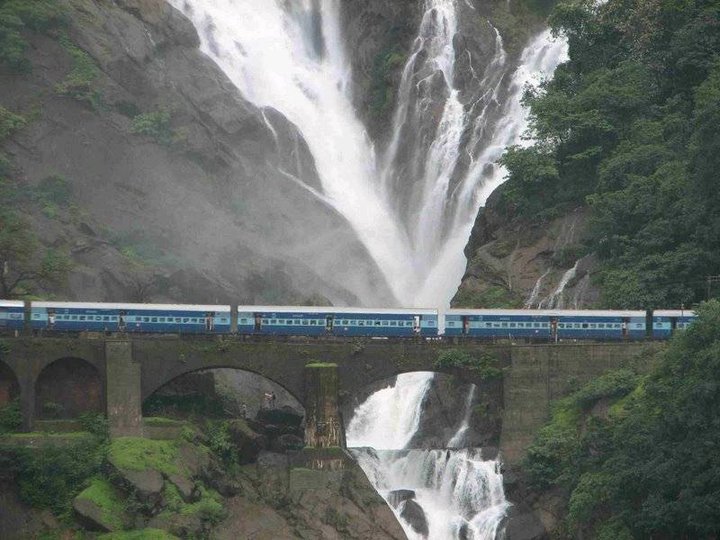
Dudhsagar Waterfall is located in the South Goa region of the Western Ghats in the Bhagavan Mahavir Wildlife Sanctuary. The train bridge that passes over over the Dudhsagar falls is one of the highlights of crossing this area of the boarder between Goa and Karnataka states . Continue reading

Rock, Water, Science, News

A diamond from Juína, Brazil, containing a water-rich inclusion of the olivine mineral ringwoodite. Richard Siemens/University of Alberta

A diamond from Juína, Brazil, containing a water-rich inclusion of the olivine mineral ringwoodite. Richard Siemens/University of Alberta

What makes scientific information newsworthy? One possibility is when the information conveyed may have profound implications for life on earth. This Scientific American article about a rock is really about water, and about a kind of water that many of us had never been aware of:

…”It’s actually the confirmation that there is a very, very large amount of water that’s trapped in a really distinct layer in the deep Earth,” said Graham Pearson, lead study author and a geochemist at the University of Alberta in Canada. The findings were published today (March 12) in the journal Nature.

The worthless-looking diamond encloses a tiny piece of an olivine mineral called ringwoodite, and it’s the first time the mineral has been found on Earth’s surface in anything other than meteorites or laboratories. Ringwoodite only forms under extreme pressure, such as the crushing load about 320 miles (515 kilometers) deep in the mantle. Continue reading

UK Organics Back In Black

The nation's appetite for organic food is growing. Photograph: Nick Turner/Alamy

The nation’s appetite for organic food is growing. Photograph: Nick Turner/Alamy

Thanks to the Guardian‘s ongoing coverage of environmental issues, this story about sales of organics in their home market:

Sales of organic food and drink rose by 2.8% last year after successive years of decline, fuelled by strong growth among independent retailers and healthy online sales. Continue reading

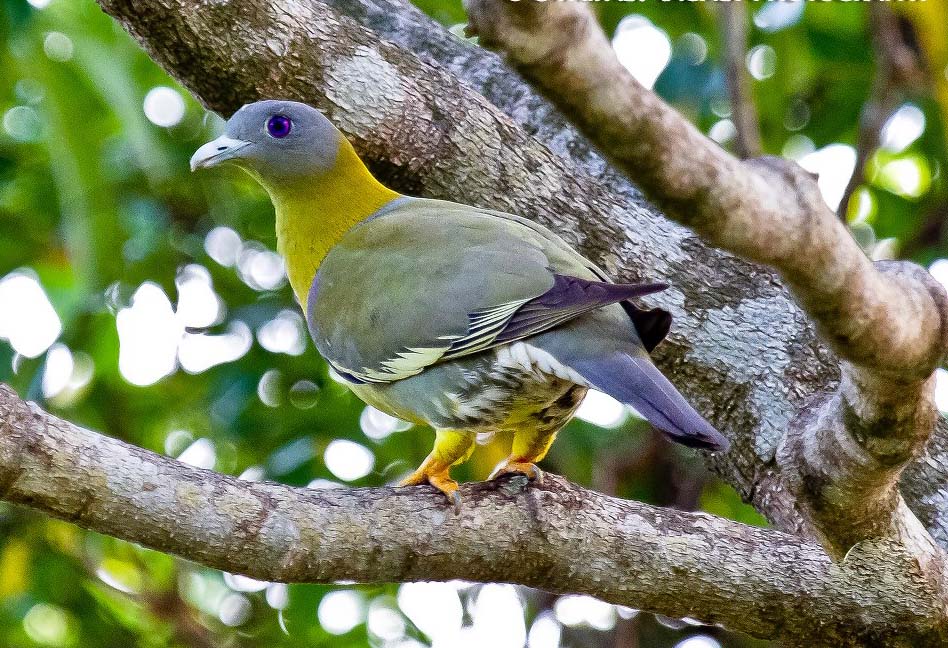
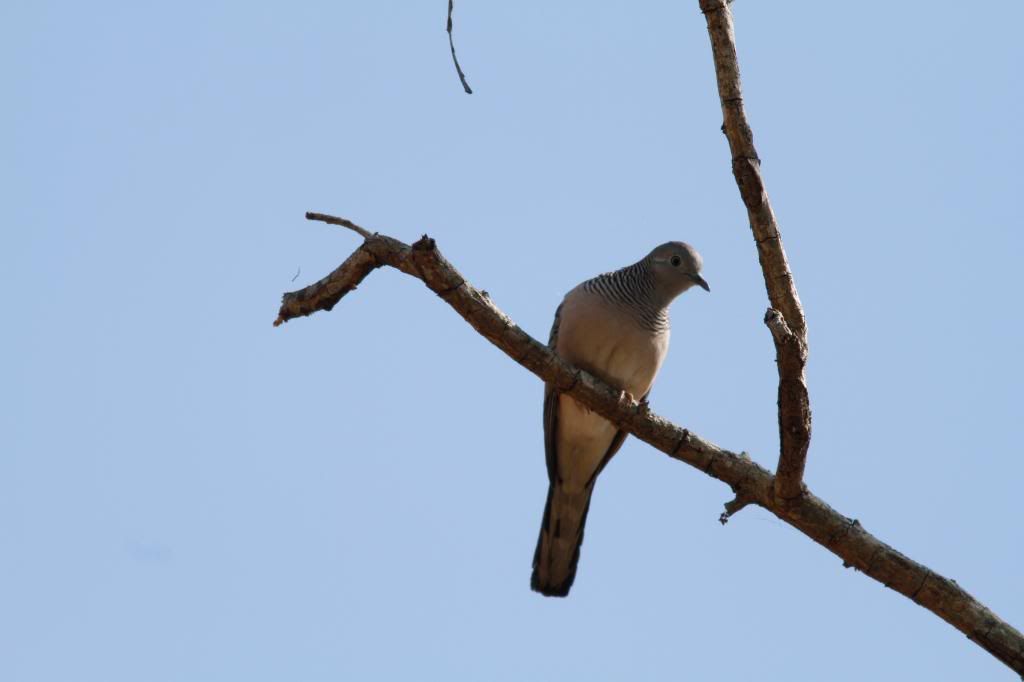
Yellow-footed Green Pigeon

Photo credit : Faisal Magnet

Photo credit: Faisal Magnet

The Yellow-footed Green Pigeon is the Maharashtra state bird, called Hariyal in Marathi, the language of the state. It is a resident of most of India and neighboring countries. Continue reading

If You Happen To Be In Oxford

spires_view__970

As we continue menu/kitchen-testing at 51, we confront daily the question of how much meat we want to offer guests, how to source it ethically, and how to improve our vegetarian options.  This book has generated considerable food for thought, so to speak. March 27 at 4pm, during the Oxford Literary Festival, co-author of the book Farmageddon, which is reviewed here and here, will be speaking for one hour. Wish we could attend. If you can and do, please send video or notes:

39829The chief executive of Compassion in World Farming Philip Lymbery uncovers the trend towards mega-farming that he says is threatening our countryside, farms and food. He says farm animals have been disappearing from our fields as food production becomes a global industry. And the recent horsemeat scandal demonstrates that we no longer know for certain what is entering the food chain. Lymbery collaborated with Sunday Times journalist Isabel Oakesott onFarmageddon, an investigation into mega-farming that ranges from the UK to Europe, the USA, China, Argentina, Peru and Mexico. Continue reading

Extinction And Its Discontents

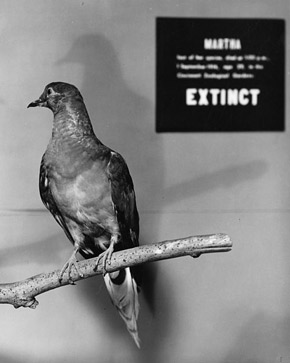
Photograph: Smithsonian Institution Archives.

Photograph: Smithsonian Institution Archives.

I consciously favor stories of alternative approaches and progress on solving environmental challenges rather than the easier-to-find doom and gloom stories, which can have the effect of making one want to turn off the news altogether. I also strive, often in vain, to not be trite. But on occasion I am willing to push that edge as well–pop tarts? yes, when the story is worth telling. Among the toughest topics is extinction, because of its foreverness, and repeated stories with ethical heaviness embedded. Still, I try.

Elizabeth Kolbert, the New Yorker‘s point person on ecological challenges, not least mass extinction, has a remarkable ability to make information about impending cataclysm compelling; she compels me with that information to open my eyes rather than shut them; she also has reasoned ideas about that information, as this post on the magazine’s website displays:

Sometime in the summer of 1914, probably on September 1st but perhaps a few days earlier, the last passenger pigeon on Earth expired. The bird, named Martha, had spent most of her life at the Cincinnati Zoo. Until a few years before her death, she had a companion, George, who shared her ten-by-twelve-foot cage. Whether the two ever tried to mate is unknown. Like the Washingtons, they left no heirs. Continue reading

Periyar Tiger Reserve

Photo credits : Vijay Mampally

Photo credits: Vijay Mampally

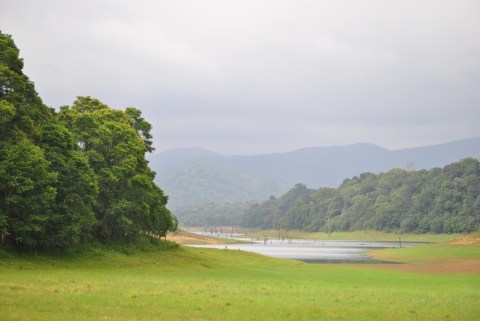
The Periyar Tiger Reserve is one of the major wildlife sanctuaries in India. It is home to elephants, wild gaur, leopards, wild boar, deer, and of course tigers, in addition to over 300 species of birds, a dazzling variety of butterflies, and plenty of reptiles and amphibians. Continue reading

Mind-Bending Race

This slideshow requires JavaScript.

A friend who lives in Costa Rica left a few weeks ago for a visit to Alaska. We did not learn until after he was already there what it was he planned to do there during the deepest depth of winter. We knew he was serious about endurance racing. We also believed that we knew something about expedition races, both in terms of adventure and endurance.  A post on the New Yorker‘s website, about the results of this year’s Iditarod, reminded us to search on the race our friend is in, to learn more about its details, and now our minds have been bent:

WHAT THIS RACE IS ALL ABOUT

The Iditarod Trail Invitational is the world’s longest winter ultra marathon by mountain bike, foot and ski and follows the historic Iditarod Trail from Knik, Alaska over the Alaska Range to McGrath and to Nome in late February every year one week before the Iditarod Sled Dog Race. The short race 350 miles finishes in the interior village of McGrath on the Kuskokwim River and the 1000 mile race finishes in Nome. Racers have to finish the 350 mile race in a previous year before they can enter the 1000 mile race.

We invite 50 racers to take part in this unique challenge every year.

To qualify for the race go to our sub page “qualifiers” or “winter training camps” to find out more. Continue reading

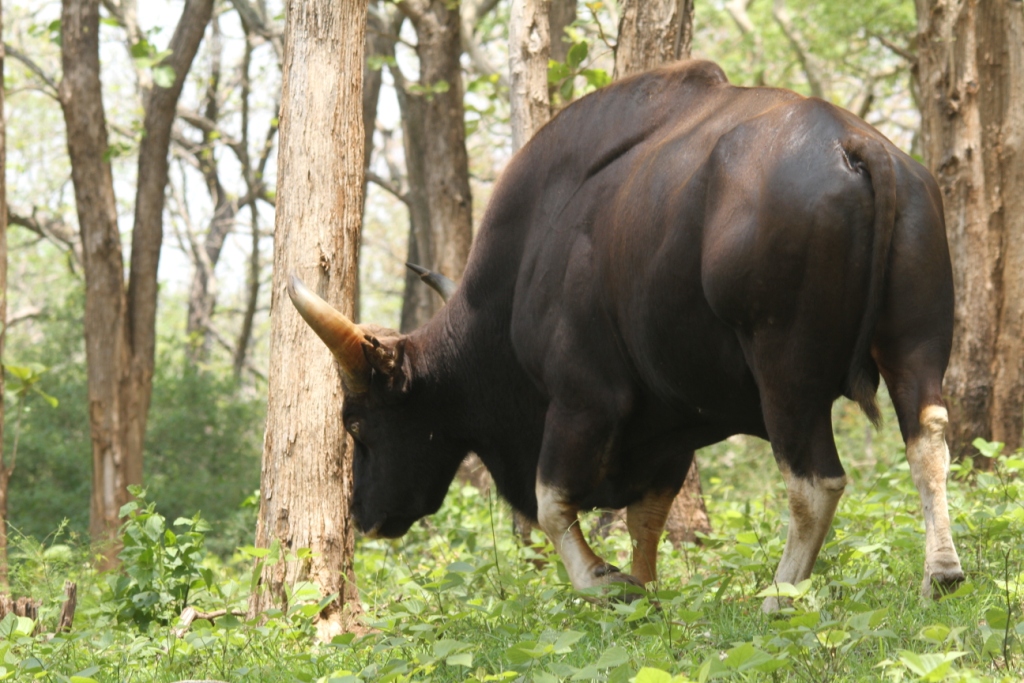
Wild Gaur – Periyar

Photo Credits : Roji Anthony

Photo Credits: Roji Anthony

The Periyar Tiger Reserve is home to an estimated 500-1000 Wild Gaur, popularly known as “Indian Bison”. They are ferocious looking but shy bovines, and some of the largest in the world. The male bison can weight up to 1000 kg, grows to 6 feet in height and has very dark brown skin. Female gaur are smaller in size and are a lighter brownish black, and the calves are even lighter still. Continue reading

Yosemite, Raxa Collective Promises To Tread Lightly


Where do you go, if Raxa Collective is both your work and your pleasure, when you want to get away from your normal day to day scenery–which by all means is awesome? Is there such a word as awesomer? Awesomest? Four Raxa Collective contributors have agreed to meet in Yosemite in late May to determine the awesomeness. They will hopefully share their findings in these pages at that time.  For now, vimeo just makes us all wish we were in Yosemite now.

Music That Never Ceases To Please, Inspire

00017089

A gospel choir leads the congregation in song during a Sunday service at the National Pentecostal Church, Johannesburg, South Africa. Photo by Dieter Telemans/Panos


Some music inspires, and a smaller subset inspires over and over and over again.  Thanks to Aeon for this article about, possibly, why:

What is music? There’s no end to the parade of philosophers who have wondered about this, but most of us feel confident saying: ‘I know it when I hear it.’ Still, judgments of musicality are notoriously malleable. That new club tune, obnoxious at first, might become toe-tappingly likeable after a few hearings. Put the most music-apathetic individual in a household where someone is rehearsing for a contemporary music recital and they will leave whistling Ligeti. The simple act of repetition can serve as a quasi-magical agent of musicalisation. Instead of asking: ‘What is music?’ we might have an easier time asking: ‘What do we hear as music?’ And a remarkably large part of the answer appears to be: ‘I know it when I hear it again.’ Continue reading

Himalayan Honey Harvest

This slideshow requires JavaScript.

Like birds, bees are a common thread on these pages, for both their innate beauty, and their importance to life on earth. Although much of the honey on the market in the world today comes from cultivated hives, the history of gathering wild honey goes back millennium. 

For generations the Gurung tribespeople of central Nepal have assembled twice a year around cliffs filled with colonies of  the world’s largest honeybee, Apis laboriosa. This dangerous Himalayan honey-harvest was recently documented by U.K.-based travel photographer Andrew Newey, who spent two weeks capturing this dying tradition, which is under the threat of commercialization.

“For hundreds of years, the skills required to perform this dangerous task have been passed down through the generations” writes Newey, “but now both the bees and traditional honey hunters are in short supply.” Continue reading

Kathakali – Traditional Dance Of Kerala

Photo Credits :Ramesh Kidangoor

Photo Credits: Ramesh Kidangoor

Kathakali is the most famous dance-drama of Kerala, and originated about 1500 years ago. This classical art form is distinguished by several unique features: it’s a marvelous blend of the Tandava (masculine) and Lasya (exotic) elements of dancing; Continue reading

Coppersmith Barbet

Photo credits : Arid V K

Photo credits: Arid V K

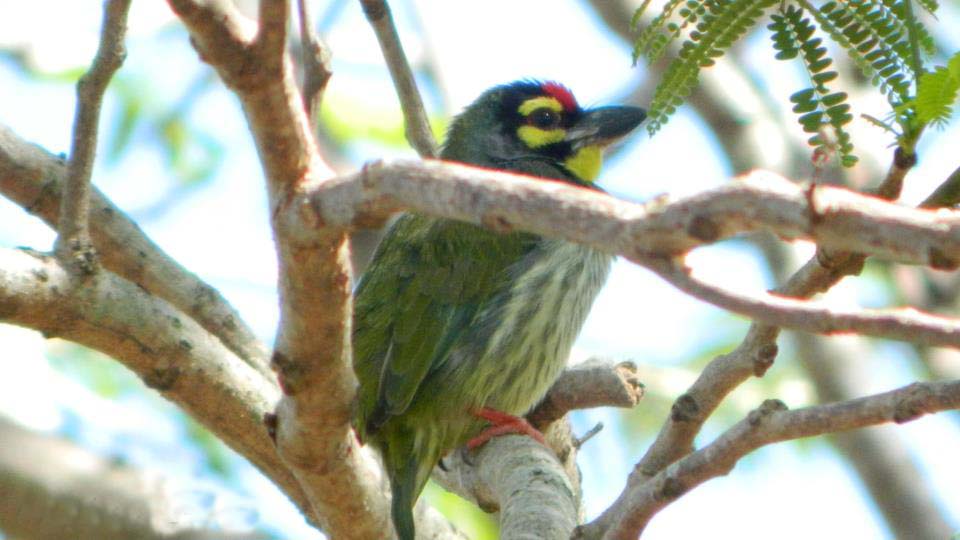
The Coppersmith Barbet, Megalaima haemacephala, is a green bird with a crimson-colored forehead and breast, along with a yellow eye-ring and throat patch. It has a very distinct call, which has been likened to the sound made when a coppersmith strikes metal with his hammer. Continue reading

A Classic Sustainable Tourism Development Story

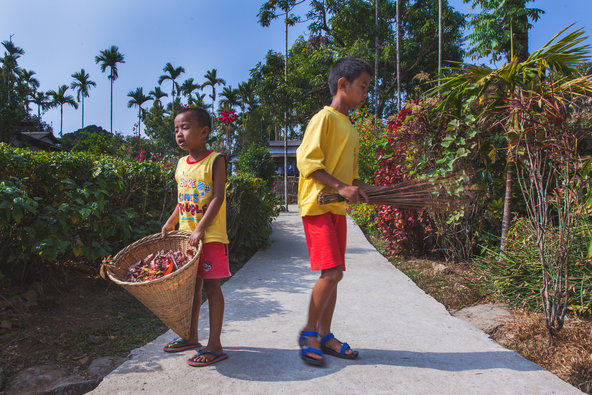
Himanshu Khagta. Children in Mawlynnong working to clean the village, where a reputation for tidiness has been both a blessing and a curse.

There is no such thing as “typical” when it comes to sustainable tourism development. By definition, each story is about that particular place.  But this one, courtesy of India Ink, provides a textbook case study example of sustainable tourism development being about community self-determination.  As for the notion that this comes with a built-in curse, we tend to believe that such curses are a function of and prevented by the same strategic planning, decision-making and action that blessings come from:

MAWLYNNONG, India — Anshuman Sen was barely a year out of college when, in 2005, he traveled to Meghalaya, a hilly northeastern state distant both in miles and cultural resemblance from what the locals call “mainland India.”

Mr. Sen was shooting pictures of the state’s bountiful natural wonders for Discover India, a travel magazine, when an acquaintance suggested visiting Mawlynnong, a remote village in the jungle along the border with Bangladesh that had acquired minor local renown for its fastidious cleanliness and a nearby bridge made entirely of living tree roots.

“I was only there for four or five hours,” said Mr. Sen, “but I couldn’t believe how beautiful it was, and neither could anyone at the magazine.” He had to write about it, even if he hadn’t spent a full day there. Continue reading