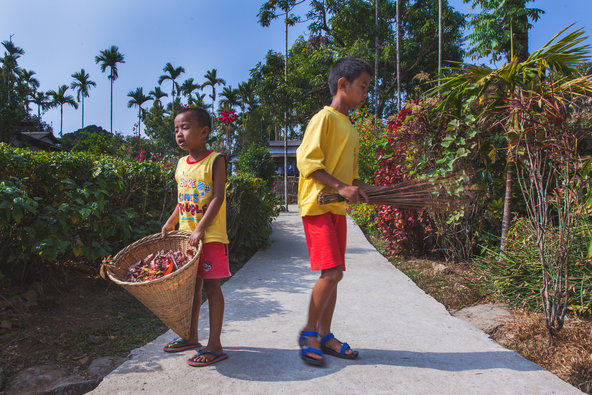
Himanshu Khagta. Children in Mawlynnong working to clean the village, where a reputation for tidiness has been both a blessing and a curse.
There is no such thing as “typical” when it comes to sustainable tourism development. By definition, each story is about that particular place. But this one, courtesy of India Ink, provides a textbook case study example of sustainable tourism development being about community self-determination. As for the notion that this comes with a built-in curse, we tend to believe that such curses are a function of and prevented by the same strategic planning, decision-making and action that blessings come from:
MAWLYNNONG, India — Anshuman Sen was barely a year out of college when, in 2005, he traveled to Meghalaya, a hilly northeastern state distant both in miles and cultural resemblance from what the locals call “mainland India.”
Mr. Sen was shooting pictures of the state’s bountiful natural wonders for Discover India, a travel magazine, when an acquaintance suggested visiting Mawlynnong, a remote village in the jungle along the border with Bangladesh that had acquired minor local renown for its fastidious cleanliness and a nearby bridge made entirely of living tree roots.
“I was only there for four or five hours,” said Mr. Sen, “but I couldn’t believe how beautiful it was, and neither could anyone at the magazine.” He had to write about it, even if he hadn’t spent a full day there. Continue reading →







 Organikos