Community, Collaboration, And Gran Chaco Conservation

This slideshow requires JavaScript.

In about 10 minutes, this National Geographic video gives a great primer on why you should care about the conservation of one of the planet’s largest intact ecosystems, with a storyline focused on community and collaboration.

South America’s Gran Chaco region spans a complex mix of land, climates, and species. National Geographic Emerging Explorer and conservation biologist Erika Cuellar shares her passion and know-how with the people who live there to protect their natural treasure from unsustainable development.

Inspiration, 51

Photograph by James Pomerantz.

Photograph by James Pomerantz.

This post is for the team at 51, a new restaurant we are opening soon, located on the waterfront of Fort Cochin’s harbor in the history-intact, spice-trading Mattanchery neighborhood. That team is a group of men and women, chefs, support cooks, self-made cuisine historians, and other interested parties collaborating on a new concept.  It is a concept, but deftly avoiding pretension. More about fun historical convergences, good taste, and communities interacting over long stretches of time to create new food ways. Following is a restaurant review whose accompanying photo was the main draw, but so was the notion of foraging that has become so compelling to foodies of late:

It seems strange to say that the best thing at a place that specializes in juice cleanses is the porchetta, but Foragers Market and Table encapsulates the contradictory nature of the New York diet, serving quality food that feels “healthy,” and is often local and organic, but with none of that dull avocado-based asceticism. Continue reading

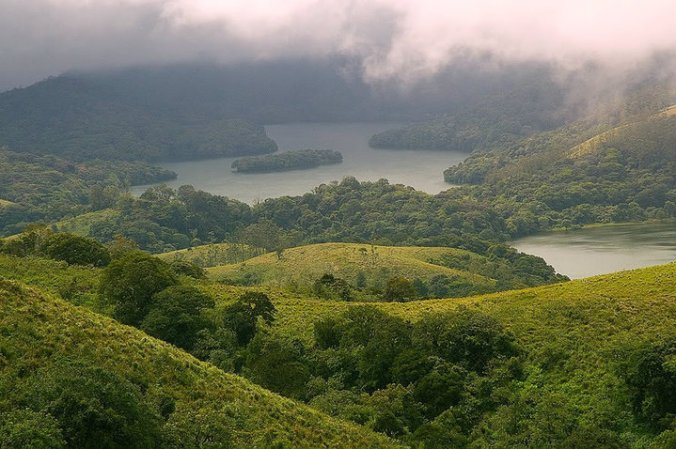
Siruvani Dam – Palakkad

Photo credits : Riaz

Photo credits: Riaz

Located in the Palakkad district of Kerala, the Siruvani Dam was built as a joint venture between the neighboring states to supply drinking water for the town of Coimbature in Tamil Nadu. The thickly forested surroundings, Siruvani Waterfall and the nearby Banan Fort make the area a rich tourist attraction.  Members of the Irular and Mudugar Tribal groups also inhabit the regions near the Siruvani Dam. Continue reading

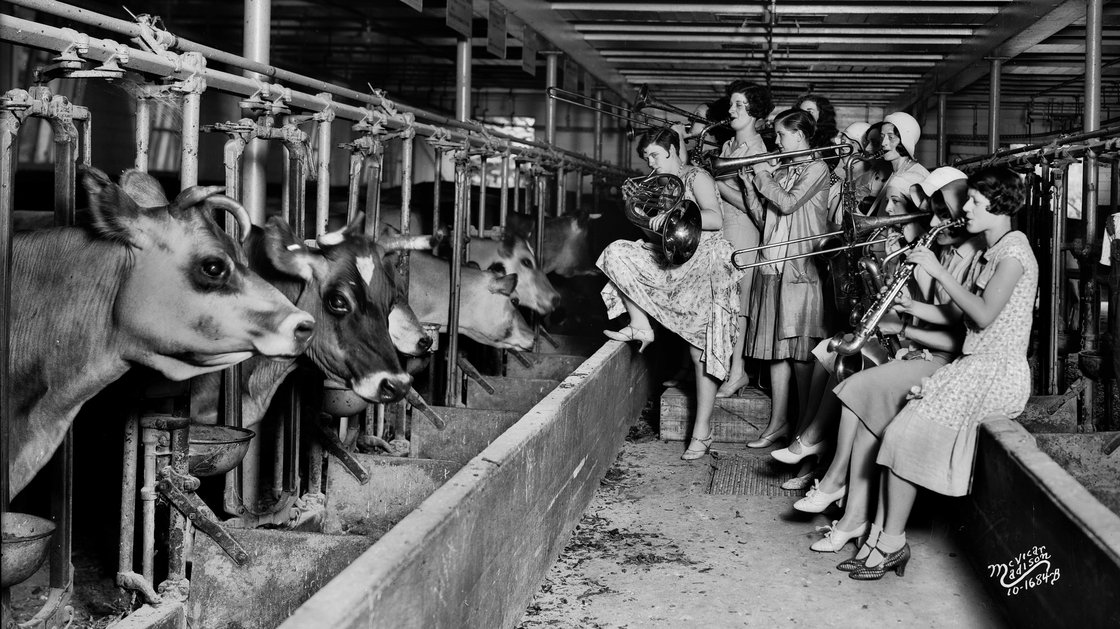
A Musically Satisfied Cow Is A Productive Cow

The Ingenues, an all-girl band and vaudeville act, serenade the cows in the University of Wisconsin, Madison's dairy barn in 1930. The show was apparently part of an experiment to see whether the soothing strains of music boosted the cows' milk production. Angus B. McVicar/Wisconsin Historical Society

The Ingenues, an all-girl band and vaudeville act, serenade the cows in the University of Wisconsin, Madison’s dairy barn in 1930. The show was apparently part of an experiment to see whether the soothing strains of music boosted the cows’ milk production. Angus B. McVicar/Wisconsin Historical Society

It is not difficult to believe, but it is funny. Thanks to National Public Radio (USA) for this story about the importance of animal happiness, an idea we can all, from carnivore to vegan all everyone in between, agree is good (the video below is at least as compelling as the scientific references):

When it’s time to buckle down and focus, plenty of office workers will put on headphones to help them drown out distractions and be more productive. But can music also help dairy cows get down to business?

Some dairy farmers have long suspected that’s the case. It’s not unheard of for farmers to play relaxing jams for their herds to boost milk production, as the folks at Modern Farmer recently reported.

A tantalizing 2001 study out of the University of Leicester in the U.K. appeared to lend credence to those claims. It found that milk production went up by as much as 3 percent when cows listened to slow tunes like R.E.M.’s “Everybody Hurts” and Simon & Garfunkel’s “Bridge over Troubled Water,” rather than faster songs. Continue reading

Community And Collaboration In Italy

Matteo Renzi in Florence, Italy on January 4th, 2014. Photograph by Laura Lezza/Getty.

Matteo Renzi in Florence, Italy on January 4th, 2014. Photograph by Laura Lezza/Getty.

We studiously avoid politics on these pages, but we studiously make occasional exceptions like this one. After an undeservedly long stretch of time, decades that became generations, of Italy in political turmoil this may be a moment of, dare we say it, change we can believe in. Alexander Stille provides a pithy summary of why this is so on the New Yorker website.

Leave ideology out of the consideration, if possible, and observe the new Prime Minister’s focus on community and collaboration; and the bicycle; one more reason to visit Italy this year as a show of support for his vision for change and his vehicular choices:

Sixty-three governments in sixty-eight years, with twenty-seven different Prime Ministers—so why should we care that Italy has a new government, with yet another Prime Minister, Continue reading

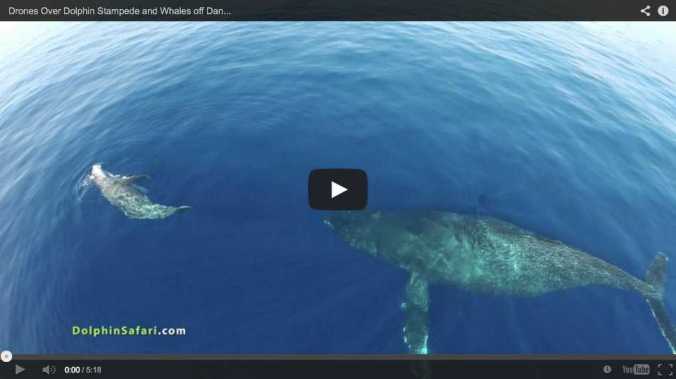
Dolphins, Drones, Delight

Screen Shot 2014-03-06 at 7.37.42 AM

We have noted on several occasions in the past about the use of drone technology to good ends, but this one takes the cake:

Whatever you think of drone technology, this may be one use that we can all agree on.

The captain of a whale-watching boat who’s also a filmmaker sent a drone with a camera into the sky to capture a stunning event: thousands of common dolphins in a super- or megapod speeding through the waters off California, destination unknown. His gorgeous video of Delphinus delphis, which includes a mama whale nuzzling its baby, is here. Continue reading

Flavours of Kerala – Pappadam

Photo credits : Renjith

Photo credits: Renjith

Kerala pappadams make a very popular side dish served with Kerala sadya (meals like the own depicted below). The main ingredients of pappadams are black gram (a type of lentil flour) and salt. Continue reading

Things We Know That Bear Repeating–Nuts, Beans, Vegetables & Fruits Edition

A new study linking animal protein-rich diets to increased mortality in middle age adds fuel to the controversy over how much protein — and from what sources — is ideal for health. One thing that seems pretty clear: It doesn't hurt to go heavy on the greens. iStockphoto

A new study linking animal protein-rich diets to increased mortality in middle age adds fuel to the controversy over how much protein — and from what sources — is ideal for health. One thing that seems pretty clear: It doesn’t hurt to go heavy on the greens. iStockphoto

For most of us, most of the time, less animal protein in our diet is a good thing. For some of us, some of the time, more vegetable protein is a particularly good thing. The takeaways from this short item at The Salt (National Public Radio, USA) are worthy quick dietary recommendations:

…In the new study, Longo and his colleagues found that high-protein foods derived from plants, such as beans and nuts, did not have the same effect on mortality as did high-protein foods from animals… Continue reading

If You Happen To Be In Muzuris

The ancient port city of Muzuris came into the spotlight in 2012 with the critically acclaimed Kochi-Muzuris Biennale, but the Muzuris Heritage Project highlights the region in a more historical context.

Located just 30 km north of Kochi in Paravur and Channamangalam, the four museums–Kerala History Museum, Lifestyle Museum, Kerala Jewish History Museum, and Jewish Lifestyle Museum–were inaugurated this Sunday.

The four museums together present a comprehensive picture of the political and cultural history and lifestyle of the region….

…The Muziris Heritage Project, spearheaded by the Tourism Department, envisaged a group of heritage and tourism plans around key historical monuments in North Paravur, Kodungalloor, Chennamangalam, Pallippuram, Mala and other areas. Continue reading

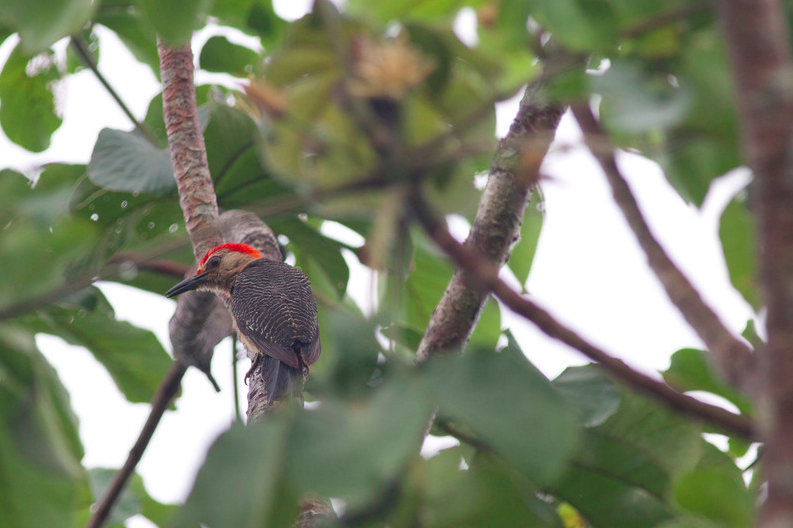
Pakshipathalam – Wayanad

Photo credits : Asif

Photo credits : Asif

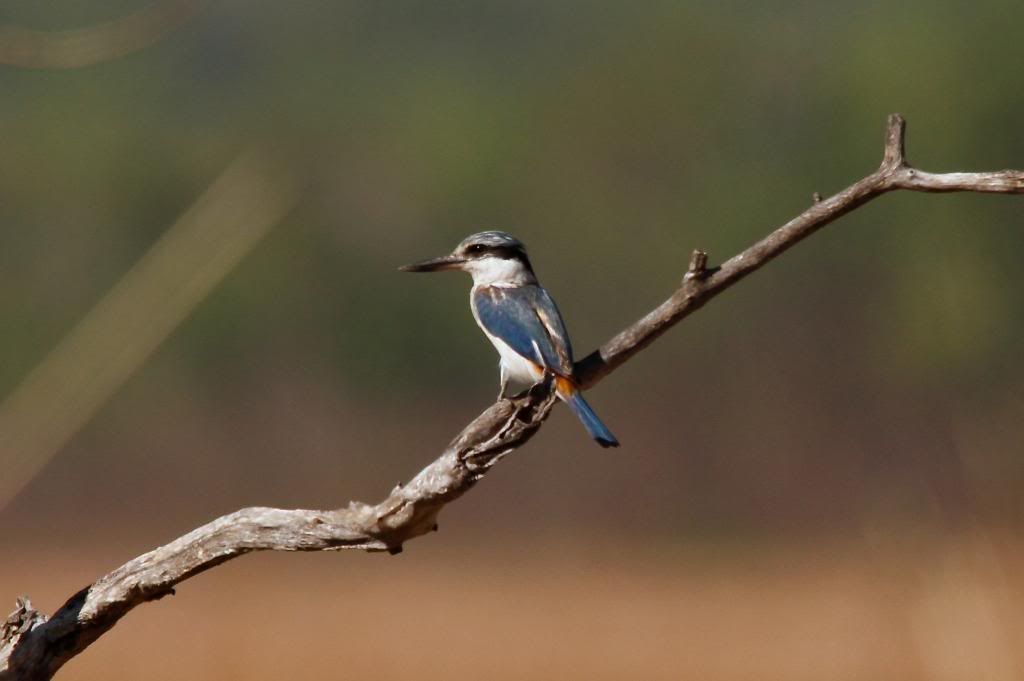
Pakshipathalam is situated in the district of Wayanad, near Karimala peak. It contains numerous caves and is surrounded by rocky hillocks. Pakshipathalam is a haven for a large avian colony, mainly around the natural rock cave. Continue reading

Train Rider, Writer

A postwar ad for the Pennsylvania Railroad.

A postwar ad for the Pennsylvania Railroad.

We link on occasion to good travel writing. It can inspire discovery. It can bring novel forms of attention to community, collaboration and conservation. Sometimes writing while traveling is the point. It may sound like merely a romantic notion, but apparently it is also a practical consideration that trains can make for good writing conditions. We ignored this story when it first came up in several of the publications we track as the source of controversy about whether this writer had any ethical dilemmas to wrestle with (the best summary of those issues can be found here).  Now that we read her piece in the Paris Review, we take it at face value:

I am in a little sleeper cabin on a train to Chicago. Framing the window are two plush seats; between them is a small table that you can slide up and out. Its top is a chessboard. Next to one of the chairs is a seat whose top flips up to reveal a toilet, and above that is a “Folding Sink”—something like a Murphy bed with a spigot. There are little cups, little towels, a tiny bar of soap. A sliding door pulls closed and locks with a latch; you can draw the curtains, as I have done, over the two windows pointing out to the corridor. The room is 3’6” by 6’8”. It is efficient and quaint. I am ensconced.

I’m only here for the journey. Soon after I get to Chicago, I’ll board a train and come right back to New York: thirty-nine hours in transit—forty-four, with delays. And I’m here to write: I owe this trip to Alexander Chee, who said in his PEN Ten interview that his favorite place to work was on the train. “I wish Amtrak had residencies for writers,” he said. I did, too, so I tweeted as much, as did a number of other writers; Amtrak got involved and ended up offering me a writers’ residency “test run.” (Disclaimer disclaimed: the trip was free.)

So here I am. Continue reading

Mathematics & Community

Alexander F. Yuan/AP Images

Alexander F. Yuan/AP Images

This article, in the Atlantic, at first seemed to have nothing to do with our core themes of community, collaboration or conservation, but reading it to the end, we see that on the contrary there is a strong link. All three of those words are closely connected to education, which is closely connected to economic opportunity, which is closely connected to the feasibility of conservation, our deepest concern.  Plus, many in our realm can attest to childhood mathematical experiences, many unpleasant, that might not after all be required to develop aptitude and appetite for what is after all just another language:

The familiar, hierarchical sequence of math instruction starts with counting, followed by addition and subtraction, then multiplication and division. The computational set expands to include bigger and bigger numbers, and at some point, fractions enter the picture, too. Then in early adolescence, students are introduced to patterns of numbers and letters, in the entirely new subject of algebra. A minority of students then wend their way through geometry, trigonometry and, finally, calculus, which is considered the pinnacle of high-school-level math. Continue reading

Raja Ravi Varma

Photo credits : Dileep

Photo credits: Dileep

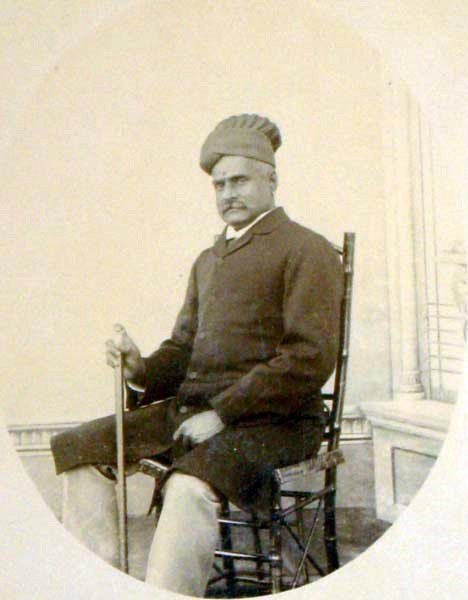
Born in the princely state of Travancore, Kerala (1848 – 1906), Raja Ravi Varma is considered among the greatest painters in the history of Indian art. Influenced by the Western tradition of art, he initiated a new movement of oil paintings on canvas in India, bringing to the life portraits and dramatic scenes from Hindu mythology and imbuing them with three dimensional qualities.
Continue reading

A Man, A Plan, A Canal

Palm trees in the tiny fishing village of Brito. In the mid-nineteenth century, Cornelius Vanderbilt, the American steamship and railroad tycoon, developed a route across the Nicaraguan isthmus, and his passengers transferred from stagecoach to steamship here.

Palm trees in the tiny fishing village of Brito. In the mid-nineteenth century, Cornelius Vanderbilt, the American steamship and railroad tycoon, developed a route across the Nicaraguan isthmus, and his passengers transferred from stagecoach to steamship here. Photograph by Jehad Nga.

When Xandari joined Raxa Collective in December, the Central America map became important in our office, and in our news tracking. Several contributors to Raxa Collective got their start in Central America in the 1990s, as did most of Xandari’s staff, most of whom have been working their for nearly two decades; so goings on in that region are of special interest.  Big goings on are of big interest. Especially when the socio-economic costs and benefits are understood in relation to ecological impact. In case you never heard the campaign slogan dating back to President Theodore Roosevelt’s time–A Man, A Plan, A Canal, Panama–it is worth noting it is a palindrome, a sort of word puzzle in that it reads the same forward and backwards.   In this week’s issue of the New Yorker, another kind of puzzle related to another Central American canal is reported by Jon Lee Anderson who profiles one (or more) man’s plan to:

…“launch the largest civil engineering and construction project in the world: a new transoceanic canal across Nicaragua.” The canal is a pet project of Daniel Ortega, the President of Nicaragua, who has argued that an Atlantic-Pacific shipping route “will bring well-being, prosperity, and happiness to the Nicaraguan people.” But while the canal’s supporters have praised its economic potential—Nicaragua is Central America’s largest and poorest country, and nearly half its population lives below the poverty line—opponents have criticized the lack of public input on the plan, which is expected to cost at least fifty billion dollars. They also argue that the project represents an affront to Nicaragua’s sovereignty: the Hong Kong Nicaragua Canal Development Investment Company, an obscure Chinese firm that holds the concession to build the canal, has been granted broad rights throughout the country, including the right to expropriate and develop private property. Continue reading

UK Chef Uses Celebrity To Shame Dodgy Fish Retailing

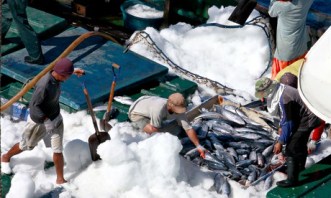
A catch of tuna from an illegal purse seine fishing vessel is loaded onto a cold storage vessel off the Indonesian coast. Photograph: Alex Hofford/AFP/Getty Images

A catch of tuna from an illegal purse seine fishing vessel is loaded onto a cold storage vessel off the Indonesian coast. Photograph: Alex Hofford/AFP/Getty Images

Bravo to one Top Chef who is using his media power to good effect, a story we thank the Guardian for reporting (click the image to the left to go to the source):

Tesco is facing the wrath of TV chef Hugh Fearnley-Whittingstall and environmental pressure group Greenpeace after stocking a cut-price brand of tuna linked to a controversial fishing method that can kill sharks, rays and turtles.

The supermarket switched its own-label canned tuna to environmentally friendly pole-and-line caught sources in 2012 in a high-profile change after criticism from Fearnley-Whittingstall and his Fish Fight campaign. But later the same year Tesco began to stock the Oriental & Pacific brand of tuna, which is caught using the purse seine method – where large nets scoop up all kinds of ocean creatures attracted by floating rafts known as fish aggregation devices. Continue reading

Alleppey Beaches


Alleppey

Alleppey

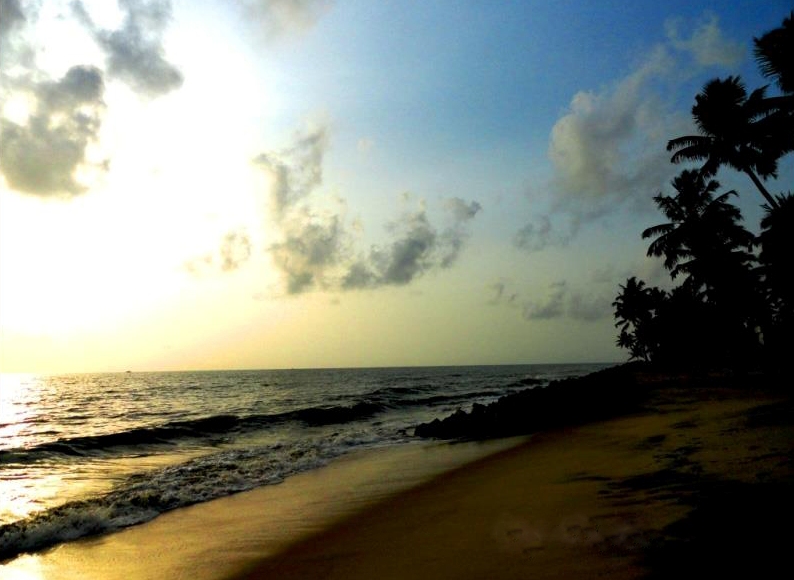
Popularly known as the “Venice of the East”, Alleppey is situated at the south-western tip of Vembanad Lake where it was the the major port of the erstwhile Travancore State. Alleppey Beach is known for its calm and quiet spirit and as a gathering place for family and friends to enjoy the fresh air, sea breeze and the most spectacular sunsets on Kerala’s coast. Continue reading