Fair Use In The Ever-Modernizing World

We have no doubt, as we post our several items a day on this blog, that we should credit photographs, writing and all other content whether original to our own contributors, linked to a third party website, or whatever the case may be.  But we admit sometimes there are borderline cases where we learn by trial and error what the rules of fair use are.  We appreciate all learning opportunities on this topic. Click the banner to the left to go to the magazine’s website Technology section, where this article illuminates the shadowy borders of fair use, with a story about two remarkable young entrepreneurs and the ethical, if not legal, issues they face in building traffic over the internet:

There is a new ubiquitous media brand on Twitter.

No, I’m not talking about Pierre Omidyar’s First Look Media or BuzzFeed or The Verge, or any other investor-backed startup.

I’m talking about @HistoryInPics, which, as I discovered, is run by two teenagers: Xavier Di Petta, 17, who lives in a small Australian town two hours north of Melbourne, and Kyle Cameron, 19, a student in Hawaii. Continue reading
If You Happen To Be In New York City

This slideshow requires JavaScript.

Raxa Collective has favored photography that captures natural and/or cultural heritage at its best in documentary mode.  But we are interested in the boundaries of this medium, not least because several contributors cross those boundaries in their other work.  If you are interested in these issues, and happen to be in New York City any time in the next few months this show looks worth a visit:

Organized by ICP Curator Carol Squiers, What Is a Photograph? will explore the intense creative experimentation in photography that has occurred since the 1970s. Conceptual art introduced photography into contemporary art making, using the medium in ways that challenged it artistically, intellectually, and technically and broadened the notion of what a photograph could be in art. A new generation of artists began an equally rigorous but more aesthetically adventurous analysis, which probed photography itself—from the role of light, color, composition, to materiality and the subject.What Is a Photograph? brings together these artists, who reinvented photography.

From the press release for the exhibit:

On view at the International Center of Photography from January 31 through May 4, 2014, What Is a Photograph? explores the range of creative experimentation that has occurred in photography since the 1970s. Continue reading

Butterflies of Kerala

Photo credits : Shiny Jose

Photo credits: Shiny Jose

Kerala’s butterflies are a richly diverse and scientifically interesting group of insects, which number around 330 species in the state. The largest butterfly in India, the Southern Birdwing, has a wingspan of about 25 centimeters, and the smallest, called the Grass Jewel (pictured below), has only a 1.5 to 2 centimeter wingspan. Can you name the species in the photo above? Continue reading

Early Adopters Of Agricultural Ethics

In conversation with Milo recently, several of us concluded that we might soon expect a series of illuminating posts from him on the topic of alternative agriculture, much as we have had from him over the last few years illuminating and visually arresting series of posts on dragonflies, mushrooms and photography itself.  So, we share the article below from the Science section of the New York Times this week, in anticipation of those posts on a topic of great interest to Raxa Collective:

FARM-slide-V3OF-thumbStandard-v2The Elders of Organic Farming

By CAROL POGASH

For nearly a week, two dozen pioneers of sustainable agriculture from the United States and Canada shared decades’ worth of stories, secrets and anxieties.

Bhutan, Inspiration For A Happier World

Click the image to the left to go to the Kingdom of Bhutan’s website, which we have been visiting in recent months in advance of a planned visit for work. Our friends to the north will surely appreciate the sentiments and insights of this essay in the current issue of Orion magazine, which we find useful background preparation in case our visit, and prospective new project, come to pass:

FROM THE FORESTED HILLSIDE above us, a bulldozer sends giant rocks and tree limbs sailing down onto the hundreds-of-years-old footpath leading us from the Paro Valley floor to Dra Lhakhang, a cliffside temple where the six of us plan to sleep on the first night of our three-day hike to, Dragipangtsho, a lake considered holy. Karma Wangchuk, the leader of our hiking party, blows his pocket whistle and screams along with the rest of us, hoping our distressed voices will penetrate the roar of the machine. Finally, the bulldozer stops and the road crew hollers and waves down to us in acknowledgement, oblivious to our peril. Continue reading

Beauty of Vagamon – Elappara

Photo credits : Renjith

Photo credits: Renjith

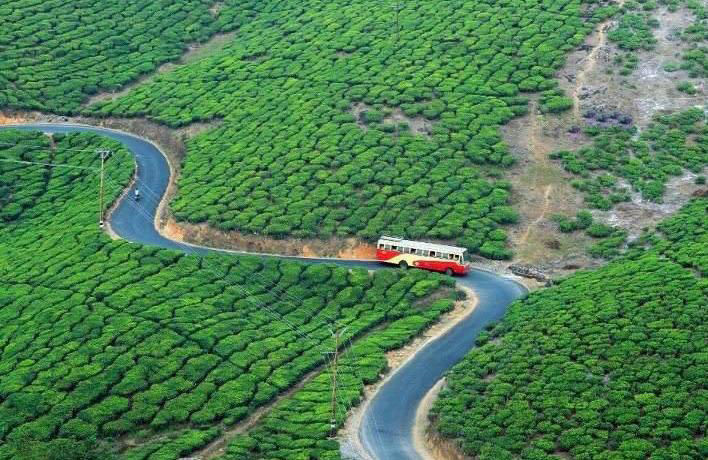
Elappara is a small tea plantation village near Vagamon, about 40km from Thekkady. This tiny village overlooks the awe-inspiring Annan Thampi mountains, the steep slopes of which British planters used to hike up before embarking on hunting expeditions. Continue reading

The Story of “Kalyana Saungandhika”

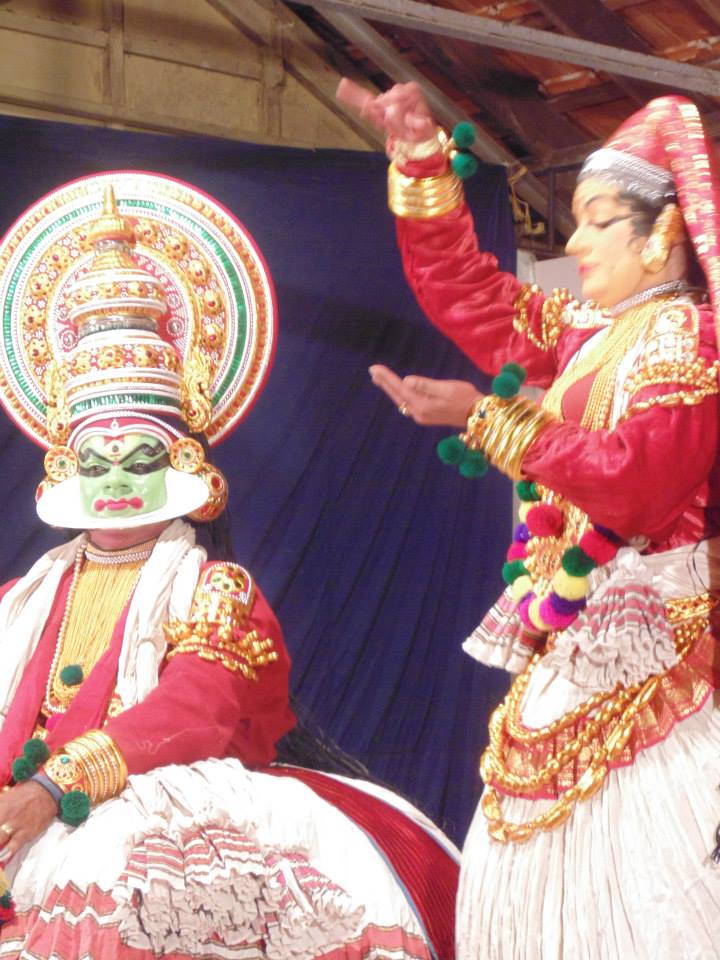
Kalyana Saungandhika–Bhima and Draupadi

The true Kathakali experience that I’ve referred to previously is only understood fully within the context of the grand Indian epic stories that they express. The rightful heirs to the throne of Hastinapur were 5 Brothers called Pandavas. The brothers were beaten in a game of dice by their 100 cousins called the Kauravas and were sent to the forest. The arrangement was such that the Pandavas were required to spend 12 years in the forest (Vanavaasa) and one year incognito (Ajnaathavaasam). If they were to be recognized by the Kauravas during the year of living incognito, they had to repeat the 12 years of forest life.

Many incidents good and bad occurred while they were undergoing Vanavaasa and the story of Kalyana Saungandhika is about one such incident, which also happens to be the favorite of ‘Kathakali’ performers.

Arjun, one of the 5 Pandavas, won his future wife Draupadi through an archery test and due to a misunderstood statement by Kunti the mother of the Pandavas, Draupadi had to accept all 5 of the Pandavas as her husband. Continue reading

Vivid Performance Art, Clearing The Fog Surrounding Climate Change

eva-mosher1Sometimes, as with a good cup of coffee in the morning, our wake up is enhanced with a dose of intoxicating taste to get our senses going. As we swing from polar vortex to the next big thing in climate change, thanks to the dean of Duke’s Nicholas School of the Environment for this article on Eva Mosher and the important role performance art may play in the needed wake up call:

Convincing Americans that climate change is a real and present danger has proven to be a daunting and often frustrating challenge for scientists. Despite the growing evidence of climate change, and humanity as the driver of that change, there remains a hardcore 20 percent or so that reject the whole notion of it and a healthy percentage that remain unconvinced that humans are causing it. And on top of those dismal statistics, more than half of Americans believe that climate change does not represent a threat to them.

Scientific Data vs. Vividness and Accessibility Continue reading

Skimming the Globe

Stemming from a spontaneous fascination while living in India, I have photographed and written extensively about dragonflies in the past, and as an untrained naturalist, my interest has been mainly focused on dragonflies’ aesthetics rather than their physiology or ecological significance. However, as my interest in holistic ecology and the natural world grows, my thoughts have wandered from dragonflies and mushrooms to a bigger-picture ideology focusing on the connectedness and relationships between organisms within an ecosystem. Those relationships are present across the globe, year-round – regardless of how lifeless a place may seem. Being used to tropical climates unfortunately gives me a predisposition to fear the painful cold of Colorado mountain winters, and I retreat to a less hands-on approach to my research.

While seeking food for thought online, I stumbled upon a TED Talk given in 2009 on dragonflies – which in itself would interest me. But this talk concerns an exceptionally interesting species of dragonfly (though I didn’t realize it when I noticed its swarms in Gavi) – and one that aligns more with my current biological interests than those I held in the past few years (skimming the surface, some might say). Continue reading

Sustainable Forestry And Eco-efficient Wood Heating

This slideshow requires JavaScript.

Thanks to Harvard Gazette for this follow up story shedding more light on the role of forests of Massachusetts in better understanding the planet’s ecological needs:

In heavily wooded New England, forests are dynamic ecosystems that support a range of plants and animals, and their ability to soak up carbon also makes them an important piece of the climate-change puzzle. How changes to forests over time affect the flow of carbon through the atmosphere has long been a focus of researchers at the 3,700-acre Harvard Forest. Now, three wood-fired boilers are providing those scientists with a new tool to expand their understanding. Continue reading

Temple Elephants

Photo credits :Ramesh Kidangoor

Photo credits: Ramesh Kidangoor

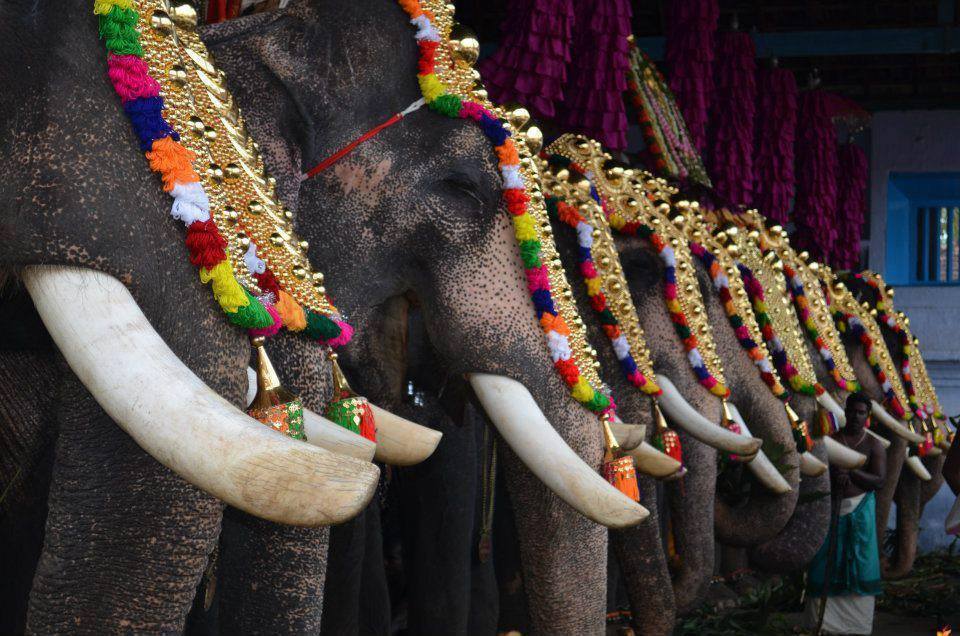
In the history of Kerala, elephants have been part of the festival and cultural ethos of the state. People believe that this animal is a remover of obstacles, a harbinger of good fortune and an integral part of religious and economic life. Over the years, no temple festival in the state has been complete without the participation of elephants: all major temples in Kerala have an attachment to them. Continue reading

Maps, More Than A Practical Tool

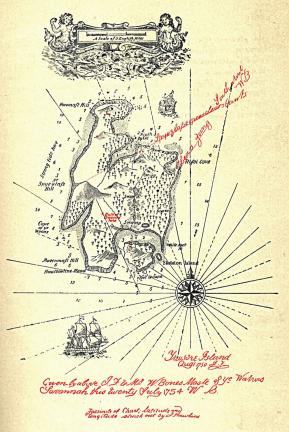
Map of Treasure Island, from Robert Louis Stevenson’s “Treasure Island.”

Map of Treasure Island, from Robert Louis Stevenson’s “Treasure Island.”

Travel without a map can be fun, sometimes, if adventure is the objective; but context and direction helps more than it hurts most of the time. The same is true when maps are there just for the sheer pleasure or comfort, in environmentally sensitive, creative graphic design, or for historical research. This post on the New Yorker‘s website captures the sentiment well:

For years, I carried the same map wherever I went. When I wasn’t travelling, Scotch Tape held it to the back of my bedroom door: it was visible to me when the door was closed, but invisible to almost everyone else. That map moved from dorm rooms to apartments and houses, from the Eastern Shore of Maryland to New England, from New England to the United Kingdom, and back again.

When I felt homesick, I would drag my fingers up and down the map’s paper folds, tracing its shorelines and rivers, wishing they were the real thing. But touching that map only made me more homesick. Continue reading

20 Years Of Camera Traps In India

4640_photo_kdlffejdk6syhb2fejxe7v66csguoo4tfzqnozlypf2gukfxr27q_850x638

Thanks to the National Geographic Society’s excellent website (membership required) for this story on a topic close to our hearts. Camera traps are the source of some of the best nature photography we have seen, as made clear by these authors:

By Krithi K. Karanth and Arjun Srivathsa

With close to 50 species of wild carnivores, India is a haven for elusive families of cats, dogs, hyaenas, bears, otters, civets and mongooses. The Wildlife Conservation Society-India Program has been camera-trapping critters in India for more than 20 years. Continue reading

Kathakali – An Introduction

Tiraseela

Tiraseela – the cloth that is used both as curtain and dramatic effect

Kathakali is one of the oldest theatre forms in the world. Originating in the area of southwestern India now known as the state of Kerala, it is a group presentation in which dancers take various roles in performances traditionally based on themes from Hindu mythology, especially the two epics, the Ramayana and the Mahabharata.

One of the most interesting aspects of the art form is its elaborate make-up. Characters are categorized according to their nature, which determines the colors used in the make-up. Continue reading

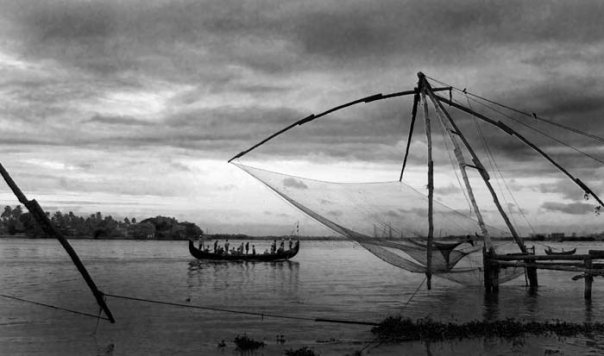
Chinese Fishing Nets, Kochi

Photo credits : Ramesh Kidangoor

Photo credits: Ramesh Kidangoor

The Chinese fishing nets are a unique and special part of Kochi. A legacy of some of the earliest visitors to this coast, they are thought to have been brought to Kochi by traders from the Chinese court some time between 1350 and 1450. Employed mainly during high tides, these nets are set up on bamboo poles supported by teak wood structures and require at least four men to operate their system of counterweights. Continue reading

Science Writers Contribute To The Conversation

As we have more conversation in 2014 and beyond, it will definitely be improved with the science writers we have been following the last few years, and their successors who follow in their footsteps.

For example, we appreciate Virginia Hughes and the kind of writing that she publishes all over the place, and which National Geographic‘s Phenomena website collects, with this most recent example of hers:

An Old and Optimistic Take On Old Age

I’ve been reading and thinking a lot lately about the process of aging. Many scientists who study it argue — quite convincingly — that it’s the most important scientific topic of our time. In his 1997 bestseller Time of Our Lives, biological gerontologist Tom Kirkwood writes that the science of human aging is “one of the last great mysteries of the living world.” Continue reading