Welcome To Raxa Collective’s Learning Laboratory, Cardamom County

Cardamom County, by Maxine Relton

Every year right about now, a group of painters arrives to Kerala from England. They are led by a professional artist who also teaches, and during their several days’ stay at Cardamom County we enjoy watching their sketch books fill up. The watercolor above is an example of what we have seen in the past, and we are looking forward to this year’s new collection.

It is not only the colors and impressionistic views of our property we enjoy seeing, but the learning process itself.  Each of the last few years, as Raxa Collective has expanded the number of properties in its portfolio, Cardamom County’s unique value as a learning laboratory has become more and more clear. Interns, trainees, and most of all guests–many of whom, while still at Cardamom County or after returning home, choose to share news about their experience with us, or on the themes of community and/or collaboration and/or conservation from around the world) are all essential components of the learning laboratory’s chemistry.

Today, we welcome a group of nearly one dozen new employees to Raxa Collective. Continue reading

Badami Temple, Karnataka

Photo credits: Ramesh Kidngoor

Photo credits: Ramesh Kidngoor

Badami, situated in modern Karnataka, was once the majestic capital of the royal Chalukyas between the 4th and 8th century — now it is a rural town famous for the monuments and remnants that remain. Continue reading

Adding Some Interesting Facts To The Conversation

  If we do have more conversation in 2014 and beyond, it will definitely be improved with the science writers we have been following the last few years, and the successors who follow in their footsteps. For example, we appreciate Virginia Hughes and the kind of writing that she publishes all over the place, and which National Geographic‘s Phenomena website collects under the name Only Human, with this most recent example here:

An Old and Optimistic Take On Old Age

I’ve been reading and thinking a lot lately about the process of aging. Many scientists who study it argue — quite convincingly — that it’s the most important scientific topic of our time. In his 1997 bestseller Time of Our Lives, biological gerontologist Tom Kirkwood writes that the science of human aging is “one of the last great mysteries  Continue reading

Beauty Of Kerala, Vagamon

Photo credits : Praveen Bhaskaran

Photo credit:  Praveen Bhaskaran

Vagamon is a land with undisturbed forests, exotic flora and fauna — green glades and verdant meadows interspersed with shola forest combine to create a picturesque landscape.  1200 metres above sea level, Vagamon is located approximately 45 km from Thekkady; a true paradise for hikers and trekkers. Continue reading

Bird Sightings and Ecology in the PTR

A White- or Woolly-necked Stork carrying nest material to a large tree. Photo © author.

A White-necked Stork carrying nest material to a large tree.

A few days ago we went for a two or three hour hike in the Periyar Tiger Reserve and saw a multitude of avian species that make Kerala a great place for both the amateur and ardent birder. I was also able to see very tangible examples of two related concepts that I’d learnt in my ecology and ornithology classes at Cornell: mixed-species foraging flocks and the ecological niche.

The American ecologist Robert MacArthur, in his seminal dissertation on five insectivorous species of warbler, noticed that  Continue reading

A Life Leading To India’s Independence

Penguin Books India recently published this book about the Mahatma’s earlier years, which is reviewed here and publisher’s blurb provided below:

Gandhi Before India

by Ramachandra Guha

In 1893, when Mohandas Gandhi set sail for South Africa, he was a 23-year-old briefless lawyer who had failed to establish himself in India. The two decades that he spent in South Africa were to be the making of the Mahatma.  Continue reading

If You Happen To Be In Washington, DC

This slideshow requires JavaScript.

At the Smithsonian, there is an exhibit specially made for the yoga aficionados of the modern world, with just a few weeks more to go:

Yoga: The Art of Transformation

October 19, 2013–January 26, 2014

Arthur M. Sackler Gallery

Yoga is a global phenomenon practiced by millions of people seeking spiritual insight and better health. Few, however, are aware of yoga’s dynamic history. Opening this fall at the Smithsonian’s Arthur M. Sackler Gallery isYoga: The Art of Transformation, the world’s first exhibition of yogic art. Temple sculptures, devotional icons, vibrant manuscripts, and court paintings created in India over 2,000 years—as well as early modern photographs, books, and films—reveal yoga’s mysteries and illuminate its profound meanings. Continue reading

Beauty of Periyar River

Photo credits:Ramesh Kidngoor

Photo credits:Ramesh Kidngoor

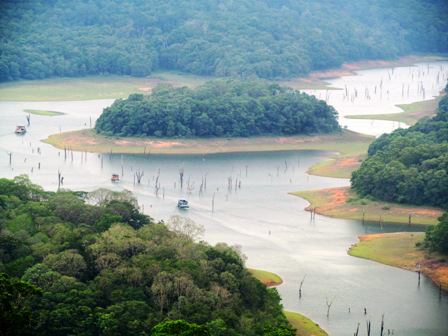
Periyar Lake comprises about 26 square kilometers within the Periyar Tiger Reserve, a sanctuary for wildlife next to Cardamom County. Periyar River, which flows from Periyar Lake, is not only the lifeline of the Periyar Tiger Reserve, but also of central Kerala. It originates in the Sivagiri peaks in the Western Ghats, 1830 meters above sea level, across the border into the neighboring state of Tamil Nadu. Continue reading

Changing Tastes In India

Courtesy of K.D. Singh K.D. Singh, left, and Kuldeep Shankar, right, owners of “The Steakhouse,” with their mutual friend Anil Arora at the store in New Delhi in the 1960s.

Courtesy of K.D. Singh. K.D. Singh, left, and Kuldeep Shankar, right, owners of “The Steakhouse,” with their mutual friend Anil Arora at the store in New Delhi in the 1960s.

Thanks to India Ink for this article on the evolution and sometimes radical change in food shopping and consumption patterns in India. For those of us from foreign countries working, interning, volunteering with, or visiting as guests of Raxa Collective in India, this news can be put in perspective only relative to the time since 2010, when excellent ice cream became available in Kerala on a regular basis; then, excellent gelato; and more recently otherworldly staples such as good olive oil have found their way onto the shelves of certain grocers.

That may matter to some of us non-Indians more than to our Indian colleagues and friends. Suppliers to our lodging properties continue to supply the high quality domestic inputs we need to produce top quality south Indian cuisine–no change sought on that front until now, as we prepare to open 51, our new restaurant in Mattanchery which will highlight some of the eastern Mediterranean influences on Malabar cuisine, more on which another time. For now, just a shout out of this story:

These days, it’s easy to find once-exotic foods like spaghetti and Parmesan cheese at grocery stores in India. Continue reading

Sleuthing for Birds

Next to my Celebrate Urban Birds student work-desk at the Lab of Ornithology, team members of the inquiry-based science program called BirdSleuth are always busy developing new curriculum plans in avian education for K-12 students and instructors to learn more about birds and the local environment through citizen science and discovery driven by curiosity.

Photo © Shailee Shah / Lab of Ornithology

Originally called “Classroom BirdWatch,” the program provides training, kits, and other resources to encourage investigation and data collection among youth. Although it started in 2004 under a National Science Foundation grant in the US, about five years ago Continue reading

More Conversation Is More Interesting In More Languages

“It’s on the left,” he says. “No, it’s southeast of here,” she says. iStockphoto

If we are going to engage in more conversation in 2014 and beyond, we all would do well to do so with as much perspective as possible, wherever we are. This reporting on scientific findings about bilingualism is particularly interesting for those of us in India, where most of our colleagues speak a minimum of two but often three or four distinct languages:

Lera Boroditsky once did a simple experiment: She asked people to close their eyes and point southeast. A room of distinguished professors in the U.S. pointed in almost every possible direction, whereas 5-year-old Australian aboriginal girls always got it right.

She says the difference lies in language. Boroditsky, an associate professor of cognitive science at the University of California, San Diego, says the Australian aboriginal language doesn’t use words like left or right. It uses compass points, so they say things like “that girl to the east of you is my sister.” Continue reading

MC’ing Christmas & New Year’s Eve

When I was asked to be the “face of RAXA Collective” during the Christmas/New Year’s Eve celebrations at Cardamom County, my impulsive nature overtook any kind of rational thinking and I said “yes”. I didn’t stop to think for a minute if I could do a decent job or not. But once I’d already made a commitment, I realized that I shouldn’t think too much of it and decided to go with the flow. So when the day dawned, I was my usual self, but honestly, quite anxious.

There were about 120 guests and to keep the crowd occupied is one thing, and entertained is another. Continue reading

Committing To More Conversation In 2014

Well over a year ago there was an interview podcast that several of us at Raxa Collective listened to, discussed, and determined to write about, but none of us did. The idea was lost for nearly 15 months. Then, all of a sudden, in the first post today the word conversation appeared in a manner that reminded us of the Fresh Air interview with Sherry Turkle headlined:

In Constant Digital Contact, We Feel ‘Alone Together’

October 17, 2012

The book was reviewed in the New York Times three years ago this month, and together with the interview we just remembered, is still very much worth the while:

As soon as Sherry Turkle arrived at the studio for her Fresh Air interview, she realized she’d forgotten her phone. “I realized I’d left it behind, and I felt a moment of Oh my god … and I felt it kind of in the pit of my stomach,” she tells Terry Gross. That feeling of emotional dependence on digital devices is the focus of Turkle’s research. Her book, Alone Together, explores how new technology is changing the way we communicate with one another. Continue reading

Kavadi Aatam: Ritual Dance

Photo credits: Ramesh Kidangoor

Photo credits: Ramesh Kidangoor

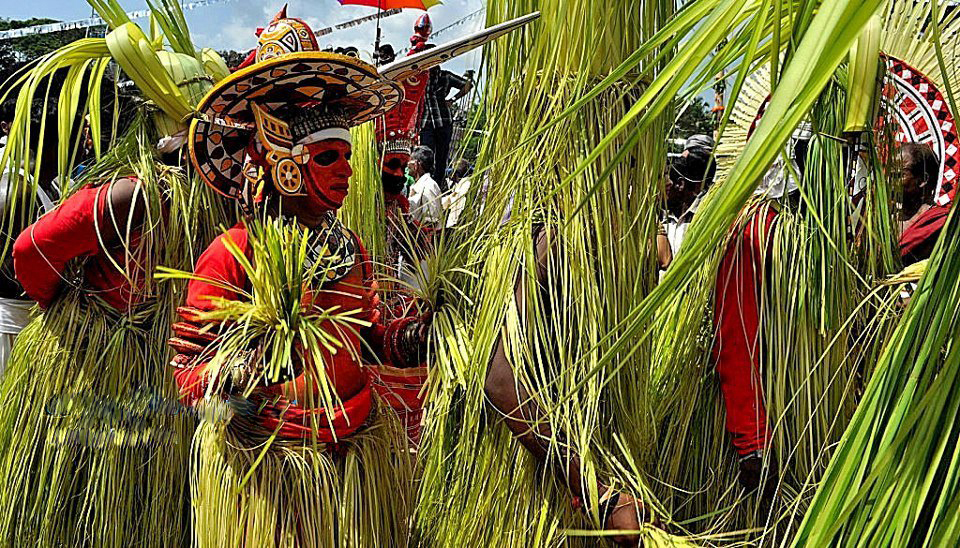
Kavadi Aatam is a religious dance offered to Lord Muruga during a pilgrimage, made mainly by men, which originated in Tamil Nadu. It is a colorful (as you can see in the photos) ritual dance widely prevalent in the Subramanya Temples in Kerala and Tamil Nadu during the festival season. The Kavadi, which are set on top of the dancers, can reach 10-15 feet high, and when the dancers twist and spin in a row it creates a quite beautiful effect.

Continue reading

Can Hunting Help An Endangered Species?

Tom Brakefield/Getty Images

Tom Brakefield/Getty Images

To Save The Black Rhino, Hunting Club Bids On Killing One

by NPR STAFF

December 29, 2013

Hunters of wild ducks have been extremely important contributors to, and activists for, wetlands preservation in the USA. Does that mean hunting is good for conservation? National Public Radio in the USA covered a story a few days ago that, as a headline cast hunting in a grotesque light, but listening to the participants there was a whole new perspective. Raxa Collective has no plans to add hunting to the list of activities it offers travelers, but we are obliged to participate in the conversation:

Fewer than 5,000 black rhinos are thought to exist in the wild, and in an effort to preserve the species, the Dallas Safari Club is offering a chance to kill one.

The Texas-based hunting organization is auctioning off a permit to hunt a rhinoceros in Nambia. It’s a fundraiser intended to help save the larger population. Continue reading