
Common Floss Flower is frequently found along road sides and on hills up to 1200 meters. Native to tropical South America and naturalized in India, it is an aggressive invader. The flowers of the plant attracts butterflies.
Common Floss Flower is frequently found along road sides and on hills up to 1200 meters. Native to tropical South America and naturalized in India, it is an aggressive invader. The flowers of the plant attracts butterflies.
Thanks to the Guardian for bringing this to our attention:
At an age when freedom passes allow pensioners to take on the challenge of clambering to the top deck of a bus, Dr Francis Hallé is more likely to be found perched at the top of a tree.
The retired professor of botany is 75 and has just completed his first film. In it he can be seen standing, without a safety rope, on a branch of a massive moabi tree 230 feet above the forest floor. Continue reading
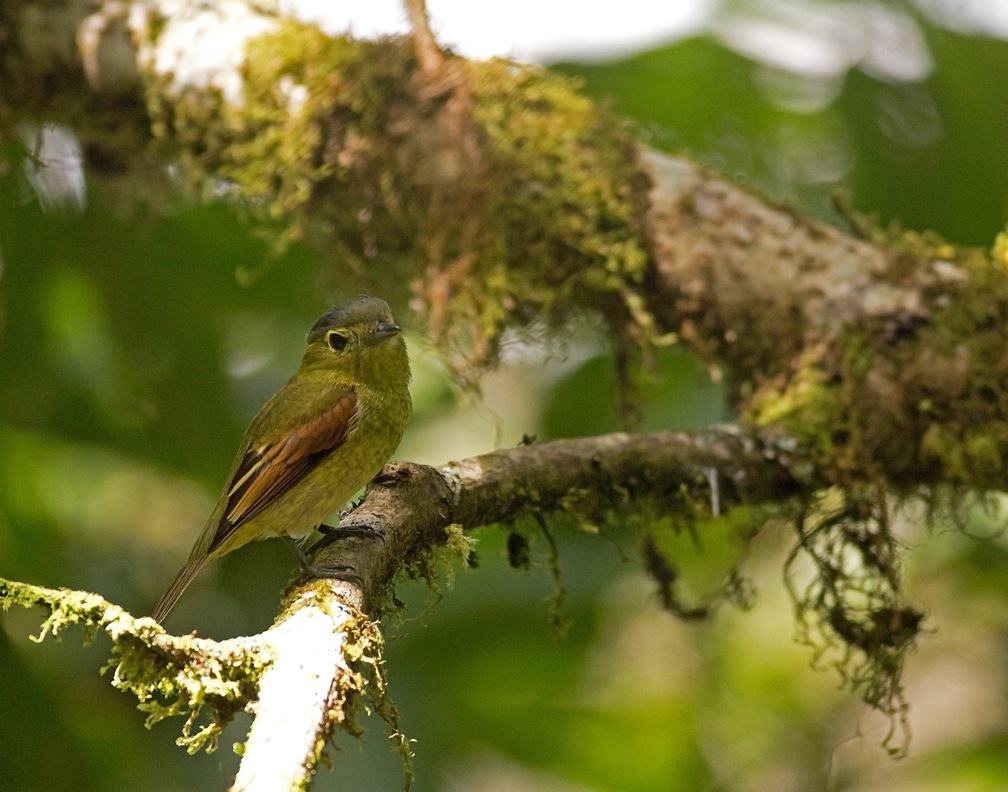
Los Quetzales, Panama
Today’s reptile is the Thorny Dragon, Moloch horridus (Australia) — as its name suggests, this Australian lizard’s body is dominated by intimidating spikes in order to look unappealing and fend off predators.
Occupying scrublands and deserts primarily, the Thorny Dragon’s coloration is perfect for blending in and feasting on ants, its main source of nutrition.
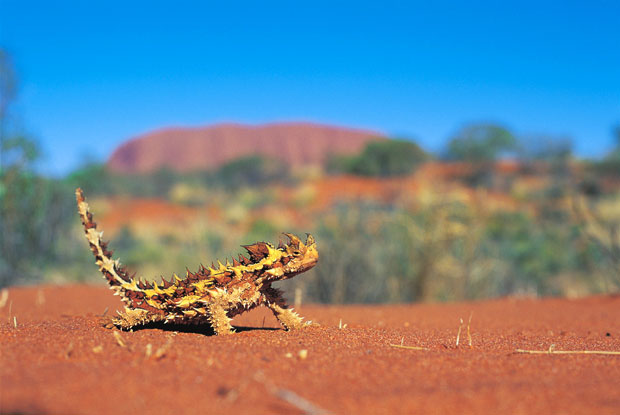
Photo Courtesy: statravel.co.uk
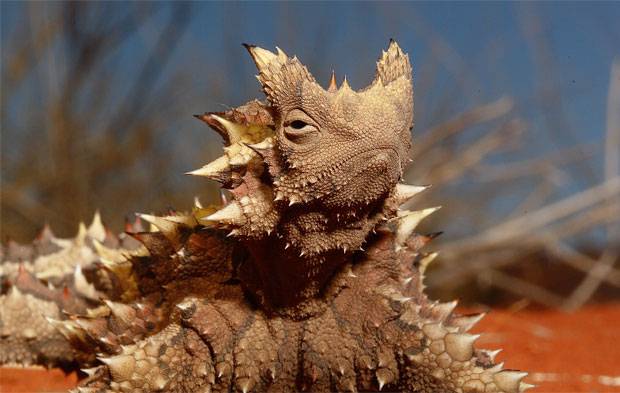
^ The face says it all ^
Photo courtesy: australiangeographic.com.au
There was an uproar, just around the time that Raxa Collective was forming, over Joseph Lelyveld’s biography of Gandhi. Many of us were new to India then, and had not understood just how much, how deeply and in how many ways Gandhi meant more than just history to all Indians. The international news coverage seemed as surprised as some of us, but generally did what they were supposed to do in reporting. This newspaper in particular seemed as objective as possible in reporting about the impact of a book that one of its own former editors had authored. Now, another biography, and we look forward to it. Thanks to the New York Times and their India Ink news service:
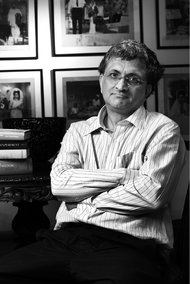
Ramachandra Guha is one of India’s foremost public intellectuals and historians. “Gandhi Before India,” his first volume of a two-part biography of Mohandas K. Gandhi, was published in India earlier this month. India Ink spoke to Mr. Guha about his decision to work on a biography of Mr. Gandhi, his choice to make Mr. Gandhi’s years in South Africa as the first volume of the biography, and Mr. Gandhi’s journey from a boy in the western state of Gujarat to his return to India as a major political figure. Continue reading

(Picture above is from Corbett National Park‘s official website)
I am going to be doing some brief research and write about each of the 53 Tiger Reserves in India from now on. They are governed by Project Tiger, which is administered by the National Tiger Conservation Authority of India.
Project Tiger was established in 1973 to “ensure a viable population of tiger in India for scientific, economic, aesthetic, cultural and ecological values and to preserve for all time, areas of biological importance as a natural heritage for the benefit, education and enjoyment of the people.” Continue reading

Photo Credits: Ullas G
The view from the Anayirankal dam is one of the most popular excursions points in Idukki district. Situated near Munnar en route to Thekkady on the Munnar state highway, the dam is flanked by steep hills and tea plantations, making it a tranquil and scenic picnic spot. Continue reading
 Caleb Crain‘s book review of this biography will no doubt be of interest to any of our readers who follow Seth’s work on the history of environmentalism. Subscription to the New Yorker is required, and worth it, but here is the blurb available to all prior to passing the pay wall:
Jack London never felt that he got enough meat. When he was seven, he stole a piece from a girl’s basket—an incident that he called “an epitome of my whole life.” Although his mother claimed that “he didn’t go hungry in our house!” and a childhood friend recalled being served steak during a visit, London insisted that he had been deprived. “It has been hunger, Continue reading

Photo credits: Ranjith
Ayurveda is science of life. Although Ayurveda is practised all over India, Kerala is perhaps the only state where this science of medicine still follows age-old traditional laws. Marma Points are positions on the body where flesh, veins, tendons, bones and joints meet. Oil therapy is an important Marma Chikitsa, where warm Medicated oils are used in specific Marma points. Continue reading
Thanks to National Geographic‘s Newswatch service for bringing this story, related to SUNY Albany’s work in a part of the world still being explored, to our attention:
The Mayapán Taboo Cenote Project will undertake an extensive exploration of the underwater cave, Cenote Sac Uayum, to document 20+ submerged skeletons and artifacts. Team leader and National Geographic Grantee Bradley Russell will also investigate the modern belief that a supernatural power- a feathered serpent- guards the water within. Continue reading
We can’t let the birders have all the fun, so I’m going to start posting my favorite reptiles & amphibians! (I’m clearly in good company on the subject, however!) These amazing creatures are often unjustly vilified, but if you take a closer look you will realize just how beautiful and unique they are.
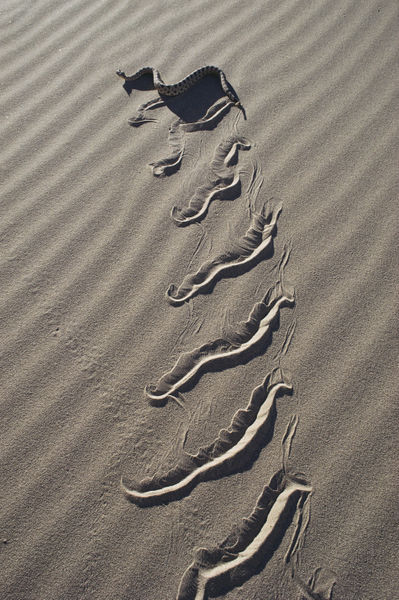
So I will start for now with Crotalus cerastes, the desert sidewinder (SW US/NW Mexico) — This small pit viper is specially adapted to live in the desert, most notably in its locomotive behavior of “sidewinding” which leaves a trademark imprint in sand. Enjoy!


Las Coloradas, Mexico

The spat: For several hours, the noisy sounds of courtship and mating were all Joe McDonald was treated to as he sat, sweltering in the hot sun, in a boat on the Three Brothers River in Brazil’s Pantanal. So when the female jaguar finally emerged from the undergrowth and walked down to the river to drink, he was grateful for the photo opportunity. But that was just a start. After slaking her thirst, the female flopped down on the sand. Then the male appeared. After drinking and scent-marking, he approached the female, who was lying in what appeared to be a pose of enticement. At least, that’s what both Joe and the male thought. She rose, growled and suddenly charged, slamming the male back as he reared up to avoid her outstretched claws. His own claws were sheathed. “I couldn’t believe the energy and intensity of those three seconds,” says Joe. The pair then disappeared into the undergrowth to resume their courtship, leaving Joe with a sense of awe and a rare, winning image. (Joe McDonald / Wildlife Photographer of the Year 2013)
Thanks to Atlantic’s website for bringing this to our attention:
The Wildlife Photographer of the Year competition, founded in 1964, is an annual international showcase of the very best in nature photography. Owned by the Natural History Museum and BBC Worldwide, the contest includes 18 individual categories, ranging from birds and mammals to “Creative Visions” and “Nature in Black & White.” Continue reading

Photo credits: Sooraj
Kummattikali is a folk dance celebrating the arrival of King Mahabali to visit his subjects during Onam. Kummattikali is famous in the north of Kerala, especially the region of Thrissur. It is believed that the presiding deity of Vadakkuumnathan Temple in Thrissur asked the attending spirits to perform for him. The dance they presented came to be known as Kummattikali. Decorated masks carved from wood adorn the face while the body is covered with a grass skirt . Continue reading

Mr. Zimmer’s the one to finally comment on the suspicious similarities between ants and wasps, in blurb form here and in full form linked below to his New York Times column:
Growing up on a small farm, I was able to get to know the insects that lived on the property pretty well. Some I liked, and some I hated. Continue reading
Rocky Mountain National Park, CO

We pointed to this interview he gave some time back, in which he talks about how his company came to be, and what it has meant to him personally. We have enjoyed news stories in the last couple years covering some of his company’s innovative approaches to making their business model viral–not only so consumers are more hooked, but so that other entrepreneurs get hooked on their business model. In our own small way we are fellow travelers, at La Paz Group, with Patagonia’s much older, established business; we hew to the same path even as our particulars could not be more different.
This letter by Patagonia’s founder provides his simple explanation of what this new initiative of the company is all about. The website’s FAQ section explains it all in a nutshell:
…What are the responsibilities of Patagonia Works as the holding company?
The Responsibilities of Patagonia Works:
- Nurture entrepreneurial ventures
- Incubate environmentally responsible companies
- Diversify corporate holdings
- Extend the reach and the influence of the brand to new markets
- Influence the global business paradigm
- Offer a new way to measure return on invested capital
- Provide long-term economic health with consideration of environmental and social risk
- Promote The Responsible Economy, Patagonia’s ongoing environmental campaign
- Provide best-quality shared services and allow each business to focus on product, quality, sales and customer experience

Photo credits: Aaradhana
A Para is a traditional measuring vessel associated with the rice paddy system in Kerala. Customarily the vessels are made of either brass or wood. Filling a Para to overflowing with a paddy offering to God is an important ritual by many devotees. Continue reading
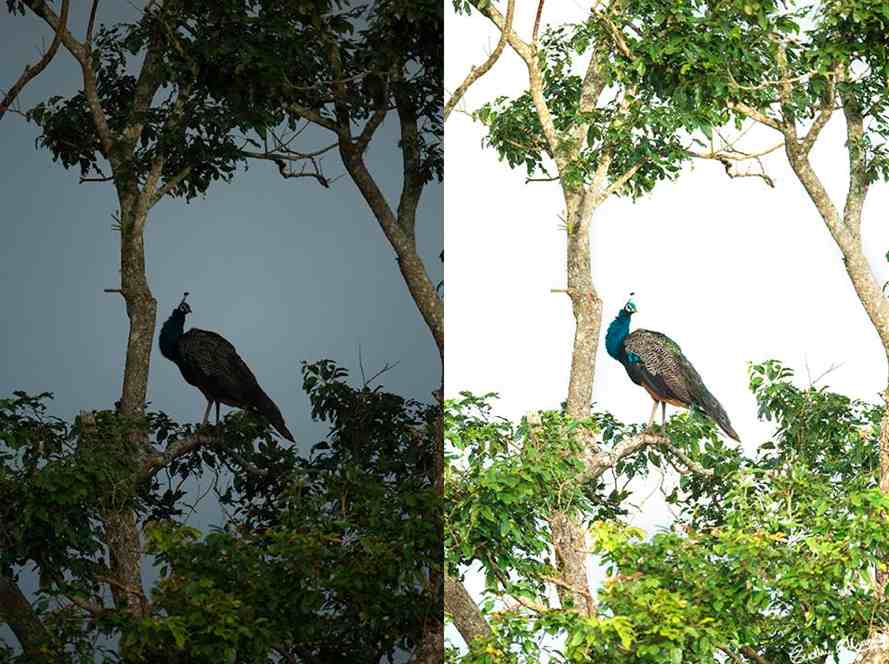
Above is an example of one of the most common issues photographers face when they shoot against the overcast sky. As you can see in the left side image, the camera tries to expose to the background which is very bright and evens it out to a medium tone (core concept of exposure) when you are shooting in evaluative or matrix metering mode.
In this situation you need to understand how the camera exposes and override the camera settings and do an exposure compensation of +2 to +3 stops. When you over expose the image by that many stops, you get the result as shown in the right side image.

