Of Birds and Beans Redux

Shade grown coffee plantations in Costa Rica; photo credit: Emilia Ferreira

What first struck me when I read about the Smithsonian Migratory Bird Center this morning was that their bird friendly coffee certification was a great idea. What struck me second was that I’d read about it before on this site, or at least a teaser on the subject. Chalk not having a “part 2” up to a Cornell student’s busy schedule, but it certainly left the door open for me to discover this wonderful initiative on my own.

We’ve discussed the environmental benefits of shade grown coffee on these pages before, and the Cornell Lab of Ornithology is a La Paz Group “touch stone” in many ways. Leave it to them to so clearly make sense of all the sustainable coffee certifiers on the market from a bird’s eye point of view.

Making Sense of Sustainable Coffee Labels
They’re those little rectangular icons lined up on your favorite gourmet coffee bags—a tree, a flower, a frog, a harvester, each trying to tell you something about how the coffee was grown. But what does each one mean, and how do they differ? Here’s a list of common labels and their benefits for birds….

Bird Friendly. Certified by scientists from the Smithsonian Migratory Bird Center, this coffee is organic and meets strict requirements for both the amount of shade and the type of forest in which the coffee is grown. Bird Friendly coffee farms are unique places where forest canopy and working farm merge into a single habitat. By paying a little extra and insisting on Bird Friendly coffee, you can help farmers hold out against economic pressures and continue preserving these valuable lands. The good news is that there’s more Bird Friendly coffee out there than many people realize—we just need to let retailers know we want it…

Organic. As with other organic crops, certified organic coffee is grown without most synthetic pesticides and fertilizers and is fairly sustainable—although there are no criteria for shade cover. Because of coffee’s growth requirements, it’s likely that organic coffee has been grown under some kind of shade. However, many farmers shade their coffee using other crops or nonnative, heavily pruned trees that provide substantially less habitat for birds, and the organic label offers no information about this. Continue reading

If You Happen To Be In Hillsborough, NC (USA)


We note and share the occasional tributes to careers we might not have had the chance to think about. This post catches our attention just as the earlier ones did, but in particular thanks to the collaborative exploration between father and daughter:

“For the past forty years, my father has travelled around America as a telephone-pole salesman,” Sara Macel writes in the afterword to her forthcoming book, “May the Road Rise to Meet You.” The book is a visual narrative of her father’s professional life, the life he lived separately from their shared family experience. Macel and her father, Dennis, retraced his steps and photographed places he may have passed along the way. Continue reading

The Journalism-Academic Complex

Illustration to John Seabrook's 2011 article "Snacks For A Fat Planet" showing: Indra Nooyi, the C.E.O. of PepsiCo, says it must be a “good company” in a moral sense.

Illustration to John Seabrook’s May 16, 2011 article “Snacks For A Fat Planet” in the New Yorker. showing: Indra Nooyi, the C.E.O. of PepsiCo, says it must be a “good company” in a moral sense.

The Military-Industrial Complex that then-exiting President Eisenhower warned about is unfortunately alive and well, as we saw in the previous decade, when journalists were mostly asleep at the wheel, often even contributors to the dark complex. But journalism has been reborn in some quarters with a new sense of purpose, and new approaches to vigilance that is worthy of the Fourth Estate. Diligent investigative journalism allied with advanced academic research-driven thinking skills produces a better complex.

Case in point: when accomplished academics such as Professor Aaron Chatterji share cogent, punchy follow up posts to articles that caught our attention years back, today’s news on labor activism meets yesterday’s analysis of the intersection of food/health trends and corporate buzz phrases like social responsibility. Thanks to this Duke University professor, New Yorker readers get follow up on a story that might otherwise have been fading, but should not:

Nooyi has backed up her rhetoric with concrete steps, acquiring healthier brands like Tropicana and Quaker Oats and creating Pepsi Next, a lower-calorie version of the flagship brand. She even hired a former official from the World Health Organization to oversee the reforms. Continue reading

Bharathanatyam Makeup

Photo credits : R R Ranjith

Photo credits: R R Ranjith

Bharatanatyam is a famous Indian form of classical dance. Dancers often use bold and colourful makeup to show grace on the stage. The makeup is very thick and dark with a lot of emphasis placed on the eyes, cheeks and lips. Bold use of kohl on eyes and brows help the audience notice expressions. Lots of powder and blush are used to give the face a clear, smooth apperance and lips are bright red to emphasize smiles and pouts. Continue reading

When The Going Gets Tough, Name Names

Bill McKibben is not likely to give up,  but you knew that already. Click the image above to go to the video and the new petition:

Petition to the WMO to name extreme storms after climate change deniers. Continue reading

Bee News, Weekly

Thanks to the Guardian‘s expanding coverage of an important topic with a series that routinely rounds up bee news (yes, it sounds funny, but try living without bees):

About this series

Concerned about the the worldwide bee crisis? Join us for Buzzfeeds, a weekly analysis featuring our resident bee expert Alison Benjamin Continue reading

Thinking, Communicating, Doing

From even just one brief interaction with students and faculty at Brown University, I might have predicted that a leader of that university would be so well suited to make this argument:

…we should embrace the debate about the value of the humanities. Let’s hear the criticisms that are often leveled, and do what we can to address them. Let’s make sure we give value to our students, and that we educate them for a variety of possible outcomes. Let’s do more to encourage cross-pollination between the sciences and the humanities for the benefit of each. Let’s educate all of our students in every discipline to use the best humanistic tools we have acquired over a millennium of university teaching—to engage in a civilized discourse about all of the great issues of our time. A grounding in the humanities will sharpen our answers to the toughest questions we are facing… Continue reading

Ashtami Rohini

Photo credits : R R Ranjith

Photo credits: R R Ranjith

Ashtami Rohini is the celebration of the birthday of Lord Krishna. Also known as Sri Krishna Jayanti, the festival is celebrated during the month of Chingam on the Rohini star in Kerala’s Malayalam calendar, falling this year on August 28 , 2013. For this festival all the temples of Lord Sri Krishna are decorated with lights and devotees visit the temple with children dressed up as Lord Sri Krishna. Continue reading

Fish Feed

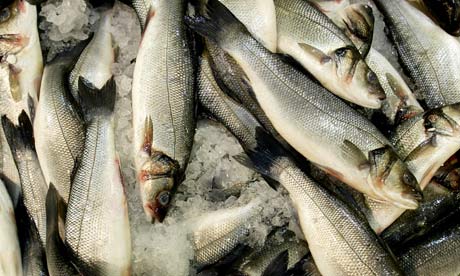
Aquaculture is found world-wide but one irony of the industry is that often wild caught fish are used as feed for their farm raised cousins, which is both counter-productive and environmentally unsustainable. A recent breakthrough by scientists at the University of Maryland Center for Environmental Science’s Institute for Marine and Environmental Technology will make that vicious cycle a thing of the past.

“Aquaculture cannot sustainably grow and expand to meet growing global population and protein demand without developing and evaluating alternative ingredients to reduce fishmeal and fish oil use,” said the study’s lead author, Dr. Aaron Watson.

Supported by another paper published in the Journal of Fisheries and Aquaculture, the team has proven that a completely plant-based food combination can support fast-growing marine carnivores like cobia and gilthead sea bream in reaching maturity just as well as—and sometimes better than—conventional diets of fish meal and fish oil made from wild-caught fish. Continue reading

Pulluvan Pattu

Photo credits : Ramesh Kidangoor

Photo credits: Ramesh Kidangoor

Pulluvan Pattu is the music sung by the caste known as Pulluvas, which means lower caste. It is accompanied by hand-made stringed instruments such as Pulluva Veena.  In Kerala this is the traditional music is associated with the worship of Snake Gods.

Clothing Without Pretension


This may be the only time you find a link related to clothing on this site.  But it is not the clothing that motivates the link.  We liked the way this fellow explained his unique humility, so we have watched the same publication for more surprises.  Here is one. A man of considerable success and apparently little pretension. Artisan ethos.  Nothing about conservation, but a pretty clear sense of community (never mind the blue bloods and rock stars; it is the early morning conversations with the road sweeper that we can relate to) and at least with his five decades of marriage a clear sense of collaboration as well:

What’s the best thing and what is the weirdest thing you’ve ever received?

I have a fan that has been sending me things covered in stamps for over 20 years. I don’t even have any idea who it is, there’s never any letter. Around my desk at the moment I have a red watering can for the garden, a yellow sunflower, a bowling pin, a boat-shaped birdhouse, a yellow chicken and a long piece of wood, all covered in stamps with the address on it. So that’s just one crazy thing. But I get all kinds of things – I just had a little book sent to me, a story about me by a 10-year-old schoolgirl. Continue reading

Foraged Cuisine

The concept of ethical eating isn’t new to these pages and neither is the suggestion that cuisine might be the secret weapon in the fight against invasive species. So we were thrilled to read about chef, artist, environmentalist and social activist Bun Lai’s menus based primarily on what he can forage from his 100 acres of shellfishing grounds off of the Thimble Islands in Connecticut.

The kitchen is the perfect place to exhibit the spirit of exploration and creativity–why not exploit it as a method of controlling ecological pests?

Pondicherry

Photo credits : Ramesh Kidangoor

Photo credits: Ramesh Kidangoor

Pondicherry is the capital city of “The Union Territory of Puducherry”, one of the famous tourist destinations in South India. The main attractions are the backwaters, palm-fringed beaches, fishing villages and the French boulevard town with its French heritage–not to mention the charming and picturesque beach side promenade. Pondicherry was the largest French colony in India with a long and interesting history of trade and war. Continue reading

Iceland’s Fearful Agencies at Work

Námarskarð mud pits, Iceland © Navis Photography

Over the summer, several people have asked me, after I tell them what I’m researching, whether the books I’m looking at are actually enjoyable to read or just another dry primary source, as dreary and monotonous as many travelers found Iceland’s vistas during the eighteenth and nineteenth centuries. As with most things, the answer depends (largely on the book and certain chapters of each book), but for the most part I’ve flipped through hundreds of pages of travel literature with pleasure, not only because I know I’m being productive despite the beautiful day two floors above me outside Cornell’s Olin Library, but also because I find the Victorian British style of these authors–most of the works I’ve read so far were published between 1850 and 1880–quite engaging and fun to read.

Consider, for example, the following excerpts from Sabine Baring-Gould’s description of Námarskarð, an area full of hot mud springs in northern Iceland, in his 1863 book,  Continue reading

Chidambaram Natraja Temple – Tamil Nadu

Photo credits : Ramesh Kidangoor

Photo credits: Ramesh Kidangoor

Chidambaram is uniquely interesting because it is the only temple complex to understood to be built primarily between the 12th and 13th centuries. This temple is dedicated to Lord Shiva. A huge Shiva Ganga tank is the one of the main attraction of this temple. Continue reading