The Last Bookstore

Photography credit Scott Garner.

Thanks to Paris Review, and particularly Casey N. Cep, for a reminder of why bookstores have more meaning than other forms of merchandising:

…Our inheritance felt large, but it was the sawhorses that I most admired, especially when my father put them to use constructing bookshelves for my bedroom. My father was no stranger to construction; he built the log cabin in which I was raised. He inherited not only tools but also skills from his father, so he was able to cut, stain, and install the wide bookshelves on my bedroom walls in no time. The shelves were required to house my growing library, acquired book by book in a thrilling sequence of gifts, purchases, and trades. Continue reading

Boys, Girls, Science And Geek Myths

Thanks, as always with Natalie Angier, for incisive reportage on an important scientific concern:

Peter Ostrander, the tireless coordinator and cheerleader for a renowned science and mathematics magnet program at Montgomery Blair High School in Silver Spring,  Continue reading

Kolam – Tamil Nadu

Photo credits : Renuka Menon

Photo credits: Renuka Menon

Kolam is a traditional form of street painting in Tamil Nadu that is created using colored rice powder. The designs are based on simple elements such as loops, dots and geometric patterns. Women create these auspicious patterns in front of the household deities in Pooja rooms and the area just outside the entrance of their houses.

Continue reading

Brought To You Live, From The Bugaboos

This slideshow requires JavaScript.

It’s been a pleasure sharing our story here with #thenewyorkermag. Today is the last day of our posts. Thanks for following from the whole crew: @alexhonnold@conradclimber@jimmy_chin@robfrostmedia@renan_ozturk. Photograph by Conrad Anker.

The photos themselves offer a moment of escape.  That is sufficient, but you might want to read the captions (like the one above, which accompanies the last photo, of the climbers smiling), in which case go to the post on New Yorker‘s website.  Better yet, the whole interview with Renan Ozturk excerpted here, is there:

What is your background, both as a climber and as a filmmaker, artist, and photographer? Continue reading

Greece Is Feeling The Love

Several of the most frequent contributors to this platform walked together in this quintessentially Greek passageway in 2008–the quality of the light, the stone, the feel this image gives can take you straight back to Greece for a moment if you let it.  So can this blog post from Messy Nessy, a new acquaintance:

Traveling the roads of Greece these past few days, it hasn’t taken long for the dollhouse-sized roadside chapels to become a bit of an obsession for me– which means stopping the car at every single one to snap a photo, of course. Some are elaborate little things made of terracotta or even marble, plonked in the middle of nowhere, high up in the mountains; no village or houses for miles, and yet impossibly, most of them are faithfully maintained with a candle always burning inside.

Continue reading

Botanical Garden – Ooty, Tamil Nadu

Photo credits : Renuka

Photo credits: Renuka

Ooty Botanical garden was designed in 1847.  One of the central features of the 55-acre property is a fossilized tree trunk believed to be 20 million years old. Other highlights include rare tree species, exotic and ornamental flowering bushes and plants, and a conservatory containing ferns and orchids. Continue reading

Flavours of Kerala – Boiled Tapioca

Boiled Tapioca and Green chilies chammanthi

Boiled Tapioca and Green chilies chammanthi

Native to Brazil where it is known as Manioc, tapioca is the most popular ingredient in Kerala cuisine, second only to coconut. A large variety of delectable dishes can be prepared from this starchy root vegetable. One example is boiled tapioca and green chilies chammanthi, which are often eaten as evening snacks. Continue reading

Cornell Herpetology and Ornithology

African Superb Starling specimen from Cornell’s collection. Photo by Jon Atkinson for students taking BIOEE 4750 – Ornithology.

During each of the spring semesters in my second and third year at Cornell, I took an advanced biology course that focused on one big group of vertebrates that I’ve always found both interesting and beautiful to study both in and out of school: birds and ‘herps’, or reptiles and amphibians. In the university setting, there is a half-joking rivalry between biologists who study these groups, leading to this type of crude but funny cartoon that can be seen on the office doors of at least one professor in Cornell’s Corson-Mudd Hall, home of the Ecology & Evolutionary Biology Department.

Continue reading

Stories from the Field: Lakkavalli Forest Range, Bhadra Wildlife Sanctuary

Lakkavalli Forest Range, Bhadra Wildlife Sanctuary

Lakkavalli Forest Range, Bhadra Wildlife Sanctuary; photo credit: Sudhir Shivaram

On Global Tiger Day Amie introduced the idea that I’ll be sharing my experiences as a wildlife photographer. Much of my time is spent doing workshops throughout India, but I’m happy to reach into the archives of my pictorial adventures to share with Organikos readers.

This is a safari from my earlier days photographing wildlife, and it’s an experience that I’ll always remember! It was around 1 pm when we reached the Lakkavalli Forest guest house, situated on top of a hill, overlooking the Bhadra dam. The road was good and the drive was quite scenic. We took the Bangalore-Tumkur-Tiptur-Arsikere-Tarikere route. As soon as we reached the guest house, we took our gear and headed into the forest. Though it was 2:30 in the afternoon and we knew that it wasn’t the best of times for spotting wildlife, we wanted to spend more time in the forest.

The forest was crawling with millions of Giant Wood Spiders. The webs spread across trees, with arachnids waiting patiently for their prey. The Lakkavalli range has a good concentration of mammals, but our timing wasn’t great on the first day. An interesting fact about the Bhadra Wildlife Sanctuary is the work done by the then DFO, Mr. Yatish Kumar, who was successful in re-locating 17 villages from within the sanctuary to the outskirts of the park. As the forest officials say, people in these villages admire him so much for his accomplishments, that they have named one of the villages as Yatish Nagar. The day’s sightings were limited to some Deer, Sambars and Gaurs. We came back to our guest house just in time for some spectacular sunset scenes.

Photo credit: Sudhir Shivaram

The next morning, driver Suresh along with guard Shivarudrappa picked us up. At the sanctuary entrance a forest watcher joined us. We were very eager to sight a tiger, as a particular route (Paramagudda) was quite famous for frequent tiger sightings. We never knew what the forest had in store for us but it turned out to be my most memorable safari to date. An hour’s drive into the forest yielded nothing. Suddenly the watcher, seated at the back of the jeep shouted, “Chirte sir, Chirte” (Leopard sir, Leopard). Continue reading

Krishnapuram Palace – Alappuzha, Kerala

Photo credits : R R Ranjith

Photo credits: R R Ranjith

Krishnapuram Palace is located in Kayamkulam, in the Alappuzha district of Kerala. The palace was built in the traditional Kerala style of architecture during the 18th century by King Anizham Thirunal Marthanda Varma. Continue reading

Traditional Duck Farming of Kerala

This slideshow requires JavaScript.

If you visit Kuttanad, Kerala at a certain time of year, you are able to hear on the rice fields a noise one might not expect, the quacking of ducks. It is not the sound of a few ducks, but the sound of thousands. In Kuttanad when the harvest season is finished duck farmers move in, and take their flocks through the pre-designated rice fields for feeding.

Aby, a 38-year old duck farmer calculates that his 10,000 ducklings are worth around Rs. 24 lakh. According to him, if the ducks survive through the period, one can save up to Rs. 5 lakh a season, despite expenses for medicine and daily wages for his helpers.

This is a livelihood for many of the farmers, but their process differs greatly from many of the commercial duck farmers you will see in the United States. Some US duck farms can process up to 70,000 ducks per week at a single site, but the good news is that duck farmers who visit Kuttanad have neither the facilities nor manpower to produce or maintain such large quantities. Instead these farmers spend 6 months of the year keeping their flocks on the move, to keep them feeding until they are ready to sell. In some ways this is the definition of “free range” meat, but at what cost? Continue reading

Bees Provide Much

Earlier this week we highlighted a new clearing house for bee news, and now we have come across another, deeper well of knowledge related to bees, and all that they do/provide more than honey. Who knew, for example, that among the important physical realm issues he pondered, bees figured into this man’s thinking:

“If the bee disappeared off the surface of the globe then man would only have four years of life left. No more bees, no more pollination, no more plants, no more animals, no more man.” Albert Einstein

This and more, from CIBER (Centre of Integrative Bee Research) at the University of Western Australia in Perth, Western Australia. Their cross-disciplinary research team includes: Continue reading

Photographic Wonder

Marvin Heiferman. Photo: Alex Welsh/WIRED

We know that one day, hopefully not too far off, the wunderkind of La Paz Group’s photographic contributors will get his gear fired up and we will be displaying his latest wonders here again. We hear that his hiatus in Ithaca, NY since about one year ago has run its course, full of fascinations, back-looking reflections, photographic recapitulations, and even small distractions. Onward, westward, as ancestors of his did in previous centuries. More from Milo soon, we hope.

Meanwhile, on the topic of photography and wonders, Wired offers an interview to illuminate what might not otherwise be obvious at first glance:

For his book Photography Changes Everything, Marvin Heiferman spoke to experts in 3-D graphics, neurobiology, online dating, the commercial flower industry, global terrorism, giant pandas, and snowflake structure to understand the infinite ways imagery affects our everyday lives… Continue reading

Uchipillaiyar Temple – Trichy, Tamil Nadu

Photo credits : Ramesh Kidangoor

Photo credits: Ramesh Kidangoor

The  Rock Fort at Trichy is a famous and fascinating architectural marvel that is built on an 83 meter high rock, rising above the plains of Tamil Nadu. At the top of the rock is the Uchipillaiyar Kovil Temple, dedicated to Lord Vinayaka. Continue reading

Discovery, Conservation’s Better Half

Wilderness conservation, marine or terrestrial, is difficult. On a good day the challenge might be described as a complex puzzle, which has its pleasures; but on most days it is slogging and increasingly, dangerously warlike.

On the best days, we observe, conservationists have the thrill of discovery. Thanks to the Guardian‘s commitment to reporting on the environment, and specifically for this story that highlights that discovery of species is an ongoing enterprise, one more reason why posts like this, and this, among others are so important in getting us all to do our part:

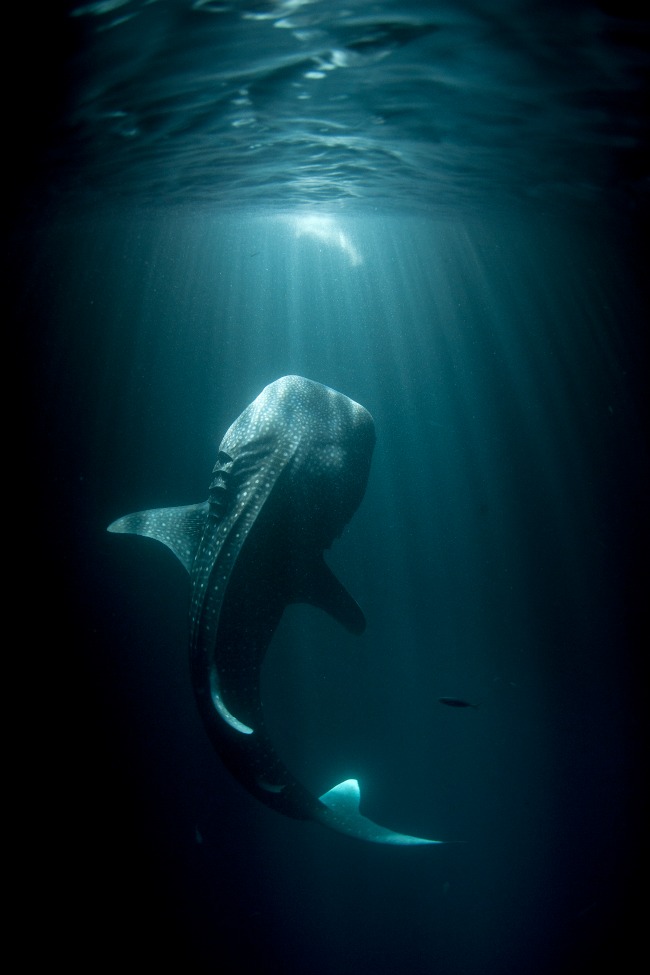
‘Walking shark’ discovered in Indonesia

Previously unknown fish, Hemiscyllium halmahera, uses its fins to move along the sea bed in search of crustaceans Continue reading