Understanding Better How Our World Works

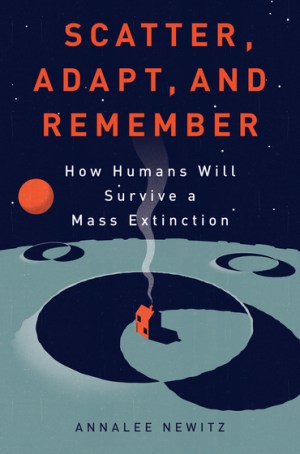
We are frequently late to the party. Fortunately it is often just in the nick of time.  This time, thanks to one of the podcasts we regularly listen to for exactly this purpose, we re-discovered Rose George (having first learned of her through her book previous book, The Big Necessity) and discovered her new book as it hits the market. There does not appear to be much in direct relation to community, conservation or collaboration  within this book, but we appreciate the author’s dedication to a topic that helps us understand better how our world works:

On ship-tracking websites, the waters are black with dots. Each dot is a ship; each ship is laden with boxes; each box is laden with goods. In postindustrial economies, we no longer produce but buy. We buy, so we must ship. Without shipping there would be no clothes, food, paper, or fuel. Without all those dots, the world would not work.

Freight shipping has been no less revolutionary than the printing press or the Internet, yet it is all but invisible. Away from public scrutiny, shipping revels in suspect practices, dubious operators, and a shady system of “flags of convenience.” Continue reading

India’s Recycling Communities

Scrap waste collected in Bholakpur Photo Courtesy of The Hindu

Scrap waste collected in Bholakpur
Photo Courtesy of The Hindu

What happens to obsolete computer or the animal skins from meat factories?

The majority of people couldn’t answer whether these items are recycled or landfilled. A recent article in The Hindu gives some insight into what happens to these items in Bholakpur, a small area of Hyderabad, and it is a surprisingly important industry. Much of what might be considered trash in the Hyderabad area plays an important role in in the community being recycled by families, and resold on the secondary market.

Once inside (Bholakpur), the animal skins go to one of the 200 skin processing units and the plastic and iron scrap to one of the 500-odd plastic or 300-odd iron scrap dealers. There it is sorted and either cleaned up and resold, or ground, melted and transformed into raw material for industrial use. Thus giving new life to waste and also earning a living for the people involved in the process. This includes over 60 per cent of the ward’s 36,000 voter population.

These recycling communities don’t just exist in the Hyderabad area, but also in many of the large metropolitan areas in India. Continue reading

Icelandic Hell-broth

Krafla, Iceland. Photo © Land & Colors

In the Middle Ages, Iceland’s Mount Hekla was commonly thought of as a mouth of Hell, from whence one could hear the cries of the damned and even see their spirits haunting the peak — if the raging flames of hellfire weren’t blocking your view, that is. A few hundred years later, describing imagery as infernal or unearthly was still popular in travel accounts, as we saw in the case Reverend Sabine Baring-Gould’s thoughts on Námarskarð. Given the image above and those from the mud pits in the linked post, it really isn’t too surprising, especially after you consider that to reach these chthonic scenes the travelers had been riding ponies over a “tortuous and wretched” landscape of lava.

Continue reading

Cheetahs And Shepherd Dogs, Partners In Entrepreneurial Conservation

Thanks to a friend’s travels to the southern tip of Africa, a story from the field about colleagues we hope to meet soon. The friend learned of this program during a visit to a Cape Town winery (cheers to them and that; click the logo to the right to read more than we can share here):

Cheetah Outreach

Promoting the survival of the free ranging, Southern African cheetah through environmental education and delivering conservation initiatives.

As a result of the success of Cheetah Conservation Fund’s livestock guarding dog programme in Namibia, a trial programme was launched by De Wildt’s Wild Cheetah Management Project (WCMP) and Cheetah Outreach in 2005 to introduce the Anatolian shepherd to serve farmers in South Africa. To give this trial the best possible chance of success, farmers  Continue reading

Kizhi – Ayurvedic Treatment

Kizhi

Kizhi

Ayurveda is the science of life. Mythology says that this science of healing originated in the cosmic consciousness of Brahma – The Creator. Kizhi Treatment is a therapy where heated herbs and medicinal oil is tied in cloths and used as a bolus on the effected body part. Continue reading

Walking the Talk

Nowadays people are sitting 9.3 hours a day, which is more than we’re sleeping, at 7.7 hours. Sitting is so incredibly prevalent, we don’t even question how much we’re doing it, and because everyone else is doing it, it doesn’t even occur to us that it’s not okay. In that way, sitting has become the smoking of our generation.

If business innovator Nilofer Merchant had her way there would be a “surgeon’s general warning” placed on desk chairs around the world. But she isn’t only referring to the health reasons why we shouldn’t be sitting as much as we are. Continue reading

Athapookalam

Photo credits: Ramesh Kidangoor

Photo credits: Ramesh Kidangoor

The first day of the Onam celebrations starts on Atham day during the Malayalam month of Chingam, which this year falls today, 7th September 2013. The date is ten days before Thiruvonam. The creation of Athapookalam is an important part of every Onam festival. This special, circular arrangement of flowers  is one of the most iconic Onam traditions. Continue reading

It’s Never Too Late

Recycling In India

Photograph Credit: mackenzienicole

To be completely honest, helping the environment had rarely been a crucial concern of mine.  Actually, that’s an understatement: Helping the environment had rarely been a concern of mine at all.  Growing up, my parents tried to nudge me the right way.  For example, they always told me not to waste food – the theme of this year’s World Environment Day.  However, it didn’t actually sunk in.  At buffets I would take more food than I actually needed so I could try everything before it was gone. To me, this was well justified – we were paying the same amount regardless of what we took, right? I even scorned my parents’ initiative to use fluorescent light bulbs in the house; I didn’t see the benefit of using light bulbs that took a while to light up.

This past summer I decided to come to India and intern for Raxa Collective to experience something both culturally and professionally different.  From the moment I arrived I was amazed at the passion with which Amie, Crist, and the rest of the Raxa Collective staff operated.  Cardamom County already had numerous eco-friendly initiatives in place such as their natural farm, composting, and the use of glass water bottles in the restaurant, solar panels to heat the water in the kitchen, and compact fluorescent lighting (CFL).  However, it was evident that the Raxa Collective staff was not willing to settle.  Continue reading

Nagarhole National Park – Karnataka

Photo credits : Ramesh Kidangoor

Photo credits: Ramesh Kidangoor

Nagarhole National Park (also known as Rajiv Gandhi National Park) is among the most well maintained wildlife reserves in India.  Located in the state Karnataka, this national park has an abundance of fauna, including large mammals such as wild elephant, bison, tiger, leopard, wild dog and spotted deer. Continue reading

Saving a Gentle Giant

1,600 WWF's Paper mâché pandas representing today's Giant Panda population

1,600 WWF Paper mâché pandas representing today’s Giant Panda population
Photo Courtesy of National Geographic

The Giant Panda is the logo for WWF, the world’s largest conservation organization and it isn’t hard to see why they’re such a successful symbol. Their black and white coloring, and compellingly large eyes have tugged on the heartstrings of millions of people around the globe. This past week the newest baby panda was born at the Washington D.C Zoo.  Mei Xiang’s cub was welcomed with applause and awe from around the world, but this event has also brought about some questions about the money going into WWF for saving the Giant Panda. National Geographic recently addressed this issue.

Is the considerable effort and millions of dollars put into breeding the animals in captivity really worth it?

Some conservationists say yes, claiming public “pandemonium” can translate to real conservation action. But others argue that the money could be better spent on other things, such as preserving threatened habitat.

Statistically, Giant Pandas have a lot stacked against them for the survival of their species. First, there are approximately only 1,600 individuals in the world today, and of those, 300 are held in captivity. Secondly, according to biologist Devra Kleiman, the Giant Pandas have a very small mating window. The female panda is only “in heat” for 2-3 days a year, and thirdly, the natural areas where the panda thrives are fractured and damaged, making it less likely that a pair will find one another easily during that limited period of time.

Continue reading

Hermes, Circa 1969

As one of the contributors referred to in this post, and as the one who took the photographs in that post, it occurred to me that I should comment further on the reference.  And in doing so, perhaps I could add to the small collection of personal statements that have been gathering on this site since mid-2011.  I am 100% sure I took the photograph above during that same visit to Greece in 2008.  As I snapped this photo my mother was at my side and we both remembered having stood in the same spot in 1969. Continue reading

Ooty Lake – Tamil Nadu

Photo credits : Renuka Menon

Photo credits: Renuka Menon

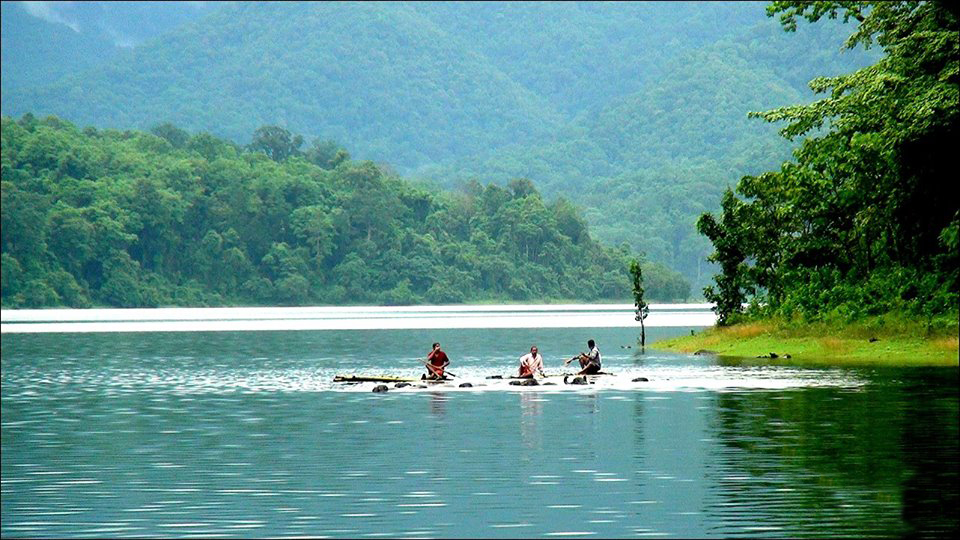
Located in the Nilgiri district, Ooty Lake was constructed in 1825 at the urging of the Coimbatore collector Mr. John Sullivan. At the time it was built in order to provide irrigation to the people of the region.  Continue reading

Debt Is Not Desirable And Prison Is Not Pretty, But Debtors’ Prison?

You can see what the publisher has to say about this book by clicking on the image to the right.  You can read about the book and its author, and even sample an excerpt. But our attention was brought to the book via this site, which provides a different excerpt from the book. We find this one intriguing because we see the author’s use of a literary figure to make a point about economics, entrepreneurship, risk-loss-gain tradeoffs, morality, civic duty and more:

“On October 29, 1692, Daniel Defoe, merchant, pamphleteer, and future best-selling author of Robinson Crusoe, was committed to King’s Bench Prison in London because he owed more than 17,000 pounds and could not pay his debts. Before Defoe was declared bankrupt, he had undertaken such far-flung ventures as underwriting marine insurance, importing wine from Portugal, buying a diving bell used to search for buried treasure, and investing in some seventy civet cats, whose musk secretions were prized for the manufacture of perfume. Continue reading