Herpetologist Confidential

This slideshow requires JavaScript.

Thanks to the scientific journal Nature, the history-biology continuum is alive and full of intrigue as the story below shows (click here for a podcast related to the same story):

Before leaving for the Philippines as an undergraduate in 1992, Rafe Brown scoured his supervisor’s bookshelf to learn as much as he could about the creatures he might encounter. He flipped through a photocopy of a 1922 monograph by the prolific herpetologist Edward Taylor, and became mesmerized by a particular lizard, Ptychozoon intermedium, the Philippine parachute gecko. With marbled skin, webs between its toes and aerodynamic flaps along its body that allow it to glide down from the treetops, it was just about the strangest animal that Brown had ever seen. Continue reading

Winter Arrivals

An exhausted winter arrival

Yesterday I encountered the first Brown Shrike for the season at Daroji Bear Sanctuary, near the town of Hampi, Karnataka.

For me, the appearance of the Brown Shrike is an indication of the winter migrants arrival. In previous years my first sightings have been in October, but they’ve arrived earlier this year.

I saw and photographed 2 individuals. One was totally worn out, probably because of the long, tiring migration from as far north as Siberia. Continue reading

Onam Celebrations – 2013

Photo credits : Ramesh Kidangoor

Photo credits: Ramesh Kidangoor

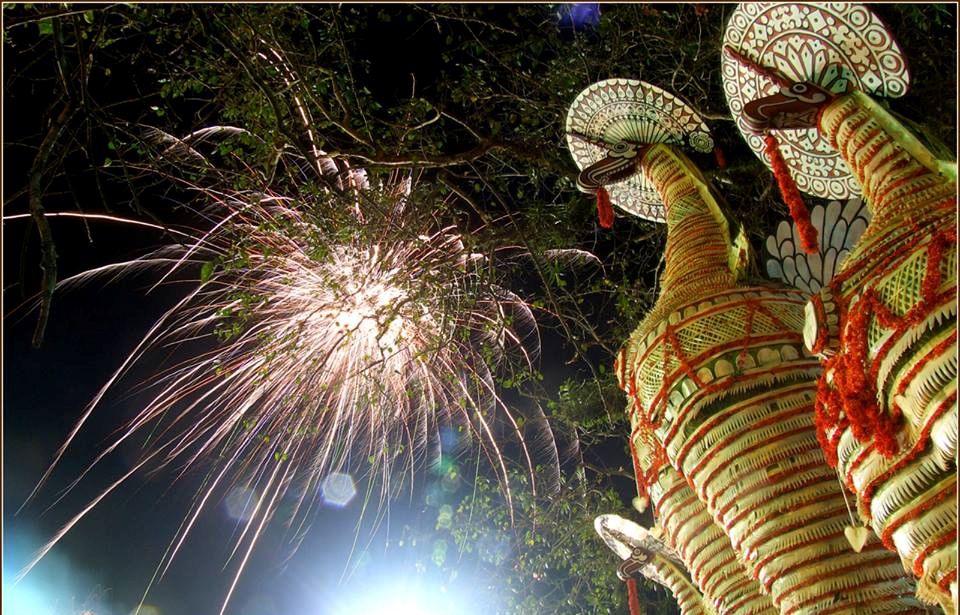
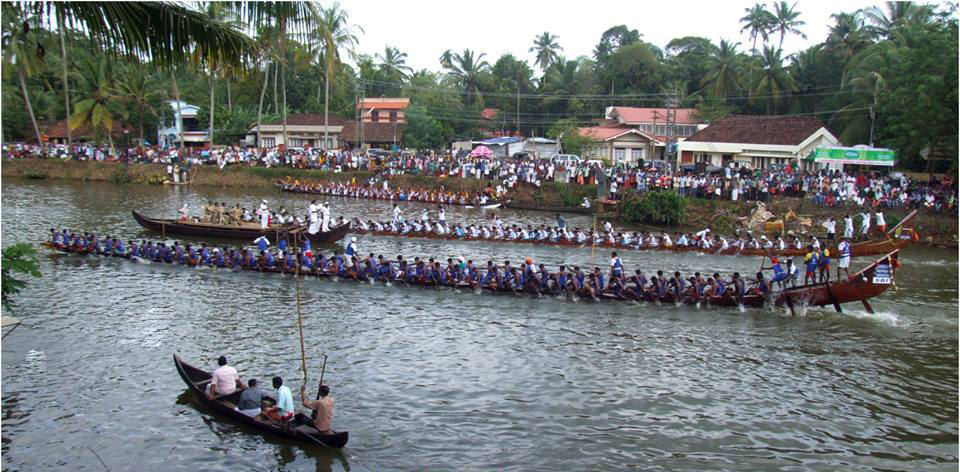
Kerala is a land of celebrations and Onam in particular transcends regional and religious profiles. Of the many festivals that are celebrated here, Onam is the most spectacular event of all. It celebrates the return of King Mahabali, who sacrificed his life to save his people but is said to visit his subjects annually at the harvest time. Continue reading

Charisma & Conservation

The video above stands on its own, worthy of a few minutes, but it brings to mind the role of charisma in conservation. We find it easier to worry about large, iconic species. Some creatures are brought back from the brink of extinction, only to experience the same fear and hatred, or worse, fate that brought them to that brink in the first place.  The editorial below, from today’s Guardian, reminds us that the uniquely human form of charisma called celebrity plays its own role, raising interesting questions.  Why celebrate not vultures and their mostly unknown guardians? Adam Welz has a few relevant thoughts:

My last post was about the need to reduce demand for rhino horn and ivory in Asia to stem Africa’s current poaching crisis. This week my inbox bulged with photos of mega-celebs trying to do just that.

Actor Edward Norton filmed a couple of public service announcements in New York on Tuesday to raise awareness of the illegal ivory trade, and yesterday Prince William, David Beckham and basketball player Yao Ming got together in London to film another brace of spots about rhino and elephant killing. The ads will go out this year as part of campaigns put together by the nonprofit WildAid, working in conjunction with other organisations. Continue reading

Citizen Science in Belize – Update – If You Can’t Beat’em, Wear’em

Lionfish spine earrings crafted by Palovi Baezar, Punta Gorda, Belize. Credit: Polly Alford, ReefCI

In earlier posts about my volunteer experience in Belize with ReefCI, I talked about the lionfish invasion that is threatening coral reef and other marine ecosystems throughout the Caribbean, Gulf of Mexico, and Southern Atlantic Seaboard of the United States, and noted that, at least for the foreseeable future, human intervention, particularly the establishment of a commercial fishery for the species, appears to be the only solution to keep the invasion under control.

I mentioned the idea of lionfish jewelry as a possible way of increasing the economic return to fisherfolk who may otherwise be reluctant to go after lionfish given the difficulty of catching them (the fish must be harvested by spearing or hand netting rather than through traditional methods such as lines or nets). I’ve been pleased to learn that at least one artisan in Belize has picked up on the idea, using some of the lionfish spines that I collected while I was there. She has already crafted some beautiful earrings (see photo above) and is working on other jewelry items as well as decorative mirrors. Elsewhere, jewelry crafted from lionfish tails and fins is being sold online, and through a retail outlet in Curaçao.  Continue reading

Helping Kerala: Transatlantic Collaboration

Western Ghats

Western Ghats

Kerala State Biodiversity Board (KSBB) has recently joined with the University of Alabama (UA) in Huntsville to help improve Kerala’s landslide alert system and the conservation of the Western Ghats. Both projects are currently in the development phases for testing, but implementations of such projects in Kerala could have profound and lifesaving affects. According to an article in The Hindu, a landslide alert system would be able to help predict landslides and give advanced warning to the authorities in the area.

Placed one kilometer apart above ground, the sensors, which cost about $300 each, register ground movement and record rainfall and soil moisture. The data is transferred to an off-site computer hosting a software model that provides advance warning of a landslip.

If testing proceeds, KSBB would place this system first in the Idukki district, an area known for having multiple landslides during the monsoon season. Predicting landslides in this area can save hundreds of lives, but this landslide alert system is not the only project in development that involves the UA and the KSBB working together to protect this region.

Continue reading

ISKON Temple – Bangalore, Karnataka

Photo credits: Dileep

Photo credits: Dileep

The Sri Radhakrishnachandra Temple in Bangalore is part of the International Society for Krishna Consciousness (ISKON). It attracts visitiors from different parts of the world that include spiritual devotees and students of architecture. Sri Radhakrishnachandra temple is one of the largest ISKON temple in the world. The gopurams were made with special technology using ferro cement. Continue reading

Flavours Of Kerala – Parotta

Parotta is a layered flat bread of Kerala, related to the Lacha Paratha of north India. Although it is found in many roadside restaurants, it is often served in special events and festivals. Parottas are eaten with chicken, mutton, beef and vegetable gravy. The main ingredients of parottas are Maida (white flour), baking powder, egg, vegetable oil (or ghee) and water. Continue reading

Obviously Worth A Look

Avid consumers of Malcolm Gladwell’s scientific gumshoe writings for the masses, occasional consumers of Daniel Kahneman‘s constant illuminations of cognitive science, and those who just watch out for randomly passing-by phenomenal thinker/researcher/writers, will likely appreciate this from the Cornell Alumni Magazine profile of Watts:

A central part of Watts’s argument is that hindsight isn’t 20/20; it’s reductive and unreliable. In a section on the Mona Lisa, for example (see excerpt), he discusses how the painting languished in relative obscurity for centuries, only becoming world famous after it was stolen from the Louvre in the early 1900s—but since the idea of its greatness owing to a fluke is so inherently unsatisfying, people ascribe post-facto “common sense” explanations. (It’s the smile! It’s the fantastical background! It’s the genius of Leonardo da Vinci!) Continue reading

Big Day Arizona

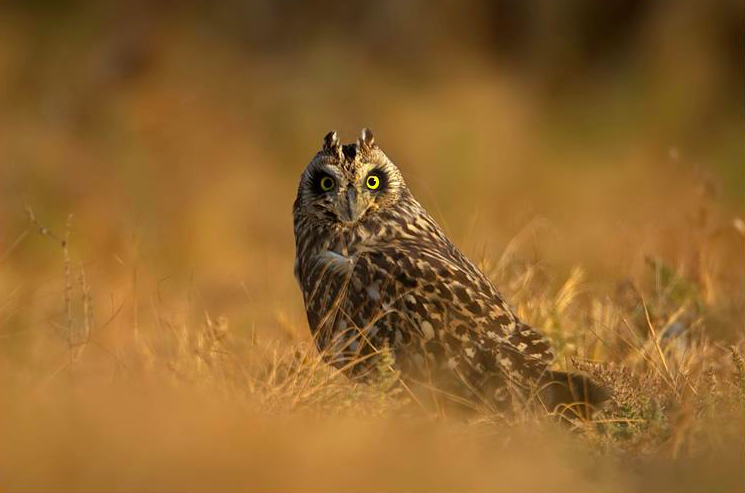
Northern Saw-whet Owl from Rustler Park

Northern Saw-whet Owl from Rustler Park

As we pulled up to the Rustler Park Campground parking lot in the Coronado National Forest a light rain began to fall.  Graham and I turned to each other upon arrival and with the same quizzical tone wondered, “Why is there someone else up here?”  The lights of another car illuminated the area and once we parked a man approached us.  There was a knock on my window as his flashlight blinded me.  I began the conversation puzzled and slightly alarmed, “Hey…how you doing?”  He announced himself as Portal’s lieutenant police officer and he asked to see our identification.  As I got out of the car to retrieve my id I noticed another ten or so officers standing behind the car.  When he asked what we were doing there at this hour and I replied “Birding” we received an expected response: “Birding? It’s midnight”.

This was hardly the way I imagined our Big Day would begin, but I suppose being searched to see if we were drug traffickers was an appropriate way to start our 24-hour birding adventure in the Chiricahua Mountains of Southeast Arizona. After trying to explain what a Big Day was (a whole day of non-stop birding in an attempt to see as many species as possible during that time) the officer hesitantly departed.

We didn’t have much time to think about this interaction, because our day was about to begin.

I gave Graham the countdown as my phone read, 11:59:45, 15 seconds, 10 seconds, 5 seconds, and Go. We immediately cupped our hands to our ears. There were three night birds we desperately needed at high elevation, and each was just as hard as next. A “sweep” of these three species would be unlikely to say the least. We did have one thing going for us though. For the past two months we had been interning at the Southwest Research Station just up the mountain from Portal. For those two months we had done almost nothing but bird. We knew specifically, sometimes down to a certain tree, where we could find each bird on our target list.

So as the clock struck midnight we were standing at the bathroom at Rustler Park listening for the rarest owl in the Chiricahuas, the Northern Saw-whet Owl. Graham and I used double playback, meaning I played the bird’s call and he would respond as a second bird; this strategy usually has a higher success rate of eliciting a call. To our delight we heard the tooting call of the owl echoing off the canyons. On a normal day we would want to see this bird, but today was far from normal. We were solely after numbers, and in the birding world an aural identification is sufficient. Once we got the Saw-whet we headed up the trail to the Forest Service cabins and began playing the Flammulated Owl. Our recordings weren’t loud enough, so I had to do it the old fashioned way and emulate the call myself. Based on my experiences in these mountains this particular owl is the most sought-after bird because it is the hardest to find. During the summer internship I received numerous emails from fellow birders asking where to spot it. But at the moment those other birders were certainly not our problem—getting this owl to respond was! Continue reading

Vadam Vali (Tug of War)

Photo credits : Ramesh Kidangoor

Photo credits: Ramesh Kidangoor

Vadam Vali is a traditional game played by both men and women during the Onam festival. In this team event each team works to show their strength and unity by pulling their opponents across the center line.  Continue reading

If You Happen To Be In Amsterdam

Alex Ruger, director of the Van Gogh Museum in Amsterdam, at the unveiling Monday of Vincent Van Gogh’s Sunset at Montmajour. Olaf Kraak /AFP/Getty Images

National Public Radio in the USA picks up this remarkable story, which makes us think of Amsterdam in the autumn as a wonderful place to be:

A painting that had earlier been thought to be a fake and had been stored for decades in the attic of a Norwegian home has now been identified as a long-lost work by Vincent Van Gogh.

Continue reading

Vinayaka Chathurthi – 2013

Photo credits : Ramesh Kidangoor

Photo credits: Ramesh Kidangoor

Vinayaka Chathurhi is celebrated throughout India by Hindus with a great enthusiasm on the birthday of Lord Vinayaka (Lord Ganesha) the elephant-headed son of Lord Shiva and Goddess Parvathi.  This year Chathurhi fell on September 9th. Continue reading