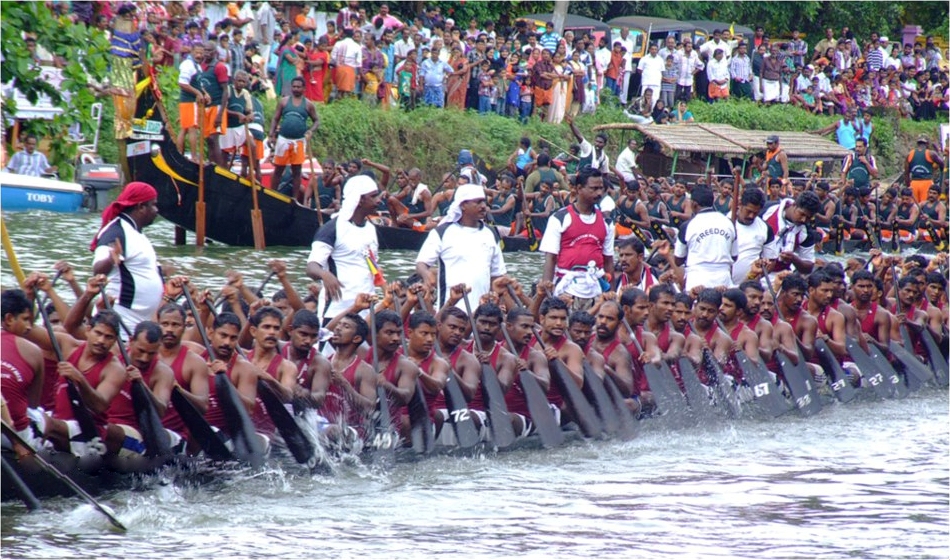
What is now known as the Nehru Trophy Boat Race, which is held every year at Punnamada Lake in Alappuzha on the second Saturday in August, was first held to commemorate the visit of the Prime Minister, Pandit Jawaharlal Nehru, in 1952. Around 16 boats take part in this fiercely contested event that attracts an enormous number of spectators annually. Continue reading
Accordion’s Life Line, Alex
This is another in the series, on the New Yorker‘s website, providing short glimpses into the craft work of New York City. Click here to go to the video and source of this text:
For forty-five years, Alex Carozza has run a small accordion shop near Times Square. It’s one of the last fixtures of the old Music Row on Forty-eighth Street, and Carozza, after a lifetime of repairing musical instruments, still works six days a week while teaching some younger apprentices the skills of the trade. Continue reading
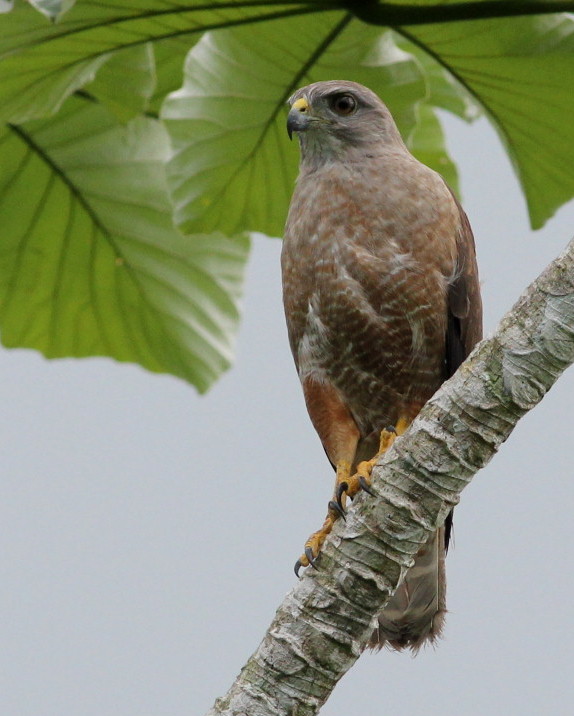
Bird of the Day: Ridgway’s Hawk
Writing To Clarify
The Washington Post is not one of our go-to sources for interesting stories, but we care deeply about journalism as a pillar of the communities we are involved in. What happens to this particular journalistic institution is of interest because of its perceived influence on policy in an influential community. For that reason, 12 minutes spent listening to the man who led the decision to sell the newspaper to one particular buyer may be worthwhile. But there is a much better reason to listen to him, and it comes exactly at minute 10 in this interview, when he describes how meetings are conducted at Amazon, and the importance of writing to clear communication.
Monsoon Theyyam
The last month of the Malayalam calendar, Karkatakam (July 17 to August 16) falls towards the end of southwest monsoon and signals the arrival of the Monsoon Theyyam. Karkataka Theyyams are performed by boys under the age of 13. They visit houses and Temples to ward off diseases, hardships and evil spirits that may come during the rainy season. Continue reading
Global, Local & Perspective
We have only mentioned him once before on this site, but we like him more than that. In less than one minute, he sums up what can sometimes take us years to get right in the development and operation of a conservation resort: framing local phenomena in such a way that reflects value beyond the locale, while avoiding as much as possible the homogenizing effects of globalization. Continue reading
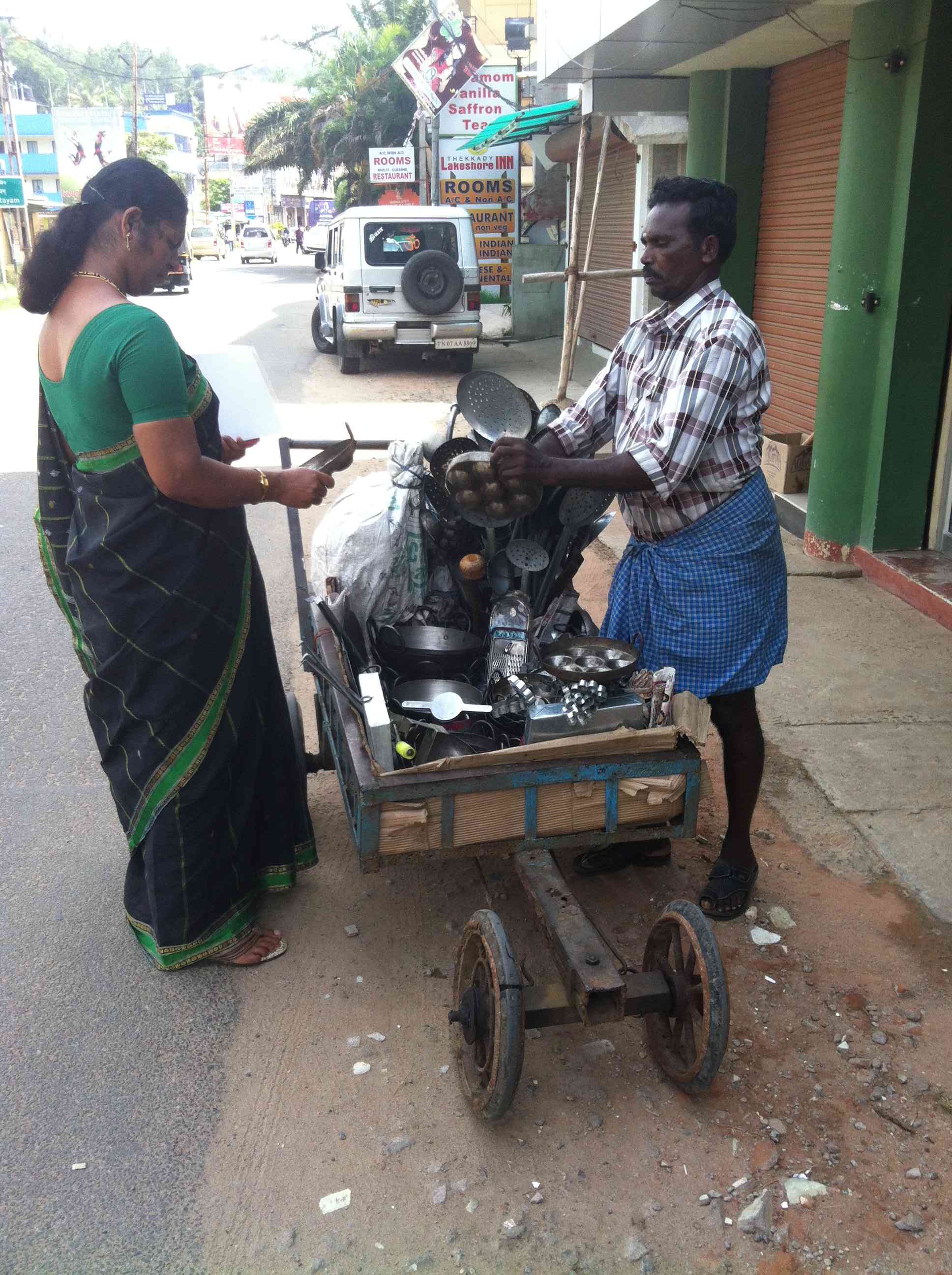
From Behind the Wheel: Panhandling, Thekkady-Style
Sport Beyond The Self
The tiresome doping scandals plaguing many sports are rivaled mainly by the ego blasts emanating from winner-take-all superstar players; but this conversation with Edson Arantes do Nascimento (better known as Pelé) has a soothing effect:
Pelé, when you are the best at something how hard is it not to get arrogant about it?
I used to tease the kids because I played better than them. But my father told me, “Don’t do this with the kids because you know how to play football; God gave you the gift to play football. You didn’t do anything. You have to respect people, because it is important to be a good man, a good person. From now on, you must be this example.” Continue reading
Bird of the Day: Horned Lark (Pawnee National Grassland, CO)
170 Million Year Old Barometer For River Water Quality

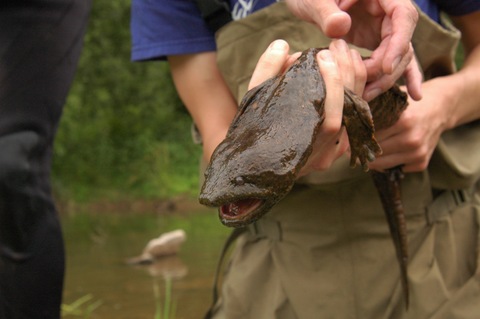
Matt Neff from the Smithsonian’s National Zoo holds a hellbender salamander that he caught in the Blue Ridge mountains of Virginia. Scientists hope to learn how healthy and viable the population is. Photo by Rebecca Jacobson
Thanks to the Public Broadcasting System of the USA for this story segment as their Science Wednesday feature this week:
…At the end of a long day snorkeling in the clear streams of southwestern Virginia’s Blue Ridge Mountains, Terrell and her team assumed their positions. As three scientists lifted a flat, heavy rock, Terrell groped underneath the stone, let out a muffled cry through her snorkel mask and popped out of the water.
“Where did it go? Did you see it?”
The biologists checked their nets and scoured the water. Sarah Colletti from the Aquatic Wildlife Conservation Center pointed at the slick rocks under the water. “Right there, he’s looking right at you.” One of the biologists lunged, secured a firm grasp, and triumphantly pulled it out: a nearly two-foot long hellbender. Continue reading
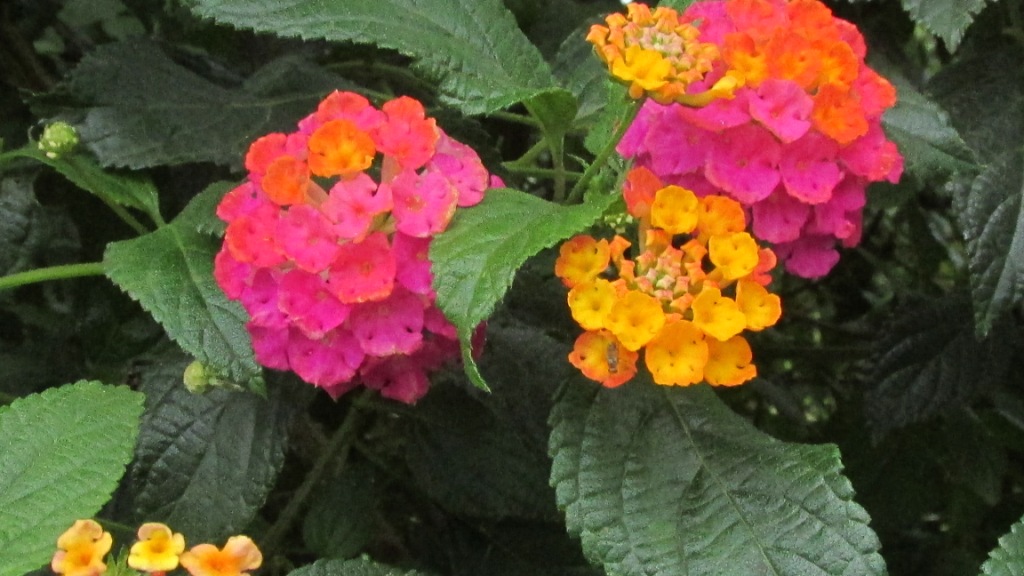
Common Lantana – Lantana camara
Lantana is native to the American tropics but is now naturalized throughout India. A widespread invader, this plant has taken over large tracts of land. Lantana is an evergreen, strong smelling perenial with stout recurved prickles. It is commonly used in home and public gardens as the flowers and subsequent fruit attract butterflies, moths and birds. The leaves and stems are also used in traditional medicines. Continue reading
Our Gang, Thevara (Brother & Sister School Holiday Cricket Practice)
Bird of the Day: Lesser Nighthawk (Las Coloradas, Mexico)
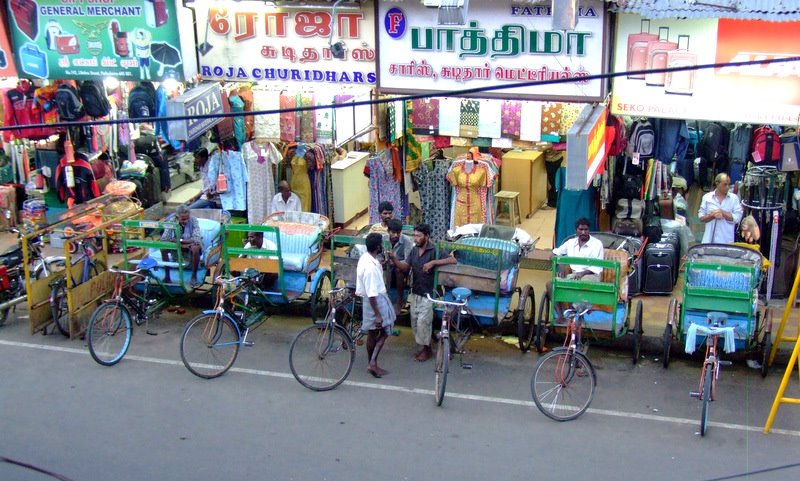
From Behind the Wheel: Rickshaw Line-up
Eid ul-Fitr – Muslim Festival
Eid ul-Fitr is celebrated after the conclusion of Ramadan, the Muslim month of fasting. Ramadan is always in the ninth month of the lunar year, so the date it falls in the calendar year varies. During this time Muslims abstain from eating and drinking throughout the day, and spend time in prayer to purify the body and soul. The onset of the festival is indicated by the sighting of the crescent Moon on the Western horizon. Ramadan is celebrated by Muslims all over the world. Continue reading
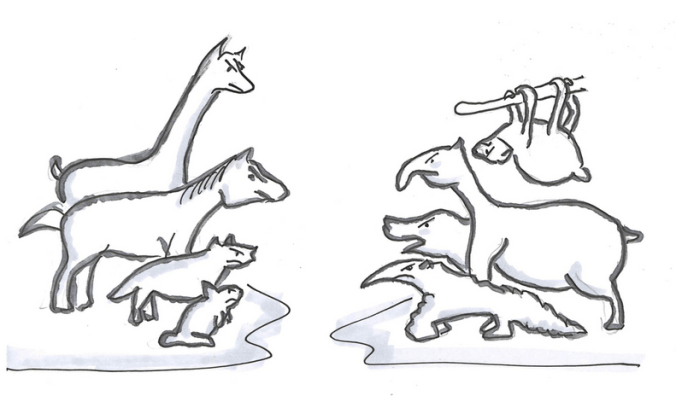
Prehistoric Hemispherical Face-Off
Wondrous prehistory, thanks to Robert Krulwich:
This is the story of two continents doing battle, North America versus South America. It is also a biological mystery.
For a very long time, North America and South America were separate land masses. The Pacific Ocean slipped between them, flowing into the Caribbean. The Isthmus of Panama was there, but it was underwater. The two continents didn’t touch.
As a result animals on both continents, especially mammals, evolved independently. They didn’t, couldn’t, interbreed. And yet, both North and South America had mountains, plains, long lazy rivers, deltas and supported similar forms of mammalian life. In fact, when biologists look back at the fossils, they found almost mirror like populations. Continue reading
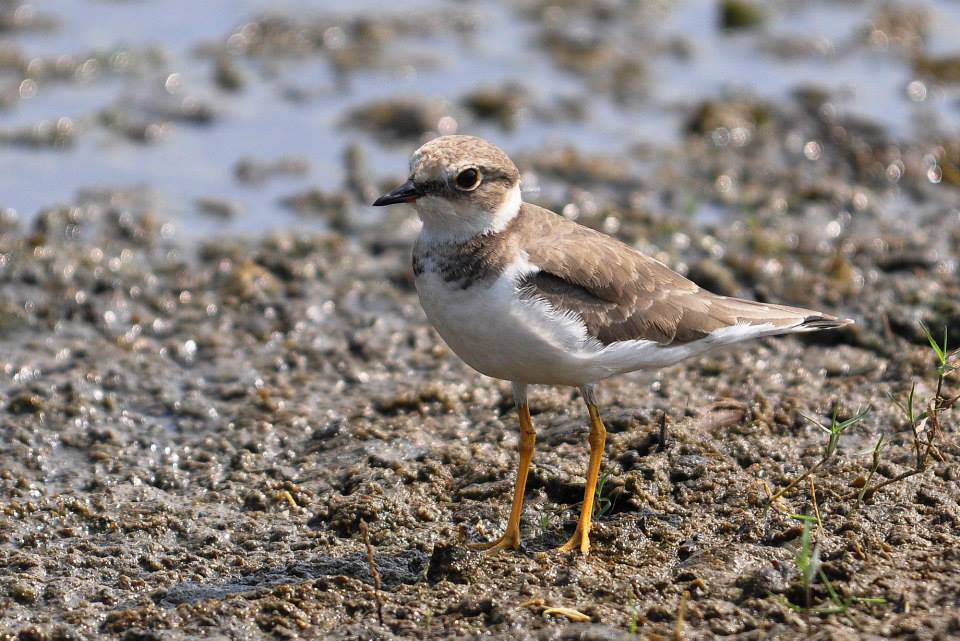
Bird of the Day: Little-ringed Plover (Point Calimere, Tamil Nadu)
Innovation, Collaboration & Illustration
Thanks to the man who, without fail, coaxes a smile with another New York Times blogpost keeper:
After spending the first 15 years of my life drawing and painting analog, I first dabbled in computer-generated graphics in the mid-1980s on a Sinclair ZX81, followed by an Amstrad CPC664. “Drawing” with these machines meant entering strings of binary code to manipulate ASCII codes into something vaguely resembling images. Continue reading
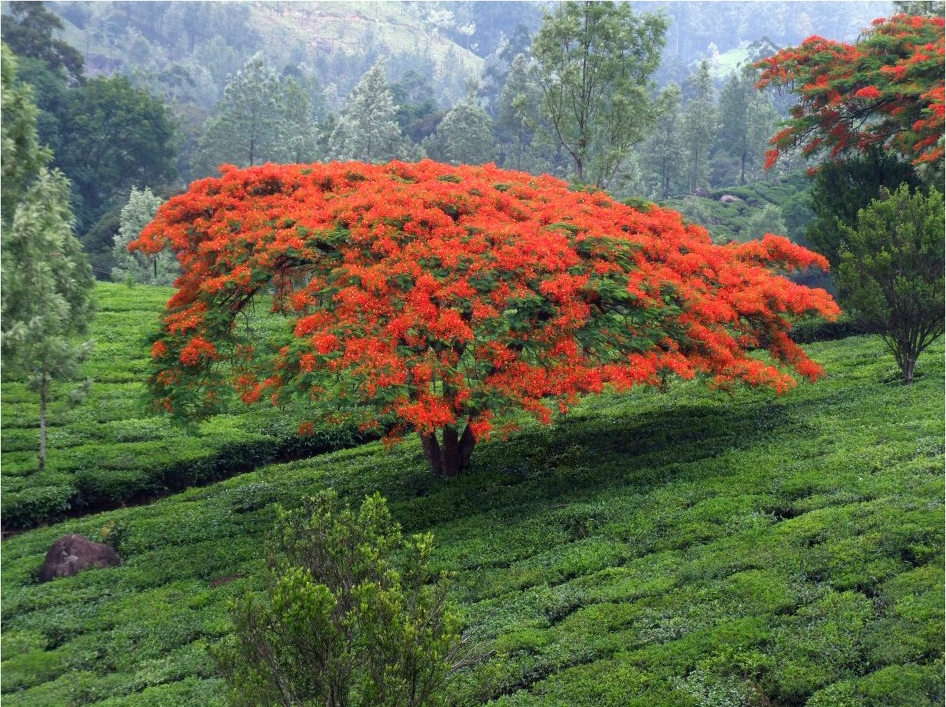
Beauty Of Munnar – Gulmohar Trees
Located at 5000 ft above sea level, Munnar hill stations were the summer resorts of the British administration in South India. Although famous for tea plantations flowering trees and plants thrive in Munnar and the surrounding region. Continue reading
Ecological Modernism Elucidated
Thanks to Yale Environment 360 for this big mental poke:
New Green Vision: Technology As Our Planet’s Last Best Hope.
The concept of ecological modernism, which sees technology as the key to solving big environmental problems, is gaining adherents and getting a lot of buzz these days. While mainstream conservationists may be put off by some of the new movement’s tenets, they cannot afford to ignore the issues it is raising.
by Fred Pearce
There is a new environmental agenda out there. One that is inimical to many traditional conservationists, but which is picking up kudos and converts. It calls itself environmental modernism — which for many is an oxymoron. Continue reading