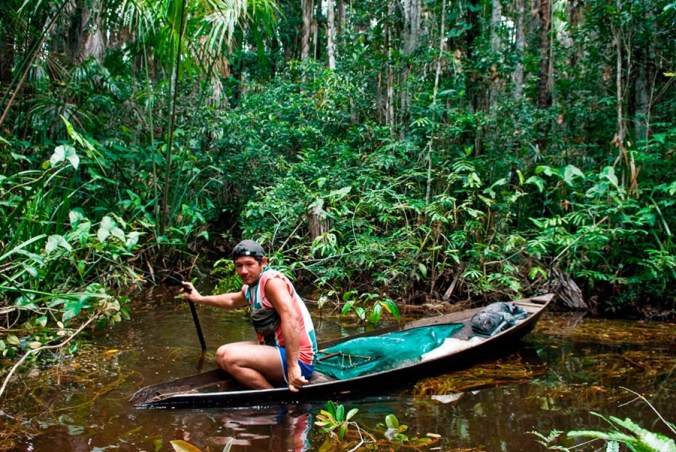
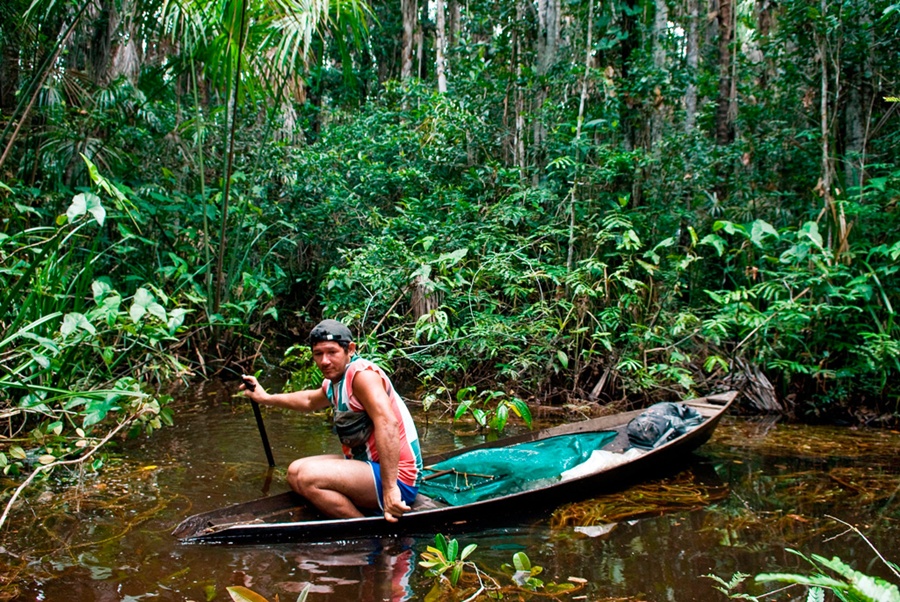
A fisherman on the Rio Negro – Photo courtesy of Discover Magazine
One would normally associate conservation with protecting the natural environment and the animals in it, but this Discovery Magazine article shows a new, almost counter-intuitive, way the local people are helping conserve and protect the Amazon Rainforest.
At sunrise on a September day in 1991, as Scott Dowd’s riverboat floated up the Rio Negro in Brazil, flocks of shrieking macaws streaked the sky red and gold. Otherwise, “my full field of vision was filled with jungle,” he remembers.
Best of all for the self-described “fish nerd” from Weymouth, Massachusetts, the dark waters beneath his boat teemed with beautiful fish—species he’d kept in aquarium tanks since he was 10. Now he was headed to the place they’d come from: Barcelos, a town of 20,000 in the heart of the Amazon.
But when he got there, he was horrified.
The riverfront was jammed with men in dugout canoes. They had come from the surrounding municipality, a rainforested area the size of Pennsylvania, bringing hand-woven baskets lined with plastic, now brimming with tiny, colorful fish. Tubs of the fish they caught would fill the entire bottom floor of an 80-foot ferryboat headed to Manaus, 280 miles to the south.
The fish were bound for exporters supplying home aquaria around the world. The estimated catch of tropical fish leaving the area, Dowd discovered, was more than 40 million fish per year. “My kneejerk reaction to this was, this was out of control!” he says.
But now, 22 years later, he eagerly admits: “I could not have been more wrong.” Continue reading →











 Organikos