
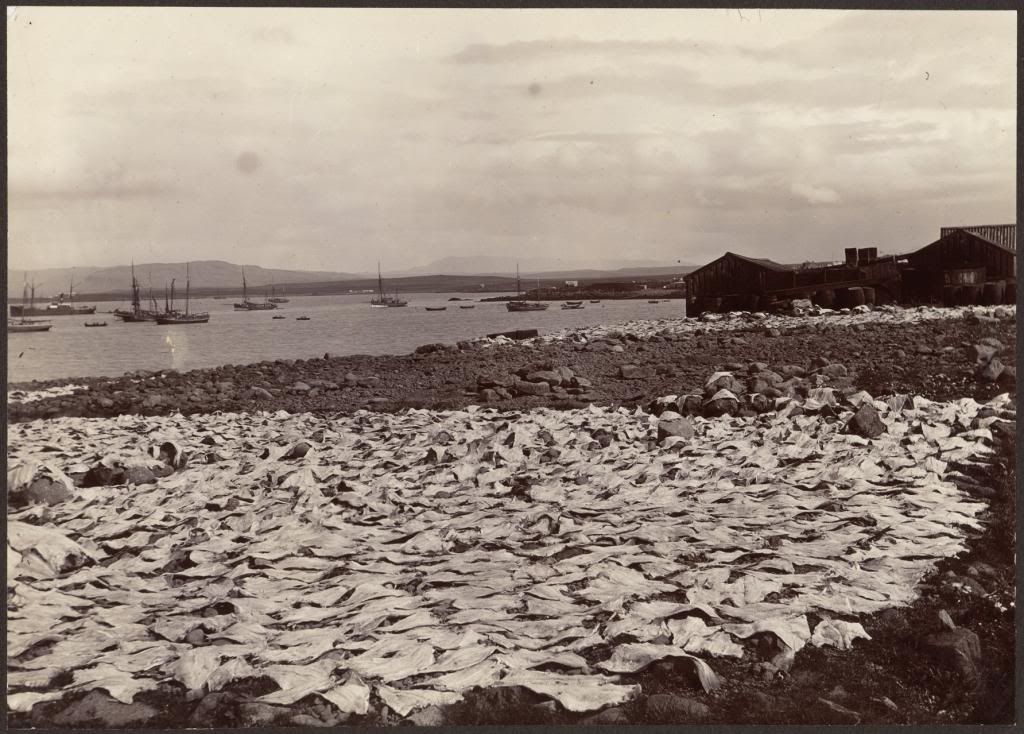
Reykjavík, Fish drying and shark oil station. Collodion print by Frederick Howell ca 1900. Bequest of Daniel Willard Fiske; compilation by Halldór Hermannsson; Cornell University Library Rare & Manuscript Collections.
Every account of travel in Iceland will cover the national meals in some fashion, but normally they are portrayed as quaint and disgusting. Many of the travelers of the period address the ‘unhealthy penchant for putrefied foods’ that revolved around stockfish. This included salmon and some other species but mostly meant cod, which was quite abundant in the oceans around the island. The fish would be cleaned and dried, and sometimes smoked, to provide food throughout the year, and the same applied for mutton. Dairy products from cattle, namely butter and cream, was often allowed to go rancid, much to the dismay of continental Europeans. Here is a paragraph I’ve translated from Jules-Joseph LeClercq, the Belgian who I referred to in my last post about Icelandic equitation, in his book Terre de Glace (1883):
I do not know how I can still respect those who are able to digest the horrible dishes to which my host introduced me, in particular dried shark-meat and whale fat. Overcoming my repugnance, I wanted to taste these incredibly novel delicacies, and was rewarded with an upset stomach for eight days. Continue reading →









 Organikos