Voice Versus Exit

Malcolm Gladwell brings to our attention an economist/planner/idea guy who might not otherwise have found his way to our reading list.  In his usual writing style, Gladwell makes the man, by reviewing his biography, irresistible.  Toward the end of the review, what is described as one of the economist’s key contributions provides a perfect counterpoint to these ideas.  We like this guy because he chooses voice over exit (click the image to the right and it is definitely worth reading to the end):

In the mid-nineteenth century, work began on a crucial section of the railway line connecting Boston to the Hudson River. The addition would run from Greenfield, Massachusetts, to Troy, New York, and it required tunnelling through Hoosac Mountain, a massive impediment, nearly five miles thick, that blocked passage between the Deerfield Valley and a tributary of the Hudson. Continue reading

Golden Birdwing Butterfly

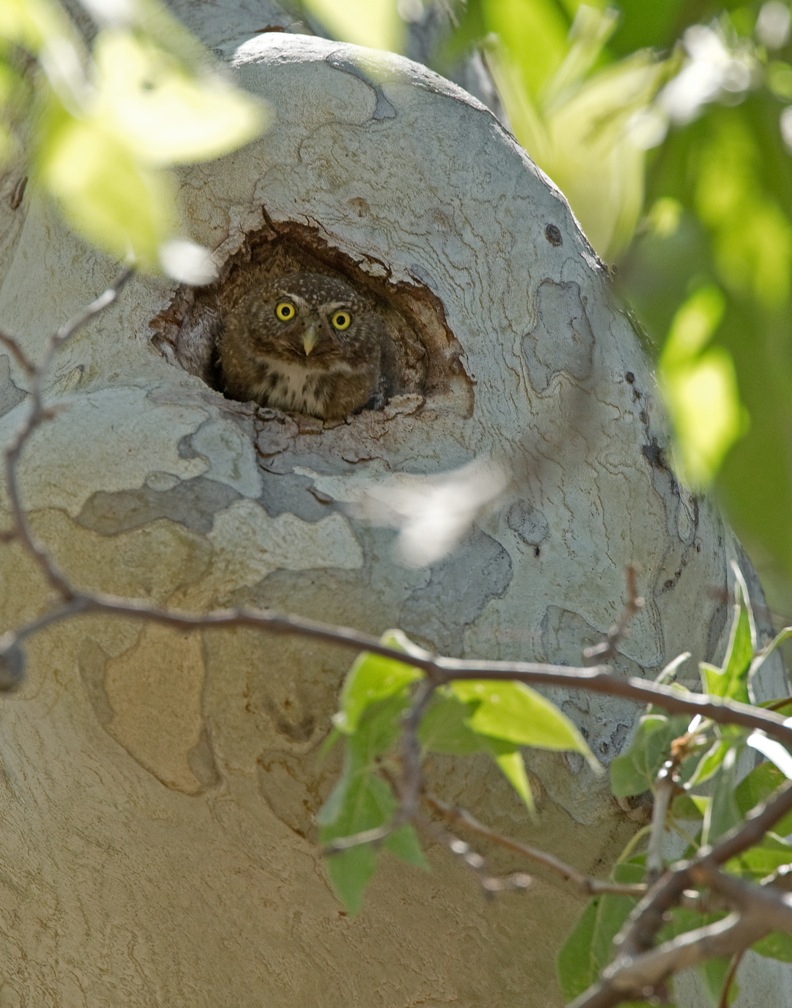
Periyar is popular for its bio-diversity and rich in butterfly population. The impressive species diversity of 160 butterflies in Periyar underscores the crucial relationship between plants and animals. The Golden Birdwing Butterfly is common in the entire region of the Western Ghats. Continue reading

Seasteading, Self-Reliance Utopia, And Our Shared Future

An article recently published in n+1 examines a utopian futurist form of an idea that seems oddly symmetric with Seth’s posts about the history of exploration using Iceland as a case study. Looking back, we see much in common with explorers, pioneerspilgrims and adventurous thinkers of all sorts.  Looking forward, we are inclined to embrace smart, creative, enthusiastic group efforts to resolve seemingly intractable challenges. Especially when they involve living on boats. We recommend reading the following all the way through:

To get to Ephemerisle, the floating festival of radical self-reliance, I left San Francisco in a rental car and drove east through Oakland, along the California Delta Highway, and onto Route 4. I passed windmill farms, trailer parks, and fields of produce dotted with multicolored Porta Potties. I took an accidental detour around Stockton, a municipality that would soon declare bankruptcy, citing generous public pensions as a main reason for its economic collapse. After rumbling along the gravely path, I reached the edge of the Sacramento–San Joaquin River Delta. The delta is one of the most dredged, dammed, and government subsidized bodies of water in the region. It’s estimated that it provides two-thirds of Californians with their water supply.  Continue reading

Veg Beat

New research shows that cabbage, carrots and blueberries are metabolically active and depend on circadian rhythms even after they’re picked, with potential consequences for nutrition. Photo by Flickr user clayirving

New research shows that cabbage, carrots and blueberries are metabolically active and depend on circadian rhythms even after they’re picked, with potential consequences for nutrition. Photo by Flickr user clayirving

Smithsonian has an article about a surprising natural phenomenon, which may not impact your feelings but should get your thoughts stirred up a bit:

You probably don’t feel much remorse when you bite into a raw carrot.

You might feel differently if you considered the fact that it’s still living the moment you put it into your mouth.

Of course, carrots—like all fruits and vegetables—don’t have consciousness or a central nervous system, so they can’t feel pain when we harvest, cook or eat them. But many species survive and continue metabolic activity even after they’re picked, and contrary to what you may believe, they’re often still alive when you take them home from the grocery store and stick them in the fridge. Continue reading

Tholpavakoothu – Traditional Shadow Play

Tholpavakoothu

Tholpavakoothu

Tholpavakoothu is a traditional form of shadow art using leather puppets. It is an important part of the temple festivals in Kerala, especially in Palakkad. The performance spans seven to 21 days; the belief being that the Devi witnesses the performance. Continue reading

The Love/Hate Relationships of Icelandic Steeds and Stockfish: Equitation

Ponies for export, Reykjavík. Collodion print by Frederick W. W. Howell. Bequest of Daniel Willard Fiske; compilation by Halldór Hermannsson; Cornell University Library Rare & Manuscript Collections.

Before jumping into the expeditions of William Watts into the Vatna Jökull (which, by the way, is pronounced /’jœ:kytl/ or “yokutl” as opposed to the “yokull” that most of us might expect), I thought I’d share some of the interesting and amusing impressions of British and French travelers regarding their encounters with the famous ponies and dried fish over and over again around the island.

This post will cover the horses and the next will examine the stockfish.  There are a large number of images in the archival collections I am exploring this summer, and it would interesting enough just to share those and let them speak for themselves.  But my task is to harvest history, so for now I will resist images and focus on ideas (sharing more images as the ideas take shape). Continue reading

Books In A Pre-Amazonized India

Courtesy of Jairaj Singh A customer at the Fact & Fiction bookstore in New Delhi.

Courtesy of Jairaj Singh
A customer at the Fact & Fiction bookstore in New Delhi.

Our friends at the India Ink blog site offer a cross-generational look at the world of books in our part of the world:

In the summer of 1984, two years before I was born, my father, Ajit Vikram Singh opened a small corner bookshop, Fact & Fiction, in South Delhi’s Vasant Vihar area,      Continue reading

Training session at the newspaper bag unit

Our newspaper bag unit is a permanent, exciting work-in-progress. Using upcycled newspapers provides us with an alternative  to plastic bags in our two shops at Cardamom County– the Raxa Collective store and the via kerala shop. It is also a way to work with more people in our community. We have been working at making this unit a sustainable entreprise with many collaborators since the beginnings of Raxa Collective in 2011.

Newspaper bag training unit - Raxa Collective Continue reading

Cane is King

This week Isabel and I continued to survey coffee producers and visit cafetales (shade coffee plots) while we also began interviewing ex-coffee producers (people who planted coffee but either have stopped harvesting it or never did) and conducting more conversational, open-ended interviews with coffee producers. Additionally, a baby cow was born on the farm and we have officially started to become sick of rice, beans, and soup.

Last week I wrote about the technical problems with shade coffee. This week I’ve learned much more about the social elements constraining it. One of the most common things we heard people say this week was that they don’t have time to work on their cafetales. By this they mean that they don’t weed it, fertilize it, or spray it to control pests and diseases. All they do is simply harvest it when it’s ready. It also means that they’re not willing to give up time from their other crops to dedicate to coffee. “Si carga, carga. Si no carga, no carga.” If it produces, it produces. If it doesn’t, it doesn’t. This attitude shows a serious lack of commitment and is also preventing people from seeing the true economic potential of this valuable crop. In our interviews we’ve been asking what people’s main sources of income are, and not one person has mentioned coffee.

Why is this the case? Largely, because of subsistence agriculture and sugarcane. Here in Barrio Nuevo, cane is king. Continue reading

Monsoon – Kerala

Photo credits :Sreekuttan

Photo credits: Sreekuttan

Monsoon rains are very much linked to the economy and ecology of Kerala; almost 85 percent of the state’s annual rainfall is received during that period. The slopes of the Western Ghats are among the places in India that receives the highest amount of rain. According to Ayurvedic theory, monsoon is the best season for rejuvenation therapies. It is the period when the atmosphere remains dust-free and cool. The Monsoon also plays an important role in the healthy growth of spices and crops like Cardamom, Pepper and Coffee. Continue reading

Harnessing The Sun To Study Climate Change On The High Seas

MS Türanor SolarPlanet will measure emissions in the open ocean. Photograph: Alex Hofford/EPA

MS Türanor SolarPlanet will measure emissions in the open ocean. Photograph: Alex Hofford/EPA

The Guardian is reporting on a floating phenomenon worth a look if you want to peer into the future of climate change science:

The solar-powered boat docked in Battery Park City in New York could easily have been packed off to a museum as a relic.

Continue reading

Creative Uses Of Intelligence, Intelligent Uses Of Creativity

How smart are they? Do they drink alot of coffee?  Find out by clicking the image above, or reading the following from the article accompanying that video:

…Google X seeks to be an heir to the classic research labs, such as the Manhattan Project, which created the first atomic bomb, and Bletchley Park, where code breakers cracked German ciphers and gave birth to modern cryptography. After the war, the spirit of these efforts was captured in pastoral corporate settings: AT&T’s (T) Bell Labs and Xerox (XRX) PARC, for example, became synonymous with breakthroughs (the transistor and the personal computer among them) and the inability of each company to capitalize on them. Continue reading

Veeshuvala – Local Fishing Net

Photo credits : Ramesh Kidangoor

Photo credits : Ramesh Kidangoor

There are many fishing techniques employed in the backwaters, rivers and canals of Kerala. The local people have a name for each tool and method employed to trap the fish. The most common is Veeshuvala, where a circular net, six to seven meters in diameter and weighted at the edges, is thrown from the shores in a distinctive fashion – a quick spin of the body to gain momentum, then releasing the gathered net at just the right moment. The weights ensure that the net flares out like a umbrella before it lands on the water. A string attached to the hub is then pulled from the banks to haul in the trapped fish. This method of fishing is very common in Kerala especially during monsoon. Continue reading

Mapping Iceland

In my last post on the subject I mentioned that portions of Iceland on contemporary maps all the way up to the early 20th century remained blank. The main culprit for explorers, travelers, and cartographers was the great glacial region of Vatnajökull, at 3,139 sq. mi (8,130 sq. km) the largest glacier in Europe, and now a national park in southeast Iceland. Terrible snowstorms, heavy rains, unreliable ice, and poor local knowledge of the frigid plateau contributed to the failure of multiple expeditions by many men into the interior of the “Glacier of Rivers,” and during the late 1800s it became clear that there was frequent volcanic activity in the area as well.

1906 geological map by Icelandic geographer/geologist Þorvaldur Thoroddsen, who is credited with being the first to map the interior of the Icelandic Highlands in 1901, which is when this map was first published. The different colors represent different compositions of the island, such as basalt, liparite, volcanic ash, etc.

Continue reading

Creativity And Coffee’s Catch

For all you coffee-fueled creatives out there, take note of recent scientific findings about Balzac’s blessed bean:

Honoré de Balzac is said to have consumed the equivalent of fifty cups of coffee a day at his peak. He did not drink coffee, though—he pulverized coffee beans into a fine dust and ingested the dry powder on an empty stomach. He described the approach as “horrible, rather brutal,” to be tried only by men of “excessive vigor.” He documented the effects of the process in his 1839 essay “Traité des Excitants Modernes” (“Treatise on Modern Stimulants”): “Sparks shoot all the way up to the brain” while “ideas quick-march into motion like battalions of a grand army to its legendary fighting ground, and the battle rages.” Continue reading