Every Picture Tells A Story, And Every Road Leads Somewhere

This slideshow requires JavaScript.

The Atlantic‘s website has a great feature that will capture your imagination in 5 minutes or less:

Inspired in part by the great geography game GeoGuessr, I spent some time recently in Google Maps, finding the edges of their Street View image coverage. 

Continue reading

Kalamezhuthu (Floor drawings)

Photo credits: Ramesh Kidangoor

Photo credits: Ramesh Kidangoor

Kalamezhuthu is the art of creating very large pictures on the floor, and is a unique form of art found only in Kerala.  Typically, Kalamezhuthu is conducted as part of the general festivals in temples. The patterns that are drawn and the colors that are used are traditionally stipulated.  Additionally, the colored powders used for the Kalams (drawings) are prepared solely from natural products.  Kalams are drawn in connection with the worship of Gods and Goddesses, and are drawn directly with the hands.  No tools are ever used.   Continue reading

Sanskrit poetry: “If my absent bride were but a pond”

Sanskrit lyric poetry is often noted for its sexual nature and flourished in the eleventh century where it was compiled by Vidyakara under the title “The Treasury of Well-Turned Verse”. Vidyakara, was a poet and a scholar of the XIth century.  Although he is thought to have been a buddhist monk, his “Treasury” is well versed on the matters of heart . This anthology of sanskrit court poetry addresses themes such as sex, love, and heroes, peace and nature.

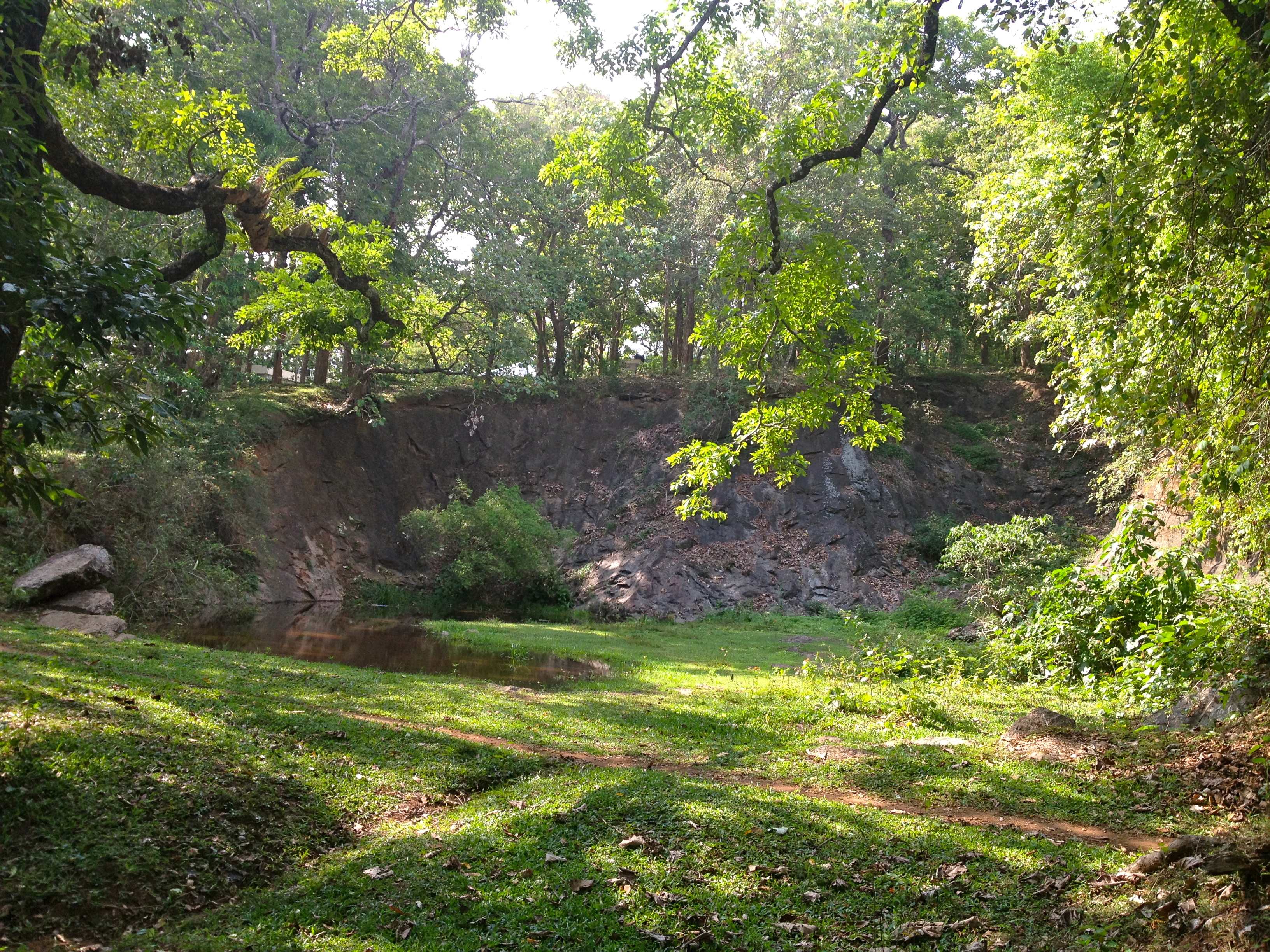
Ponds in the woods of Thekkady

If my absent bride were but a pond, Continue reading

Cochin Carnival

Photo Credits : Ramesh Kidangoor

Photo Credits : Ramesh Kidangoor

Cochin Carnival is celebrated at Fort Cochin annually during the last ten days of December. The carnival is celebrated as a continuity of the Portuguese New Year festivals during the colonial years. During the carnival period all establishments in the city don white paper buntings. All available space on the streets is used to host traditional competitions such as kalam vara (floor drawing), tug-of-war, and bicycle racing. Additionally, people often play beach volleyball or go for a swim in the sea. The festivity and revelries continue until midnight of December 31st, culminating in a marvelous show of fireworks. Continue reading

Transformative Innovation, Collaboration And The Growth Of Community

Click the image to the left for an interview with Tim Westergren about his experience prior to and as founder of Pandora. The path to that founding is colorful and unlike other startup stories. Launching a business that threatens the status quo is a classic tale, retold often.Travis Kalanick tells his own variation on a founder’s story about an industry’s reaction to disruptive technology; it is worth listening to both interviews back to back.

Michael Philips has a very insightful blog post covering Pandora’s recent moves in a brutal chess game–incumbents are under no obligation to sit back and watch an upstart deliver creative destruction on a silver platter, but the defensive moves to protect entrenched interests from the power of innovation obviously do not always serve the best interests of society. Philips gives attention to Kalanick’s Uber travails at the same time:

This week, the Internet-radio service Pandora planted itself in South Dakotan soil. It bought an FM radio station in Rapid City. The station, KXMZ-FM (Hits 102.7, “Today’s hits without the rap”), serves the two hundred and fifty-fifth largest radio market in America. Its Facebook page highlights a local Good Samaritan who bought new tires for a stranger’s beat-up pickup truck. But Pandora’s purchase is not a bid for heartland radio; it is the company’s latest gambit in the war between artists, publishers, broadcasters, and technology companies over who will profit from popular music. Continue reading

Bhutan’s Different Approach

Singye Wangchuk/Reuters A statue of Lord Buddha at Kuensel Phodrang in Thimphu, Bhutan on May 20, 2012.

Singye Wangchuk/Reuters. A statue of Lord Buddha at Kuensel Phodrang in Thimphu, Bhutan on May 20, 2012.

Our friends at India Ink share a story about the mysteriously happy kingdom to the north:

Bhutan does things differently in South Asia, and nothing illustrates this so as much as the way it has conducted its transition to democracy. Continue reading

Endangered species : the Vechur cow

Vechur calf

Vechur cow

We recently talked about the cowbird, but today I’d just like to talk about cows. Cows are ubiquitous here in India. The Vechur cow, however is on the FAO’s ‘Critical-Maintained Breeds List.’ Continue reading

Kathakali Chamayam – Makeup and Costumes

Photo credits: R Ranjith

Photo credits: R Ranjith

Kathakali is known for its heavy, elaborate makeup and costumes.In fact, the makeup is so  intricate and the costumes so huge and heavy that it looks as though the artist is wearing a mask. The makeup is based on a certain set of colors each of which is used to represent a particular character. Only natural dyes are used on the face and the process will take hours. Continue reading

Thalappoli – Traditions Of Kerala

Photo Credits: Ramesh Kidangoor

Photo Credits: Ramesh Kidangoor

Thalappoli is a traditional and ritual procession carried out by young girls and ladies of Kerala to attract happiness and prosperity in the community which holds the festival. The participants wear traditional dress and hold thalam (a metal plate) in their hands  filled with fresh paddy, flowers, rice, coconut and a lighted lamp. Continue reading

Sleek, sustainable alternatives to disposable tableware

Single-use tableware create increasing, massive amounts of waste. We eat out more than our parents ever did and our lunches are more and more wasteful. The best way to minimize lunch waste is to pack a lunch and pack only what you can eat, and to keep the restaurant option for that special occasion. The bento-box for lunch is a huge trend right now in Europe, mine is a shiny round box. When I happened to eat at my company’s canteen I noticed the invasion of the shelves by disposable packaging. And when my colleagues and I ate out at any of the pricey parisian eateries, it was more and more difficult to find non-disposable tableware. Here in rural South India, I never once had to say “I’d rather have a real cup please”.  When I go to the staff cafeteria, I pick up my large steel tray and my steel cup from the drainer wash it, fill them up and afterwards I wash ’em put ’em back, so someone else can do the same. Easy peasy. Nothing worth adding to the landfill about.   Continue reading

Elephants in Kerala

Photo Credits: Ramesh Kidangoor

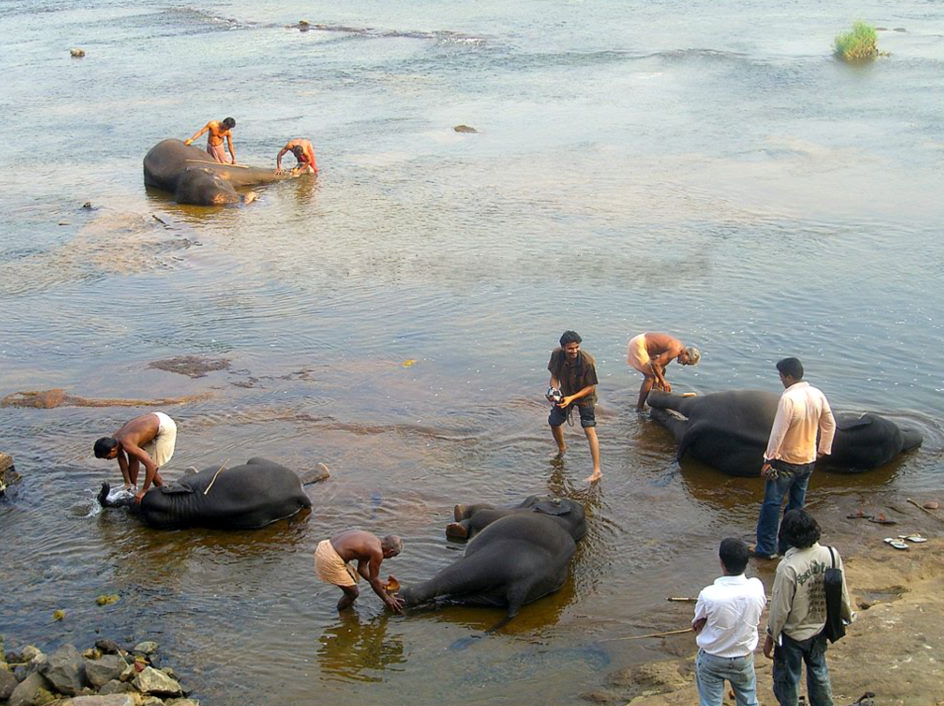
Elephants being bathed by their Mahouts near  the Kodanad Elephant Training Center; Photo Credits: Ramesh Kidangoor

A symbol of strength and prestige since ancient times, elephants were used by royalty and feudal lords to display their power. Nowadays elephants are still part of the life and cultural ethos of Kerala. People here consider this animal a harbinger of good fortune, a remover of obstacles. It is an integral and inseparable part of the religious and economic life. Continue reading

Entrepreneurial Conservation And Language Apps

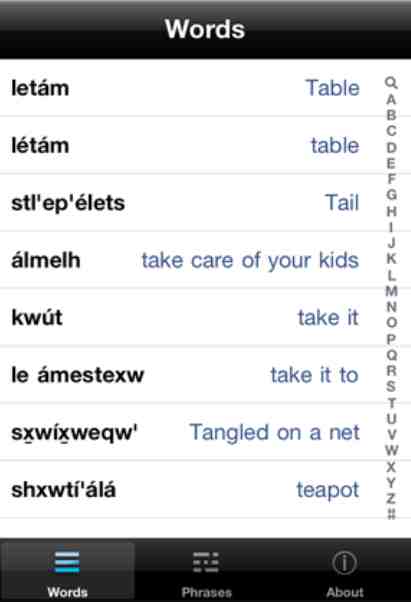
This recent post about a language app was thought to be a one off on a funny subject. Then the topic was no longer one off, and not particularly funny. Even less funny, but technologically amazing, and certainly an example of one of our favorite topics, is this one (click the image to the left to go to the source):

…Last June, FirstVoices launched an iPhone app that allows indigenous-language speakers to text, e-mail, and chat on Facebook and Google Talk in their own languages. Users can select from a hundred and forty keyboards not recognized by iOS; the app supports every indigenous language in North America and Australia. (By default, iOS supports just two: Cherokee and Hawaiian.) The app accomplishes this through mimicry. When a text box is selected, a keyboard identical in form and function to iOS’s appears. The keyboard includes the characters necessary to write in, say, Cree, and follows a layout unique to the chosen language.  Continue reading

Birders, Language Apps, And Protected Area Rules

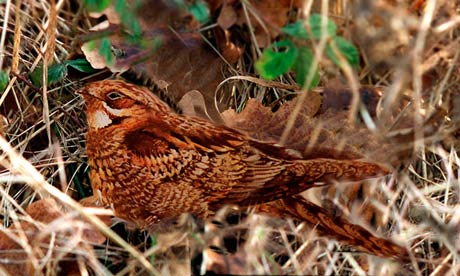
Several visitors to Brownsea Island, Poole Harbour, were found to be using apps that imitate the unusual 'churring' call of the nightjar to coax out the bird. Photograph: Don Mcphee for the Guardian

Several visitors to Brownsea Island, Poole Harbour, were found to be using apps that imitate the unusual ‘churring’ call of the nightjar to coax out the bird. Photograph: Don Mcphee for the Guardian

Where is Ben, apart from being on the road to 2,000 birds, when you need him? We are curious how widespread the use of such apps might be among serious birders. Read this Guardian story to the end and you may agree with us that this language app is more likely to do harm than good:

To the long list of nature reserve do’s and dont’s can be added a thoroughly 21st-century injunction: don’t use your apps to pap the feathered denizens. Continue reading

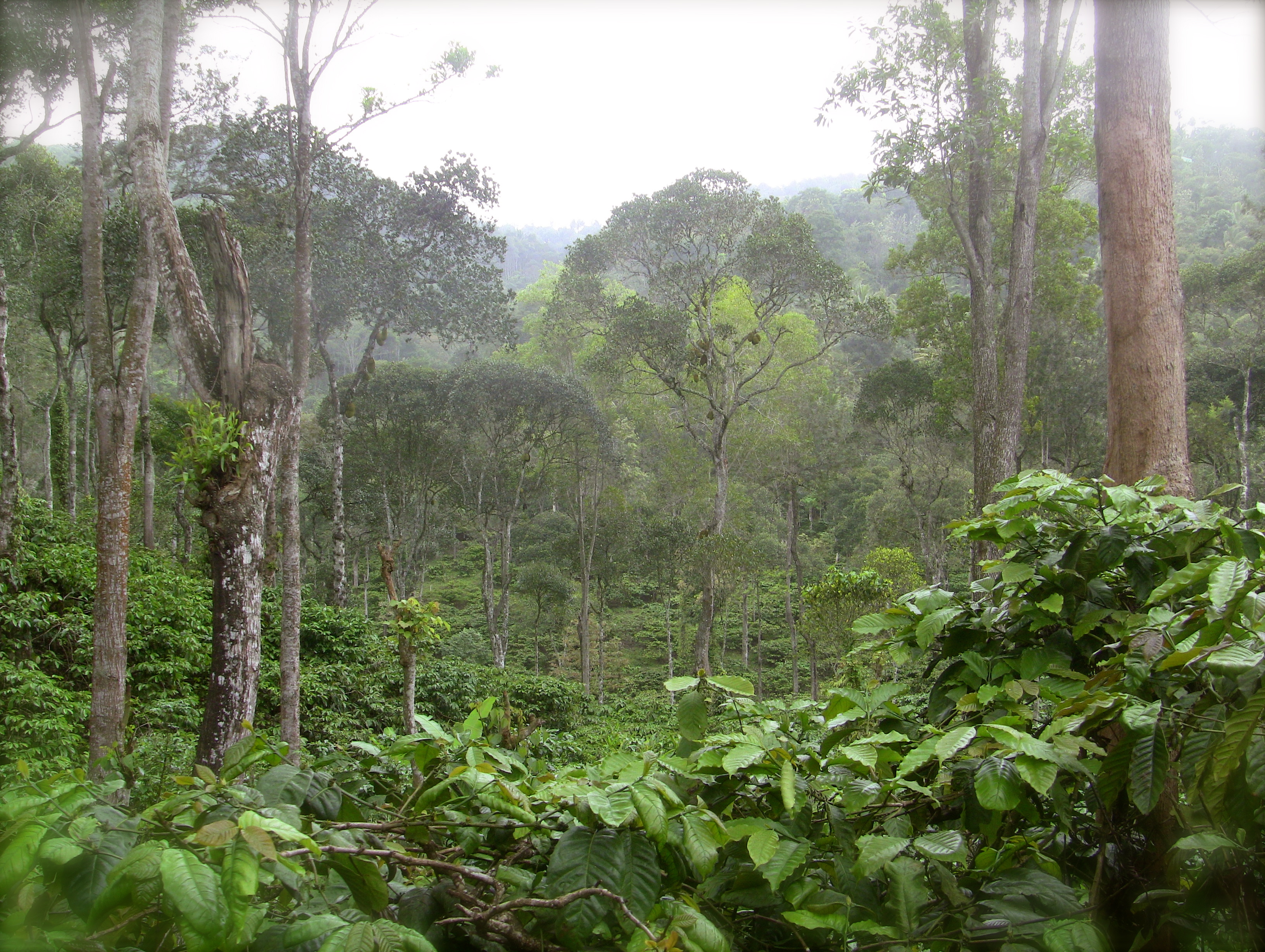
Robusta, Liberian, Arabica: a visit to a coffee plantation in the Western Ghats

Coffee plantation - Spring Valley, Kerala credit Ea Marzarte - Raxa Collective

Coffee plantation – Spring Valley, Kerala

Evan’s research on agroforestry in Ecuador  inspired me to learn more about coffee in India.  No coffee seed sprouted outside Africa or Arabia before the 17th century. Legend has it this all changed when a pilgrim named Baba Budan smuggled fertile coffee beans out of Mecca strapped to his stomach. Returning to his native India, he successfully cultivated the beans near Mysore.Commercial cultivation began in 1840 when the British rule established Arabica coffee plantations throughout the mountains of Southern India. Till today much of the production comes from the Western Ghats. Initially Arabica was widespread, but Continue reading

For The 2012 Design Team

Hey you!  We think of you guys almost every day, and this vimeo made it necessary to stop and post a quick hello.  The property we called Harbour is looking fabulous. And the property called Pearl down at Marari beach is curvaceous in exactly the manner we talked about.  We have heard rumors that one of you got a job in New York.  True or false?  The rest of you?  Stay in touch!