
Our newspaper bag unit is a permanent, exciting work-in-progress. Using upcycled newspapers provides us with an alternative to plastic bags in our two shops at Cardamom County– the Raxa Collective store and the via kerala shop. It is also a way to work with more people in our community. We have been working at making this unit a sustainable entreprise with many collaborators since the beginnings of Raxa Collective in 2011.
This week Isabel and I continued to survey coffee producers and visit cafetales (shade coffee plots) while we also began interviewing ex-coffee producers (people who planted coffee but either have stopped harvesting it or never did) and conducting more conversational, open-ended interviews with coffee producers. Additionally, a baby cow was born on the farm and we have officially started to become sick of rice, beans, and soup.
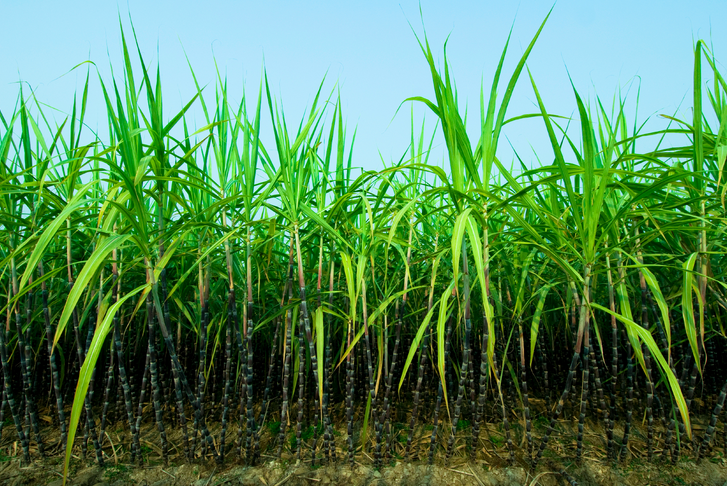
Last week I wrote about the technical problems with shade coffee. This week I’ve learned much more about the social elements constraining it. One of the most common things we heard people say this week was that they don’t have time to work on their cafetales. By this they mean that they don’t weed it, fertilize it, or spray it to control pests and diseases. All they do is simply harvest it when it’s ready. It also means that they’re not willing to give up time from their other crops to dedicate to coffee. “Si carga, carga. Si no carga, no carga.” If it produces, it produces. If it doesn’t, it doesn’t. This attitude shows a serious lack of commitment and is also preventing people from seeing the true economic potential of this valuable crop. In our interviews we’ve been asking what people’s main sources of income are, and not one person has mentioned coffee.
Why is this the case? Largely, because of subsistence agriculture and sugarcane. Here in Barrio Nuevo, cane is king. Continue reading
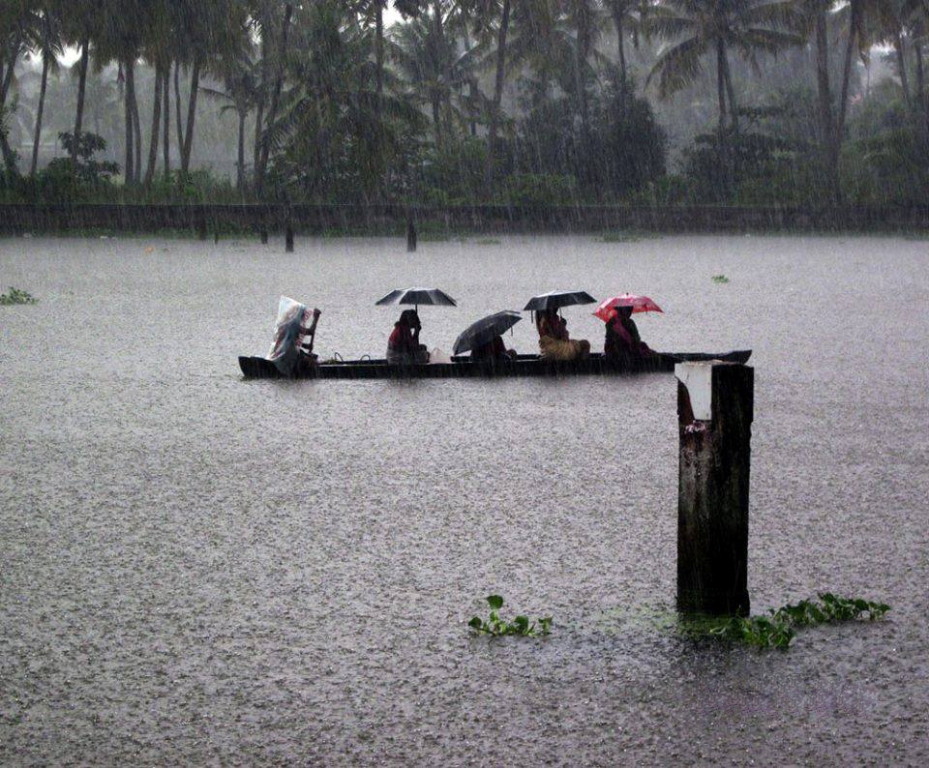
Photo credits: Sreekuttan
Monsoon rains are very much linked to the economy and ecology of Kerala; almost 85 percent of the state’s annual rainfall is received during that period. The slopes of the Western Ghats are among the places in India that receives the highest amount of rain. According to Ayurvedic theory, monsoon is the best season for rejuvenation therapies. It is the period when the atmosphere remains dust-free and cool. The Monsoon also plays an important role in the healthy growth of spices and crops like Cardamom, Pepper and Coffee. Continue reading
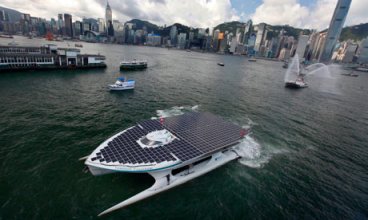
MS Türanor SolarPlanet will measure emissions in the open ocean. Photograph: Alex Hofford/EPA
The Guardian is reporting on a floating phenomenon worth a look if you want to peer into the future of climate change science:
The solar-powered boat docked in Battery Park City in New York could easily have been packed off to a museum as a relic.

Los Quetzales, Panama

How smart are they? Do they drink alot of coffee? Find out by clicking the image above, or reading the following from the article accompanying that video:
…Google X seeks to be an heir to the classic research labs, such as the Manhattan Project, which created the first atomic bomb, and Bletchley Park, where code breakers cracked German ciphers and gave birth to modern cryptography. After the war, the spirit of these efforts was captured in pastoral corporate settings: AT&T’s (T) Bell Labs and Xerox (XRX) PARC, for example, became synonymous with breakthroughs (the transistor and the personal computer among them) and the inability of each company to capitalize on them. Continue reading
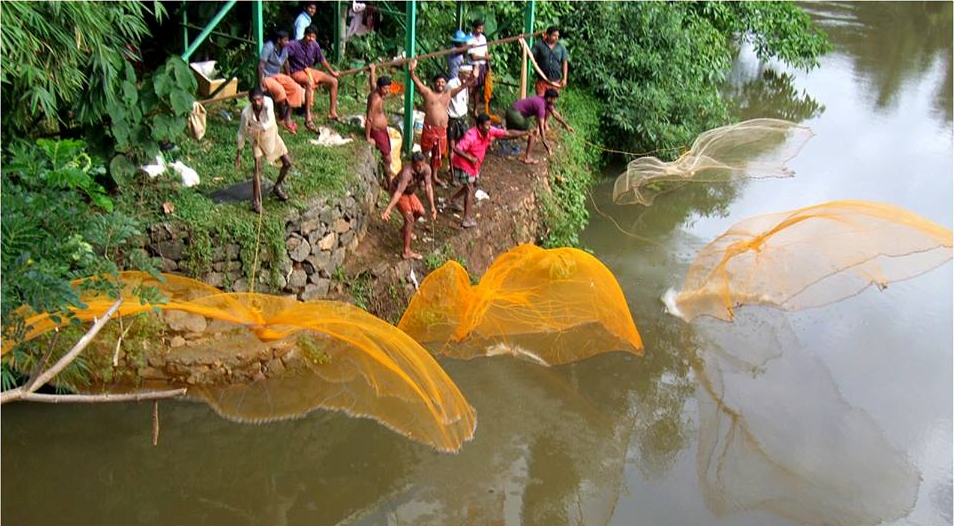
Photo credits : Ramesh Kidangoor
There are many fishing techniques employed in the backwaters, rivers and canals of Kerala. The local people have a name for each tool and method employed to trap the fish. The most common is Veeshuvala, where a circular net, six to seven meters in diameter and weighted at the edges, is thrown from the shores in a distinctive fashion – a quick spin of the body to gain momentum, then releasing the gathered net at just the right moment. The weights ensure that the net flares out like a umbrella before it lands on the water. A string attached to the hub is then pulled from the banks to haul in the trapped fish. This method of fishing is very common in Kerala especially during monsoon. Continue reading
In my last post on the subject I mentioned that portions of Iceland on contemporary maps all the way up to the early 20th century remained blank. The main culprit for explorers, travelers, and cartographers was the great glacial region of Vatnajökull, at 3,139 sq. mi (8,130 sq. km) the largest glacier in Europe, and now a national park in southeast Iceland. Terrible snowstorms, heavy rains, unreliable ice, and poor local knowledge of the frigid plateau contributed to the failure of multiple expeditions by many men into the interior of the “Glacier of Rivers,” and during the late 1800s it became clear that there was frequent volcanic activity in the area as well.

1906 geological map by Icelandic geographer/geologist Þorvaldur Thoroddsen, who is credited with being the first to map the interior of the Icelandic Highlands in 1901, which is when this map was first published. The different colors represent different compositions of the island, such as basalt, liparite, volcanic ash, etc.

For all you coffee-fueled creatives out there, take note of recent scientific findings about Balzac’s blessed bean:
Honoré de Balzac is said to have consumed the equivalent of fifty cups of coffee a day at his peak. He did not drink coffee, though—he pulverized coffee beans into a fine dust and ingested the dry powder on an empty stomach. He described the approach as “horrible, rather brutal,” to be tried only by men of “excessive vigor.” He documented the effects of the process in his 1839 essay “Traité des Excitants Modernes” (“Treatise on Modern Stimulants”): “Sparks shoot all the way up to the brain” while “ideas quick-march into motion like battalions of a grand army to its legendary fighting ground, and the battle rages.” Continue reading
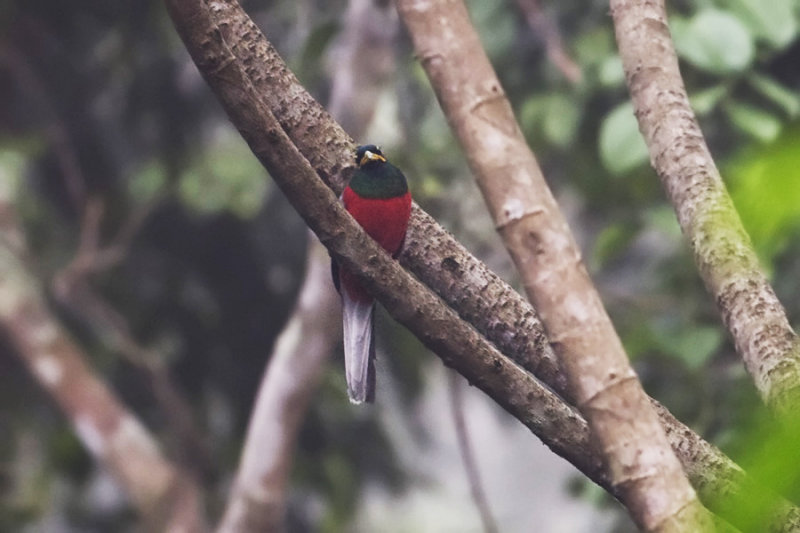

A house on a coffee plantation in Spring Valley, Kumily, Kerala
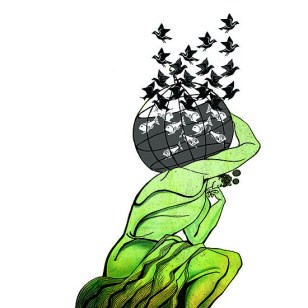
ESSAY: A Different River Every Time
What is ‘smart’ and how does it fit our consciousness? Is there just one way to it? Are smarter people happier, richer? The answers may not always be that obvious. by SANDIPAN DEB
…Which, of course, brings us to that common capitalist question: “If you’re so smart, why aren’t you rich?” There is something abhorrent about this query. Of course, Mukesh Ambani is super-smart, but so was Jagadish Chandra Bose, who invented wireless communication at least a couple of years before Guglielmo Marconi, who received the Nobel prize for the breakthrough (It is now established that Marconi met Bose in London when the Indian scientist was demonstrating his wireless devices there, and changed his research methods after that meeting). Bose also invented microwave transmission and the whole field of solid state physics, which forms the basis of micro-electronics. Bose’s contributions are all around us today, from almost every electronic device we have at home to the most powerful radio telescopes in the world. But he steadfastly refused to patent any of his inventions, or to license them to any specific company. Some 70 years after Bose’s death, the global apex body, Institute of Electrical and Electronics Engineers, officially acknowledged Bose to be the father of wireless communication.
This is an excerpt whose catchy question pervades an essay worth reading in full. Intelligence, specifically smart Indian people, is the subject of a whole special issue of Outlook magazine. We have pondered amazing people from India on occasion in the past, and if the brief tale above intrigues you then see this post about Tesla versus Edison, but for now Continue reading

Photo credits : Ramesh Kidangoor
Thirvunamalai Arunacaleshwara Temple is dedicated to Jyothi Lingam, the fire incarnation of Lord Shiva. Situated amidst picturesque surroundings at the base of the 2600-ft Annamalai hills, it is one of the largest and most revered shrines in South India. The nine imposing gopurams of the temple constructed in the Vijayanagar style are a magnificent sight. There is a “thousand pillared hall” with intricate carving of minor deities and demi-Gods. Continue reading
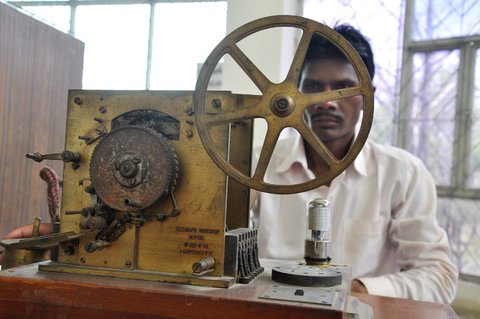
Sanjeev Gupta/European Pressphoto Agency. An employee of the National Telecom Museum in Bhopal, Madhya Pradesh, sitting behind an 1871 model of a telegraphic code machine invented by French engineer Emile Baudot.
As we mentioned, history is about to be amended and here is a small post at India Ink about what various people intend to do in honor of the occasion:
On Saturday afternoon, Vikrant Deshpande, a 32-year-old Indian Air Force pilot, drove with his wife to the Central Telegram Office in New Delhi. The newly married couple gazed at a sign in the Telegram Office lobby that read, “Standard Phrases for Greeting Telegrams.” Continue reading
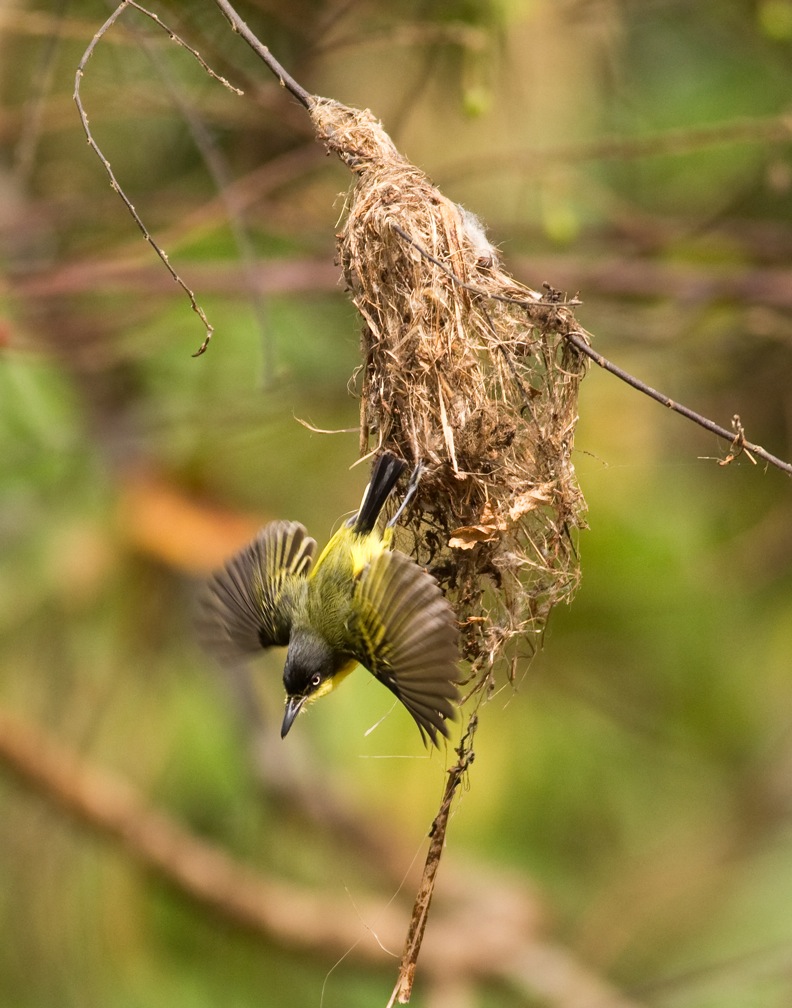
Gamboa, Panama
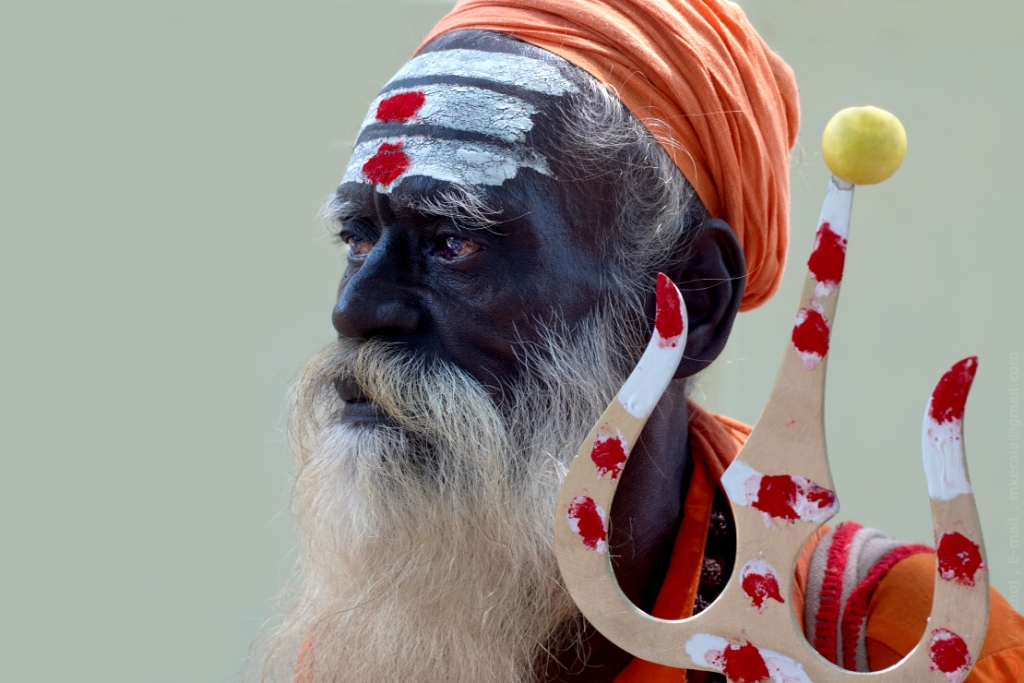
Photo credits :Manoj Vasudevan
Sadhus are commonly found outside famous temples in India. They live an ascetic life on the fringes of society, free from all family ties with neither possessions or permanent house and eat little. They live off alms given by pilgrims and devotees and often wear saffron coloured clothing. Continue reading
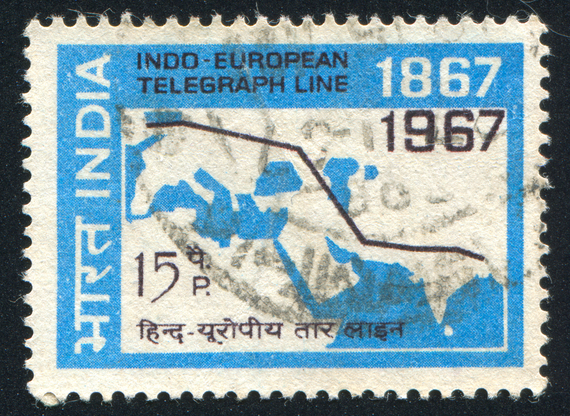
A stamp for the Indo-European Telegraph, circa 1967 (Shutterstock/rook76)
The Atlantic is reporting, and it reaches us in India, that July 14 will be a historic day. On that day (coincidentally aka Bastille Day in France), an era will end:
In 1850, the British inventor William O’Shaughnessy — who would later become famous for his early experiments with medical cannabis — sent a coded message over a telegraph line in India. His telegram would usher in a new age of communication in and for India, connecting the country in a way that had never before been possible. Continue reading

Mysore, Karnataka
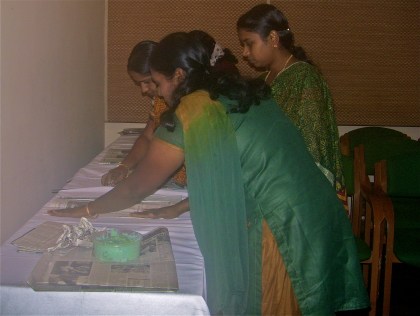
 Organikos