WED 2013: Europe dumps fish dumping

WED 2013 - Raxa Collective

On June 5, we’ll celebrate World Environment Day. This year UNEP focuses on the theme Food waste/Food Loss. At Raxa Collective we’ll be carrying out actions and sharing experience and ideas. Come and join us with your ideas and tips to preserve foods, preserve resources and preserve our planet.

www.fishfight.net

…and about 80 per cent of Mediterranean stocks and 47 per cent of Atlantic stocks are overfished. It may seem rather odd but the European Union’s policy to avoid overfishing consists in tossing dead fish back in the sea if a fleet exceeds its quota.

For decades industrial fleets have been subsidised to plunder the European waters working under the rules of the  Common Fisheries Policy devised in the 1970s. And the rule of ‘discards’ has been let’s say counter-productive in reviving the fish stock. The practice allows fleets to net quantities of fish exceeding their quota, then simply throw any unwanted dead fish overboard.
Continue reading

WED 2013 : Learning To Finish That Meal…

WED 2013 - Raxa Collective

On June 5, we’ll celebrate World Environment Day. This year UNEP focuses on Food waste/Food Loss. At Raxa Collective we’ll be carrying out actions and sharing experience and ideas. Come and join us with your tips to preserve foods, preserve resources and preserve our planet.

As a child, I was always told to finish eating my meals because there were starving children in poor and faraway lands that would gladly trade places with me.  I could not exactly picture what that meant, and the rebelious part of me always wanted to stick a postage stamp on my plate and send it to these children.  No one who grew up with such abundance, I think, could trade the fresh memory of a full meal for a clear picture of hunger.

Being from Texas (and proud of it, so don’t mess with that), with its long “bigger and better” history and wonderful mythology of abundance and its can-do certainty, I did not “get it”.  Now, the hazy memories of those dinners and parental wisdom are coming into perspective with my ability to follow and understand news from around the world.

Continue reading

Ueli Steck, Collaboration And Culture


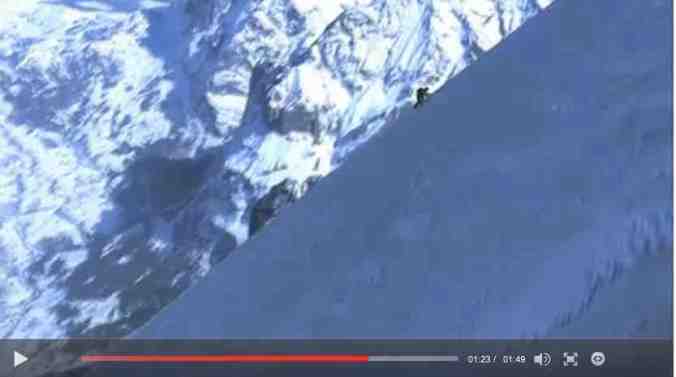
The article is worth the time, and the subscription, for reasons we pointed to herehere and here.  Click above to go to this brief video for another enticement to read it and you will also see this additional wording from the author:

Many Americans got their first glimpse of Ueli Steck in the 2010 short film “The Swiss Machine,” which depicts Steck speed-climbing the North Face of the Eiger, as well as the Nose on El Capitan, in Yosemite. This short video consists of excerpts from that film. I approached Steck almost a year ago, in the hope he’d allow me to write a Profile of him, but he was hard to pin down. Continue reading

Auroville, Gourds And Innovation

Courtesy of Deepika Kundaji. Bottle gourds growing in the Pebble Garden in Auroville, Tamil Nadu.

Courtesy of Deepika Kundaji. Bottle gourds growing in the Pebble Garden in Auroville, Tamil Nadu.

Our friends on the east coast (to be specific, in the vicinity of the town where the early scenes of the book and movie, Life of Pi, took place) are at it again with out of this world innovations:

Now that June is right around the corner, farmers and economists in India are anxiously awaiting the arrival of monsoon season, which will bring up to 80 percent of the country’s annual rainfall. Continue reading

This object will self-destruct in… Shouldn’t the life span of a product be on the package ?

The adaptor for my very sleek, efficient and trendy computer broke down and I am a thousands of kilometers away from the brand store. It was a second-hand computer, I’m a vintage kind of gal you see, so I was not exactly shocked that after 4 years the computer may need care. I  soon realized though that the local resellers did not have a replacement for the plug, only a newer bigger version for a computer no one has yet. So I tried to have the adaptor fixed. It turned out the white well-rounded adaptor was not made to be fixed.

That’s what planned obsolescence is about : designing objects for the bin, if you want to know more about this industrial method you should watch The Story of Stuff.

Are there solutions to shift to a less wasteful consumption ? Governments, France and the European Union included, are currently at work on laws to implement longer guarantee periods, to encourage companies to offer replacement parts for 10 years after manufacture and to inform consumers on the expected longevity of the product.

And the corporate sector ? A growing number is getting organized in a circular economy :

Worlds And Distant Times Apart, Bridged By Ideas (Or Ideology)

Future Shlock

The New Republic is not a magazine we scan often, because its focus rarely intersects with our focus; even its Must Reads are to us, not-often-must; but occasionally we stumble on something of interest.  Perhaps because the first link of today had a technology component, we got on a roll thinking about the relationship between technology, ideas, culture. This particular article is worth reading simply for the quality of both content and style:

The sewing machine was the smartphone of the nineteenth century. Just skim through the promotional materials of the leading sewing-machine manufacturers of that distant era and you will notice the many similarities with our own lofty, dizzy discourse. The catalog from Willcox & Gibbs, the Apple of its day, in 1864, includes glowing testimonials from a number of reverends thrilled by the civilizing powers of the new machine. Continue reading

Mudumalai Wildlife Sanctuary

Photo Credits: Roji Antony

Photo Credits: Roji Antony

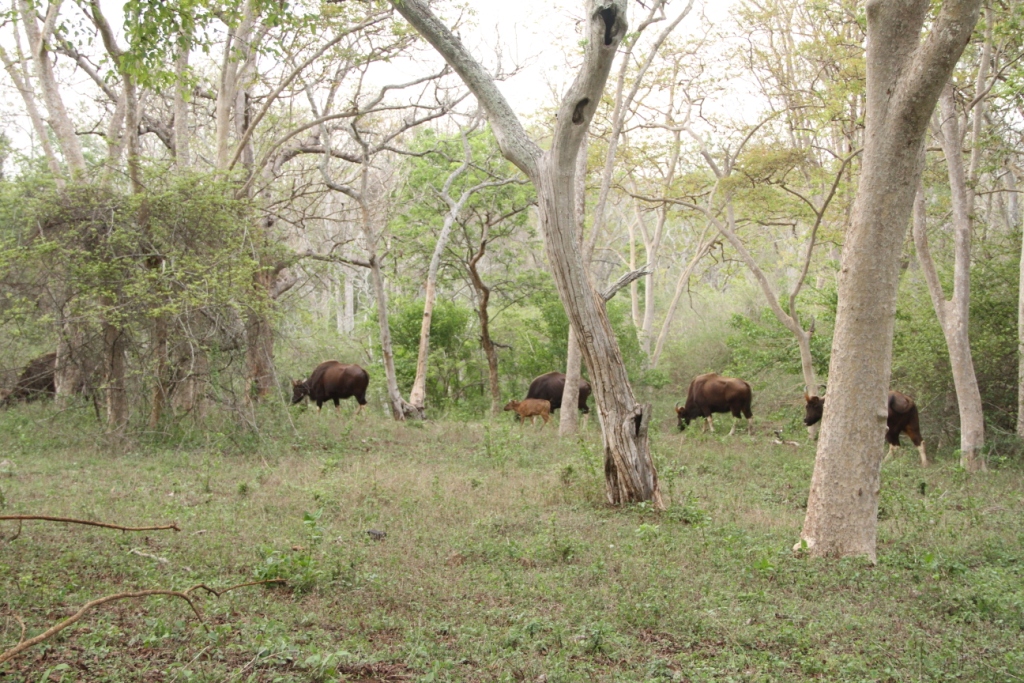
Mudumalai Wildlife Sanctuary is one of south India’s famous national parks, nestled amidst the Nilgiri Hills Biosphere in Tamil Nadu. This sanctuary is situated at the tri-junction of Tamil Nadu, Karnataka and Kerala near the Mysore plains. With an area of 321 sq km of natural forest, Mudumalai is famous for Elephant, Wild Gaur, Tiger, Leopard and Deer, as well as being home to over 200 species of bird. Continue reading

Technology, Globalization And Over The Top To Do’s

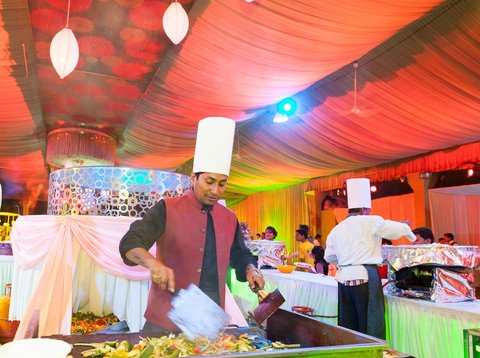
Courtesy of Ravi Sinha/Lucky Malhotra Photography.  Ravi Sinha preparing grilled vegetables to be served with saffron rice and romesco sauce, at a wedding banquet in Bangalore, Karnataka.

Courtesy of Ravi Sinha/Lucky Malhotra Photography. Ravi Sinha preparing grilled vegetables to be served with saffron rice and romesco sauce, at a wedding banquet in Bangalore, Karnataka.

Saritha Rai provides important insight into technology’s impact on the cultural practices of one community in India, and in particular with regard to their most sacred affairs:

Ravi Sinha, an entrepreneur in Bangalore, innovates constantly, tracking all the latest trends and occasionally outsourcing to outside specialists. Research and development are critical to his profits, and globalization has helped shape his business. Continue reading

Basket Cases

What strange growths protrude from this tree? Photo by Seth Inman.

There are birds around the world that use strands of different materials to craft marvelous woven nests that hang from tree branches — if you’re lucky enough to see them!

Yellow-rumped Cacique in Avian Architecture by Peter Goodfellow © Princeton University Press 2011. p95

Of course, in some circumstances it is not hard to find these pendent, or hanging, nests, as with many species of caciques and oropendolas in Central and South America (birds related to the North American blackbirds, orioles, and cowbirds). That’s right, the photo above isn’t of some weird fruit tree, but a tree-wide colony of oropendolas at Las Isletas, in Nicaragua!

Caciques, close relatives of Oropendolas, often nest beside wasp nests; orioles, only slightly more distant relatives, frequently nest near Eastern Kingbirds and Great Kiskadees. Wasps and these large flycatchers all help defend against nest predators. Yellow-rumped Caciques like the one pictured on the right start their nest building with a loop in a tangled mass of fibers that surrounds the end of a branch. Continue reading

“Often I am permitted to return to a meadow”

Some places are of no use. They remind us that not everything in life needs to be of use. Take poetry.  The meadows near Cardamom County remind me daily of this poem by Robert Duncan.

Flowers in the meadow credit Ea Marzarte - Raxa Collective

Often I Am Permitted to Return to a Meadow
as if it were a scene made-up by the mind,
that is not mine, but is a made place,

that is mine, it is so near to the heart,
an eternal pasture folded in all thought
so that there is a hall therein Continue reading

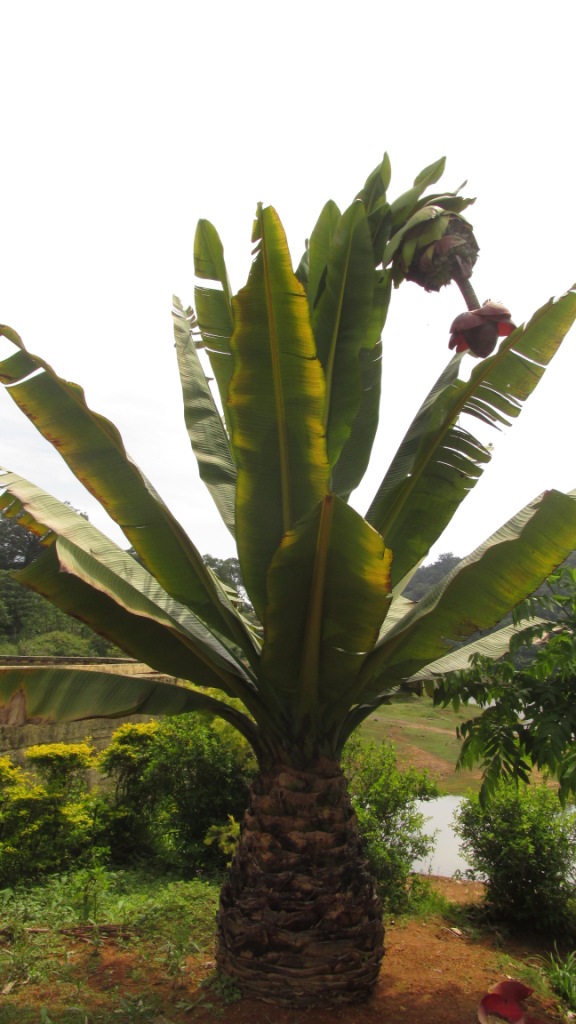
Western Hill Banana – Ensete superbum

The Western Hill Banana is a large succulent herb that naturally grows in the rocky slopes and cliffs of South India’s Western Ghats. These plants are commonly growing in the forests above 1000 meters. The fruits of this plant is used in many traditional medicines. Continue reading

Coffee and biodiversity

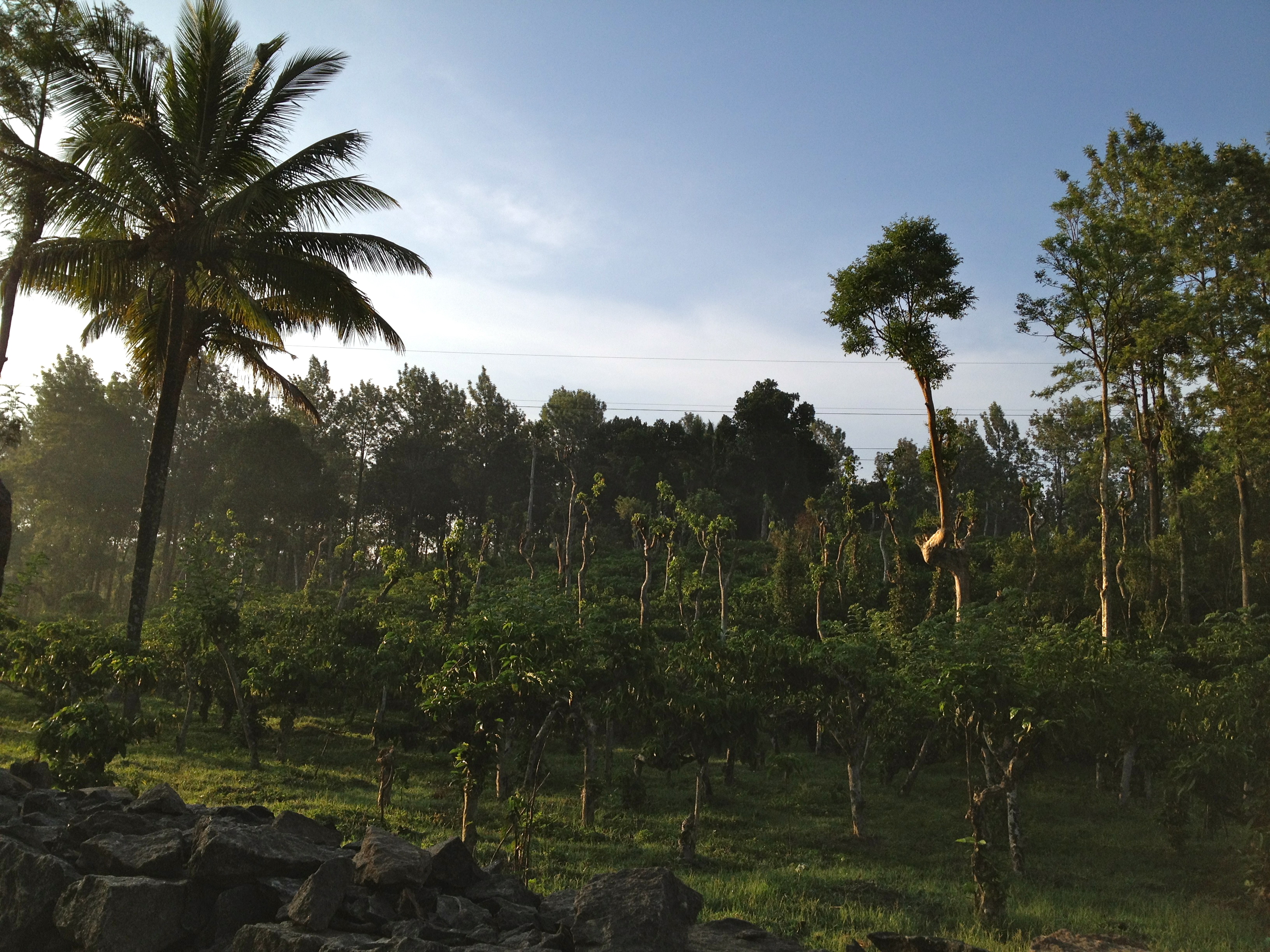
I’ve grown addicted to my colleague Anitha’s cold coffee since I got here (sorry guys but hers is just perfection). Ice cold, 70% arabica/30% robusta, locally grown coffee. India may not be known for its coffee, but in the Western Ghats of Southern India, you’ll find coffee plantations on hills and misty mountains between 800m and 1500m above sea level. One of the challenges here has been to integrate biodiversity conservation and sustainable livelihoods for farmers. Continue reading

On Language, Travel And Imagination

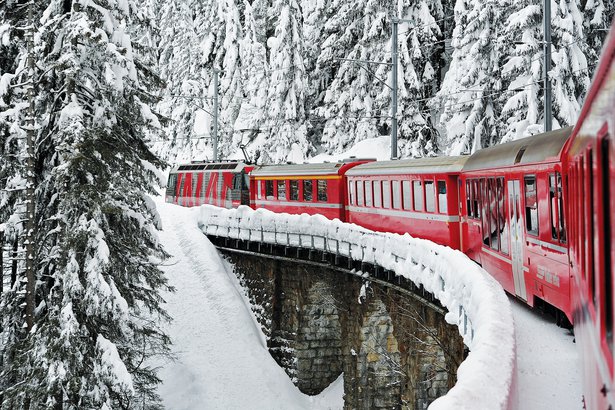
The snow-covered mountains and punctual trains of Montreux, Switzerland, summon childhood train sets, and the daydreams that accompanied them. (Harold Cunningham/Getty)

The snow-covered mountains and punctual trains of Montreux, Switzerland, summon childhood train sets, and the daydreams that accompanied them. (Harold Cunningham/Getty)

If we failed to get you reading him here, shame on us. If you choose to ignore this short piece of his, well, you have only yourself to answer to. He has had a running series of blog posts on the Atlantic‘s website dealing with the frustrations and wonders of language acquisition as an adult, a phenomenon several of us at Raxa Collective can relate to perfectly well.  He captures some of the many benefits of the process and the outcome, especially the collaborative part, in short order here:

When I was about 6 years old, I started collecting model trains with my father. We would assemble the track in the attic, put a foam mountain with a tunnel over the top, and, through the magic of a transformer, watch the trains make their rounds. My dad took me to train shows, and for my birthdays back then, I always got train sets or trestles. I had books on model trains, and books on actual trains. Both kinds showed pictures of big mountains parted by trains, small towns bisected by trains, and trains adorning white Christmas-scapes. Continue reading

Climbers, Sherpas And Everest

We recently linked to a post at India Ink that gave some backstory to an incident that was mainly of interest to people who follow the “Everest culture”–a group of people enlarged enormously by one book (if you only read the original the updated version with a new afterword is worth the price of a new copy of the book)–and members of the climbing culture. Climbers and non-climbers alike will appreciate Nick Paumgarten’s article in the current issue of the New Yorker about the Swiss climber Ueli Steck:

…who made a name for himself climbing mountains at high speed with no ropes. In a recent climb, on Mt. Everest, Steck and his climbing partners got into a violent confrontation with Nepalese Sherpas…

Continue reading