Documentaries : Black Out by Eva Weber, children searching for the light

Short electricity cuts punctuate the day here in Kerala. As if to remind us, for a few seconds in our daily life, that the electricity fairy can play hard to get. Generators always kick in in an instant though, and that is it. Elsewhere, in Guinea for instance, generators are not there to save the day. 

Only about a fifth of Guinea’s people have access to electricity. With few families able to afford generators, school children have had to get creative to find a place to read, do their homework and study for exams. So every day during exam season, as the sun sets over Conakry, hundreds of children begin a nightly pilgrimage to the  G’bessia International Airport, to petrol stations and parks in wealthier areas of the city, searching for light.
Continue reading

Dispatch From Everest

This slideshow requires JavaScript.

India Ink has a story about a group of young Indians collaborating in the upper reaches of the region’s mountains, at a time when many are celebrating the six decades-old historic accomplishment in the same region:

KHUMBU GLACIER —It was nearly 60 years ago this month that Tenzing Norgay, the Sherpa guide, and Sir Edmund Hillary from New Zealand scaled the highest peak in the world, Mount Everest. Continue reading

Best of Salim E.I.: The Harvest Dance

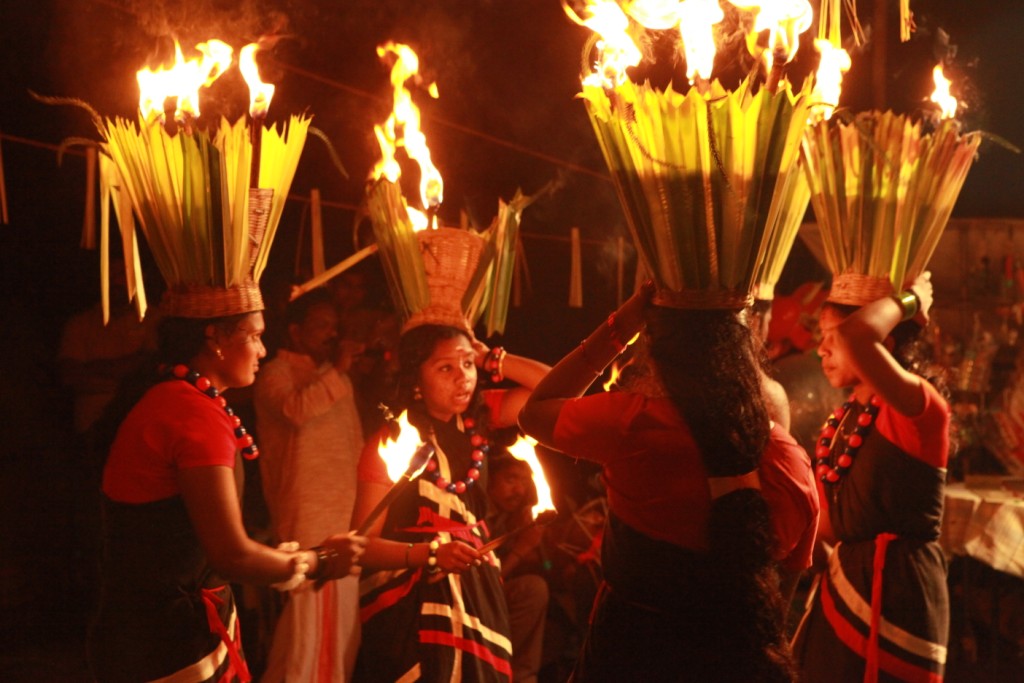
In India Kerala is famous for its Tribal folk dances. There are more than fifty well-known popular folk dances in the state which are mostly performed for religious influences, during harvesting, sowing of seeds, festivals etc. Tribal dances are often accompanied by songs & instruments.

Continue reading

The logistics dilemma: double passenger scooter or double-decker lorry ?

Transporting products around the Ghats credit Ea Marzarte My friends and I had been looking for one around town for an aftenoon, and finally I found it a week later driving away towards another town: a coir mat, the ideal support to make my salutations to the sun on. The small motorbike was actually part of a ‘caravan’ carrying people and mats from the neighboring state of Tamil Nadu.  So loaded it was uncanny, this one had either the most efficient engine or the best pilot because it made it to the top of the hill first and stopped there to wait for the others. Continue reading

Barefoot College

This slideshow requires JavaScript.

This organization and its founder came to our attention recently in a by-now familiar manner: our go-to podcast for interesting and inspiring stories of entrepreneurs, From Scratch, featuring Bunker Roy. Read about Barefoot College here and then click through their site to see more about their accomplishments:

In the late 60’s, a very small group of determined individuals in India, coming out of a sound educational system, felt it necessary to look for alternative ways of living, thinking and looking for rural solutions. Continue reading

Midway – a transmedia project by Chris Jordan

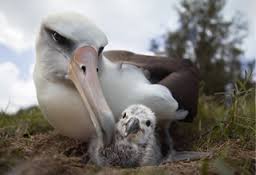
imagesThis morning’s post about the Smithsonian Ocean Portal featuring one of Chris Jordan‘s pictures from his exhibit Midway reminded me to check on his current work on the atoll. On one of the remotest islands on our planet, tens of thousands of albatrosses lie on the ground, their bodies filled with plastic from the Pacific Garbage Patch.

Returning to the island over several years, Chris Jordan and his team witness the cycles of life and death of these birds. He will release in late 2013, his first documentary feature Midway, message from the gyre.

See the  trailer after the jump. Continue reading

Idukki Dam – Asia’s First Arch Dam

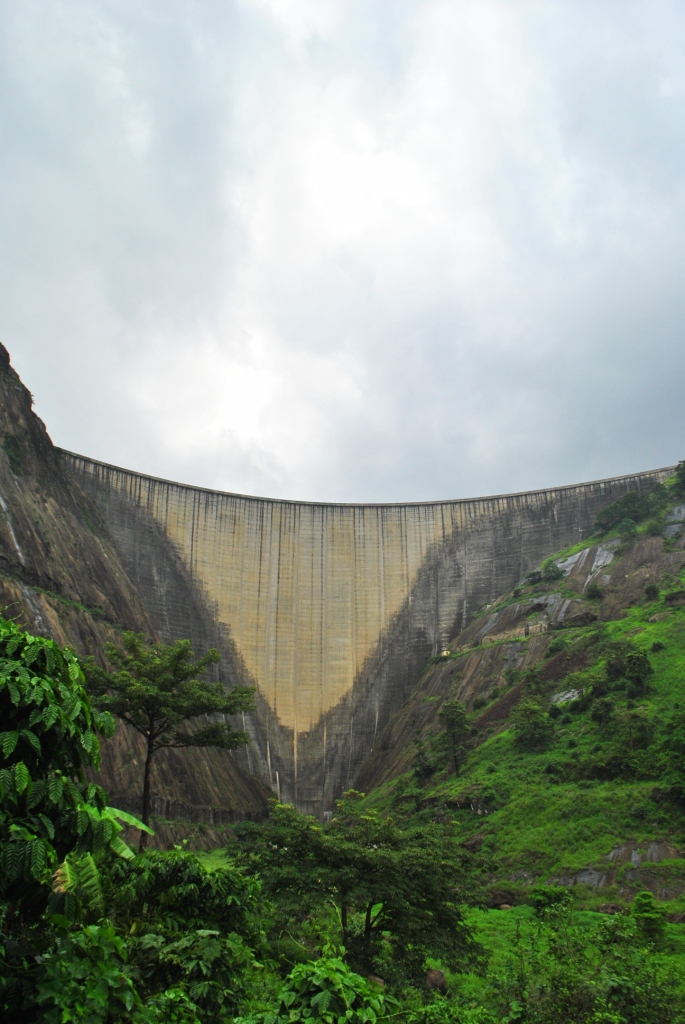
The Idukki Dam is the first arch dam built in India, as well as the country’s third tallest. Located in the Idukki district of Kerala, this 554 ft tall and 650 ft wide dam stands between the two mountains named Kuravanmala and Kuratimala, meaning Kuravan– A tribal, Kurati– His wife and Mala-mountain. It is nearly 50 km away from Thekkady.

Smithsonian In Deep Water

This slideshow requires JavaScript.

New (to us) thanks to the Smithsonian and its supporters:

The Ocean Portal is part of the Smithsonian Institution’s Ocean Initiative. Together with the National Museum of Natural History’s Sant Ocean Hall and the Sant Marine Science Chair, the Ocean Portal supports the Smithsonian’s mission to increase the public’s understanding and stewardship of the Ocean. Continue reading

Everything is good in a banana

My colleague Vinod is an expert on sustainable tourism in India, he has studied the alternatives to plastics. He explained to me that after Brazil, India is the largest producer of bananas in the world… Continue reading

7 Ways To Understand Man’s Impact On The Earth In Recent Decades

The news headlines started carrying this story more than a week ago, but it was not until now that we had the chance to understand it.  Thanks to the Atlantic‘s coverage:

The project was built in conjunction with the U.S. Geological Survey, NASA, and TIME. The images come from the USGS-NASA’s satellite program LANDSAT, which were often stored on tapes like those in the thumbnail to the right. Google started sorting through a collection of 2,068,467 images back in 2009 — 909 terabytes of data, according to Google — finding the highest quality pixels (which is to say, shots not obscured by clouds), “for every years since 1984 and for every spot on Earth.” Continue reading

Oxen Horseshoes

Photo Credits: Ramesh Kidangoor

Photo Credits: Ramesh Kidangoor

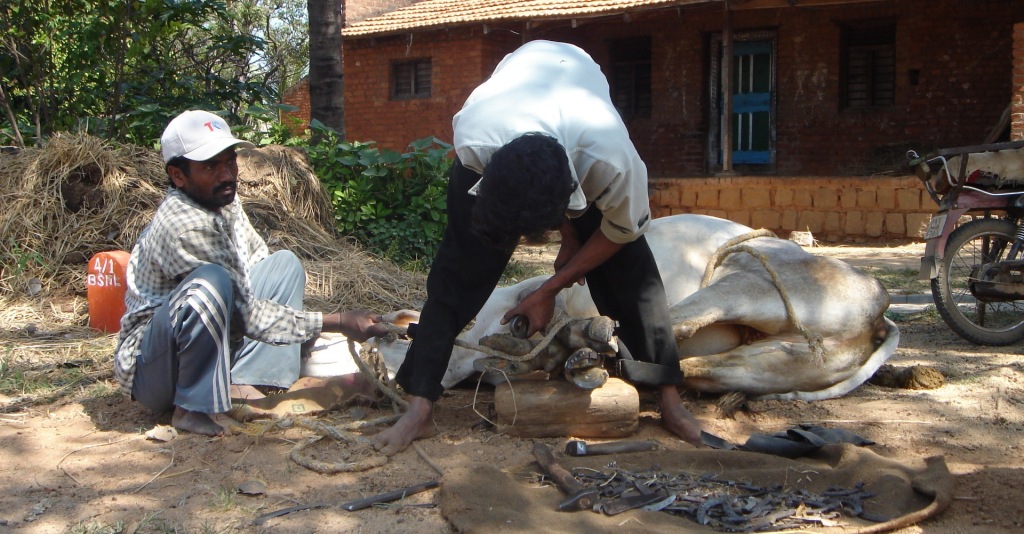
In most of the South Indian states villages are still using the bullock cart for transporting goods and people, mostly in farms and plantations. The oxen are fitted with horseshoes in order to protect their hooves from heat and uneven roads. Continue reading

Community, Collaboration, Career

If you spend five minutes listening to Gerald Chertavian in the video above, and it resonates in any manner, then you should learn more about the organization he formed.  It came to our attention, as many other great stories have recently, thanks to From Scratch, Jessica Harris’s radio show and podcast repository. Continue reading

A road paved with mixed intentions

Hotel on the lake road Thekkady

The pavement is being rebuilt on the street leading to ‘downtown’ Thekkady. Right now it looks like in many other Indian cities, which is apparently like a constant work in progress according to this article by N N Sachitanand in the New Indian Express:

Once upon a time, roadside pavements were meant for the use of pedestrians so that they could safely traverse the length of the road without being knocked down by traffic. That is why the Americans (as in the US of A) call them sidewalks. Indians have adopted and adapted to this Western concept to suit their own environment and, in the process, mangled its original purpose beyond recognition.

…or an extreme-gardening experimentation : Continue reading

Theemidi Fire Walk – Hindu Festival

Photo Credits: Ramesh Kidangoor

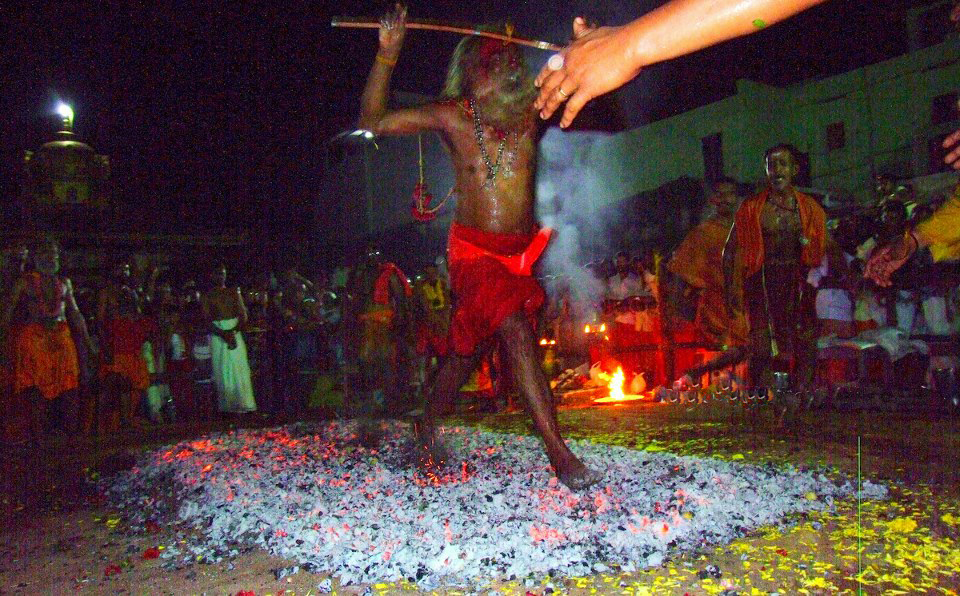
Kerala is rich in beliefs and the Fire Walk is one of the most difficult example. The person doing the fire walk must follow specific religious practices. The devotee walks through a pit of burning coals and the surrounding devotees sing hymns praising the lord. The sound of the drums and the burning of the incense make the entire atmosphere inspiring. The devotee gets in to a state ecstasy and easily walks over the fire. Continue reading

Captain Robert Scott’s South Pole Expedition, Exposed Again

This slideshow requires JavaScript.

People with an interest in exploration, expeditions, adventure have a higher likelihood of knowing who Captain Scott was.  Only an expedition photography geek, a historian, or otherwise quirky know-it-all is likely be familiar with the name Ponting. Thankfully, such people exist and they have brought Ponting back from the archival grave. Outside magazine’s website has this collection on display. The captions follow in order of the slideshow above:

1. A program for Herbert Ponting’s lectures on Captain Scott. Ponting’s lectures, which accompanied his silent films at the Philharmonic Hall in London, were a huge success, with over 100,000 people going in to hear him, including leading politicians and celebrities of the day. His films were a significant milestone in the history of the cinema. Continue reading

Natural Substitute For Some Plastics

In the first couple of years of posts, Milo was our primary resource for information related to the subject covered in this article in the current edition of the New Yorker. Others contributed information too, but Milo’s interest and seemingly encyclopedic knowledge translated into action; he started a culinary grade oyster mushroom cultivation project at Cardamom County; outlined a myco-remediation solution to a perplexing water drainage problem; and took at least hundreds, probably thousands of photographs cataloguing edible, medicinal and neither-edible-nor-medicinal mushrooms and fungi in the Periyar Tiger Reserve.  He did the latter often in the company of the knowledgeable guides from the local indigenous community, sometimes learning from them and other times vice versa.

Now that Milo is in another part of the world, this article reminds those of us in India of his myco-opportunism, and that we must do our own foraging for innovations in this realm:

Gavin McIntyre, the co-inventor of a process that grows all-natural substitutes for plastic from the tissue of mushrooms, holds a pen or pencil in an unusual way. Continue reading