
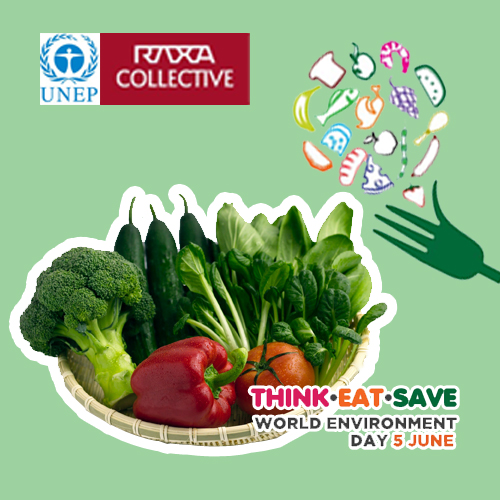
On June 5, we’ll celebrate World Environment Day. This year UNEP focuses on the theme Food waste/Food Loss. At Raxa Collective we’ll be carrying out actions and sharing experience and ideas. Come and join us with your ideas and tips to preserve foods, preserve resources and preserve our planet.
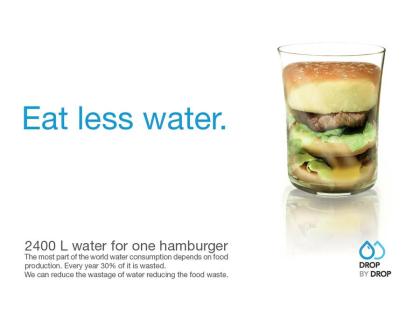
On June 5, we’ll celebrate World Environment Day. This year UNEP focuses on the theme Food waste/Food Loss. At Raxa Collective we’ll be carrying out actions and sharing experience and ideas. Come and join us with your ideas and tips to preserve foods, preserve resources and preserve our planet.
When I tell people that it’s possible to grow highly nutritional food on agricultural waste products with almost zero technology, I usually get a blank look. On a good day, someone will demand an explanation. Why would such a process, if existent, be so obscure if it could help solve malnutrition in underdeveloped communities? While I’m sure there is a logical explanation for this, it remains a mystery to me at present.


New York this week became the latest major city to launch a bike-share program. Craig Ruttle/AP
Cyclists in the USA have much to cheer in this week’s community-centric news (thanks, NPR) about several new bike-sharing programs which all use check-in, check-out systems:
…with automated stations spread throughout a city, designed for point-to-point trips. “We try to encourage people to use it … almost like a taxi,” says Gabe Klein, commissioner of the Chicago Department of Transportation.
 Our attention to entomological wonders dropped off, sadly, when Milo (whose interests and talents happily extend beyond bugs) left India last year. To keep bug love alive, we posted recently about a current entomophenomenon linking to a blog post on the New Yorker’s website; now note that another of their writers has treated it, crafting words so we might have thought of it this way ourselves (if only):
It is the nature of youth to make a racket. This happens reliably in New York City every weekday between two and three in the afternoon, when school lets out. Teen-agers spill onto the sidewalks and descend below ground into the subway, where, having loosened their uniforms and shed decorum, they occupy the airwaves—shouting, flirting, arguing, cajoling, checking in, checking out. They sing the song of themselves, loudly, jubilantly, to a rhythm that only they can hear. Continue reading

Photo Credits: Ramesh Kidangoor
Gopalaswamy Betta Temple is located in the Chamarajanagar district of Karnataka. This temple is adjacent to Bandipur and Nagarhole National parks. Gopalaswamy is the other name of Lord Krishna. The temple was built by the King Cola Bellala during AD 1315. Continue reading

On June 5, we’ll celebrate World Environment Day. This year UNEP focuses on the theme Food waste/Food Loss. At Raxa Collective we’ll be carrying out actions and sharing experience and ideas. Come and join us with your ideas and tips to preserve foods, preserve resources and preserve our planet.

Here in India, food waste reduction is considered as mere common sense and rarely even mentioned, that’s why chef Nitin Padwal taking the time to explain his work for a restaurant kitchen with “0% sent to landfill” is precious and we’ll also deliver a case study on our own work here at AllSpice in Cardamom County. Nitin Padwal used to work at the Taj Hotel in Nashik and the Renaissance Marriot in Mumbai before he became Head Chef at Petrichor at The Cavendish London. Since his arrival there in 2010, Nitin Padwal championed the idea of a sustainable restaurant, and has made substantial improvements in that area. Watch the interview… Continue reading
On June 5, we’ll celebrate World Environment Day. This year UNEP focuses on the theme Food waste/Food Loss. At Raxa Collective we’ll be carrying out actions and sharing experience and ideas. Come and join us with your ideas and tips to preserve foods, preserve resources and preserve our planet.
Recently when thinking about the universal recycling symbol it occurred to me that many of our expectations on how basic human needs are met can be influenced by the three concepts of Reduce, Reuse and Recycle.
Moving is almost always a bittersweet experience.
Over the past week, my move from Ithaca back to California certainly erred more on the side of bitterness, and like many of my peers, I find it very difficult to believe that I am now a Cornell alumnus. But the four years have indeed come to an end, and I now sit in my room in Cupertino, wondering what graduating from the Hotel School would mean for me. In the process, I thought back to some of the advice that professors and mentors had given to me during my undergraduate career. It’s with great pleasure that I share some of that advice today with my fellow Cornell students and alumni.

Cornell central campus: a sight that I will dearly miss.

Lindsay France/University Photography.
Annie Leonard visits campus in April.
Allegra was recently asking several Raxa Collective veterans (with the vast experience of two years maintaining this site), in advance of posting this, whether we had posted any “stories of stuff,” or heard of Annie Leonard before. The answers she got, incorrectly, were no and yes. Apparently it was forgotten that we have mentioned her “stuff” once previously in one of our earliest posts (note to WordPress: please improve your search function), but she most certainly had an influence on our interest in bringing more information from the field into the public domain using online distribution. So this news item caught our attention:
Annie Leonard, environmental activist and creator of the 2007 viral hit video “The Story of Stuff,” spent nearly 25 years traveling the world investigating environmental health issues and ecological sustainability.
This spring, she finished a long-overdue project she had put on hold during that time: completing her Cornell master’s degree. Continue reading

Photo Credits: Ramesh Kidangoor
The city of Kottayam is referred to as both the “land of literacy” due to its numerous institutions of higher eduction, as well as the “land of Latex” due to its rubber plantations. The Indian government has just added the moniker of “land of the mural paintings”. Continue reading

On June 5, we’ll celebrate World Environment Day. This year UNEP focuses on the theme Food waste/Food Loss. At Raxa Collective we’ll be carrying out actions and sharing experience and ideas. Come and join us with your ideas and tips to preserve foods, preserve resources and preserve our planet.
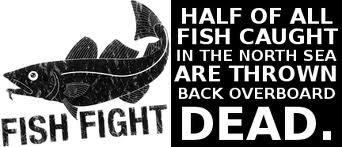
…and about 80 per cent of Mediterranean stocks and 47 per cent of Atlantic stocks are overfished. It may seem rather odd but the European Union’s policy to avoid overfishing consists in tossing dead fish back in the sea if a fleet exceeds its quota.
For decades industrial fleets have been subsidised to plunder the European waters working under the rules of the Common Fisheries Policy devised in the 1970s. And the rule of ‘discards’ has been let’s say counter-productive in reviving the fish stock. The practice allows fleets to net quantities of fish exceeding their quota, then simply throw any unwanted dead fish overboard.
On June 5, we’ll celebrate World Environment Day. This year UNEP focuses on Food waste/Food Loss. At Raxa Collective we’ll be carrying out actions and sharing experience and ideas. Come and join us with your tips to preserve foods, preserve resources and preserve our planet.
As a child, I was always told to finish eating my meals because there were starving children in poor and faraway lands that would gladly trade places with me. I could not exactly picture what that meant, and the rebelious part of me always wanted to stick a postage stamp on my plate and send it to these children. No one who grew up with such abundance, I think, could trade the fresh memory of a full meal for a clear picture of hunger.
Being from Texas (and proud of it, so don’t mess with that), with its long “bigger and better” history and wonderful mythology of abundance and its can-do certainty, I did not “get it”. Now, the hazy memories of those dinners and parental wisdom are coming into perspective with my ability to follow and understand news from around the world.

The article is worth the time, and the subscription, for reasons we pointed to here, here and here. Click above to go to this brief video for another enticement to read it and you will also see this additional wording from the author:
Many Americans got their first glimpse of Ueli Steck in the 2010 short film “The Swiss Machine,” which depicts Steck speed-climbing the North Face of the Eiger, as well as the Nose on El Capitan, in Yosemite. This short video consists of excerpts from that film. I approached Steck almost a year ago, in the hope he’d allow me to write a Profile of him, but he was hard to pin down. Continue reading

Lemons are common in the South Indian hill ranges. Several varieties grow in the Western Ghats, most of which are primarily used for making pickles. Continue reading

Courtesy of Deepika Kundaji. Bottle gourds growing in the Pebble Garden in Auroville, Tamil Nadu.
Our friends on the east coast (to be specific, in the vicinity of the town where the early scenes of the book and movie, Life of Pi, took place) are at it again with out of this world innovations:
Now that June is right around the corner, farmers and economists in India are anxiously awaiting the arrival of monsoon season, which will bring up to 80 percent of the country’s annual rainfall. Continue reading

Yanacocha Reserve, Ecuador
The adaptor for my very sleek, efficient and trendy computer broke down and I am a thousands of kilometers away from the brand store. It was a second-hand computer, I’m a vintage kind of gal you see, so I was not exactly shocked that after 4 years the computer may need care. I soon realized though that the local resellers did not have a replacement for the plug, only a newer bigger version for a computer no one has yet. So I tried to have the adaptor fixed. It turned out the white well-rounded adaptor was not made to be fixed.
That’s what planned obsolescence is about : designing objects for the bin, if you want to know more about this industrial method you should watch The Story of Stuff.
Are there solutions to shift to a less wasteful consumption ? Governments, France and the European Union included, are currently at work on laws to implement longer guarantee periods, to encourage companies to offer replacement parts for 10 years after manufacture and to inform consumers on the expected longevity of the product.
And the corporate sector ? A growing number is getting organized in a circular economy :


