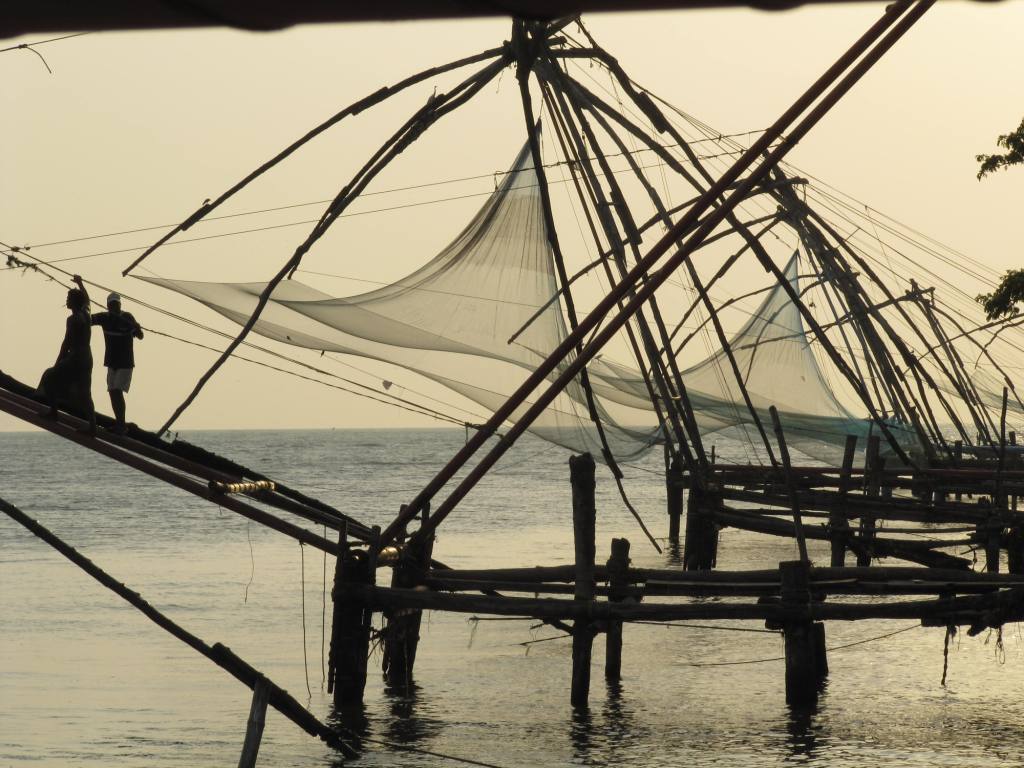
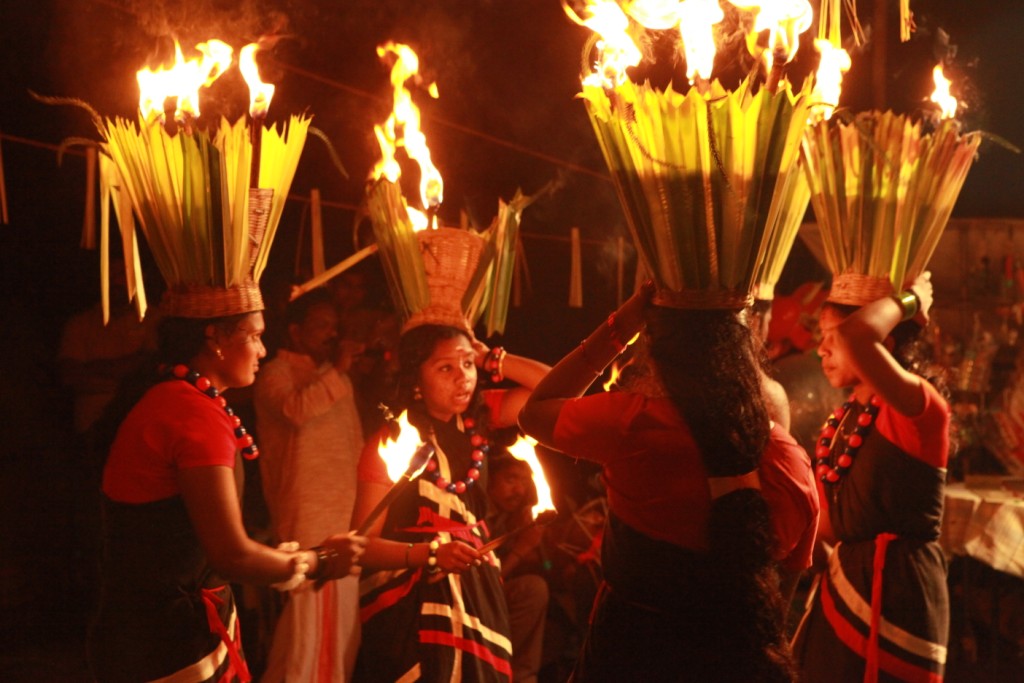
Sometimes you look at workers through a tourism car window and you think: they may be doing the same gestures that their ancestors were doing centuries ago.
Bolgatty Palace – Kochi
The Bolgatty Palace was built in 1744 by the Dutch and later taken over by the British. Today it is a hotel run by the Kerala Tourism Board. The palace is located on Bolgatty Island, one of the islands that form part of the city of Kochi. It is a two-storied building with well-laid verandas on both sides facing the seas. Set amidst lush, tropical greenery, this Dutch heritage building has the added advantage of a spectacular view of the backwaters.
Continue reading
Artisanal Glass & Natural History
An article in today’s New York Times by C. Drew Harvell profiles the Blaschkas, glassmakers who were commissioned to create anatomically perfect sculptures of marine creatures for scientific purposes starting in the late 1800s, and current efforts to find living specimens of the same. From the introduction to one of the original collections, at Cornell University:
Before Jacques Cousteau and the aqualung, before Kodachrome and underwater photography – there were the Blaschkas, father and son glassworkers who produced some of the most extraordinary glass objects that have ever been made. Their work has been described as “an artistic marvel in the field of science and a scientific marvel in the field of art.”
Artifacts inevitably reflect the cultural values leading to their creation. In 19th century Europe and America, an explosion of interest in science and education directly affected Leopold and Rudolf Blaschka. Reflecting these interests, new museums were built and opened to the public. They differed from earlier museums not only by admitting the public but also by featuring collections that illustrated science and natural history and often displayed systematic arrangements of plants and animals.
Bird of the Day: American Kestrel
Kathakali: non-speaking communication as an art form
My colleagues pressed me to arrive at Kathakali half an hour early : “You cannot miss the make-up session”, they insisted. Kathakali is non-speaking theatre you see. So the performance starts early on, before the show even starts. Continue reading
Tamarind Tree Flowers
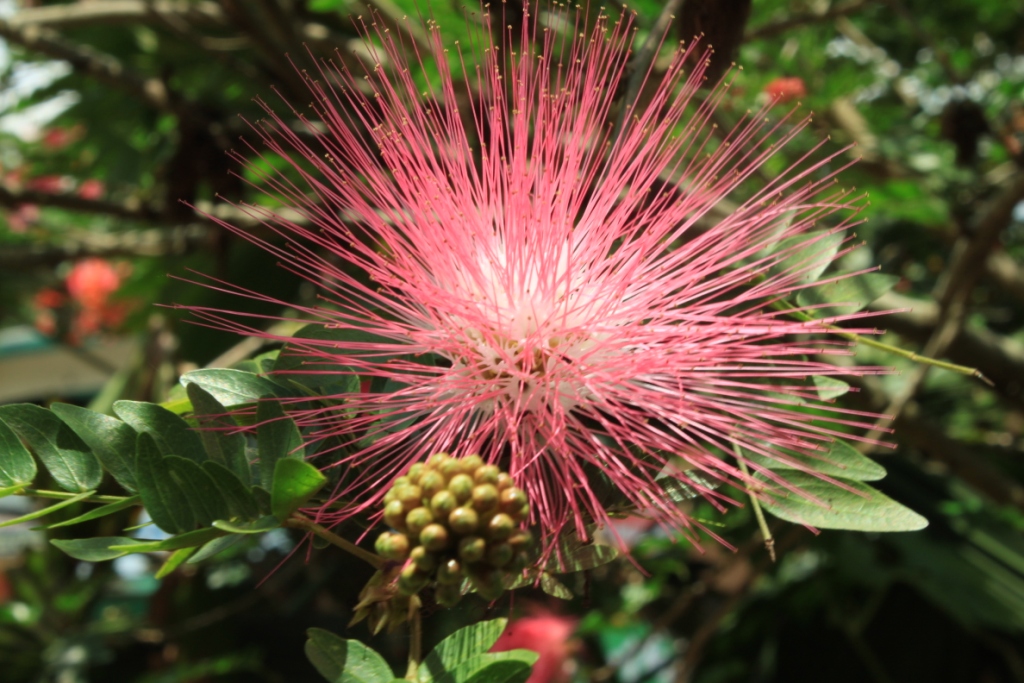
The Tamarind is a large evergreen tree that grows up to 30 to 35 metres in height with beautiful flowers. Tamarind grows all over India, especially in hot and dry climate. Continue reading
Egg Coloration

Gray Catbird nest with eggs. Photo by Flickr user JMK Birder.
In my last post I covered Killdeer eggs and nests, focusing on their pyriform shape and mottled coloration. Here I’d like to talk a bit about egg pigmentation in more detail, since variation in patterns and colors is so fascinating in itself!
We saw with Killdeer that the spotted coloration of the eggs helped them blend in better with their surroundings, but what about eggs that aren’t marked at all? Well, white eggs, as we might assume, don’t have much camouflage potential unless placed in a white background, which is essentially limited to very light sand or gravel. White eggs, therefore, need to be disguised in other ways. They can be covered by things like feathers or vegetation, which is what many waterbirds do–wet leaves or seaweed can even stain parts of the eggs brown! They can also be laid in burrows or cavities where they won’t be seen anyway, which is what many woodpeckers, parrots, and owls, among other species, do.
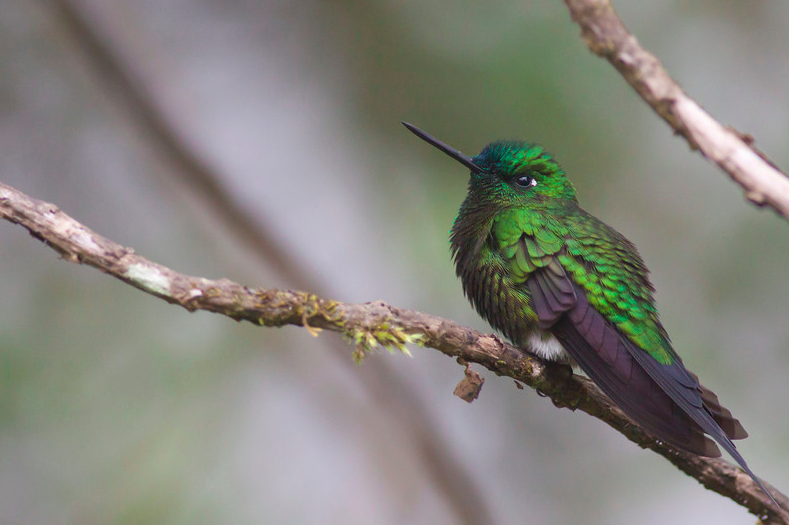
Bird of the Day: Mexican Sheartail Hummingbird
Malayalam font: research and reinvention at Thought Factory Design
One of the things you notice first when you arrive Kerala is the beautifully curvy and mysterious script. The Malayalam alphabet consists of 56 letters. Its rounded form comes from the fact it was primarily handwritten with a sharp point on dried palm leaves. Continue reading
Spying on Mammals: Camera trapping in Ecuador
Hey Raxa readers, I thought I’d share with you the process of putting up a camera trap in a tree, and also a couple of videos that I recorded with the camera trap. What adorable rodent did I get a great video of in a shade coffee plot? Take a look and find out! Continue reading
Community-Enhanced Blogging
On occasion we have linked to stories in The Atlantic, one of the oldest continuously published magazines in the world. Most recently we have been paying attention to a science writer there. One writer we have not had occasion to link to is Ta-Nehisi Coates, who writes often about race, social justice, politics and other topics we care deeply about but which are not the focus of this blog. He writes for the print magazine but he is also among the most prolific bloggers on the magazine’s website. He has just posted a profound note (pasted in full below, but please click here so he gets full “internet metrics” credit for it) about the importance of community, aka The Horde, in his writing:
Last night The Atlantic won two awards. The first was for best website. The second was for essays and criticism. The essay in question was written by me. In my mind, these awards are linked. Writing for the website has fundamentally changed how I write in print. Continue reading
Kerala’s Classical Music
Musical traditions in Kerala consists of both vocal and instrumental forms, the latter gradually overtaking the former in terms of popularity. Sopana sangeetham (classical music) is a typically Keralan style of music. The name comes from the fact that it was recited at the steps of the temple. Some consider sopana saneetham as merely a rustic variation of a local style of singing, sharing some elements with classic Carnatic music. Continue reading
If You Happen To Be In Phoenix
Click the image above to go to the website of these entrepreneurs who seem to be on their way with a new form of aviation. Just today the plane made its first landing and stayover en route from West to East coast of the USA. You can visit the plane if you happen to be in Phoenix between today and Tuesday:
The first leg of the 2013 Across America mission was concluded successfully. Bertrand Piccard did a wonderful job throughout the flight, bringing HB-SIA safely from San Francisco to Phoenix, and landing at 00:30 am MST (UTC-7) on Runway 08, Saturday May 4th. Continue reading
Bird of the Day: Indian Roller
Simple health tips to travel in Kerala from our Ayurvedic doctor
The first aid kit I packed to come here in Kerala is the size of a small shoebox. Except for mosquito repellent and cold cream I have yet to use it, and although I should be relieved, I am annoyed. It’s the heaviest part of my luggage and I’ll probably carry it all back home ! A lot of this medication treats tummy-aches and Kerala has a strong system of traditional medicine, Ayurveda, that handles those issues well and without the long tail of potential side effects.
“You were right to take precautions, when traveling you never know where you’re going to land and what you’re going to find. Kerala is rich in water sources and is not at risk for Malaria. But you may want to travel to other parts of India which are less fortunate in those regards.” Dr Sulficker reminded me. Dr Pameela Sulficker is the Ayurvedic doctor here at Cardamom County, she introduces travelers to ayurveda at the Ayura Wellness Center. Continue reading
Getting It Done, With Attitude

Harvard Magazine writes about a man we have appreciated since hearing him interviewed on a show whose podcasts with some of our heroes we have mentioned in previous posts. It is easy to perceive Wurman as a world class pain in the neck. Listen to the end of that podcast and you learn that he is self-aware of this. For those who know ourselves to come across as unreasonable, contentious, etc. Wurman is an inspiration worthy of the pantheon:
Described by Fortune magazine as an “intellectual hedonist with a hummingbird mind,” Wurman created and chaired the TED conference from 1984 through 2002, bringing together many of the world’s pathbreaking thinkers to share their ideas and spark discussion. Continue reading
Snake Worship
The origin of snake worship goes way back in history in many parts of India, but only in Kerala is it such a living tradition. In earlier times, in almost every Hindu household the southwest corner of the compound was set apart for a shrine called sarpakavu as the propitiation of the serpent god was considered essential to the wellbeing of the family. There are several legends associated with snake worship; it is believed that soon after Parasurama created Kerala the land with thick forests was inhabited by poisonous snakes. It is believed that people believed they could appease them through worship. Continue reading
Bird of the Day: Cattle Egret
Living according to nature : trials and errors
Back home in Paris I have exhausting reactions to pollens and fruits. As if I was allergic to nature, to my own environment. Here in the Ghats, I live in the forest, I’m surrounded with foreign trees, I eat exotic fruits. Yet they don’t seem to provoke any negative reaction in me. I can get rid of the first signs of headache with a cup of coffee. As if here I could let myself let nature take care of business.
When taking my first yoga lesson in India today I realized that when I apply my habitual automated thinking to my resolutions of living according to nature, it backlashes. Continue reading
CUBs Focal Species Close-up: Killdeer
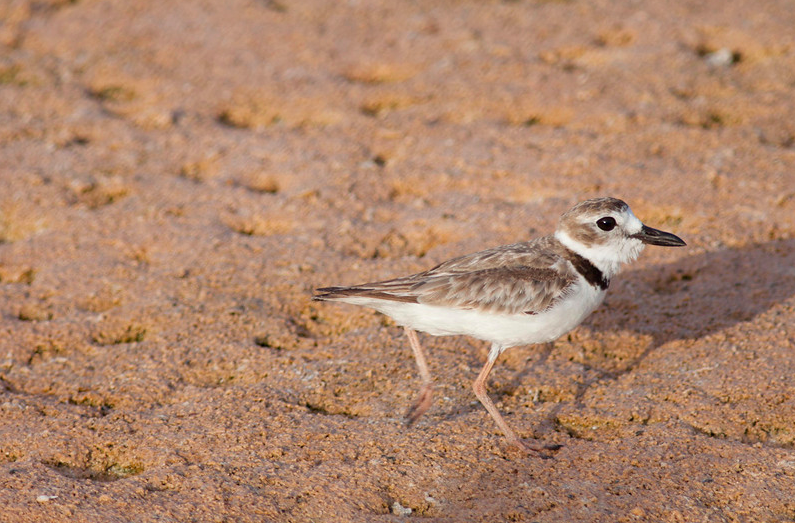
If you haven’t heard of CUBs–Celebrate Urban Birds–yet, click here. Unlike the rest of shorebirds in the family of plovers, dotterels, and lapwings, Killdeer inhabit places other than the beach. Why? In part this is because they enjoy expanses of gravelly rocks and short grass, and there is only so much coastline. With all the parking lots, golf courses, well-maintained lawns, grazed pastures, and athletic fields in the US alone, it isn’t surprising that they took to the niches that were much more open to a ground-dwelling bird than the fairly packed shores. The fact that Killdeer have chosen homes that quite often happen to be in (sub)urban areas points to the relative comfort the species has for human proximity, and to a degree explains their successful expansion throughout North America as year-round residents. Continue reading