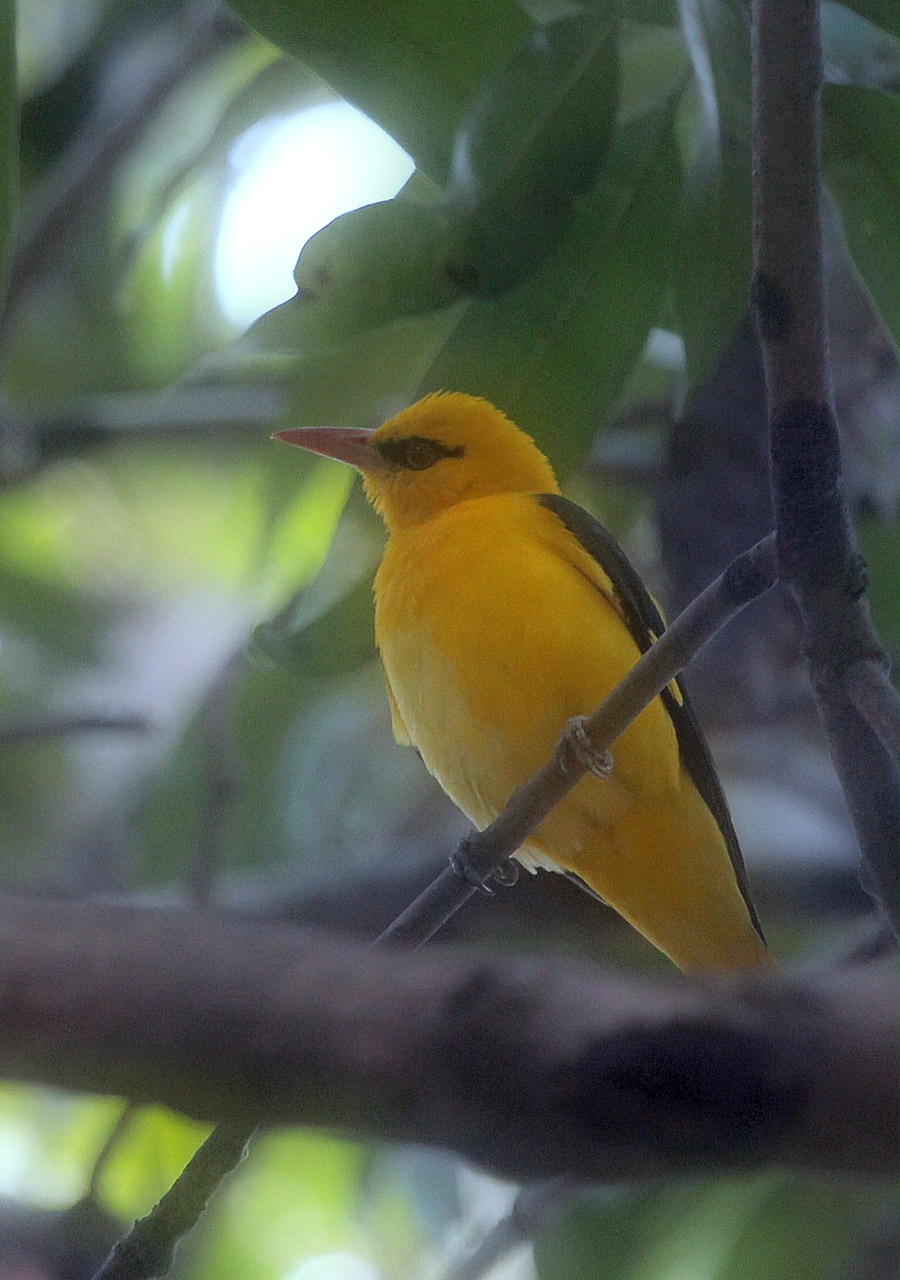
Lalbagh Gardens, Bangalore
Lalbagh Gardens, Bangalore
We used the terminology natural born killers too soon. Apparently these unassuming creatures are the real efficient ones. And, like cats, disguised as gracefully admirable, and often unnoticed. In today’s New York Times Science section there is a story by one of our favorite science writers:
Science Times: April 2, 2013
New research suggests that dragonflies may well be the most brutally effective hunters in the animal kingdom. Continue reading
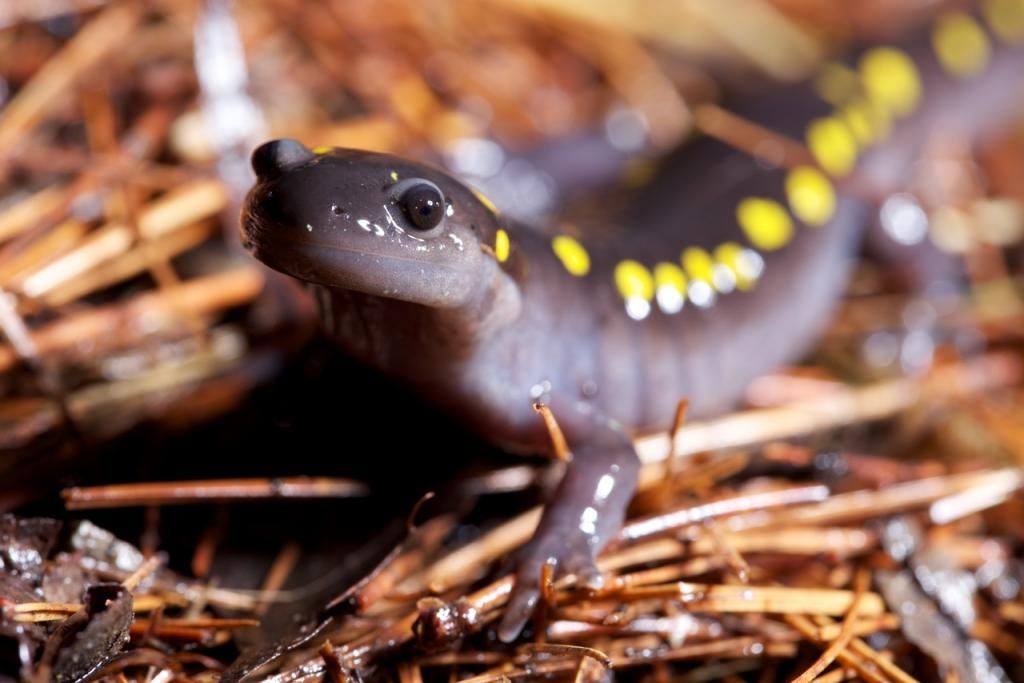
Spotted Salamander by Brian Magnier
Last night, at forty-odd degrees Fahrenheit and under a light drizzle, the salamanders of Ithaca’s Bull Pasture Pond signalled that spring has come. Before I explain, let me tell you a little bit about salamanders:
“The Americas have far more kinds of salamanders than all the rest of the world put together,” the Conant and Collins Field Guide to Reptiles and Amphibians reads in its introductory passage to the order Caudata. Species in eastern and central North America range from barely two inches to nearly four feet long, and some species are practically fully aquatic while others prefer only damp environments. Most of them are active at night and hide during the day, which is an easy way to differentiate them from lizards (except for the gecko family of lizards, which is primarily nocturnal). Other key differences are that lizards have scales on their bodies and claws on their toes, while salamanders have smooth or warty skin (just look at the slime in these photos) and no claws.

This has captured our attention, and will not let go. Why? Maybe it is because the artist’s name (but definitely not his work) is identical to that of another non-mainstream artist who, according to the most widely used search engines, is alot more well-known. But that cannot be all there is to it. For some it could be the strong memory of Grand Central Station and the seeming incongruity of its use as a stage, even on the occasion of a birthday party. For others it may be as simple as a question. What are those costumes? A post in on the New Yorker‘s website explains:
…Cave, who was born in Missouri, in 1959, and is based in Chicago, where he serves as director of the Art Institute’s graduate fashion program, has been producing Soundsuits—which can be displayed as inert sculptures, or can be worn, often by their creator, “activated” to produce a variety of noises—for nearly twenty years. He has made Soundsuits from an array of found materials including dryer lint, sequins, sweaters, socks, buttons, feathers, human hair, and vintage toys. His first Soundsuit was made of twigs, in reaction to the beating of Rodney King. Continue reading

Kadavanthra, Ernakulam

traditional house
Traditionally the architecture of Kerala has been of a humble scale, an ensemble of simplicity and elegance tailored to suit the climate and culture of the state. The low walls, sloping roofs and projecting eaves of ancient houses were built for protection against heavy rains and intense heat. The architecture of Kerala tells many stories; the way its structures have been designed not only speaks about the artistic and technical capabilities of the craftsmen, but also about the progression and evolution of its society. Continue reading
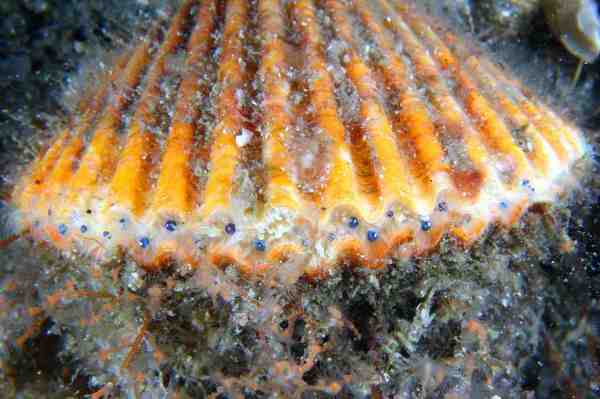
Unless you are an avid scuba diver, when you think of scallops, you probably think of linguine and garlic more than oceans and shells. That’s because we only eat the muscle of the scallop: You never see them in context.
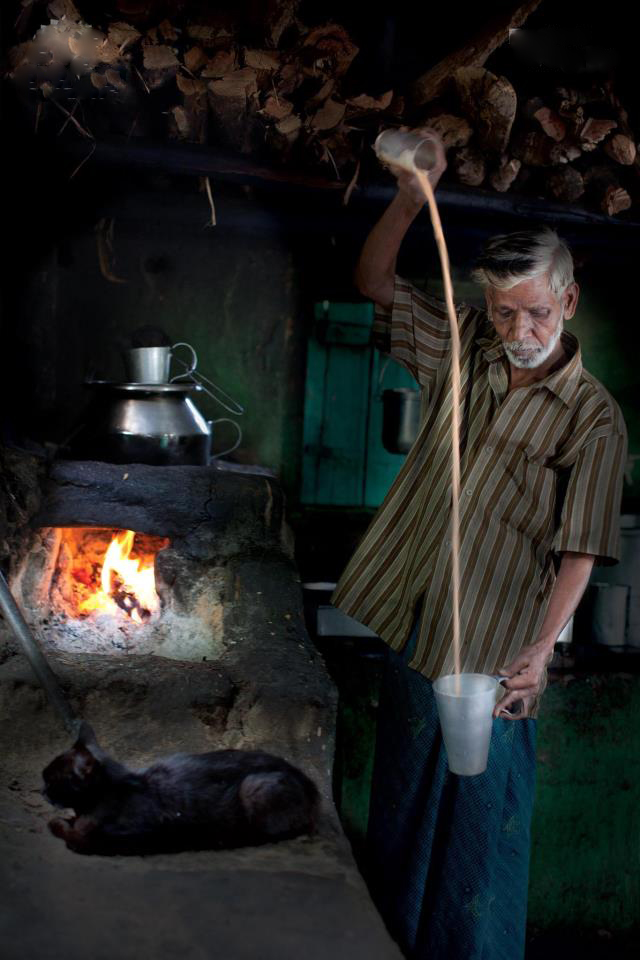
Photo Credits: Shanavas
Tea stalls are an integral part of Kerala’s culture. These tiny restaurants offers a chance to enjoy traditional tea and Kerala snacks in authentic style. It has become something of a national pastime to enjoy conversation and a cup of chai masala or black tea at the end of the day. Parippu vada (lentil fritters), Ulli vada (onion fritters), and Pazham pori (banana fritters) are the most popular snacks enjoyed at tea stalls. Continue reading
For those of us non-Indians living in this colorful place, thanks to the Atlantic Monthly‘s decision to publish these photographs on its website. That way, when we write home to family and friends, they will not have to just take our word for it. The will see: India is incredible.
The charisma of whales is normally associated with their size, their ancient history, their apparently gentle approach to life. But it is not only those; the eyes have a role to play in why we love these creatures, among others (more on which in a subsequent post). Thanks to Alex Madrigal and The Atlantic for their attention to this topic:
Both humans and whales are mammals, so our eyes are derived from a common ancestor. Not only can we look at whales and they can look back at us, but we know enough about optics to infer their eyes’ capabilities from their anatomy. Animal eyes can be imagined as technological systems evolved with biological materials.
“We will make the fairly bold claim that it is sensible to approach eyes in essentially the same way that an optical engineer might evaluate a new video camera,” write Michael Land and Dan-Eric Nilsson, the authors of the Oxford University Press treatment of our topic, Animal Eyes.
Their eyes capture light in ways we can understand. Their eyes have a focal length. Their eyes have a maximum resolution.
So, what does the world look like to a whale? Continue reading

Kindi
The Kindi is integral to all rituals and ceremonies in Kerala. The spouted vessel is made out of bronze (odu), and is mainly used for Hindu’s Poojas. In Kerala each and every household keeps a kindi for special occasions. Continue reading
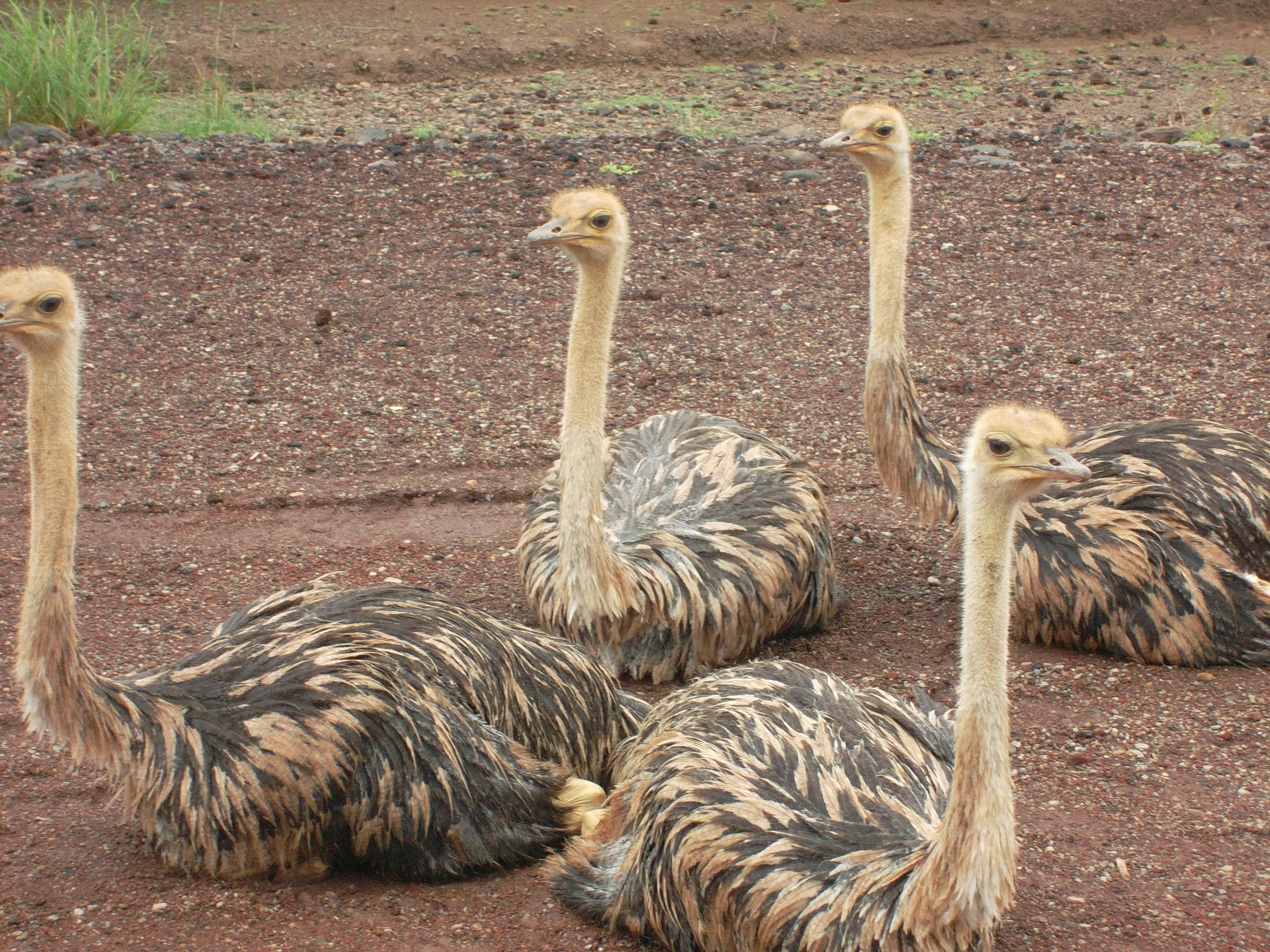
Photo Credit: John Mason

Ernakulam

Photo Credits: Ramesh Kidangoor
Kailasanatha temple is the largest and most important of the temples built by Rajasimha, the last king of the first Pandyan empire. Dating from the 7th century, this is one of the oldest temples in Kanchipuram and is a rare example of the Dravidian style. A wall of fifty-eight small shrines further encloses the main shrine. Continue reading
Thirty years ago, Iraq’s Mesopotamian Marshes were referred to by biblical scholars as the Garden of Eden. Fed by the iconic Tigris and Euphrates rivers, for more than 7,000 years this enormous marshland of over 6,000 square miles (twice the size of the Everglades National Park) provided a bountiful home for both wildlife and humans. A large population of indigenous people, the Ma’dan Tribes known as Marsh Arabs, had thrived there for centuries. But in the political conflicts of the 1990s, Saddam Hussein attempted to eradicate them by destroying the marshes on which they depended for survival. The canals and embankments that both diverted the river water away from and prevented it from entering the area caused the marshes to shrink to less than 10% of its original size, transforming the remainder into a parched, lifeless desert; forcing the wildlife and the people to leave.
We are happy to write that the story doesn’t end there. Continue reading

Abrams, publisher of the book above, was also publisher for another conservation-friendly artist featured on our pages. They have a series of books that showcase wonders of nature in spectacular fashion, and we encourage a visit to their site by clicking the image above:
Photographer and conservationist Bryant Austin’s breathtaking photographic project Beautiful Whale is the first of its kind: It chronicles his fearless attempts to reach out to whales as fellow sentient beings. Continue reading
San Jose, CA
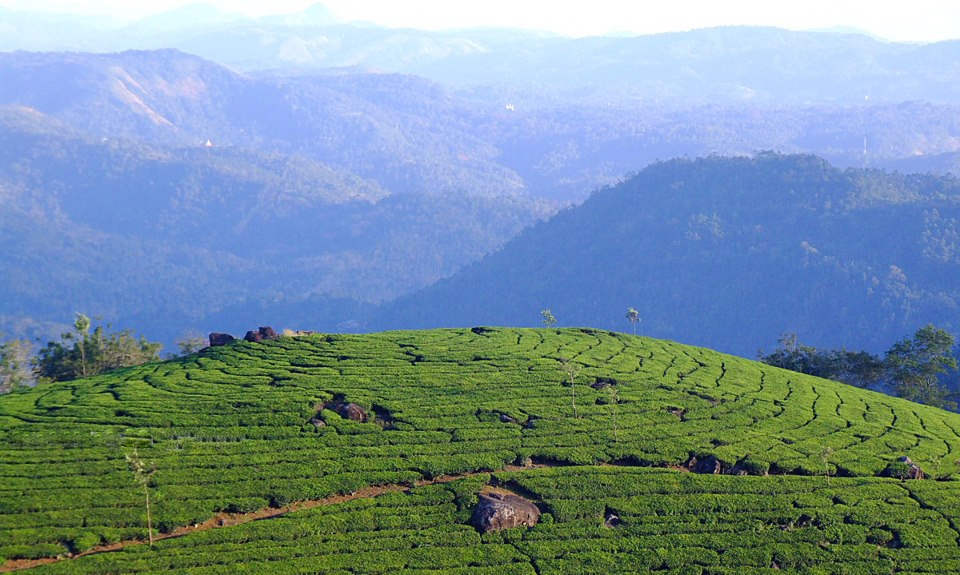
Photo credits: Ramesh Kidangoor
Munnar is a major tea producing area of South India. Over time Munnar became the headquarters for several tea plantations scattered throughout the High Ranges, and the need to service these estates led to the growth of Munnar town. With the attending “Hill Station” tag Munnar became a centre for tourism as well as plantation life. Continue reading

For those of us living and working in Rising Asia, much in this book either rings true from experience or is eye-opening about things that may be lurking just around the corner, out of sight. Kerala is a long way from Lahore, in every sense. But at least the basic notion–that the world has only in the last year or so become one in which a majority of us are urban dwellers for the first time in human history, and not long from now it will be a super-majority–can be felt in Raxa Collective’s back yard. The great migration from paddy to city is noisily happening all around us each day. What of it?
Mr. Hamid has alot to say about that, good, bad and ugly. An interview he conducted to discuss the book can be heard in this podcast. The book is likely to anger some, but it has received positive reviews, even from often-tough critics:
“Mr. Hamid reaffirms his place as one of his generation’s most inventive and gifted writers.” –Michiko Kakutani, The New York Times
 Organikos