Photo Credit: John Mason
Photo Credit: John Mason
In the mid-1990s I moved with Amie and our two sons Seth and Milo from Ithaca, NY in the USA to Costa Rica for my first post-Ph.D. venture, working with the governments and business leaders in each country of Central America. The project combined a few then-young strategic and economic development models–competitiveness, economic clustering, and sustainable development–with several of their luminary proponents from Harvard Business School and at the Harvard Institute of International Development. My job was to take those ideas and apply them to my area of expertise as a newly minted Ph.D. from Cornell University.
Sustainable Tourism Development was the terminology applied to this hybrid. In 1996, the third country in my regional rotation was El Salvador, after Costa Rica and Nicaragua. I have not had reason to think of El Salvador lately, but a nearly-lost article in my to-read-later folio popped out today:
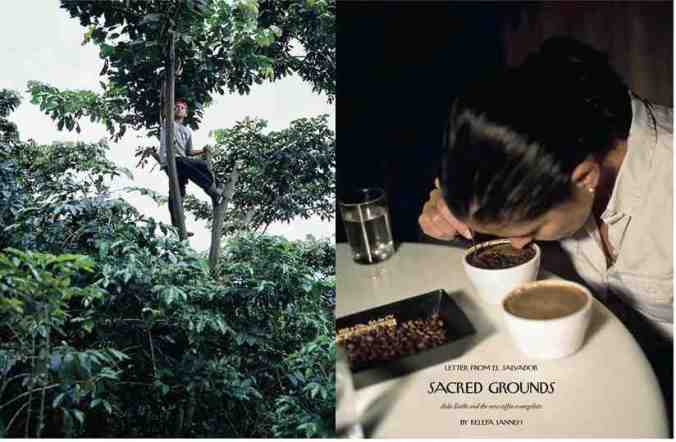
Aida Batlle is a fifth-generation coffee farmer and a first-generation coffee celebrity. On the steep hillsides of the Santa Ana Volcano, in western El Salvador, she produces beans that trade on the extreme end of the coffee market, where a twelve-ounce bag may cost twenty dollars or more and comes accompanied by a lyrical essay on provenance and flavor. These beans have made Batlle an object of obsession among coffee connoisseurs and professionals–the coffee equivalent of a European vigneron–and she is willing to play the role, if it helps raise coffee’s status. Continue reading

Mumbai

Photo credits: Best Of Kerala
Throughout history the people of Kerala have had a special affinity for gold ornaments compared to people in other parts of India. Keralites love gold and the state is noted for a variety of gold designs made by traditional goldsmiths. Due to the influences of modern-day fashions the current trends are quite different. Continue reading

San Francisco Bay Trail, CA
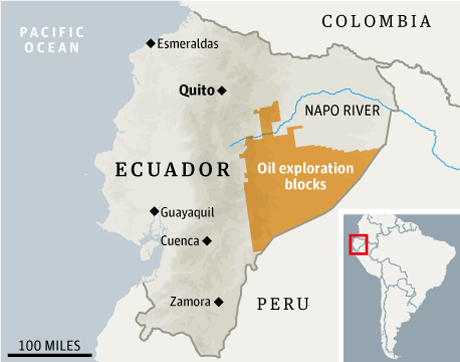
From today’s Guardian (click the image above to go to the source):
Ecuador plans to auction off more than three million hectares of pristine Amazonian rainforest to Chinese oil companies, angering indigenous groups and underlining the global environmental toll of China’s insatiable thirst for energy. Continue reading

Photo Credits: Ramesh Kidangoor
Located in the northern part of Kerala in the Kasaragod District, the 17th century Bekal Fort is one of the largest and best preserved forts in the state. This imposing circular laterite structure rises 130 ft above sea level and stands on a 35-acre headland that juts into the Arabian Sea. The fort consists of a centrally located 30 foot high observation tower, which affords a grand view of the blue sea and the green palm forest. There are underground tunnels leading to the Sea. Continue reading

There does not seem to be a weak link in this chain: From Scratch consistently delivers. Earlier samplings were, with few exceptions, mostly interviewees who we know about and admire at the intersection of conservation and commerce. Chuck Close, pictured to the right in a self-portrait from 1994, is another exception in terms of theme. But like his paintings, his role as entrepreneur is a matter of perspective: seen from one distance, then like any great entrepreneur he combines determination with creativity to do what he must do, even in the face of adversity most of us cannot even imagine. From another distance, his distaste from the commercial dimension of his chosen calling appears anti-entrepreneurial (but of course this is why he is among the most celebrated living artists). He is a mirror opposite of all the things we find distasteful and dreadful about the so-called “art world.” Click the artist’s image to go to the interview:
When we see a painting hanging on the hallowed walls of a museum, we get a sense of an artist’s technique and imagination, but we don’t get a sense of the process and hurdles that artist faced on the way to critical acclaim. Continue reading

Photo Credit: John Mason

Photo credits: Ramesh Kidangoor
Pickles are an important part of Indian cuisine, especially in Kerala. There are numerous varieties of pickles, locally called achar, in Kerala’s traditional meals. Lime, Mango, Gooseberry, Carrot, Chili and Garlic are among the favorites. Several types of Achar are usually a must in Kerala’s Sadya meals served on the banana leaf during special occasions. Continue reading
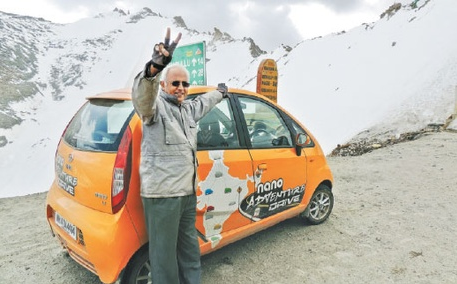
India is unique, says Thomas Chacko after his mega carathon
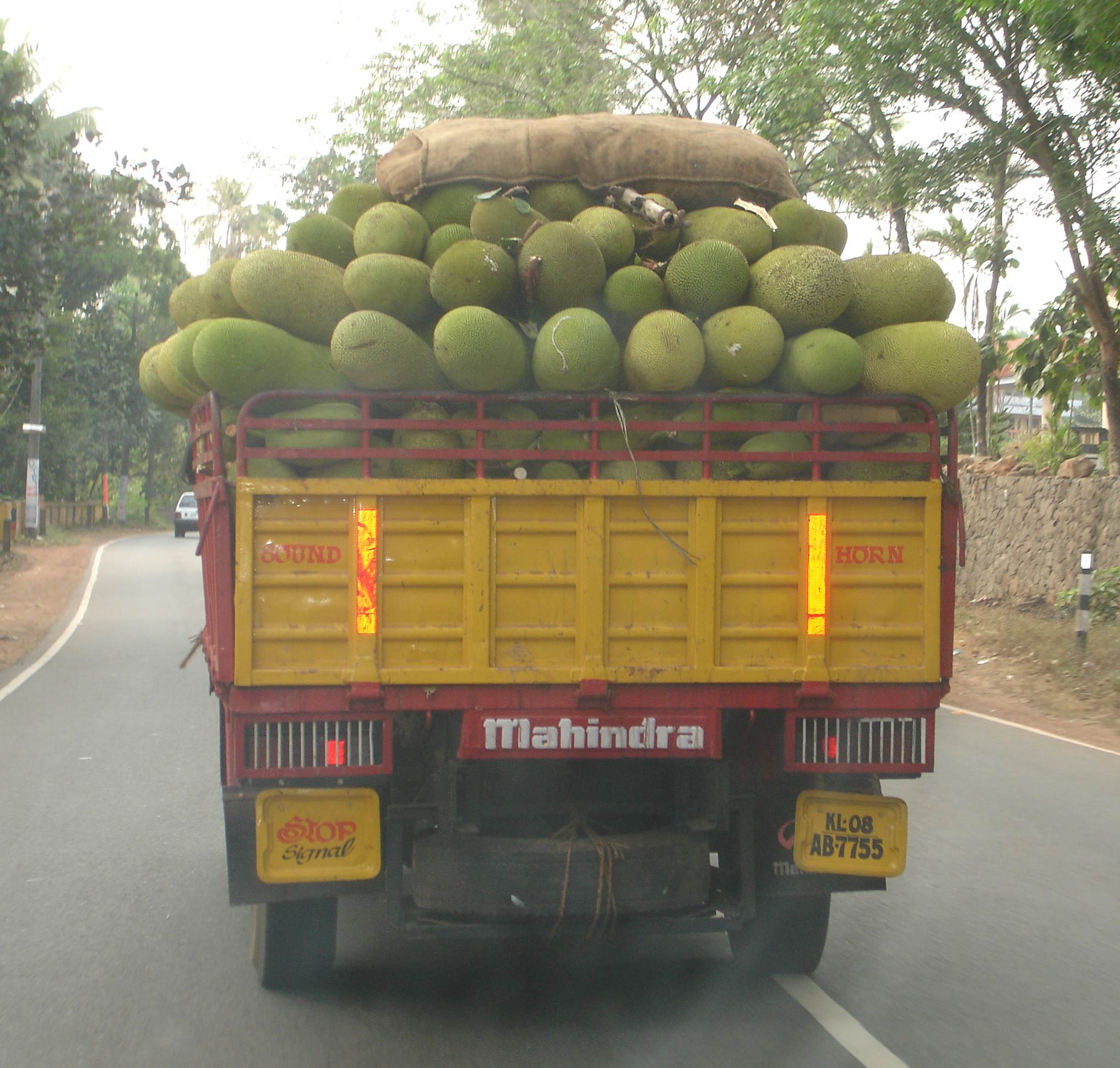
When Jules Verne wrote his novel Around the World In 80 Days 140 years ago the protagonist Phileas Fogg has to manage a circumnavigation of the globe by myriad types of transport, including by elephant during his crossing of India. He wouldn’t have dreamt of a tiny motorized vehicle like the one pictured above.
Author and motorcar enthusiast Thomas Chacko didn’t try to mange the world in 80 days, only India herself. Chacko, a Keralite, documented his journey in “real time” using the entertaining blog Mano et Nano, as well as a book, Atop the World, after the conclusion of his 26,500-km journey in a Nano car to all the state capitals, as well as the Union Territories, and the far corners of India. The journey, which began on May 3, 2012, concluded on July 20, last year.
In an interview with The New Indian Express Chacko commented:
Only one other country can compare with India, in terms of terrain, and that is the USA. We have beaches, mountains, hills, forests, deserts, swamps and canyons. You don’t have to go out of India to see and experience all this. Apart from that, no country has as many languages or communities. India is unique. Continue reading
 He is the Theatre Critic for The Toronto Star, and let this fellow make a statement that is probably unparalleled in this sort of venue or any other venue for that matter. Artists are often reticent to share their views on meaning or interpretation, their craft, their purpose. This one puts it all out there, and Richard is wise to let him go at it. Continue reading

Monterey, CA
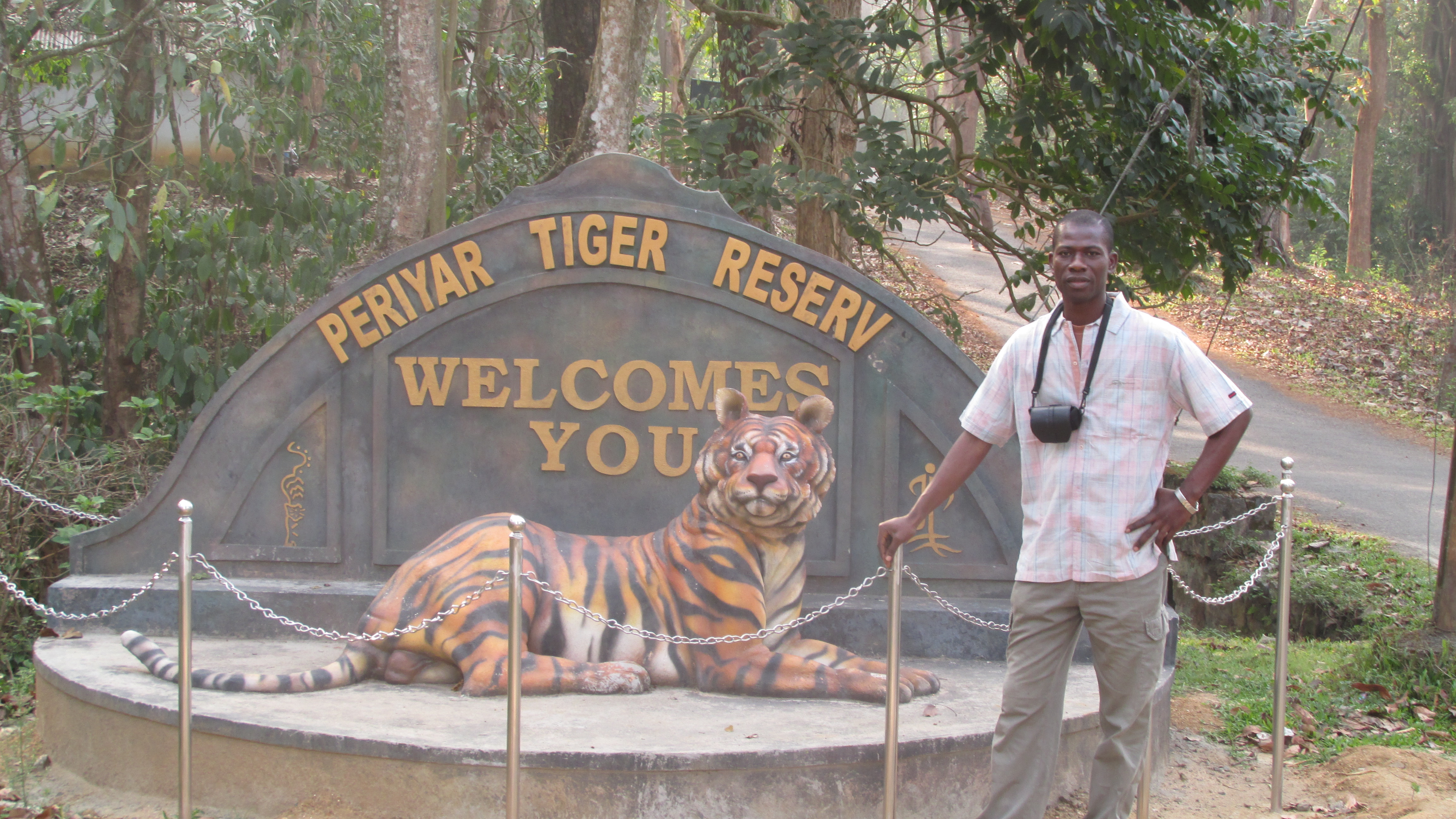
At the Periyar Tiger Reserve
I’ve been in Kerala 10 days now and in Thekkady about a week of that time. After all the orientation, yesterday was my first opportunity to explore the Periyar Tiger Reserve, the Kerala national park located right across the street from Cardamom County where I’m spending the next 2 months. As a management trainee with Raxa Collective my responsibilities are to develop the tools that I’ll implement in what will be the best lodging within Ghana’s Mole National Park. (In fact, my day off actually began the evening before by experiencing Earth Hour at the hotel as well as with a candlelight procession with other hoteliers and townspeople.)

Earth Hour at Cardamom County
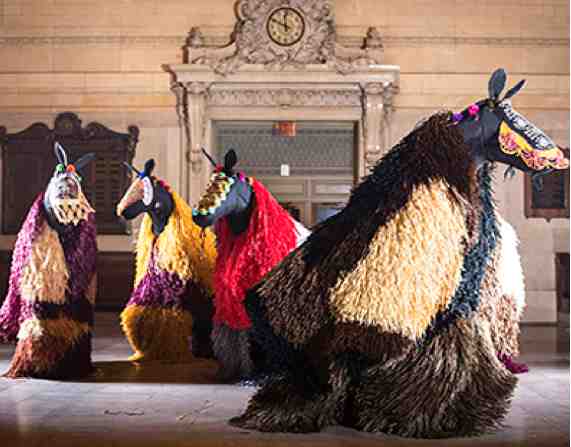
Many people happen to be in New York City. It happens all the time. People just show up. But this time is different (as they all are, and so on). In discussion recently, several of us at Raxa Collective agreed that the first time they heard of someone named Nick Cave, a rather offbeat artist to say the least, was through the music in a film that may have had the best soundtrack of any film ever. Now, continuing that offbeat approach, he shows up in a train station of all places. Only thing is, it is not the same Nick Cave. That soundtrack Nick Cave was the real deal. So is this one. How many Nick Caves are there?
Nick Cave/ HEARD • NY
Presented by MTA Arts for Transit and CREATIVE TIME
Vanderbilt Hall, Grand Central Terminal
March 25 – 31, 2013 Continue reading
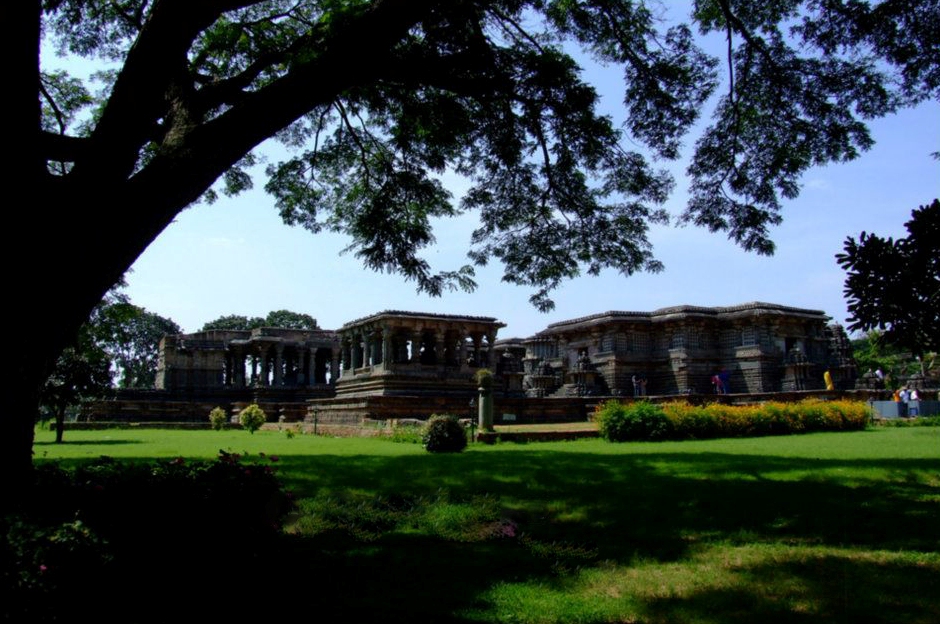
Hoysaleswara Temple
The Hoysaleswara Temple was built by “Kettumalla” one of the ministers of King Vishnuvardhana during 1121 A.D. It is believed that it took nearly a century to complete the temple, there are still some unfinished portions.The ground plan is the characteristic star shape common to all Hoysala Temples. Continue reading

Wayanad, Kerala

Cycle 2, Version 3 by Sopheap Pich, 2008. Photo credit (c) The Metropolitan Museum of Art.
For the next several months, The Metropolitan Museum of Art (aka The Met) has quite a few great special exhibits open that I would recommend seeing. My two favorites from a visit to The Met last week are titled “Cambodian Rattan: The Sculptures of Sopheap Pich” and “Birds in the Art of Japan,” both on the second floor in the Asian Art section.
In the first exhibit, Pich uses wire, bamboo, rattan, and a couple other materials to craft beautiful abstract or representational sculptures, which are presented, as you can see in the picture on the left, with great lighting to create superb shadows around the piece. Pich and his assistants had to boil the rattan and bamboo cane in diesel oil to remove insect eggs, prevent fungal damage, and preserve the cane from discoloration.

When our new contributor ÉA Marzate wrote about a recent film festival it had the added benefit of providing the incentive to explore similar festivals worldwide. I’d nearly missed the DC Environmental Film Fest, which boasted documentaries that overlapped with those screened in Paris as well as some that touch a direct personal chord with RAXA Collective. (As I live in India, I use the word “missed” figuratively of course!)
I’m referring to the U.S. Premier of the 2012 BBC film Lonesome George and the Battle for the Galapagos. Continue reading
 Organikos