Willfully Contemplating

A Boat in the Sea by Arkhip Kuindzhi, c.1875. Oil on canvas.

A Boat in the Sea by Arkhip Kuindzhi, c.1875. Oil on canvas.

We tend to favor action as a general rule on this site, but without contemplation where would we be? Two choice paragraphs from a recent philosophical musing in one of our newly favored  and now reliably interesting online publications:

…After three years, I was no wiser than when I started. Did we choose freely? Or were we just victims of larger historical, social and biological forces? It was impossible to tell. What I did realise was that philosophers had been struggling with such questions for thousands of years, but were no closer to understanding the answer than they were when they started out. Continue reading →
Innovation And Toxic Hope

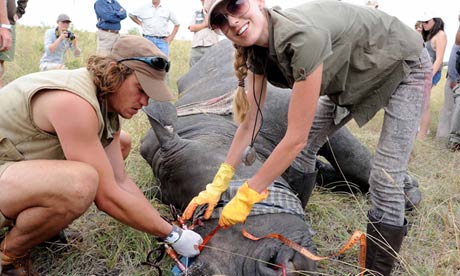
The Sabi Sand Game Reserve is injecting non-lethal chemical mixtures into rhino's horns. Photograph: David Smith/Sabi Sand Game Reserve

The Sabi Sand Game Reserve is injecting non-lethal chemical mixtures into rhino’s horns. Photograph: David Smith/Sabi Sand Game Reserve

We have only occasionally mentioned the facts surrounding the epidemic slaughter of rhinoceros, mainly because the stories are hopelessly hopeless almost (but not all) all the time. This one may be either another case in point, or a perverse example of innovation in times of extreme need. Click the image above to go to the story in the Guardian:

A game reserve in South Africa has taken the radical step of poisoning rhino horns so that people risk becoming “seriously ill” if they consume them.

Sabi Sand said it had injected a mix of parasiticides and indelible pink dye into more than 100 rhinos’ horns over the past 18 months to combat international poaching syndicates. More than 200 rhinos have been poached so far this year in South Africa, driven by demand in the far east, where horn ground into powder is seen as a delicacy or traditional medicine. Continue reading →

Beauty Of Kerala – Wayanad

photo Credits: Nidhin Poothully

Photo credits:  Nidhin Poothully

The road leading to Wayanad is smooth and even and surrounded by greenery from deciduous forest to soaring bamboos. The sanctuary around Wayanad is rich in fauna and flora. Elephants are the most common wildlife sighting, sometimes even amidst the the thick bamboo groves flanking the road en route to the sanctuary. Continue reading →

Feather Hill Flowers

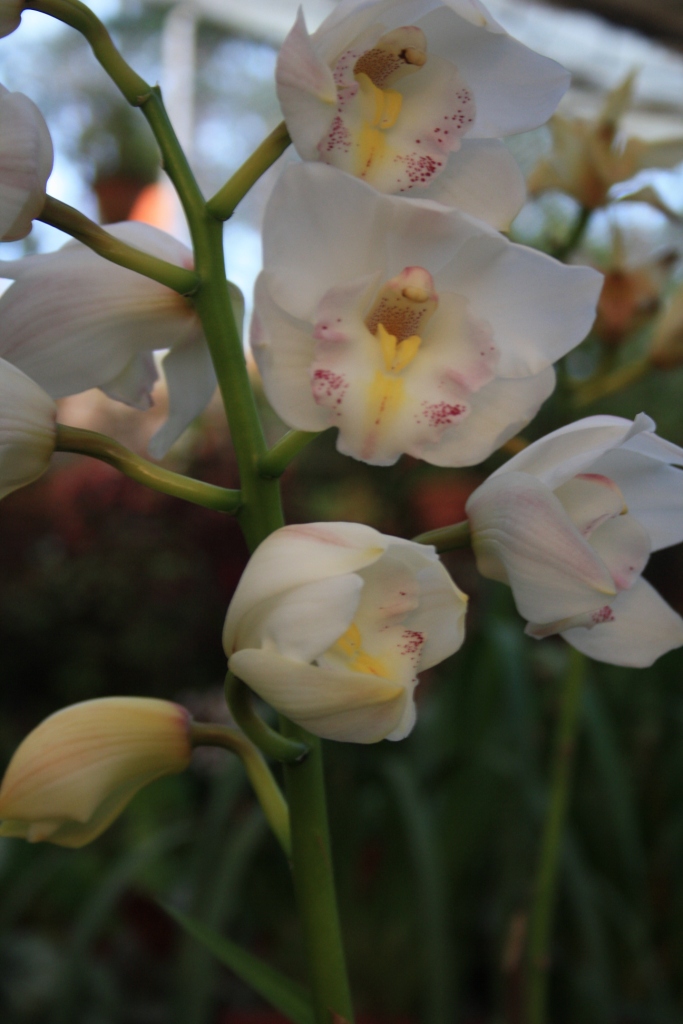
Feather Hill flowers are hybrid orchids in the Cymbidium family. Up to 15-25 butterfly-shaped white flowers adorned with light pink spots hang gently on the strong stems. Cymbidiums grow widely in Kerala’s Western Ghats above 1500 meters. Continue reading →

A Thekkady Easter

The dawn of my Easter Holiday experience in Kerala started with this unique communion bread served with Molasses sauce to represent the wine. The beautiful church nearby the resort was filled beyond capacity but I fully enjoyed the Sunday service together with other worshippers standing across the street. There I stood, not understanding any of the words (the service was in Malayalam) but following all the rituals with the same sense of peace as in my own church in Accra, Ghana.

After a good lunch and the sleep of the blessed I had my road to “Emmaus” experience by going on the 3 hour Green Walk in the Periyar Tiger Reserve with one of the naturalist guides. Continue reading →

Is Giving the Secret to Getting Ahead?

This slideshow requires JavaScript.

From this week’s Sunday New York Times an article by Susan Dominus in which the:

organizational psychologist Adam Grant argues that the key to hyperefficiency is tirelessly helping others. Continue reading →

Aihole Temples – Karnataka

Photo Credits: Ramesh Kidangoor

Photo Credits: Ramesh Kidangoor

Aihole was the capital of the Chalukyan Kings, who between the 4th and 6th century A.D began experimenting with the idea of constructing temples with stone blocks. Aihole has over 125 temples, all intricately carved and rich in detail. Durga temple has a semicircular apse and a sanctum, encircled by a richly carved colonnaded passageway. Durga temple is roofed in the usual flat Early Western Chalukyan manner. The niches in the circumambulatory  passage around the sanctum are filled with statues; notable among them are splendid images of Durga and Shiva. Continue reading →

Shopping Shifts

Lifestyles of Health and Sustainability (LOHAS) is a description, a name, a trend we have mentioned plenty of times in so many words, but not previously using this acronmyn. If you have not already seen it, you can expect to see it more now.  We appreciate its blog, which you can sign up for by clicking through from this article in it (click the LOHAS banner image in this post):

…In the improving but not yet booming economy of 2013, Patricia Aburdene, author of the New York Times bestseller “Megatrends 2000” and most recently “Conscious Money” (Atria Publishing; $16 paperback), predicts priorities and values will play a bigger role in shaping spending decisions. Continue reading →

Nature Books: Birds

9780810996137

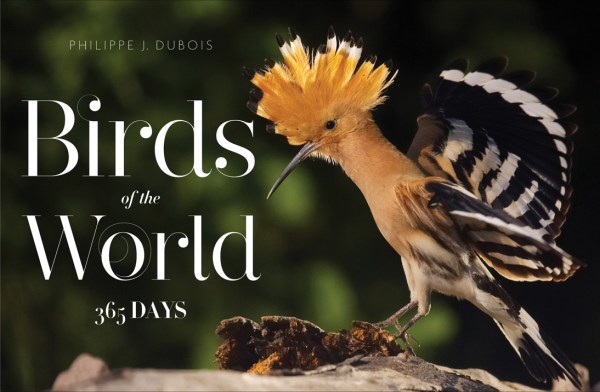
Looking through this publisher‘s catalogue, we see they give attention to a wide variety of charismatic flora and fauna.  For example, this book (click the image above to go to the source):

Birds of the World: 365 Days gives this perennially popular subject the 365 treatment: ornithologist and conservationist Philippe J. Dubois presents a “day in the life” of a year’s worth of species from five continents. The stunning images of birds in action, taken by some of the best avian photographers in the world, illustrate the text beautifully. Continue reading →

Kerala Cities – Ernakulam (Kochi)

Photo Credits: Ramesh Kidangoor

Photo Credits: Ramesh Kidangoor

Known as the commercial capital of Kerala, Ernakulam is the one of the largest cities in the state. Ernakulam refers to the eastern part of the twin cities Ernakulam-Kochi. Alive and throbbing with people, shopping centers, cinemas, hotels, offices, plush buildings, and restaurants; the factors that come together to create the quintessential city life can be experienced here with an International Airport an hour away. Ernakulam is the only city in Kerala where one can experience the conveniences of an urban lifestyle that is now increasingly prevalent in the larger cities of India, in addition to the criss-crossing backwaters that make the area famous. Continue reading →

Natalie Angier Strikes Again

This slideshow requires JavaScript.

We used the terminology natural born killers too soon. Apparently these unassuming creatures are the real efficient ones. And, like cats, disguised as gracefully admirable, and often unnoticed. In today’s New York Times Science section there is a story by one of our favorite science writers:

Science Times: April 2, 2013

New research suggests that dragonflies may well be the most brutally effective hunters in the animal kingdom. Continue reading →

Salamanders Announce Arrival of Spring in Ithaca

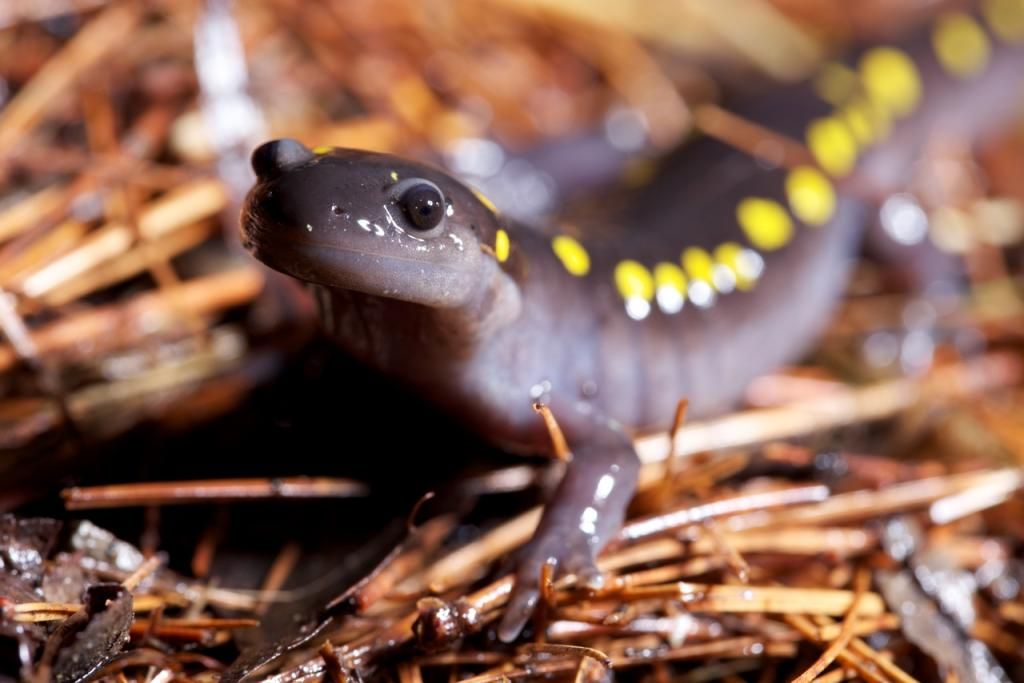
Spotted Salamander by Brian Magnier

Last night, at forty-odd degrees Fahrenheit and under a light drizzle, the salamanders of Ithaca’s Bull Pasture Pond signalled that spring has come. Before I explain, let me tell you a little bit about salamanders:

“The Americas have far more kinds of salamanders than all the rest of the world put together,” the Conant and Collins Field Guide to Reptiles and Amphibians reads in its introductory passage to the order Caudata. Species in eastern and central North America range from barely two inches to nearly four feet long, and some species are practically fully aquatic while others prefer only damp environments. Most of them are active at night and hide during the day, which is an easy way to differentiate them from lizards (except for the gecko family of lizards, which is primarily nocturnal). Other key differences are that lizards have scales on their bodies and claws on their toes, while salamanders have smooth or warty skin (just look at the slime in these photos) and no claws.

Continue reading →

Nick Cave And Grand Central Station’s 100th Birthday

This has captured our attention, and will not let go. Why?  Maybe it is because the artist’s name (but definitely not his work) is identical to that of another non-mainstream artist who, according to the most widely used search engines, is alot more well-known.  But that cannot be all there is to it. For some it could be the strong memory of Grand Central Station and the seeming incongruity of its use as a stage, even on the occasion of a birthday party.  For others it may be as simple as a question.  What are those costumes?  A post in on the New Yorker‘s website explains:

…Cave, who was born in Missouri, in 1959, and is based in Chicago, where he serves as director of the Art Institute’s graduate fashion program, has been producing Soundsuits—which can be displayed as inert sculptures, or can be worn, often by their creator, “activated” to produce a variety of noises—for nearly twenty years. He has made Soundsuits from an array of found materials including dryer lint, sequins, sweaters, socks, buttons, feathers, human hair, and vintage toys. His first Soundsuit was made of twigs, in reaction to the beating of Rodney King. Continue reading →

Traditional Kerala Houses

traditional house

traditional house

Traditionally the architecture of Kerala has been of a humble scale, an ensemble of simplicity and elegance tailored to suit the climate and culture of the state. The low walls, sloping roofs and projecting eaves of ancient houses were built for protection against heavy rains and intense heat. The architecture of Kerala tells many stories; the way its structures have been designed not only speaks about the artistic and technical capabilities of the craftsmen, but also about the progression and evolution of its society. Continue reading →