Ecuador’s Modern Conundrum

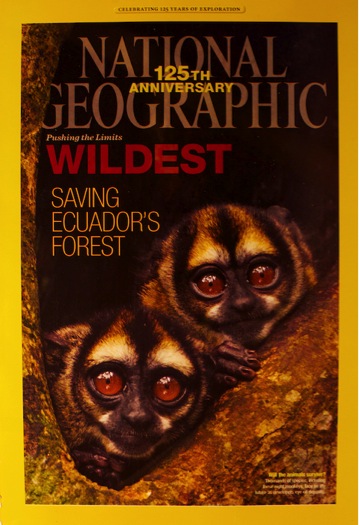
It used to be that Ecuador was in the news primarily due to the instability of its presidency.  That has changed in recent years. It is worth more than one magazine article to see what has changed in this amazing country. If you have an interest in conservation, Ecuador or both, you will appreciate this in depth coverage of both in detailed context:

The leaves are still dripping from an overnight downpour when Andrés Link slings on his day pack and heads out into the damp morning chill. It’s just after daybreak, and already the forest is alive with hoots and chatter—the deep-throated roar of a howler monkey, the hollow rat-a-tat-tat of a woodpecker, the squeal of squirrel monkeys

Continue reading

Rendering Climate Change With A Camera

This slideshow requires JavaScript.

Climate change is not only a major issue for scientists and politicians but for artists as well. Here are ten examples of photographers and other visual artists who are challenging viewers to consider the dangers of inaction by capturing the effects of extreme weather and a warming world.

Read the text to this slideshow, valuable for understanding the context, at the New Yorker website.


Cardamom – Elettaria cardamom

A native of India’s Western Ghats, Cardamom belongs to the Ginger family. Known as the “Queen Of Spices”, it is one of the most famous and popular spices used in India and the Middle East. The dried berry of the plant is called chotti elaichi in Hindi, which means small cardamom. Continue reading

There’s Something About Audrey

Screen Shot 2013-01-06 at 8.56.14 AM

Last year I wrote about the eminent blooming of the rare Titan Arum, more fondly known as the corpse plant or in my posts “Audrey”, at Cornell University’s Kenneth Post Lab Greenhouse. The event was followed with quite a bit of fanfare, as these blooms allow for the assisted cross pollination of the various specimens around the world, thus hopefully insuring the survival of the species that is becoming more and more rare in the wild. Continue reading

Voyager’s Dilemma

Harvard University Professor Joyce Chaplin talked about her book, Round About the Earth: Circumnavigation from Magellan to Orbit, in which she presents the history of the circumnavigation of earth, going back to the days of Portuguese explorer Ferdinand Magellan. Professor Chaplin spoke at Harvard Book Store in Cambridge, Massachusetts.

Three of our most viewed posts since starting this site in mid-2011 have to do with the intersection of travel (in all its various forms) and sustainability so when we saw this video and the related book reviews we could not help thinking it might resonate with readers who have enjoyed those three posts. One challenge for the modern voyager is an inverse of the same as that to a hospitality-providing organization such as ours going forward: how do we get there and back with the smallest footprint possible?  It is not the same question Magellan was asking but some of the “voyage issues” have not changed over the centuries.  Click the image above to go to the video, and here for a review of the book in the LA Times:

A trip on a 140-foot sailboat helped inspire Harvard professor Joyce E. Chaplin to write “Round About the Earth: Circumnavigation From Magellan to Orbit” — and that may explain the enthusiasm she brings to the many-stranded narrative. At the very least, it underlies her sympathy for sailors on small boats heading into rough, unknown seas.

This history, the first of its kind, is a lively charge through 500 years of worldwide exploration (and beyond). Chaplin sets to the task by carving that time span into three parts. Continue reading

Writer’s How

Another in our series of links meant to help each of us contributing to this site to write as well as we can:

In the morning, I don’t talk to anyone, nor do I think about certain things.

I try to stay within certain confines. I imagine this as a narrow, shadowy corridor with dim bare walls. Continue reading

Fulvous Pied Flat Butterfly – Pseudocoladenia dan

Fulvous Pied Flat Butterflies are found inside deep forest habitats. Both genders are reddish brown in colour but the male has two large yellow hyaline spots on the upper wings. Continue reading

What A Place, What A Pair, What A Story

01books

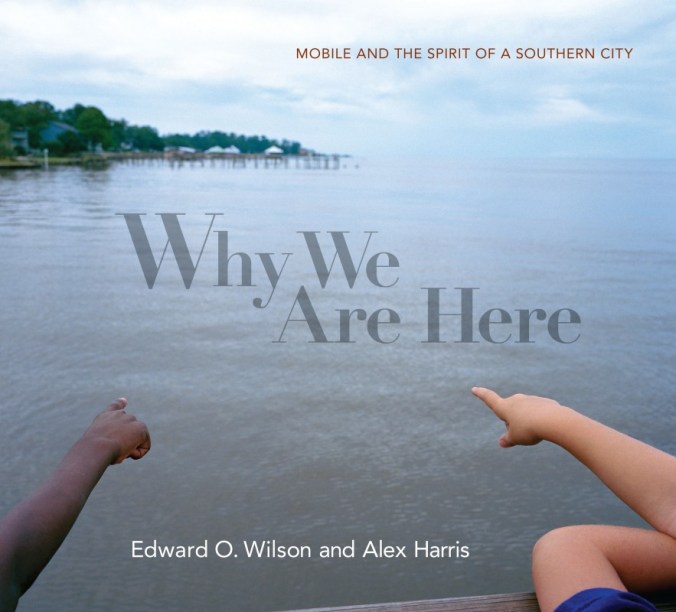
Thanks to National Public Radio in the USA for this amazing sense of people, and place and meaning (click on the image of the book above to go to the story in full) involving an evolutionary biologist we have mentioned more than once and a photographer we will start paying more attention to:

In 1991, photographer Alex Harris was nominated for a Pulitzer Prize in general nonfiction for his book River of Traps, written with William deBuys. It told the story, in words and pictures, of an old-time New Mexican villager. Harris didn’t win.

Instead, the prize went to evolutionary biologist E.O. Wilson for The Ants.

“It took me 20 years to get over that defeat,” said Harris.

Then, coincidentally, Continue reading

Indian Owl Moth – Erebus macrops

The Indian Owl Moth is named based on the large yellow ringed eyespots on lower side of their wings. When their wings are spread the moth resembles the head of an owl; this visual trick is used to escape from predators. Continue reading

Writing Places

Wolfe

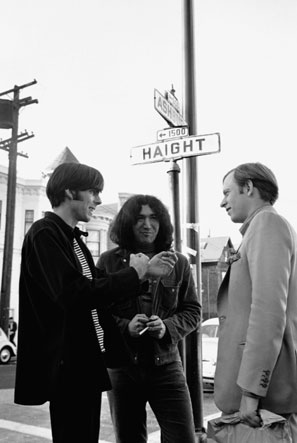
TED STRESHINSKY/CORBIS. Wolfe (right) with the Grateful Dead’s Jerry Garcia (center) and the band’s manager, Rock Scully, in 1966 San Francisco

In our quest to understand why and how great writers write greatly, we have started to pay attention to when and where they write.  This article, about one of the most influential writers of the last generation in the United States, focuses on the big picture role of place in his writing.  Click the image to go to the article:

Over the course of his career, Wolfe has devoted more pages to the Golden State than to any setting other than Gotham. In his early years, from the mid-1960s through the early 1970s, the ratio was almost one-to-one. More to the point, the core insights on which he built his career—the devolution of style to the masses, status as a replacement for social class, the “happiness explosion” in postwar America—all first came to him in California. Even books in which the  Continue reading

Sparking Activism

We have linked to 350, its various activities and sister concerns plenty of times before, but this three minute thought bubble is another good link to get the point: we all must do our part.  We link to organizations and actions instead of his name because we recognize the temptation to idolize Bill McKibben for his activism; if we do that without taking action, what is the point?

Is Telecommuting A Sustainable Solution?

Click the banner to go to the site created by Arizona State University, New America Foundation and Slate, and this particular article covering the topic of whether telecommuting is the solution it was expected to be:

The early case for telecommuting—made most prominently by Alvin Toffler in his best-sellingThe Third Wave in 1980—had a strong romantic flavor to it. For futurists like Toffler, the home office would be an “electronic cottage” that might “glue the family together again,” provide “greater community stability,” and even trigger a “renaissance among voluntary organizations.” Continue reading

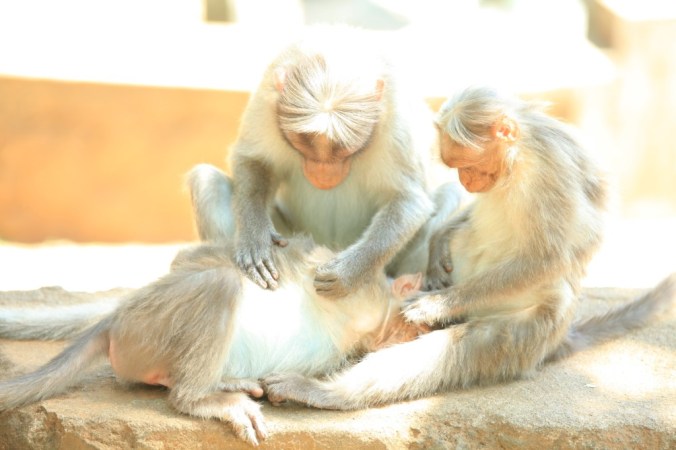
Wild Periyar – Bonnet Macaque

Bonnet Macaques are the most commonly seen of the four species of primates found in Periyar. They are particularly prevalent close to human habitation in places such as the boat landing, picnic spots and the parking areas of Thekkady. Continue reading

Krulwich Wonders About The Little Things

Click above to go to the post where this video is hosted:

Every year, thousands of college graduates pour into big cities, find themselves a fun place to live in a cool neighborhood, great location, friends all around. But then, their luck turns, they run short of money, lose their first job, their second job, lose their lease, and then, step by step, find themselves in places that are less safe, less airy, less and less livable, until they’re on the bad side of town in a scary, dank room … and life is grim. You know people like this?

Well, this is their mascot: an animal with a serious real estate problem. Continue reading