Opposition to Arctic Drilling

Illustration by Aisha Franz

Illustration by Aisha Franz

Click on the image above to read an open letter from two influential policy insiders:

Why We Now Oppose Drilling in the Arctic

By Carol Browner & John Podesta Jan 18, 2013
The Arctic Ocean is subject to some of the most volatile weather patterns on the planet. Geologists believe it also contains vast undersea oil and gas reserves. Continue reading →

Beauty Of Kerala – Kovalam Beach

Kovalam Beach lies 16 km south of Trivandrum, the capital of Kerala. Ruled by the Chera and Chola Kings and later by the Dutch, Portuguese and British, Kovalam has historically attracted tourist around the world. The beautiful area is comprised of three crescent-shaped beaches separated by rocky outcroppings that form the main attraction of this beach. Continue reading →

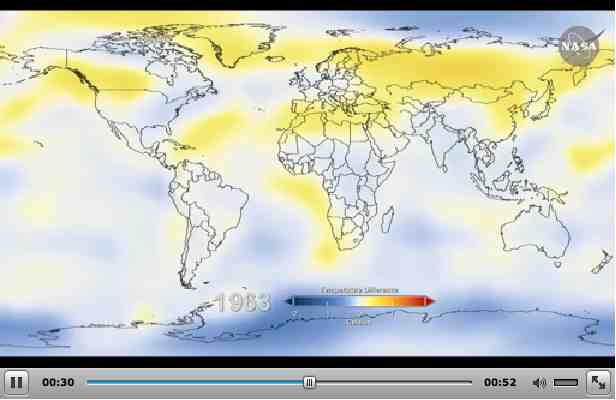
52 Seconds Of Silent, Strong Visual Representation Of Earth’s Temperature Since 1886

Nasa

Thanks to Atlantic’s coverage on this important topic, we have now this short but not very sweet visual message (click the image above to go to the video):

Whew! We did it! We didn’t have another warmest-year-on-record! Continue reading →

Another Look At Sight

(Copyright: Thinkstock).  Our eyes are remarkable in making almost instant sense of the world around us in ways that even the most sophisticated machines can’t do. So what cues do we pick up that make sure we can see the wood for the trees?

(Copyright: Thinkstock). Our eyes are remarkable in making almost instant sense of the world around us in ways that even the most sophisticated machines can’t do. So what cues do we pick up that make sure we can see the wood for the trees?

The BBC provides this interesting view on the relationship between sight and other forms of sense:

One of the unforeseen boons of research on artificial intelligence is that it has revealed much about our own intelligence. Some aspects of human perception and thought can be mimicked easily, indeed vastly surpassed, by machines, while others are extremely hard to reproduce. Take visual processing. We can give a satellite an artificial eye that can photograph your backyard from space, but making machines that can interpret what they “see” is still very challenging. Continue reading →

Science Scores One For The Bees

Bees-007

Environmental campaigners say the conclusion, by Europe’s leading food safety authority, sounds the “death knell” for the insect nerve agent neonicotinoid. Photograph: Alamy

There is a steady stream of unhappy news for bees in recent years, with scientists often being called to study the problem and propose solutions; today was just another such news day. We have a particularly soft spot for bees, so these actions taken, reported from Europe, are welcome additions to today’s news:

…”This is a major turning point in the battle to save our bees,” said Friends of the Earth’s Andrew Pendleton: “EFSA have sounded the death knell for one of the chemicals most frequently linked to bee decline and cast serious doubt over the safety of the whole neonicotinoid family. Ministers must wake up to the fact that these chemicals come with an enormous sting in the tail by immediately suspending the use of these pesticides.” Continue reading →

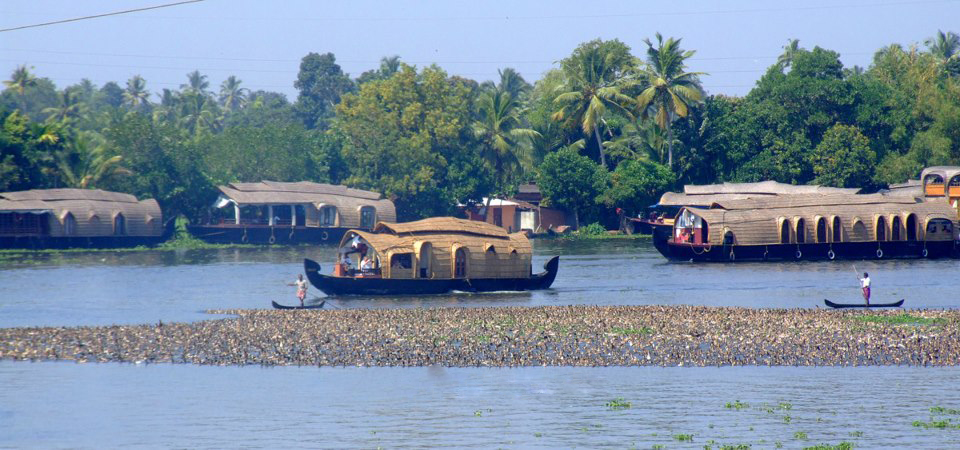
The Enchanting Backwaters

Photo Credits: Ramesh Kidangoor

Kerala has an extensive network of  backwaters which includes the entire network of canals, estuaries and water bodies formed by the inimitable craftsmanship of nature. There are 29 major lakes in the backwaters which give life to this unique eco-system. Continue reading →

Beauty Of Kerala- Kumbalangi

Photo credits: Ramesh Kidangoor

Kumbalangi is a tiny village facing the backwaters in the western part of Cochin. Described as the first eco-friendly tourist village in India, the village has been preserved in such a way that nature can be seen in its essence in order to strike a balance between tourism and the ecosystem.  Continue reading →

Thoreau’s Flowers

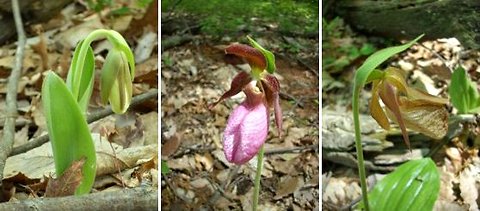
orchid-blog480

Zoe Panchen. Earlier flowering times: the progression of Cypripedium acaule, the pink lady slipper orchid, on April 23, May 7 and May 20, 2010.


From Green Blog:

Henry David Thoreau was a peculiar fellow. After his secluded stint at Walden Pond, his fixation with the natural world only grew. Starting in 1852, his journal turned into a two million-word project documenting seasonal observations around his small Massachusetts township, Concord. Over the next six springs he could be seen racing about town like a madman in an effort to spot and record that year’s first elusive blooms, all the while taking notes. Continue reading →

Industrialized Biofuels Part 1: US Production

Image via Renaissance Ronin

The United States plans to produce 70 billion liters of advanced biofuels by 2020. In 2007, the global production of all biofuels roughly matched this amount, and the US used 24% of its corn to produce its share of the ethanol included in those 70 billion liters. Even given this impressive amount of corn used for ethanol, American corn ethanol only accounted for 1.3% of the US’ national liquid fuel consumption. An increase in either corn harvests or ethanol production efficiency is clearly necessary if the US is to meet the 2020 goal with corn alone. Given the significant drawbacks to producing more corn, and the unlikelihood of efficiency increasing enough to meet requirements, it would be more prudent to invest in second- and third-generation, or advanced, biofuels.

These biofuels, such as ethanol made from cellulose, biogas, or hydrocarbon fuels converted from biomass to liquid (BtL) are made from feedstock rich in cellulose like grass and wood. Advanced biofuels have better environmental profiles than what are referred to as first generation biofuels (e.g. ethanol produced from corn or sugarcane) because they generally require less land and are converted from biomass more efficiently—the processes also use less energy and water than ethanol since they do not involve distillation. A biofuel’s emissions depend largely on land considerations, nativity to the region, and feedstock technology. If land was converted from forest or prairie, the feedstock was not native to the region, and the feedstock required excessive fertilizers to grow, then GHG emissions are higher. Continue reading →

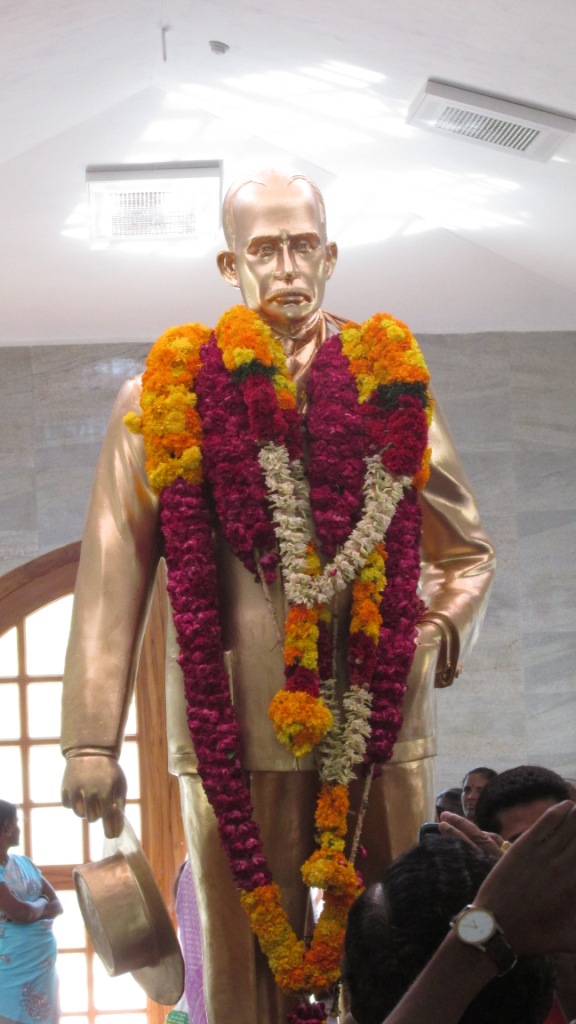
Monument To The Great Visionary

IMG_4219 - Copy

The government of Tamil Nadu recently honored Colonel J. Pennycuick, the architect of the Mullaperiyar Dam which had been built in 1895. The chief minister of the state commissioned a small memorial building which includes a statue of Pennycuick and a rare collection of  photos taken during the dam construction. Continue reading →

If You Happen To Be In New York City

photo4384

Join Sea Shepherd Conservation Society NYC chapter for a training session for on-shore activists. Learn about Sea Shepherd Conservation Society, our history, our tactics, and our campaigns. Learn how to effectively outreach to individuals who attend our events and come to our tables. Please RSVP to nyc@seashepherd.org as space is limited.

From the Sea Shepherd Conservation Society’s website events calendar page:

On-Shore Volunteer Training – New York, NY

Wed, 23 Jan, 2013 6:30 PM – 8:00 PM

Continuum Coffee 199 Avenue B New York, NY

Fees:   Free

Largest Gathering On Earth

This slideshow requires JavaScript.

The Atlantic‘s photographic coverage of Kumbh Mela is accompanied by this explanation:

Tens of millions of Hindu pilgrims are now descending on Allahabad, India, joining an estimated 8 million already there for the Maha Kumbh Mela. Continue reading →

What’s The Problem? The Key Question Of Entrepreneurship

Click the image above to watch this brief, powerful statement on entrepreneurship from Cornell’s 2012 Entrepreneurship Summit in New York last October. Between the fourth and fifth minute Jay Walker lays out in his own words the promoted purpose of the Summit:

BREAKING APART PROBLEMS.
TO FIND BETTER SOLUTIONS.

Every entrepreneur is pushed forward by the drive to fill an unmet need. Finding solutions to real-world problems is why we invent, build, and grow. At the first annual Cornell Entrepreneurship Summit, some of the world’s most innovative minds will share their experiences addressing complex challenges and paving new solutions. They will provide insights from their own achievements, as well as looking ahead to the problems we must tackle next.What are you solving?

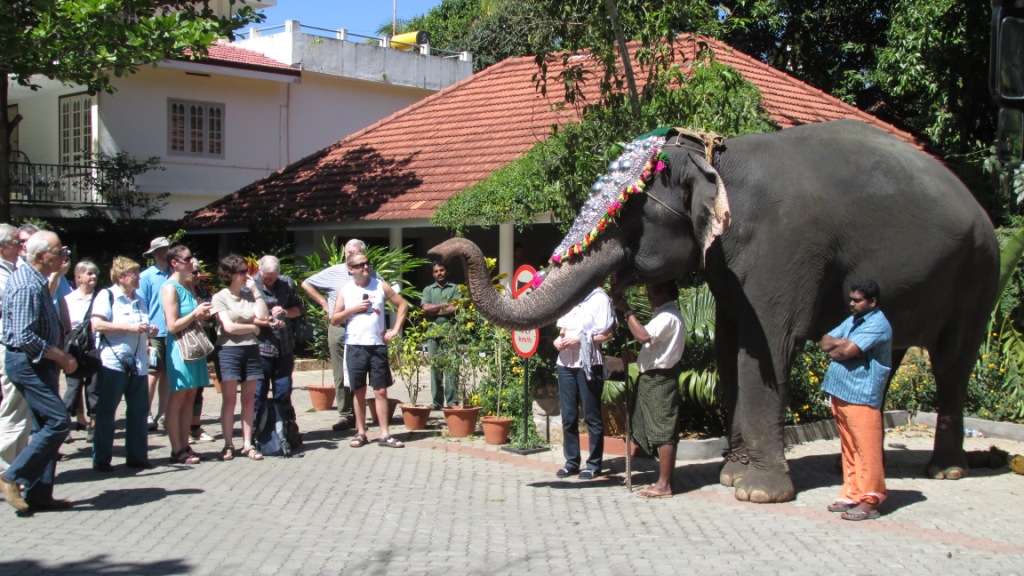
Traditional Welcome at Cardamom County

A group of 20 guests at Cardamom County enjoyed a traditional Kerala welcome today with a caparisoned elephant, traditional Chenda melam band, flower garland and sandalwood paste Tikka.

Continue reading →