Privacy Disturbed

Emperor penguin colony

The newly discovered 9,000-strong emperor penguin colony on Antarctica’s Princess Ragnhild coast. Photograph: International Polar Foundation/PA

Click the photo above for the story in the Guardian. It sounds beautiful. They are so charismatic.  But it also raises the question of whether these creatures might have been happier without the visitors:

A previously unknown colony of about 9,000 emperor penguins has received its first human visitors.

Scientists from the British Antarctic Survey and US colleagues discovered the colony from satellite images. Continue reading →

The Sun Also Rises In India

Green Blog updates us on the state of affairs in India with regard to solar energy:

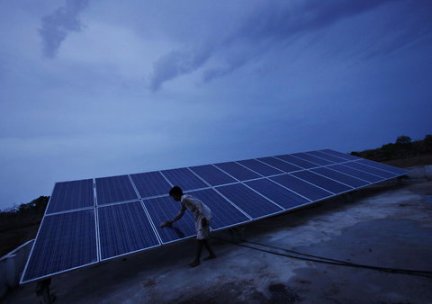
After years of lagging behind China and the West in the adoption of solar power, some states in India are proposing to build solar farms at a galloping pace that leaves them at risk of falling short of electricity (a familiar problem here) or of paying higher prices for it. Continue reading →

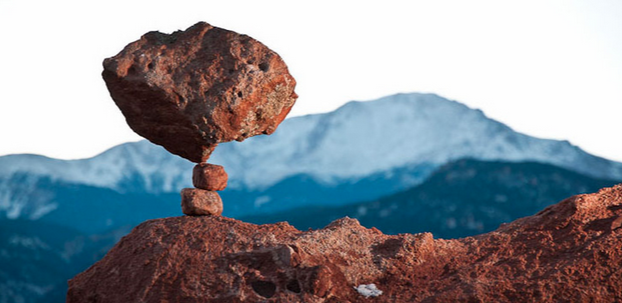
Zen, Mathematics, and the Art of Rock Relationships

Robert Krulwich, always finding and sharing wonders we might otherwise miss, has a post on the process demonstrated in the video link below:

But how? How does he do it? First he says, you’ve got to “know the rocks.” I think this is a zen thing. Or maybe a sculptor’s thing. On his website, he says he is hyperaware of possible nooks on the rock’s surface: Continue reading →

Plain Tiger Butterfly- Danaus chrysippus

Plain Tiger Butterflies are commonly seen throughout the year in the grass lands and open forest areas of Kerala. Their wings are reddish yellow with white spots on the upper side. Continue reading →

Questions Science Forces Us To Consider

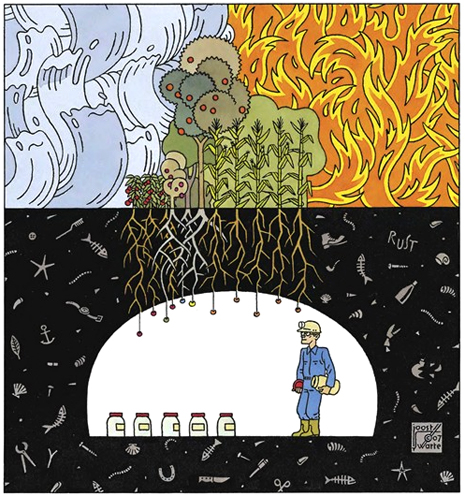
Michael Specter has written on more than one occasion on topics that are of concern to any environmentally sensitive reader, but with an unexpected twist.  Not unexpected in a “denier” sense, nor in the typical skeptic‘s perspective.  A few months back he wrote a blog post on GMOs that caught our attention for its simple explanation of a piece of legislation, and then surprised us with the notion that the proponents of that legislation (including a food writer we point to frequently) might have it all wrong. Here is another:

It has been more than fifteen years since companies like Monsanto began intense efforts to export agricultural biotechnology from the United States to the fields of Europe and the United Kingdom. The battle continues to this day. Few opponents have been more militant or effective than Mark Lynas, one of the first people to break into fields that scientists had planted with genetically modified test crops—and then rip them out of the ground. Continue reading →

Betel Leaf – Pan Leaf (Piper betle)

Betel is the leaf of a climbing vine that belongs to the Piperaceae family. A member of the same family as black pepper, they both require a support tree to grow. The plant has many traditional medicinal uses; in Kerala people use the betel leaf to treat headaches, arthritis and joint pain, in China and Thailand the root of the plant is used for toothache. Continue reading →

Mexican Moths

_MG_7886

Entomology is a relatively minor hobby of mine. I enjoy chasing after and photographing insects when I have the chance – and most places in the world have an abundance of insects. Cabo’s airport, located on the southern point of Baja California, is no exception. These photographs were taken mere minutes after disembarking the airplane on which we arrived. The thousands upon thousands of egg-laying moths were easily mistaken for bird droppings, until examined more closely.

_MG_7888 Continue reading →

Ecuador’s Modern Conundrum

It used to be that Ecuador was in the news primarily due to the instability of its presidency.  That has changed in recent years. It is worth more than one magazine article to see what has changed in this amazing country. If you have an interest in conservation, Ecuador or both, you will appreciate this in depth coverage of both in detailed context:

The leaves are still dripping from an overnight downpour when Andrés Link slings on his day pack and heads out into the damp morning chill. It’s just after daybreak, and already the forest is alive with hoots and chatter—the deep-throated roar of a howler monkey, the hollow rat-a-tat-tat of a woodpecker, the squeal of squirrel monkeys

Continue reading →

Rendering Climate Change With A Camera

This slideshow requires JavaScript.

Climate change is not only a major issue for scientists and politicians but for artists as well. Here are ten examples of photographers and other visual artists who are challenging viewers to consider the dangers of inaction by capturing the effects of extreme weather and a warming world.

Read the text to this slideshow, valuable for understanding the context, at the New Yorker website.


Cardamom – Elettaria cardamom

A native of India’s Western Ghats, Cardamom belongs to the Ginger family. Known as the “Queen Of Spices”, it is one of the most famous and popular spices used in India and the Middle East. The dried berry of the plant is called chotti elaichi in Hindi, which means small cardamom. Continue reading →

There’s Something About Audrey

Screen Shot 2013-01-06 at 8.56.14 AM

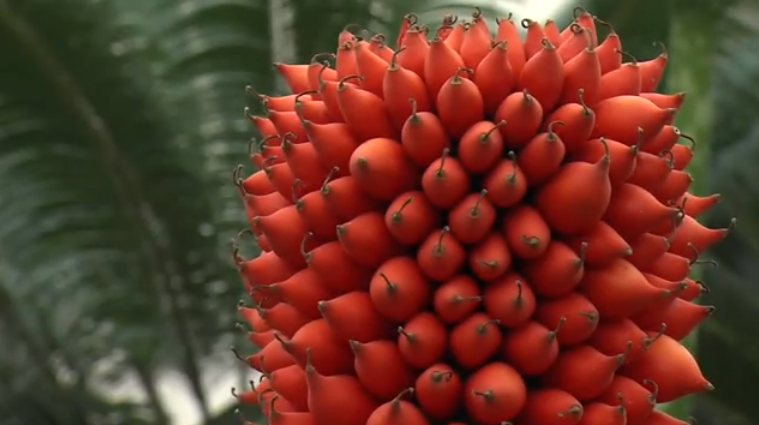
Last year I wrote about the eminent blooming of the rare Titan Arum, more fondly known as the corpse plant or in my posts “Audrey”, at Cornell University’s Kenneth Post Lab Greenhouse. The event was followed with quite a bit of fanfare, as these blooms allow for the assisted cross pollination of the various specimens around the world, thus hopefully insuring the survival of the species that is becoming more and more rare in the wild. Continue reading →

Voyager’s Dilemma

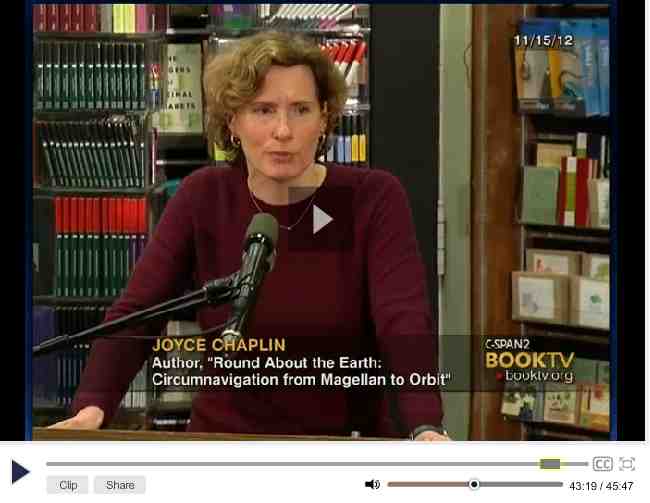
Harvard University Professor Joyce Chaplin talked about her book, Round About the Earth: Circumnavigation from Magellan to Orbit, in which she presents the history of the circumnavigation of earth, going back to the days of Portuguese explorer Ferdinand Magellan. Professor Chaplin spoke at Harvard Book Store in Cambridge, Massachusetts.

Three of our most viewed posts since starting this site in mid-2011 have to do with the intersection of travel (in all its various forms) and sustainability so when we saw this video and the related book reviews we could not help thinking it might resonate with readers who have enjoyed those three posts. One challenge for the modern voyager is an inverse of the same as that to a hospitality-providing organization such as ours going forward: how do we get there and back with the smallest footprint possible?  It is not the same question Magellan was asking but some of the “voyage issues” have not changed over the centuries.  Click the image above to go to the video, and here for a review of the book in the LA Times:

A trip on a 140-foot sailboat helped inspire Harvard professor Joyce E. Chaplin to write “Round About the Earth: Circumnavigation From Magellan to Orbit” — and that may explain the enthusiasm she brings to the many-stranded narrative. At the very least, it underlies her sympathy for sailors on small boats heading into rough, unknown seas.

This history, the first of its kind, is a lively charge through 500 years of worldwide exploration (and beyond). Chaplin sets to the task by carving that time span into three parts. Continue reading →

Writer’s How

Another in our series of links meant to help each of us contributing to this site to write as well as we can:

In the morning, I don’t talk to anyone, nor do I think about certain things.

I try to stay within certain confines. I imagine this as a narrow, shadowy corridor with dim bare walls. Continue reading →