The Red Silk Cotton is a fast growing tree growing widely in the Western Ghats forest areas. These trees can reach a height of 35-40 meters, and bear large red-orange flowers from December to March. The timber of the tree is very soft and used for making plywood and match boxes. Continue reading
You, and 999,999 Other Email Protesters, Can Sometimes Save The World (In This Case, The One Whales Inhabit)

South Korea had planned y to conduct ‘scientific’ whale hunts similar to those carried out by Japan in the Antarctic every winter. Photograph: Momatiuk – Eastcott/Corbis
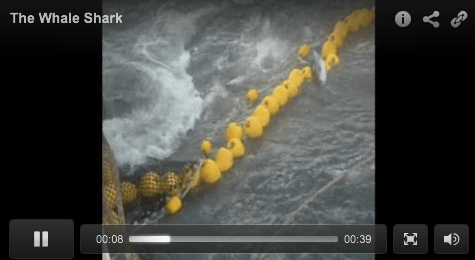
Bravo, activists of all stripes, but in this case especially the emailing type. And thank you, Korea, for finally rejecting false justification for whale-killing and doing the right thing. Click the image above for the whole story in the Guardian (whose consistent coverage to these issues deserves credit, too):
Japan, which uses the loophole to kill hundreds of whales every year, is expected to send its whaling fleet to the southern ocean in the next few weeks.
South Korea initially said an increase in whale stocks in its coastal waters had prompted the decision to resume whaling. The fisheries ministry said rising whales numbers posed a threat to squid and fish stocks.
The ministry reportedly began to reconsider after criticism from anti-whaling nations and an online petition that attracted more than 1,000,000 protest emails in three weeks.
Et tu, Japan?
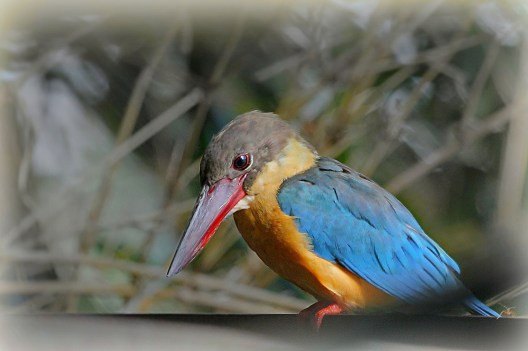
Bird of the Day: Stork Billed Kingfisher

Tribute Is Due

His academic work is so far removed from what we do day to day, it would be difficult to explain why this post must be. His political activism is not the reason, though we admire his taking the side of the underdog, being friend to the friendless, giving voice to the powerless. When someone leads as he has led, he deserves a birthday tribute. Do yourself a favor and take 5-10 minutes to read this in its entirety, or at least these last two paragraphs:
When I was a second-year graduate student at M.I.T., Chomsky taught a class on philosophy, which I was lucky enough to sit in on. The class itself was an event, almost a circus; people came from all over Boston, not just M.I.T. Continue reading
Our Gang, Thevara (Seeing Is Believing)
In our neighborhood, kids rule. Smiles are contagious. Games are simple. It is worth a visit. You have to see it to believe it.
Pottan Theyyam
The Pottan Theyyam is one of the most popular ritualistic dances of Kerala performed by the Malayan community. It is a devotional performance with a surrealistic representation of the divine. The Pottan Theyyam leaps into the fire at the end of his performance, his costume made of fronds and leaves insulating him from burns . Continue reading
Friends In High Places
Not all marine creatures have equal opportunity of species survival. As in any social milieu, some are better connected than others; some have benefactors to look out for them; others do not. Thanks to Green Blog, more on the protection of certain charismatic species (but not not others) in the wild blue yonder:
Whale sharks get some respect; the bigeye tuna, not so much.
That was the gist of the message from the Western and Central Pacific Fisheries Commission, whose member nations agreed this week at a meeting in Manila to help reduce whale shark deaths in Pacific fisheries. The commission did not act on a recommendation from scientists that the catch of bigeye tuna be sharply reduced. Continue reading
Zombie Architecture & Rainforest Creatures
In the New York Times, the great science-explaining journalist Carl Zimmer writes about a mystery most of us would never otherwise encounter:
In the rain forests of Costa Rica lives Anelosimus octavius, a species of spider that sometimes displays a strange and ghoulish habit.
From time to time these spiders abandon their own web and build a radically different one, a home not for the spider but for a parasitic wasp that has been living inside it. Then the spider dies — a zombie architect, its brain hijacked by its parasitic invader — and out of its body crawls the wasp’s larva, which has been growing inside it all this time. Continue reading
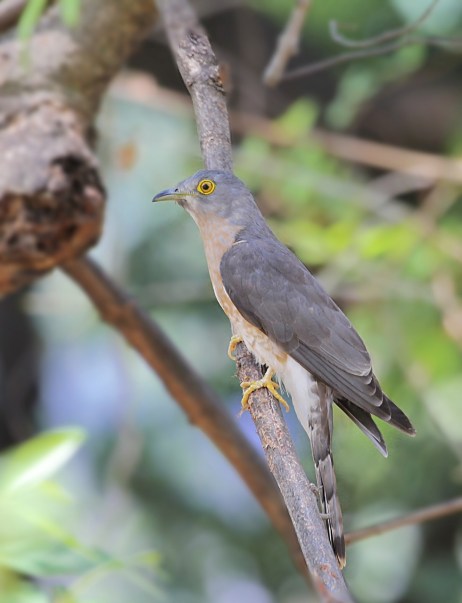
Bird of the Day: Common Cuckoo (Bhimeshwari, Kanakpura)

From Behind the Wheel: For Hearth and Home

Guardian, Angel, Sea Shepherd

Paul Watson, founder the animal rights and environmental group, Sea Shepherd Conservation, has returned to Antarctic waters after months on the run. Photograph: Markus Schreiber/AP
We feel fortunate to have the Guardian’s coverage of our favorite angelic trouble-maker, Paul Watson, since few other publications seem willing to pay attention to his cause. From our relatively comfortable, distant perch on dry land we nod to the southern waters where he and his band of activists righteously take on the whale-killers:
From aboard a Sea Shepherd ship, Paul Watson told Associated Press on Tuesday that his job is to protect whales, and he can’t do that if he’s in custody. He said the Sea Shepherd fleet is already in the Southern Ocean.
“I want to stay in the ocean,” the 62-year-old said. “I’m not going to be able to do that from some holding cell in Japan.”
Read the whole story here.
If You Happen To Be In London
Milo’s recent post got us thinking about the temptation to anthropomorphize. Tim Flach‘s photography seems to be hugging the temptation sometimes, wrestling with it at others.
His show, just opening in London, would be a good place to start with his work. The photos below help understand the riff on Milo’s post and his book looks worthy of any coffee table as a conversation-starter.
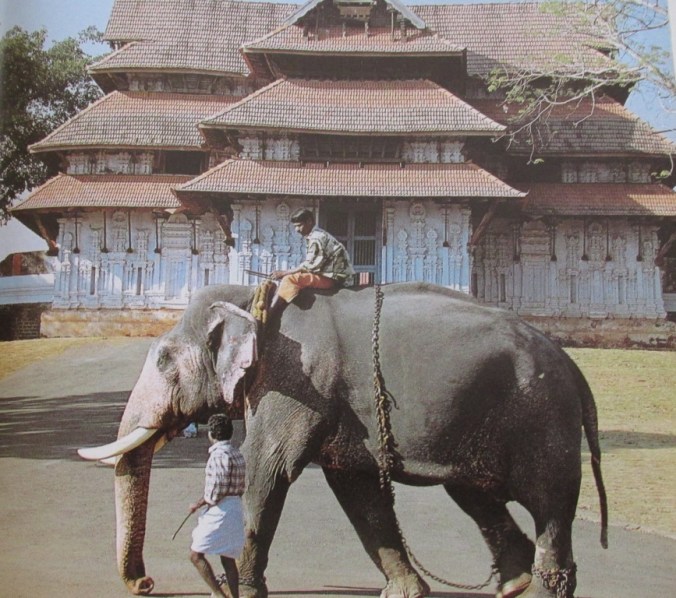
Vadakkunanthan Temple (Thrissur, Kerala)
Vadakkunanthan Temple is one of Kerala’s most ancient and famous temples. Millions of people witness the famous Thrissur Pooram with dozens of elephants at the temple annually. They also visit the site to view the many decorative paintings and historically important pieces of art. Continue reading
Byron’s Daughter, Randomness And A Great Science Writer
The Royal Society’s recognition is enough to make even the author blush (in the video above, just barely visible in the fifth minute):
From the invention of scripts and alphabets to our current world of blogs and tweets, James Gleick tells the story of information technologies that changed the very nature of human consciousness. ‘The Information’ is the story of how we got here and where we are heading.
Professor Jocelyn Bell Burnell DBE FRS, Chair of the judges, said: “The Information is an ambitious and insightful book that takes us, with verve and fizz, on a journey from African drums to computers, throwing in generous helpings of evidence and examples along the way. It is one of those very rare books that provide a completely new framework for understanding the world around us. It was a privilege to read.”
James Gleick said: “This is a very unexpected surprise. I am not a scientist, but I have my nose pressed against the glass. I visited the Royal Society 12 years ago to research a biography of Isaac Newton. It is a pleasure to be back again.”
Bird of the Day: Red-whiskered Bulbul (Outskirts of Bangalore, Karnataka)

Final Thoughts On Oysters, Dunes And Conservation

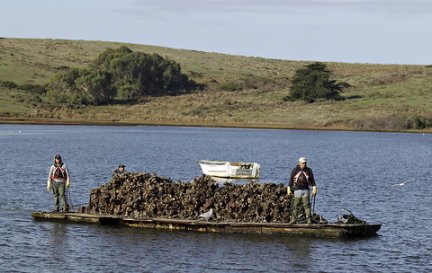
Photo: Associated Press. Workers from Drakes Bay Oyster Company bring in a load of freshly harvested oysters at Point Reyes National Seashore. Interior Secretary Ken Salazar announced last week that the operation would have to shut down.
Thanks to our oft-linked to favorite writer on such topics — Felicity Barringer — for the follow up on this story from a few days ago:
In the end, after all the money spent on the science — on cameras whose images were not carefully examined, on reports that misrepresented scientific studies, and on repeated investigations of flawed scientific work — the Interior Department’s decision not to renew an oyster company’s lease to operate within Point Reyes National Seashore largely sidestepped any scientific issues. Continue reading
Flavours Of Kerala – Pal-Appam (Lacy Rice Cake)
Pal-appam is a popular breakfast dish in Kerala, served with vegetable, mutton or chicken stew. Alternatively it is served as a starter dish with fish curry for formal meals. Pal-appam is a white lacy crepe-like cake with crispy brown edges.
A Parliament Of Owls

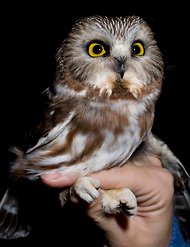
Photo: Scott Weidensaul. Little larger than a robin, northern saw-whet owls were long considered rare in the East.
Our thanks to Green Blog for this wonderful item:
Each autumn, thousands of miniature owls fill the night skies in the Northeast, gliding over forests and fields, suburbs and cities. They cast minuscule shadows as they breeze by the Empire State Building. Where they are headed, no one knows exactly. But researchers are certain of one point: there are many, many more of these little raptors, known as northern saw-whet owls, than they had suspected.
“This is a little bit of the Canadian wilderness passing through,” said Scott Weidensaul, a natural history writer who has coordinated volunteer research on saw-whet owls for 16 years. “Pretty much wherever you live in the Northeast or even in other parts of North America, there are tiny owls weighing no more than robins flying over your house.” Continue reading
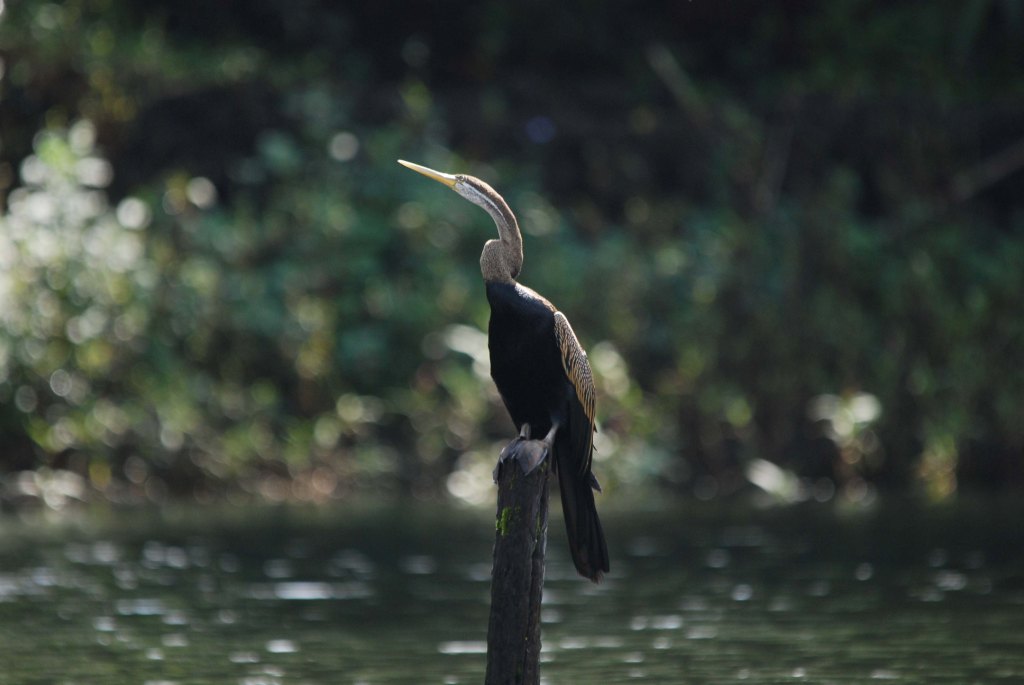
Bird of the Day: Darter
From the 2012 Net Impact Conference, Part 2
Continuing on my previous post about the 2012 Net Impact Conference, I want to address some of the interesting and debatable issues that several company panelists spoke about during the conference. I dedicate this post to addressing Monsanto’s climate change adaptation strategies. A very interesting discussion on how businesses have been approaching climate change adaptation included panelists from the World Resources Institute, AT&T, Monsanto, and a few universities. Monsanto’s strategies related to increased crop yield, and its view was that higher production was the clear answer to climate change risk and food insecurity.

Monsanto has experienced a haunted past (and continues to suffer from a poor reputation among environmentalists) with activist groups protesting its GMO seeds and its aggressive litigation against farmers.