Bird of the Day: Eurasian Spoonbill (Ranganthittu Bird Sanctuary, Karnataka)
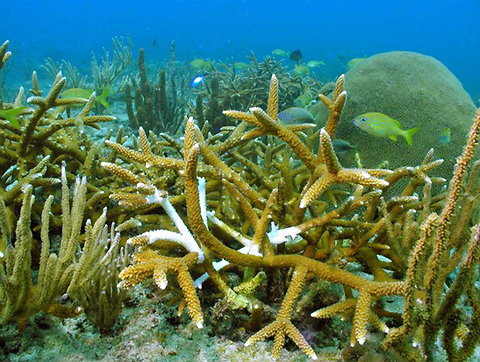
Image: NOAA. Staghorn coral afflicted by whitening, which is associated with ocean acidification and rising ocean temperatures.
We care about both genotypes and phenotypes when it comes to finding solutions to endangerment. And in case you are reading this you should hear the truth: we selected the word phenotype among many possibilities for the post title, mainly for its alliterative value. We need a bit of lingual levity from time to time to balance out the accumulated weight of the days’ environmental news. This particular wordplay is nonetheless a fine fit to the purpose of the story. Thanks to Green Blog for the view on farming as one solution to the various types of endangered coral whose traits, including their morphology and development, may be replicated using techniques from agriculture:
In the international trade in live coral, most of which ships to the United States for ornamental marine aquariums, the source is quickly shifting from wild harvesting to farming, researchers report in a new study. Continue reading
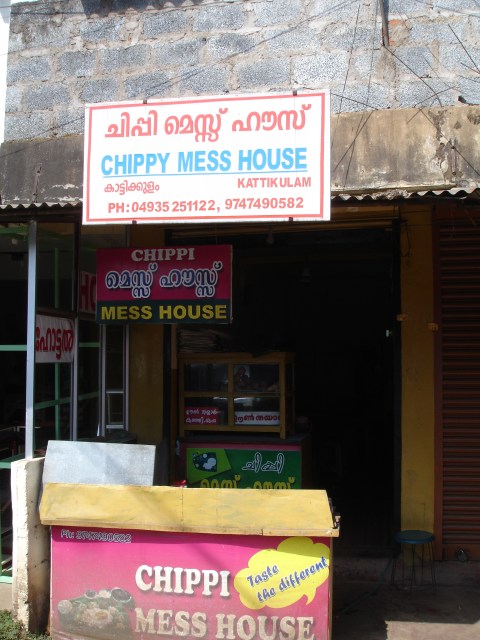
Kattikulam, Tamil Nadu
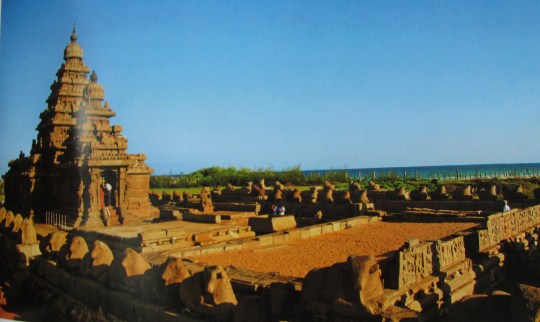
Photo Credits: Salim Pushpanath
The Shore Temple is one of the oldest temples in South India. Built during the 8th Century A.D., it is a good example of the Dravidian style of temple construction. Continue reading
Memes matter. You know it. Know why:
Yes we can! Ermahgerd. Occupy. I had a dream. Haters gonna hate. Tear down this wall! Gangnam Style. Drill, baby, drill.
We are constantly bombarded by memes in our daily lives. Some spontaneously flare up and then burn out as quickly as they appeared, while others stick around for decades. We hardly consider their presence, much less contemplate their possible influence on our lives. Continue reading

Chikmagalur, Karnataka
From the collaborative film Waste Land about the catadores (trash pickers) of Jardim Gramacho to the new documentary Trashed, there are film makers and organizations talking about the growing and overpowering problem of waste. Waste Land talks about the transformation of trash into art. The documentary film Landfill Harmonic is about “people transforming trash into music; about love, courage and creativity.”
With the ethos of reuse and recycle there are those who grab the creative spirit along with our attention with programs like the Paraguayan Sonidos de la Tierra (Saving Children Through Music) and Favio Chávez, director of the orchestra of recycled instruments on the Catuera Landfill on the banks of the Paraguay River. Continue reading

We believe governments and NGOs, supported by research in academia and elsewhere, are the institutions best designed to establish, enforce and monitor environmental protection schemes. NGOs can also play a philanthropic role. Enterprises such as ours have evolved in the last couple decades to approach conservation challenges better suited for market solutions. Now, another random variation in this never-ending evolution of ideas.
What is the implication of conservation NGOs getting into business deals with the very businesses that are causing environmental problems? We favor innovation, but also evaluation of those new approaches. We have only recently been paying attention to this relatively new phenomenon, so do not have the answers, but each time we see questions being raised we take note (and will share them here). This, from the excellent Yale Environment 360 site:
Like plastic bags, coal, and SUVs, beef has few friends in the environmental community. Most environmentalists would point to beef — in particular, beef cattle that spend their final days in confined feedlots — as being responsible for an array of ills — the greenhouse gas emissions that the cattle generate; the groundwater pollution from their manure; the use of antibiotics in animal feed; the vast quantities of monoculture corn grown to feed the cattle; and the enormous amount of chemical fertilizers and water needed to grow the corn. As advocacy group Food and Water Watch put it in a 2010 report, “The significant growth in industrial-scale, factory-farmed livestock has contributed to a host of environmental, public health, food safety and animal welfare problems.” Continue reading

Mangroves are an essential element of healthy coastal environment. They provide excellent habitat for migratory birds, serve as breeding ground for many species of fishes, control pollution through natural filtration and protect the shoreline from heavy waves. The important Mangroves plants are Acanthus cillicifolious, Acrostichum aurem and Avicennia officinalis, several of which are found in Kerala. Mangroves are salt-tolerant plants found in tropical and subtropical regions of the world. Continue reading
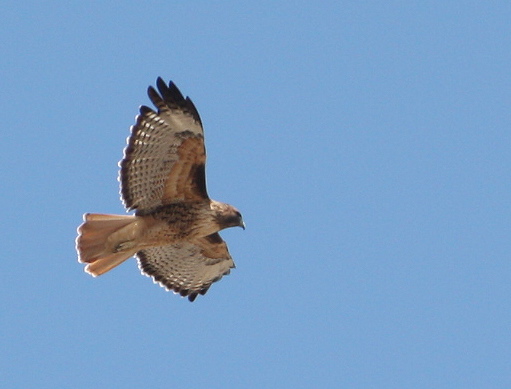
Photo Credit: Stephen Crafts
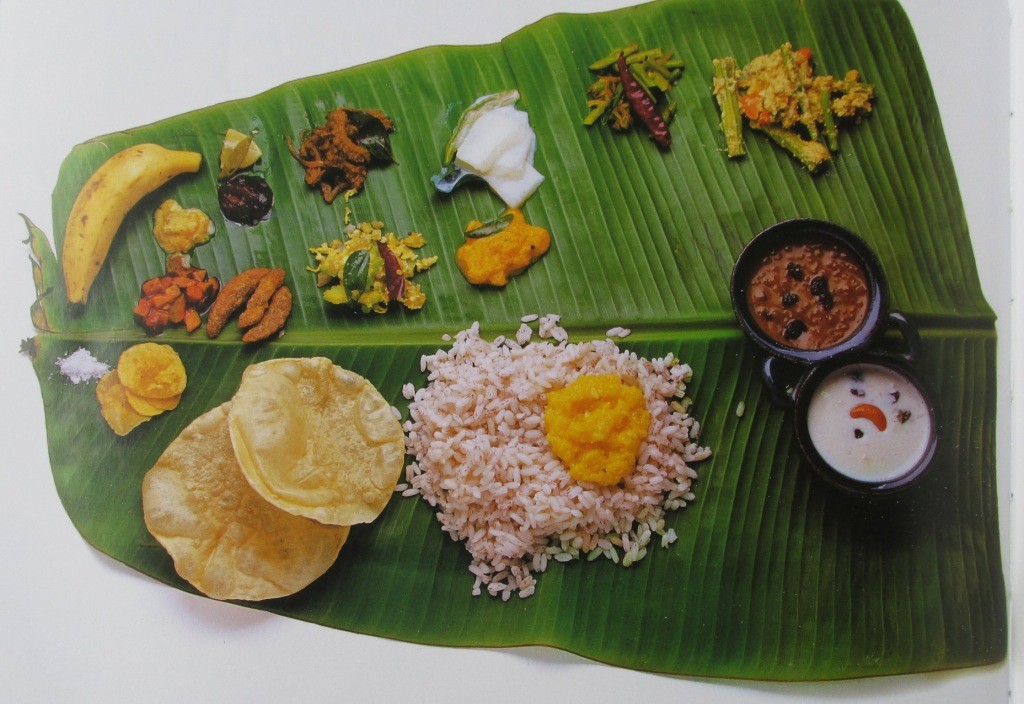
Food is an important indicator of a region’s history. The diversity that one sees today in Kerala’s food evolved from its past, when profound historical and social events influenced the diet of the inhabitants. Only the end section of the banana leaf is used due to the precise method of serving a Sadya. Starting at the narrow end, individual items are carefully added from left to right with the curries above the dividing spine so they don’t get mixed with the rice which will be placed on the bottom half later. Continue reading

The wedding of Alan Moore and Melinda Gebbie. Photograph: Neil Gaiman/Writer Pictures
Please bring your bride, too. We extend this type of invitation to the too few happy few who clearly work for the pleasure of their craft (or so it seems, observing them), rather than the money. In our own small way, 180+ full time members of Raxa Collective in Kerala–not to mention contributing photographers, interns and other friends to our purpose–are all attempting the same. For whomever might have missed it, this profile is worth the read:
…Moore has a complicated relationship with money. “Pure voodoo,” he says now. “Only there as long as we believe in it.” Challenged, during a television interview this year, about why he would sign away the movie rights to a comic such as Watchmen if he didn’t ever want it to become a movie, Moore said he gave up the rights because he never expected any adaptations to happen; he called it making money for old rope. Continue reading

Maradu, Cochin
Click here to go to Oceana’s report, which documents a study in which, through sampling and DNA testing, it is found that 39% of seafood peddled in major metro markets is fraudulently labeled:
Executive Summary
Seafood fraud can happen anywhere – even in the Big Apple. Fraud includes any false information accompanying seafood, from short weighting to swapping out one species of fish for another. Oceana’s investigation focused on species substitution, or the swapping of a lower value or lower quality fish for a more desirable species. This “bait and switch” hurts our oceans, our health and rips off consumers. And most importantly, it is illegal. Continue reading
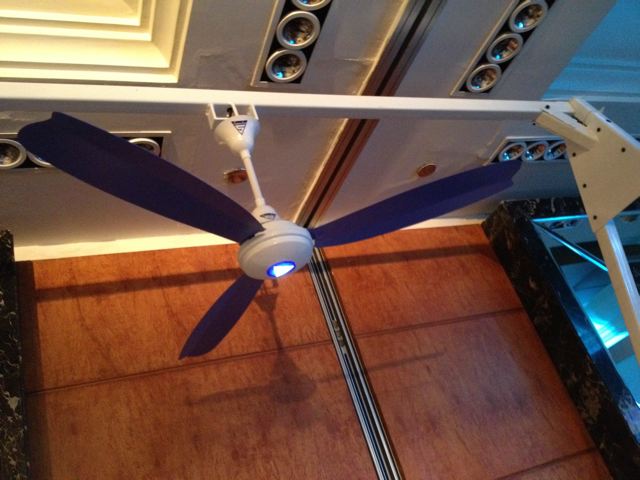
The Superfan, complete with colorful blades and LED power indicator. Photo credit: David Ferris
One of the least likely publications to cover ecological or social issues with any true concern, to our pleasant surprise occasionally runs an interesting story like this one (click the image above to go to the source):
…The fan is the first venture into consumer products for Versa Drives, a Indian manufacturer of alternating-current drives. Managing Director Sundar Muruganandhan said that the Superfan uses 35 watts of electricity in a country where the standard efficient fan is rated at 75 watts. In fact, Muruganandhan said, the fan blows past the country’s existing ratings system so thoroughly that a new index might be required. Continue reading
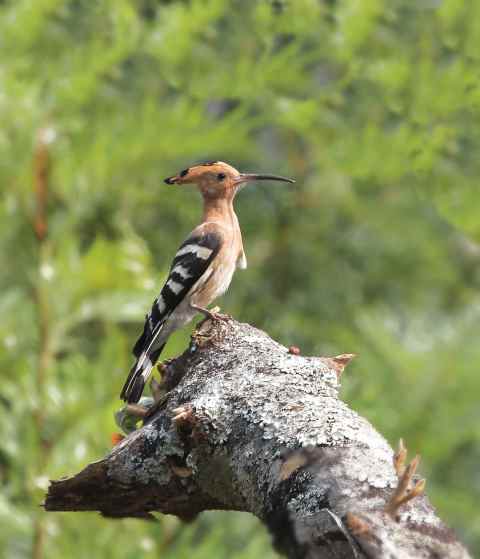
Chickmagalur, Karnataka

Brihadeeswarar Temple in Tamil Nadu is one of the greatest artistic accomplishments of the Late Chola period. At 216 feet in height, the shrine of this UNESCO World Heritage Site is the largest and tallest in India. This was an imperial monument to Chola power, built without using bricks, lime mortar or clay. The stones are placed one above the other and are held in place due to sheer weight. Continue reading
Trametes versicolor is a fascinating mushroom on many fronts – as a specialized organism within an ecosystem, as a beautifully variable natural art piece, and as valuable medicine. Fungi are an untapped resource in many scientific fields, and are vastly underappreciated as an entire natural kingdom. Food, medicine and art can all be created from but a single species alone, and the Kingdom of Fungi is one inhabited by thousands upon thousands of unique species, each of which has its own human uses and limitations.

Human uses and limitations. Mushroom hunters (including myself) often inadvertently train themselves to ignore categories of fungi that don’t hold any immediate interest. Small, white polypores, for example, tend to be tough as bark, tasteless, or crumbly, so one simply doesn’t pick them. Little brown gilled mushrooms, on the other hand, are soggy and crumbly, and could be any of a million species. One usually does not pick these. However, human knowledge of fungi over the ages has waxed and waned – several ancient traditional medicines have made use of fungi with huge medicinal potential, but which modern scientists are unable to understand. That said, human industry has improved the lot of frustrated medical researchers by refining the process of mushroom cultivation to the point that almost any species is accessible for study.
Jeremy Irons is comfortable enough, surely, that he could rest on his laurels and not give a hoot about all this. He is more than likely removed from the subject of the film he has just completed, most if not all the time. So why bother? But he got off his duff and did something, and for that we are impressed and give thanks:
A new documentary about the ultimate fate of just about everything we lug home from the mall opens on Friday in limited release in the United States. “Trashed,” directed by Candida Brady and starring Jeremy Irons, delves into the less festive side of consumerism and waste disposal — overflowing landfills in England, a toxic trash incinerator in Iceland, a hospital for children with birth defects in Vietnam.
We sat down recently with Mr. Irons to talk trash. Following are excerpts, edited for brevity and clarity. Continue reading