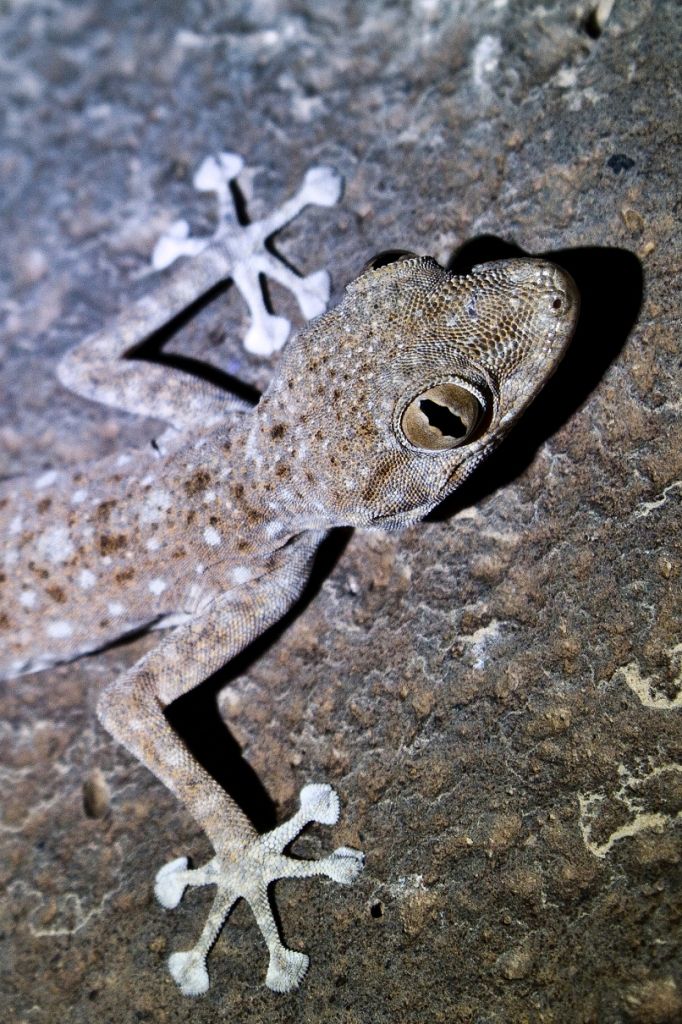
Geckos are more or less ubiquitous throughout the tropics, but visualizing them outside of such environments poses a challenge. Ptyodactylus guttatus, however, is a desert-dwelling species I found and photographed extensively in Jordan. Not only was this species my first subject to attempt capturing nocturnal macro photographs of, its residence within my own probably saved me quite a few mosquito bites over the weeks we shared it. Continue reading
Language, Heritage & Meaning

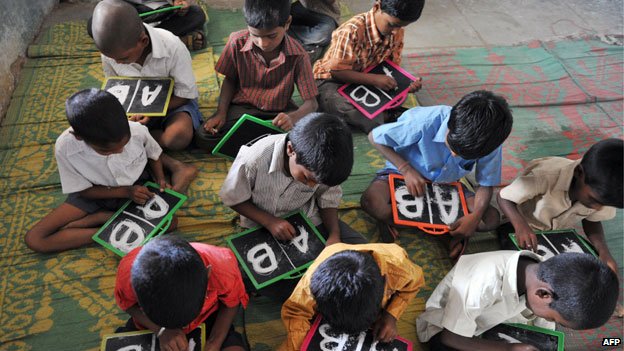
Today’s aspirational Indians want their children to go to a school where lessons are taught in English. But often the pupils leave speaking a language that would not be recognised in London or New York. Could this Hinglish be the language of India’s future?
Thanks to the BBC for this note on languages in our adopted home country:
Why, half a century after Indian independence, does English remain the language of higher education, national media, the upper judiciary and bureaucracy and corporate business? Continue reading
From Behind the Wheel: I’ve Got My Eyes On You

We Love Oysters, But We Love Wilderness More
Thanks to a briefing on Green Blog, we learn today that the good deed was done, as hoped:
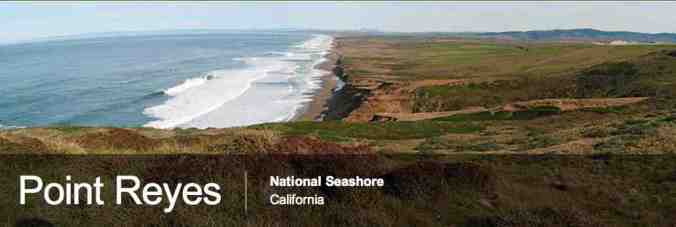
California Oyster Farm Must Go | Ken Salazar, the secretary of the interior, announced on Thursday that he would not extend the lease of an oyster farm in the Point Reyes National Seashore in Northern California, allowing the estuary there to become a wilderness area. Continue reading
Cumbum Vegetable Market (Tamil Nadu)
Cumbum is located about 25km away from Thekkady and is famous for its weekly fresh vegetable market. People from Kerala and Tamil Nadu buy their produce here both in wholesale and for domestic use. Garlic, Onion, Tomato, Okra, Beans, Carrot and Green chilies are the popular vegetables from this market.
Bird of the Day: Pond Heron (Lalbagh Botonical Gardens, Bangalore)

Jellyfish & Life
One of the longest and most fascinating items in the New York Times Magazine in ages:
After more than 4,000 years — almost since the dawn of recorded time, when Utnapishtim told Gilgamesh that the secret to immortality lay in a coral found on the ocean floor — man finally discovered eternal life in 1988. He found it, in fact, on the ocean floor. The discovery was made unwittingly by Christian Sommer, a German marine-biology student in his early 20s. He was spending the summer in Rapallo, a small city on the Italian Riviera, where exactly one century earlier Friedrich Nietzsche conceived “Thus Spoke Zarathustra”: “Everything goes, everything comes back; eternally rolls the wheel of being. Everything dies, everything blossoms again. . . .” Continue reading
Food Issues
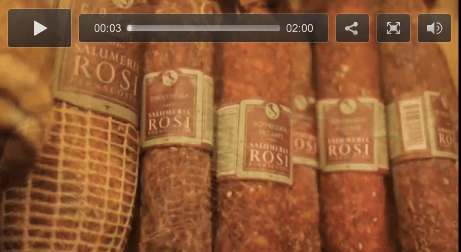
Usually the links to great journalism, or books worth reading, or art exhibitions, etc. on this site are left to to the group as a whole, and under the name Raxa Collective we share things like the video you can click through to on the image above. The text below will introduce you to that particular video.
But in my own voice, I urge you to pick up a real copy or click through to browse virtual portions of this week’s New Yorker magazine. For however many years they have been producing a “food issue,” a theme which (in the world we live in) could be tasteless but in this magazine almost never is, I think this year’s is the best yet. And this little video+writing piece is a good sample (Mimi, you have been much loved in our home and you always will be):
There are very few sausage- and salami-makers left in New York City, and presumably only one with “Swami of Salami” printed on his business cards. Cesare Casella is the executive chef at Salumeria Rosi, on the Upper West Side, where he cooks sausage and conjures up closely guarded formulas for gourmet cured meats. Casella said that cooking sausage brings him back to his childhood in Lucca, Italy, where he raised pigs as pets and then ate them. We sat down with him to see how sausage is made at his restaurant, and find out why so many people are so obsessed with his luscious links. Mimi Sheraton wrote about her obsession with sausage and salami in this week’s magazine.
Walk The Walk
Click the image above to go to the thought piece. It got us thinking that sometimes we can only talk the talk; other times we make the effort to at least talk the walk; on a good day we walk as we talk; but on the best days we walk the walk:
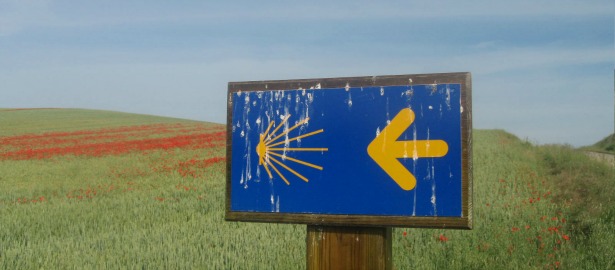
For 44 days, I walked El Camino de Santiago de Compostella. “The way to Santiago along the field of stars.”
The standard icebreaker along the dirt path is simply, expectedly, “Why are you walking?” Continue reading
Common Palmfly (Elymnias hypermenstra)
Common Palmfly is one of the frequently seen butterflies throughout Kerala. Coconut, Areca Nut and other ornamental palms are the main food plant for this species.
Do Not Look Away
Click the image above to go to this important report, as described in Green Blog. It would seem more pleasant to look away, but we cannot. Anyone who has been to Siberia knows what this is about. If you have not been to Siberia, read on:
The greatest single uncertainty about climate change is how much the warming of the planet will feed on itself.
As the temperature increases because of human emissions, feedbacks could cause new pools of carbon to be released into the atmosphere, magnifying the trend. Other types of feedbacks could potentially slow the warming. Over all, climate scientists have only best guesses about how these conflicting tendencies will balance out, though most of them think the net result is likely to be a substantial rise in the planet’s average temperature. Continue reading
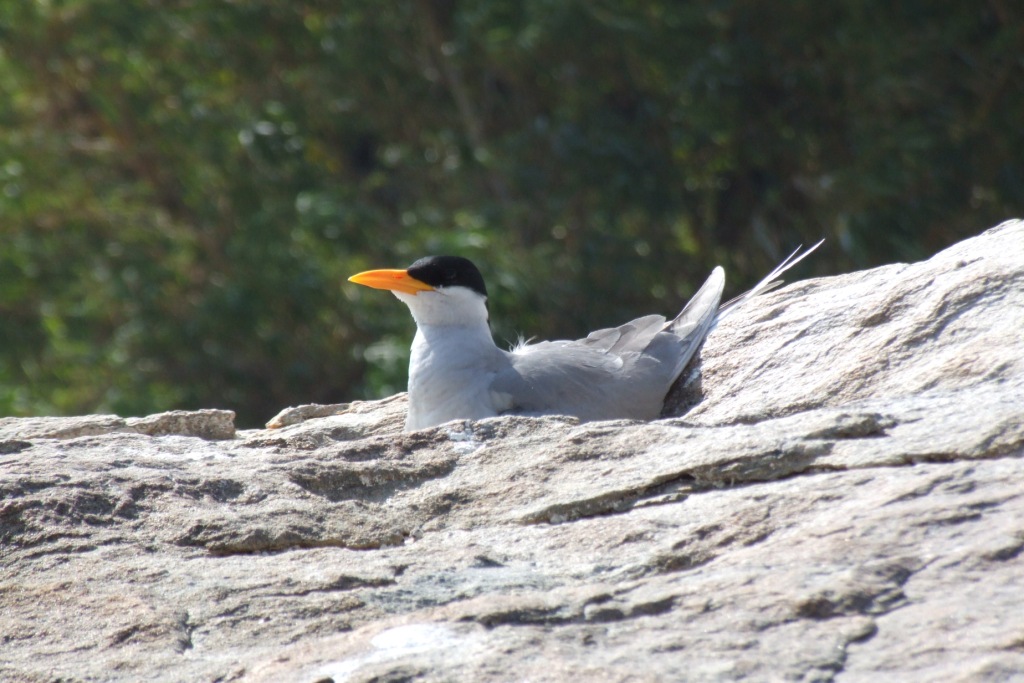
Bird of the Day: River Tern (Mysore, Karnataka)
From Behind the Wheel: In Lord Hanuman’s Shadow

Tamil Nadu near Mulliperiyar Dam; Photo Credit: Janna Crafts
Building Memories With Pavilions
Since first realizing, back in the 1990s, that our business model is something we might call entrepreneurial conservation I have been obsessed with the idea of non-permanence as the ultimate game-changer. With resorts in particular, if we were to argue that a property’s conservation area was the main purpose of the resort, then the resort itself would best fulfill that purpose if it could credibly disappear on a moment’s notice. A decade+ and a luxury tent camp revolution later (aka glamping) I am still working at variations on this idea.
My conversation with Chi-Chi yesterday was about one non-permanent structure we will build on a waterfront area to serve as the new base for our houseboat operations. The image above was one brainstorming topic of our conversation, the details of which do not matter so much as the ideas that followed and mixed with other lingering ideas. Continue reading
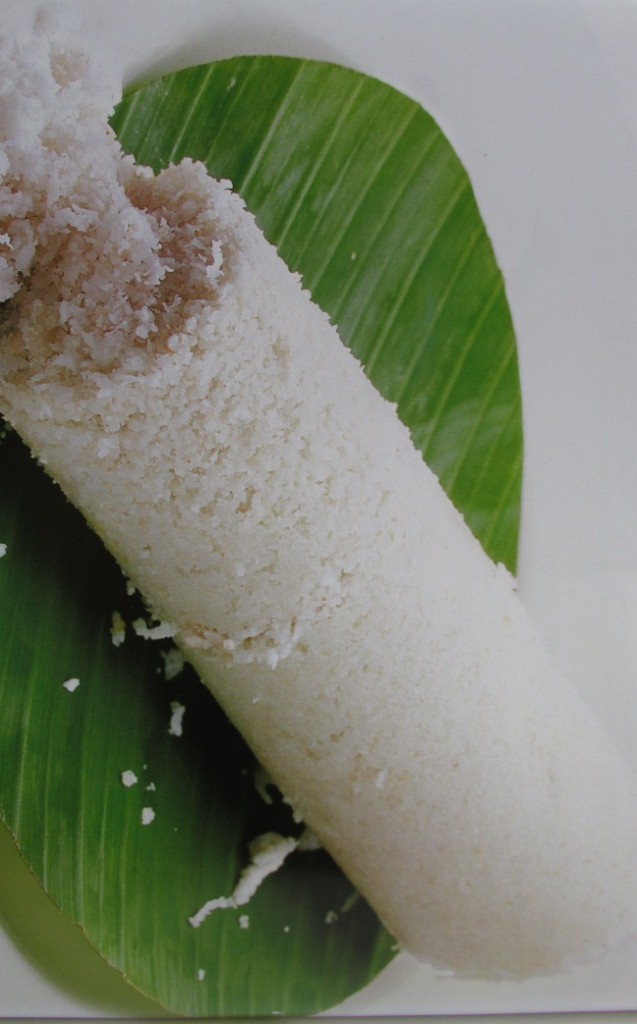
Flavours of Kerala- Puttu (Steamed Rice-Cake)
Puttu is a wonderful main dish for breakfast in Kerala. Easy to make and compatible with everything from ripe bananas to red fish curry this oil -free and healthy dish is made using a unique two piece vessel called a puttu – kudam and puttu- kutti. Continue reading
We Care About Innovation, So Patents Matter Even If We Will Never Have One
The one previous post on our site worth a visit on this topic happens to be a mostly funny, and fun one. If you have 34 minutes to spare, the best explanation of why this issue matters to all of us is in this podcast. Meanwhile, for those with only two minutes to spare, thanks to the Atlantic‘s attention to this matter:
If there’s one thing Schoolhouse Rock taught us all, it’s that the easiest way to explain a dry topic to someone with a short attention span is to show them a cartoon. So kudos to George Mason University economist Alex Tabarrok and Idea Rocket Animation for putting together this delightful two-minute clip laying out the case against software patents Continue reading
Bird of the Day: Galapagos Mockingbird (Galapagos Islands, Ecuador)
Pavilions & Memory
Thanks to Chi-Chi and a conversation we had twelve hours ago about a new pavilion project we are about to begin in Kerala, I found myself searching “the world’s most visited architecture website.” I came across this video that reminded me that most of my professional life in 2008, 2009 and the first half of 2010 was dedicated to entrepreneurial conservation projects in the southern half of Chile.
Chile’s pavilion at the Venice Biennale was evocative. I do not regret not having gone to Venice to see it, but it evokes some regret that I have not stepped on the soilscapes of Chile recently…
Alms For Aristocrats

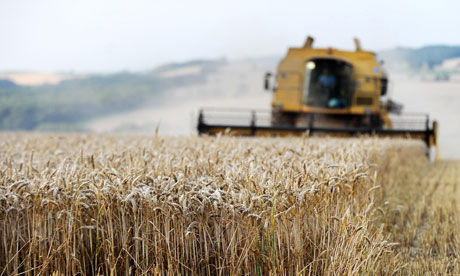
‘Not long ago, farm payments were justified on the grounds that world demand was low. Now they are justified on the grounds that world demand is high.’ Photograph: Andrew Matthews/PA
We are overwhelmingly in favor of supporting family farms whenever and wherever possible. Family farms are increasingly a form of heritage in danger of extinction. Sometimes but not always charity or government support is a solution to specific needs of family farms (search on Willie Nelson’s Farm Aid initiative for examples). But charity from the poor flowing to the wealthiest landowners? There are boundaries to the definition of a family farm that we had not thought to specify until reading this Guardian editorial today:
Squatting at the heart of last week’s summit, poisoning all negotiations, is a vast, wobbling lump of pork fat called the common agricultural policy. The talks collapsed partly because the president of the European council, pressed by François Hollande, proposed inflating the great blob by a further €8bn over six years. I don’t often find myself on their side, but the British and Dutch governments were right to say no. Continue reading
Blue Tiger Butterfly (Tirumala limniace)
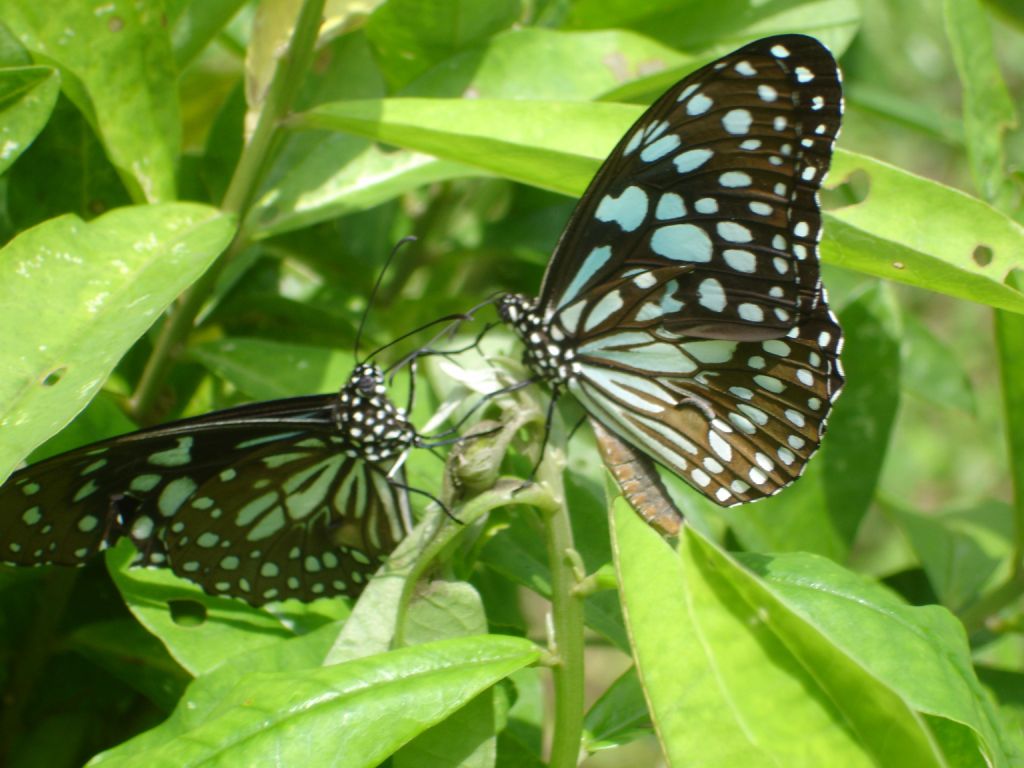
The Blue Tiger is one of the butterflies found commonly throughout most of India, both in the hills and in the plains. These butterflies are frequent visitors to gardens and the Pink Cockscomb (Ageratum conyzoides) is its favorite flower. Continue reading