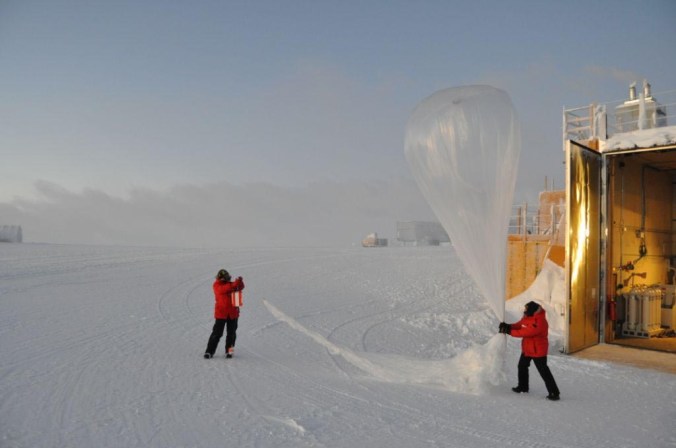
Staff at the South Pole get ready to release a balloon that will carry an ozone instrument up to 20 miles in the atmosphere, measuring ozone levels all along the way. NOAA image from 2011.
Click the image above to go to the story:
Warmer air temperatures high above the Antarctic led to the second smallest seasonal ozone hole in 20 years, according to NOAA and NASA satellite measurements. This year, the average size of the ozone hole was 6.9 million square miles (17.9 million square kilometers). The ozone layer helps shield life on Earth from potentially harmful ultraviolet (UV) radiation that can cause skin cancer and damage plants. Continue reading
















 Organikos