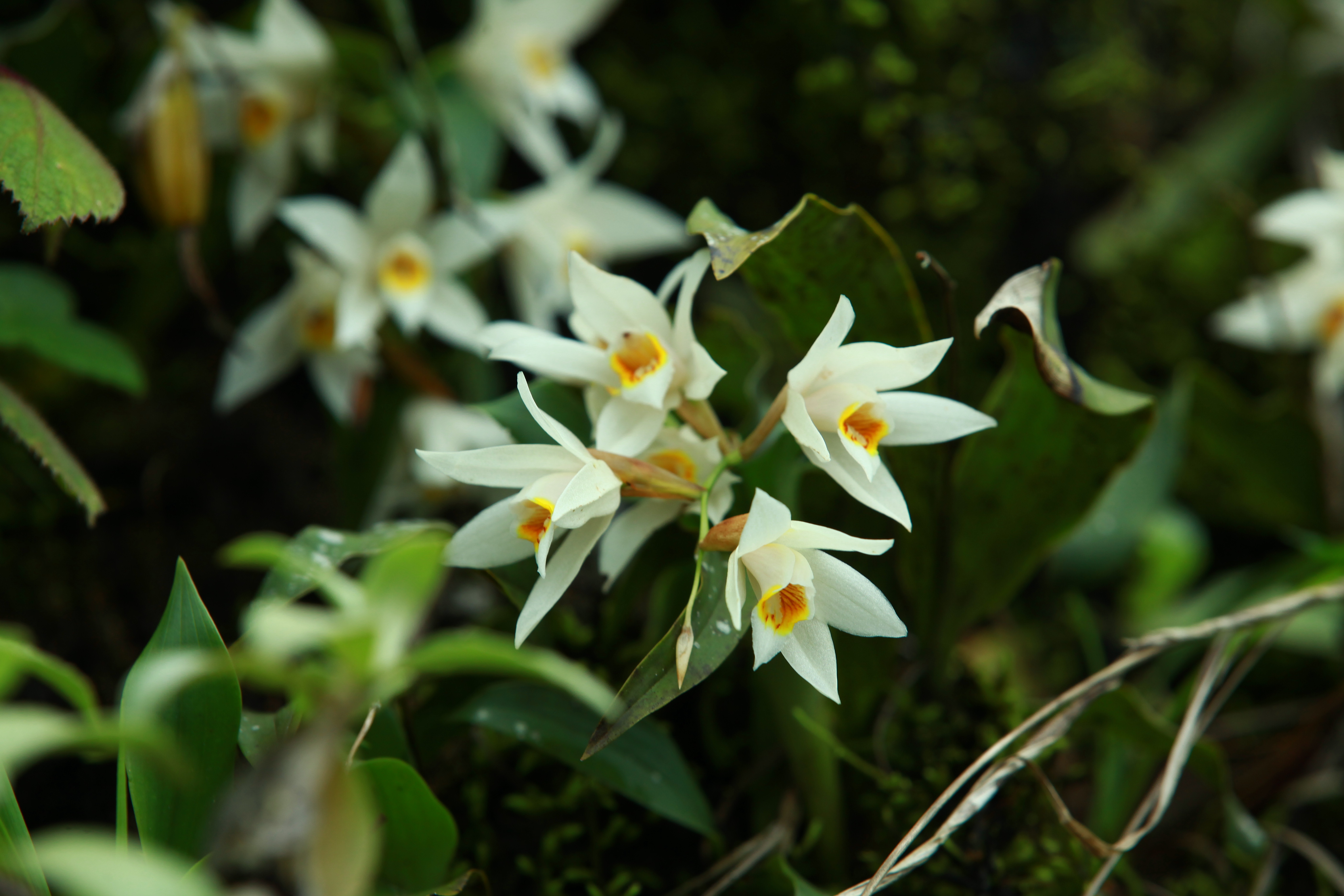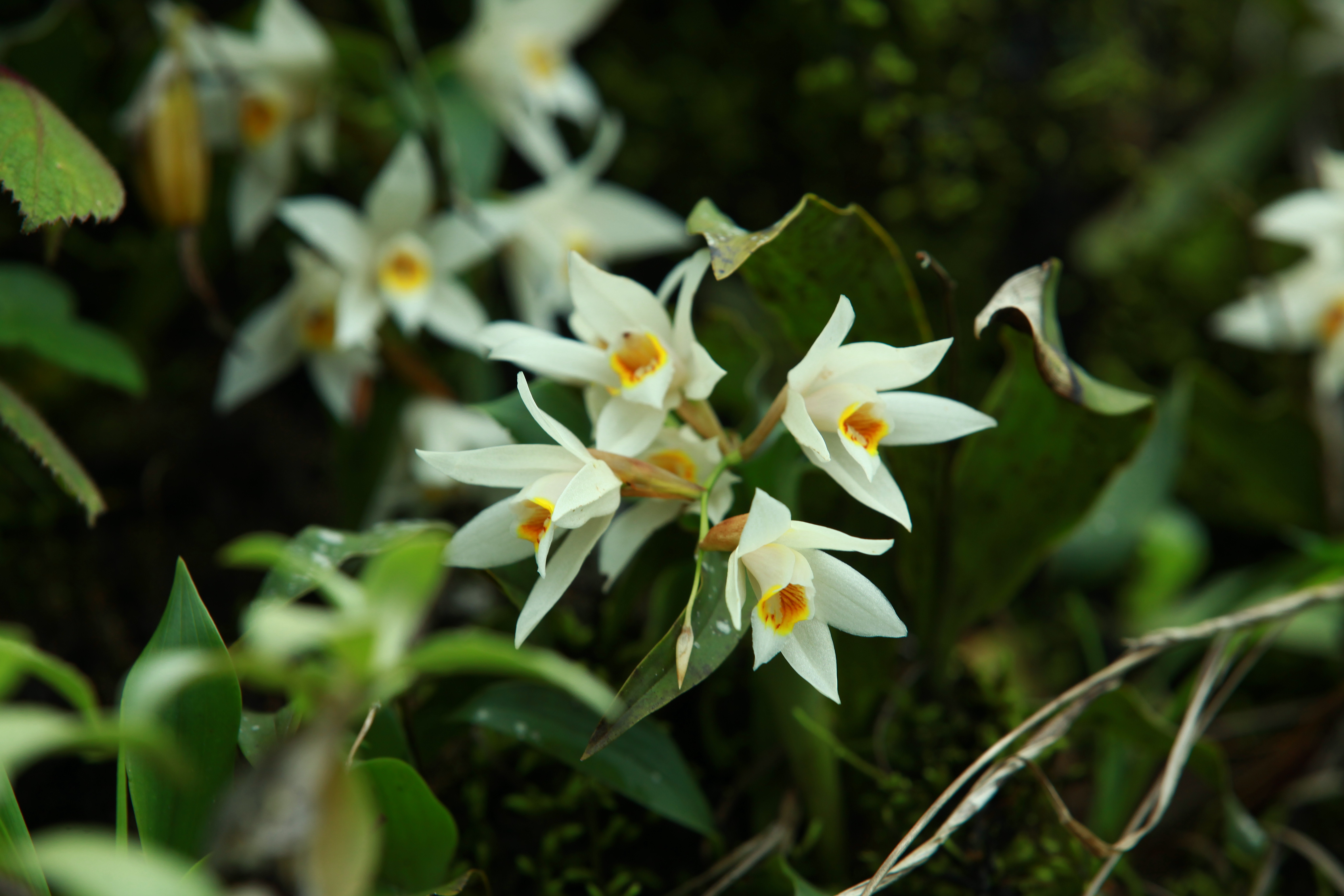
Tulipa Turkestanica is a member of the tulip family native to central Asia and widely growing in the Western Ghats of India above 1300 meters. These beautiful white flowers with yellow centers are often found in rocky gardens.
Michael Pollan, Food Activist In Journalism Professor’s Clothing
Thanks to The Edible Schoolyard Project and UC Berkeley, Michael Pollan‘s course about the challenges and opportunities of our food system is offered for all of us to share in. Course Description:
As the costs of our industrialized food system—to the environment, public health, farmers and food workers, and to our social life—become impossible to ignore, a national debate over the future of food and farming has begun. Telling stories about where food comes from, how it is produced—and how it might be produced differently—plays a critical role in bringing attention to the issue and shifting politics. Each week, a prominent figure in the debate explores: What can be done to make the food system healthier, more equitable, more sustainable? What is the role of storytelling in the process?
Bird of the Day: Black-winged Kite

Uda Walawe, Sri Lanka
Rousseau on American Democracy
 Jean-Jacques Rousseau, writing in mid-18th century Geneva, discusses in The Social Contract several types of government and societies that depend on them, scorning and praising elements of each. Overall, he seems rather cynical about the possibilities of a decent society existing where the people and the government maintain an optimal state of equilibrium, but takes care not to criticize or admire one political system too closely–partly, perhaps, to avoid controversy and imprisonment or exile (which didn’t work, by the way) but also to keep his arguments logical and well-formed. He always emphasizes the generalizations, exceptions, or complexities associated with particular systems (e.g. monarchy), and rarely mentions contemporary examples when Sparta or Rome will suffice.
The Social Contract was published in 1762, and Rousseau passed away in 1778. His ideas were purportedly influential in the 1789 French Revolution (although the majority of the participants were illiterate), and it is typical to wonder what Rousseau would have thought of the execution of King Louis XVI, the formation of the National Assembly, and the rise of Maximilien Robespierre (himself an ardent supporter of Rousseau’s theories). During this year’s turbulent political season in the United States, I find myself wondering if Rousseau (who most of the Founding Fathers undoubtedly read) would have endorsed the system Americans have been so proud of.
Elephant Diet
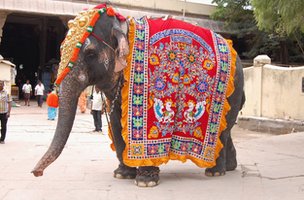
Cuisine and wellness, topics we think about mainly in the context of resort operations in India, also have a role to play in the life of a particular group of elephants, as this BBC story (click the image to go to the source) illustrates:
In parts of India, elephants are kept in temples for religious reasons – taking part in ceremonies and festivals.
Efforts are on in the South Indian state of Tamil Nadu to get these over-pampered tusked animals to slim down, officials have told the BBC. Continue reading
Aster (Alpine aster)

Asters, a charming spring-flowering plants with one flower head per stem, are widely growing in the High Ranges of Kerala. The flowers are mainly used for floral decorations.
Bridging Humans And Nature

Photo by Lauren E. Oakes: Basil, tomatoes, and glass floats from the outer coast at a home in Gustavus, Alaska
An excellent recent post in Green Blog (click the image above to go to the source) begins:
Basking in a surprise dose of early morning sun, we sat together on a bench made from yellow-cedar at the Gustavus Forelands Preserve, a landscape of spruce and cottonwood forests and beaches overlooking the Icy Strait waters. We were staring at a diagram on a piece of paper I had handed to Hank Lentfer, a lifelong Alaskan and longtime resident of the tiny town of Gustavus. Continue reading
Bird of the Day: Osprey with Dinner (Sanibel Island, FL)

Photo credit: Stephen Crafts
The Wind Power Debate Gets More Interesting

An offshore wind turbine, part of the London Array wind farm site, located in the outer Thames Estuary, about 70 miles east of London. Image: phault via flickr
An article in Inside Science (click the image above to go to the article) discusses new research demonstrating that wind power might be able to generate all the world’s electricity needs without large atmospheric effects:
There is enough energy for people to reap from the wind to meet all of the world’s power demands without radically altering the planet’s climate, according to two independent teams of scientists.
Wind power is often touted as environmentally friendly, generating no pollutants. It is an increasingly popular source of renewable energy, with the United States aiming to produce 20 percent of its electricity by wind power by 2030. Still, there have been questions as to how much energy wind power can supply the world, and how green it actually is, given how it pulls energy from the atmosphere. Continue reading
Wild Periyar: October 14, 2012
Our guests Mr.& Mrs. Brayan shared some of their wild life experiences from their visit to Periyar National Park.
Fighting Fire With Fire
This isn’t the first time we’ve applauded local libraries taking a stand to protect their place in public service. But the particular example above is prime in terms collective action lassoing social media. Kudos to Leo Burnett/Arc Worldwide agency for campaigning the hoax, and hurray for yet another library with the backbone to publicly roar.
Troy Public Library would close for good unless voters approved a tax increase. With little money, six weeks until the election, facing a well organized anti-tax group who’d managed to get two previous library-saving tax increases to fail, we had to be bold. We posed as a clandestine group who urged people to vote to close the library so they could have a book burning party. Public outcry over the idea drowned out the anti-tax opposition and created a ground-swell of support for the library, which won by a landslide.
Bird of the Day: Yellow Bittern
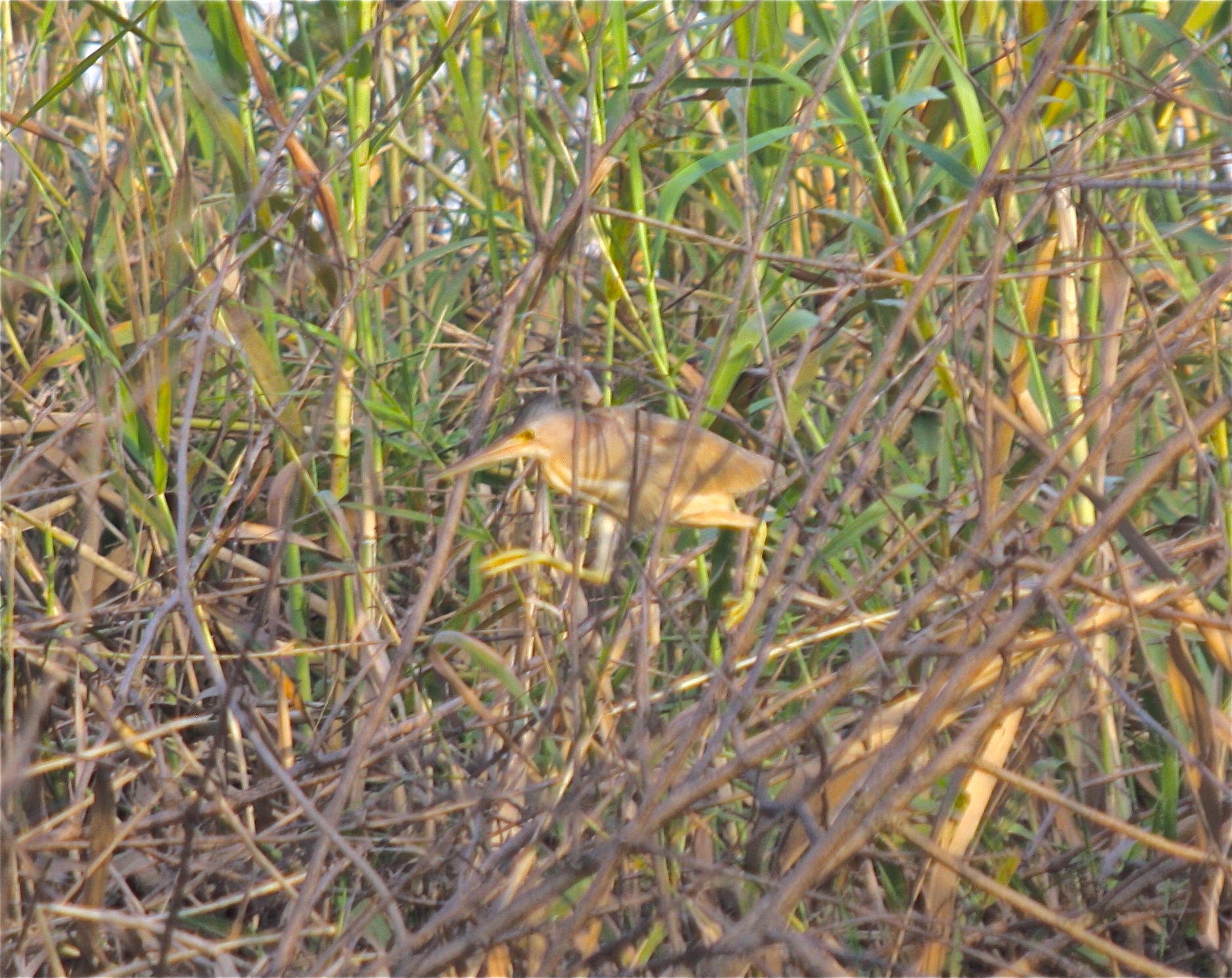
Kerala Backwaters, India
From Behind the Wheel: Batman Says “Sound Horn”

Vyttila Junction, Ernakulam
Creative Climate Activism
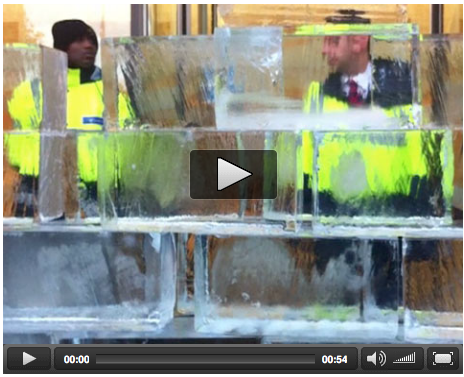
Click the image to go to the video of climate activists’ ice pyramid in London at Shell’s HQ.
Fire Flame Bush (Wood Fordia)

Fire Flame Bush is a many branched deciduous shrub that grows to a height of 4-5 meters. It takes its name from the red coloration of both its bark and its flowers. It grows throughout Kerala up to an altitude of 1500 meters.
Leading With Historical Vision

President Barack Obama shows students from Johnson College Prep in Chicago, Illinois, a model of Samuel Morse’s telegraph patent in the Oval Office last October. (The White House/Flickr)
We avoid politics, but call out the good, the bad and the ugly in the public sector when needed. Admittedly, too much of the latter two and not enough of the good. So hail to the geek in chief of the United States of America, who followed through on his promise in one of our favorite magazines two years ago:
When I was sworn into office, I had a chance to request objects from some of America’s finest museums to put on display in the White House. One of my requests was for patent models from the Smithsonian National Museum of American History…
What’s good? Telling your constituents you want to invest in the future through education; telling young students that innovation is the future of the economy; getting those dusty plates off the wall and celebrating the history of innovation instead. Continue reading
Bird of the Day: Snowy Egret (Sanibel Island, FL)

Photo credit: Stephen Crafts
Hot, Fresh Data

Thanks to one of our favorite informers, Felicity Barringer, whose past stories we have occasionally riffed on, for this piece in today’s Dot Earth section of the New York Times website (click the graph above to go to the source, and yes it counts as a non-subscriber article read):
From California to New Jersey, the summer sun was hot this year — and so was the solar industry. While the business of solar energy is still small enough and young enough to record firsts at the fearsome pace of a toddler, the milestones are getting more substantial. Continue reading
Fever Nut
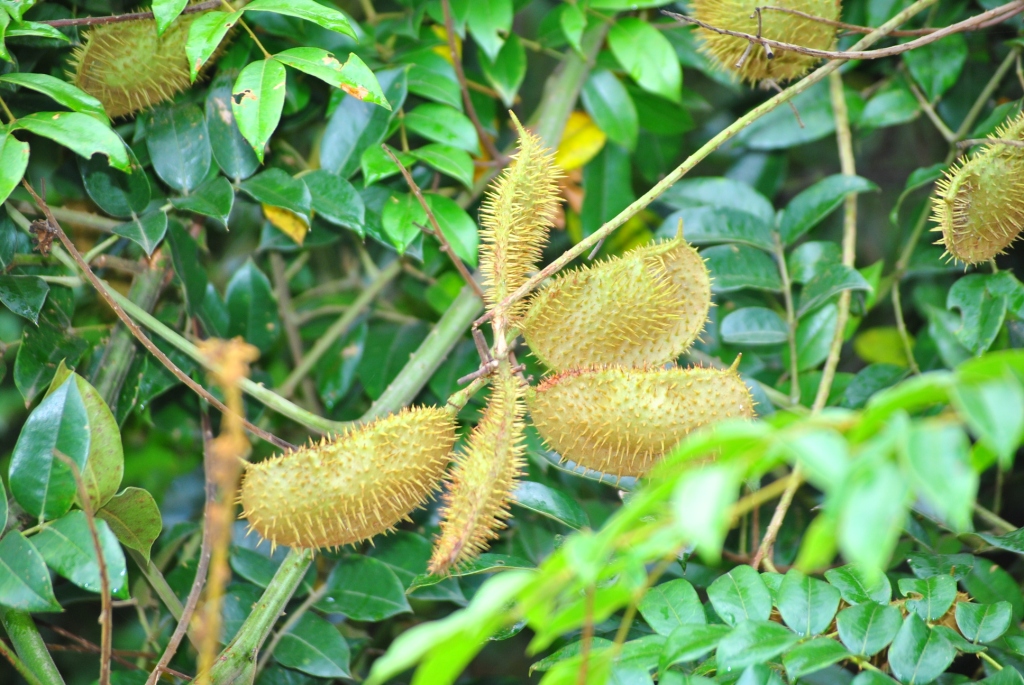
Fever Nut is a large thorny shrub bearing light yellow fruits covered with sharp thorns. Its commonly found in the tropical forests of the Western Ghats up to an altitude of 1000 meters. In Ayurveda the root of the plant is used for treating fever, cough, asthma, worms and colic. The leaves are anthelmintic and useful in treating elephantiasis.
Droning On About Conservation

In a world where funding for national parks and rangers isn’t always in the budget, conservationists have to look to technologies to help protect the millions of acres that some of the world’s most threatened species make their home. The World Wildlife Fund has developed remote controlled planes that use simple enough technology to be launched by hand and be powered by rechargeable electric batteries. Click the image above to go to the story in the BBC:
Conservationists in Nepal will soon start using special drones…developed by the global wildlife organisation, WWF. Continue reading
 Organikos