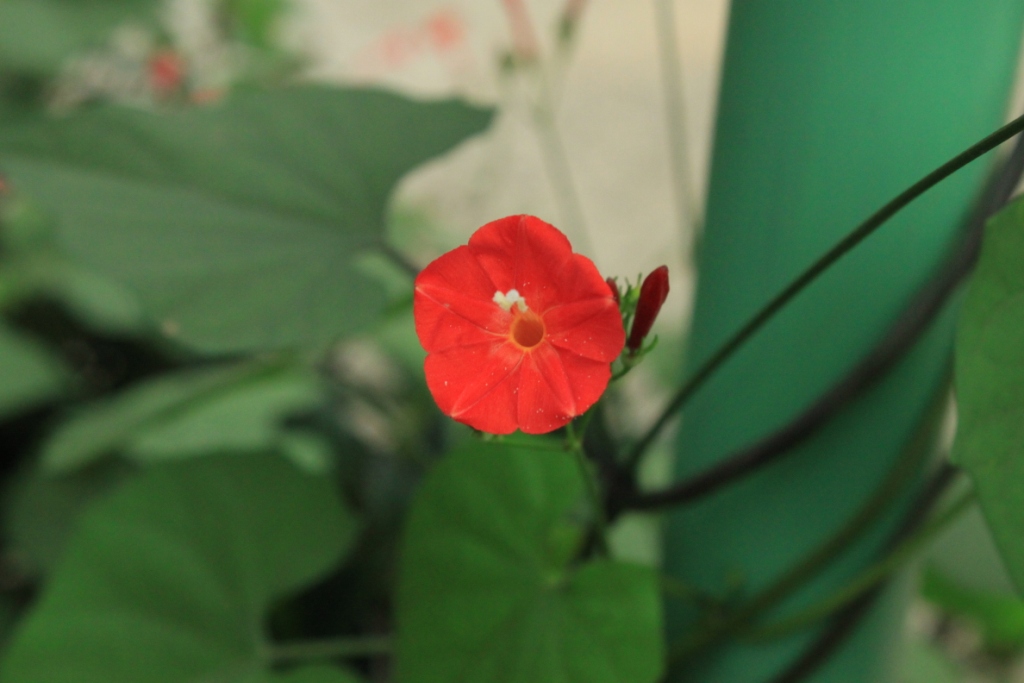
Red Star Glory is an annual twining plant with bright scarlet flowers found in the Western Ghats of India that appears as the monsoon trails off. Its scientific name is Ipomoea hederifolia but it is also known by the names Scarlet creeper, Scarlet Morning Glory and Star Ipomea. The plant grows vigorously to a height of 10 ft. with elongated heart shaped leaves with pointed tips. Continue reading
Tuning In
I went birding yesterday. For a rookie like me, that means taking a walk somewhere scenic with my camera, aiming and shooting (the lens) at birds, hoping my amateur work churns out something recognizable, then researching and identifying the species.

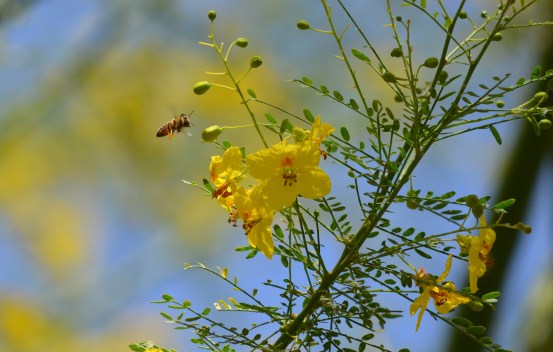
Bee in action on Palo Verde tree
As I moved along from tree to tree and bush to bush, detecting movements and sounds, I felt myself identifying a couple of birds by their calls, and hunting them out in that way. Suddenly it felt as if the volume was turned up – I tuned into the busy conversation that was going on above my head. Continue reading
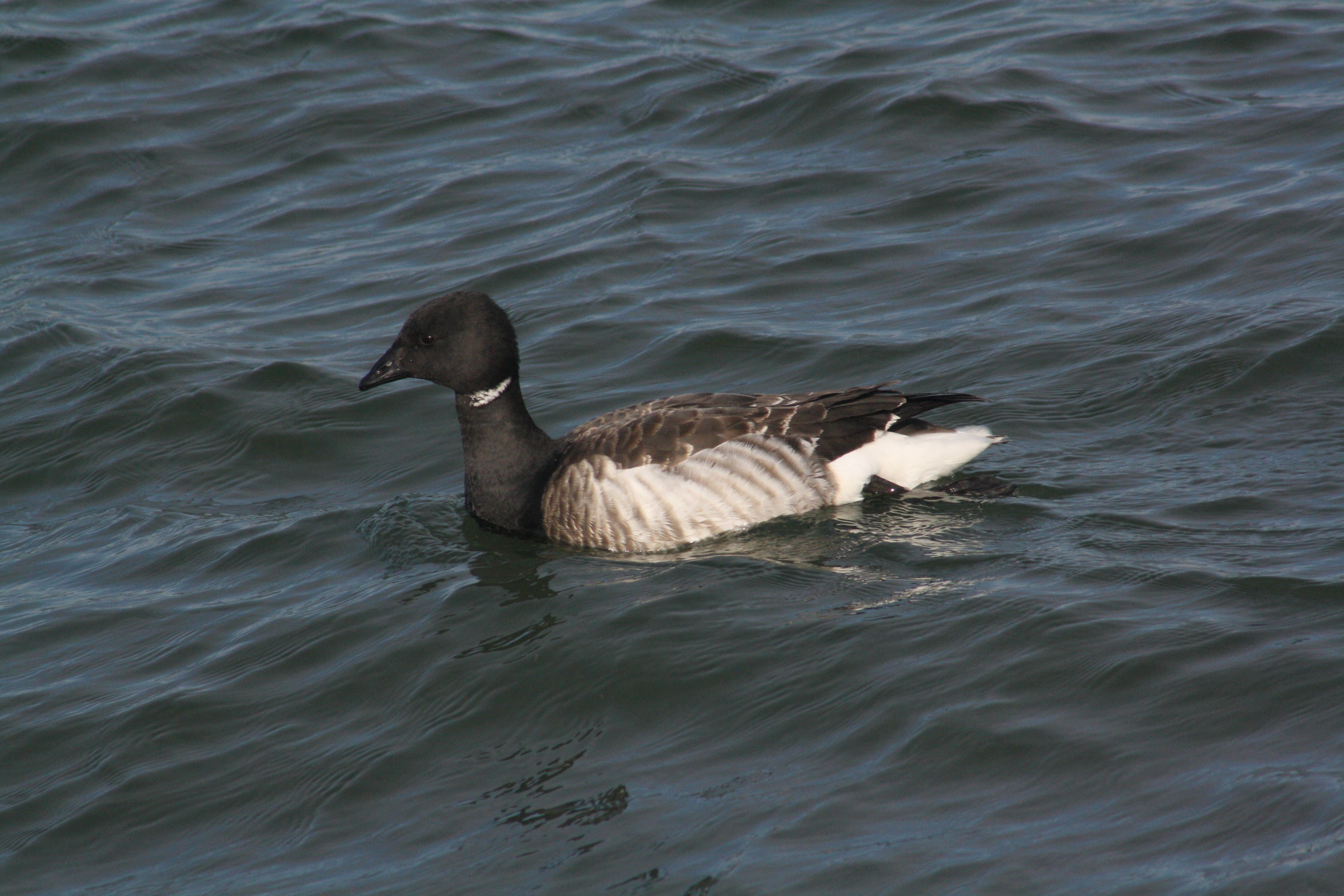
Bird of the Day: Brant
Mangala Devi Temple in Thekkady
The 1000 year old Mangala Devi Temple is a good example of the traditional architectural style of South India. It is situated on the northern boundary of the Periyar Tiger Reserve 1400m above sea level. Continue reading
Zimmer Jive
The ever clever science writer, Carl Zimmer, has an item in the new issue of National Geographic, accompanied by a lovely short video illustration, which you can see by clicking the image above (also see a sample of the opening below):
The Common Hand
Humans, of course, have them. So do bats, cats, dolphins, elephants, and frogs. Our artwork takes you inside these useful appendages.
By Carl ZimmerIllustration by Bryan Christie Continue reading
Bird of the Day: Black Throated Sparrow (Palm Desert, CA)

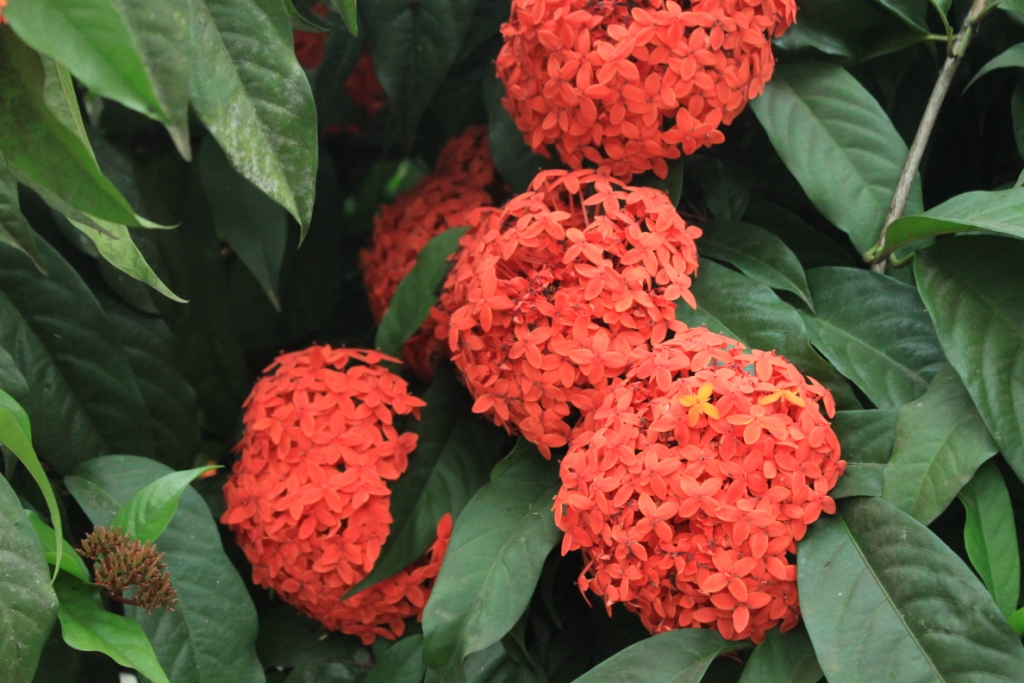
Ixora coccinea
Ixora coccinea is an ornamental, multi-branched, evergreen shrub found in the Western ghats of India which grows 4-5 ft tall and can reach the height of 12 ft. It is also known by the names Flame of the woods and Jungle flame. The plant has oblong glossy leaves and small bright orange to scarlet flowers that grow in dense rounded clusters 2-5 in in size. Continue reading
Bird of the Day: Scarlet Minivet- Female (Periyar Tiger Reserve, Thekkady, India)

Photo: Mr. Manoj Vasudeva
Report To Greco
Click the photo to go to the recent post titled “Do We Need Stories?” in the blog site of the New York Review of Books. It starts out:
Let’s tackle one of the literary set’s favorite orthodoxies head on: that the world “needs stories.” There is an enormous need,” Jonathan Franzen declares in an interview with Corriere della Sera (there’s no escape these days), “for long, elaborate, complex stories, such as can only be written by an author concentrating alone, free from the deafening chatter of Twitter.”
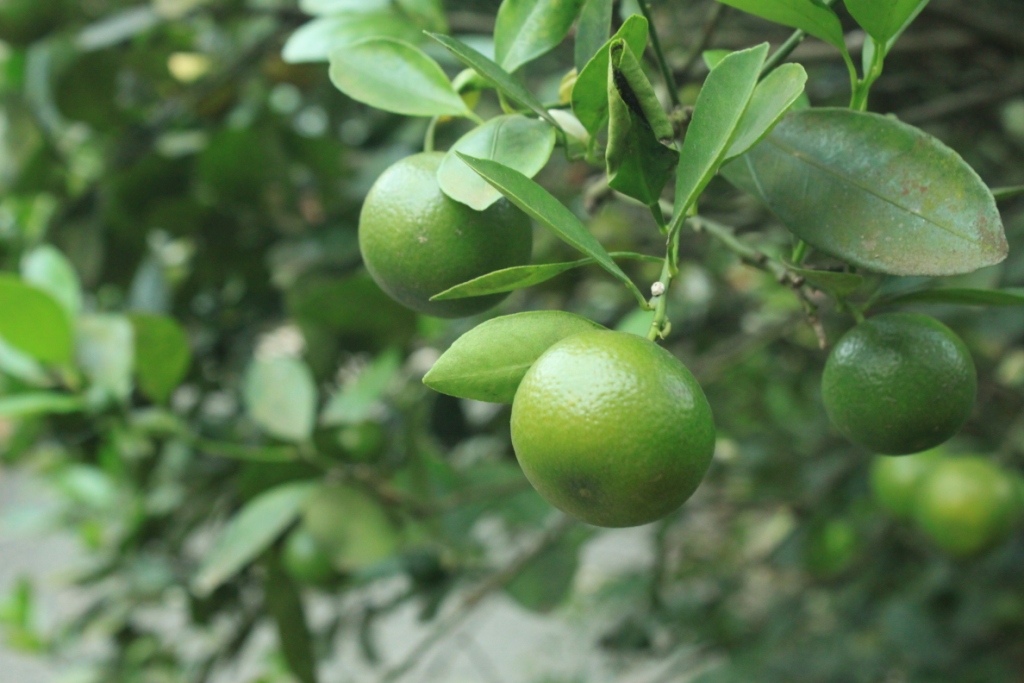
Orange fruit (Citrus sinensis)
Oranges are one of the most popular of the world’s fruit. It flourishes in warm climates across the globe and the many varieties of oranges vary from sweet to sour. The tree is a sub-tropical evergreen that can reach up to 30-40 ft tall with thorny shoots and waxy 2-4 inch long leaves . Continue reading
Bird of the Day: Black-headed Gull
Salvia scarlet sage (Salvia splendens)
Salvia scarlet sage is a shrubby, ornamental plant with scarlet red flowers and symmetrical leaves growing commonly in India’s Western Ghats. It is widely cultivated as a bedding plant in many countries. Continue reading
나는 한국말을 해요 (I speak Korean)
Ok, maybe that’s a little white lie. I don’t really speak Korean – you can thank good old Google Translate for the post title – but I’m on my way! My interest was piqued back in first year when my phonology lecturer mentioned the language, since it has a unique alphabet in which the shapes of the written letters actually represent the shape your mouth makes when you sound them out! Isn’t that amazing?!
Well, call me a language freak, but I just had to learn more. It took me a while (read: two years) to take the plunge, but when my friend Kim posted this on my Timeline yesterday (girl, you know me so well…), I decided. I have so much time on my hands and it’s driving me nuts, so today I finally started making use of the university’s language centre: I trammed it in to the centre, grabbed a bagel and a lemonade for good measure, then showed up at the library and got Korein’! Continue reading
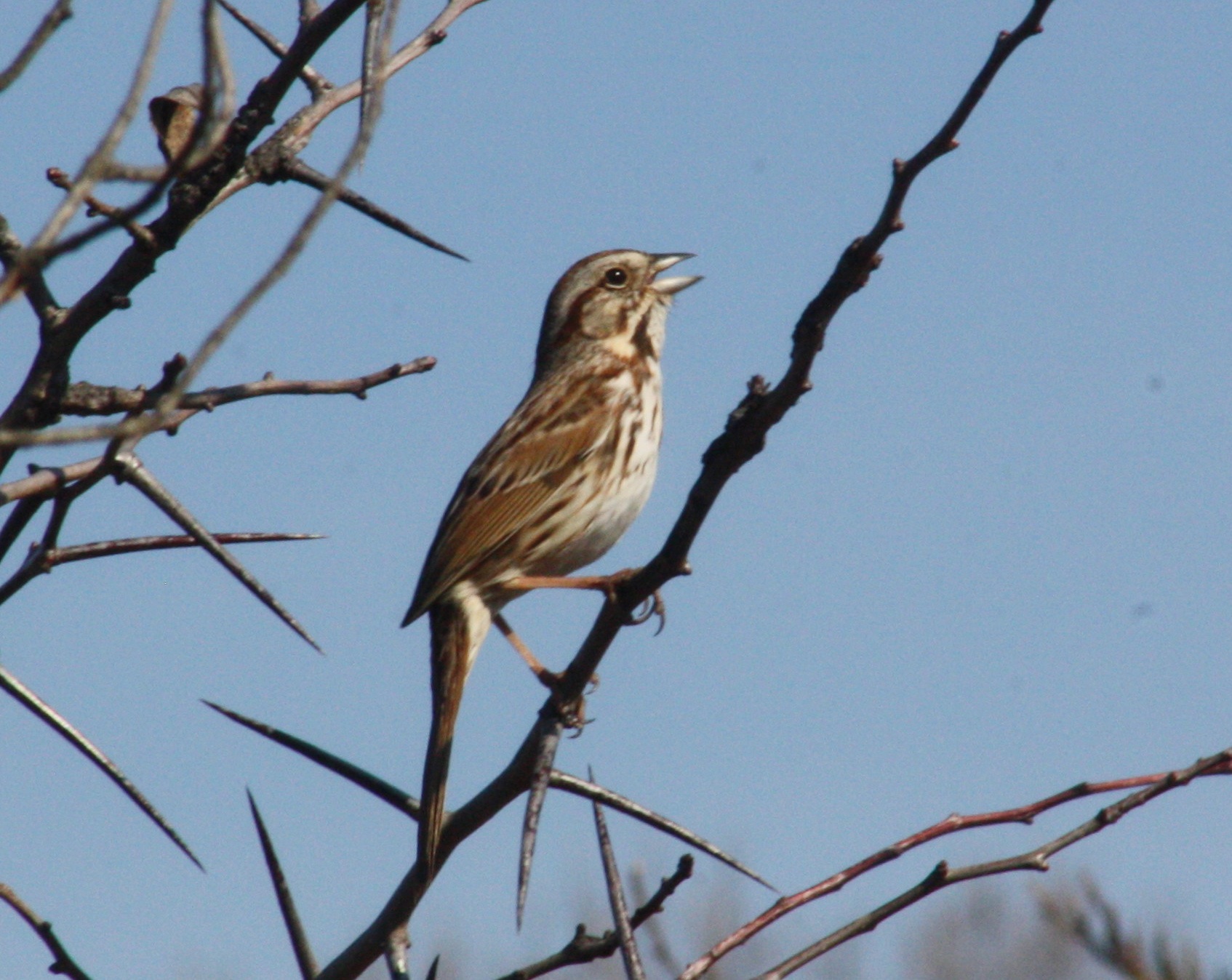
Bird of the Day: Song Sparrow
Greater galangal (Alpinia galanga)
This perennial tropical plant with an aromatic rhizome grows up to 5-6 feet tall. The plant belongs to the ginger family where the rhizomes are used for medicinal purpose. It has oblong, smooth leaves and fragrant, greenish white flowers.
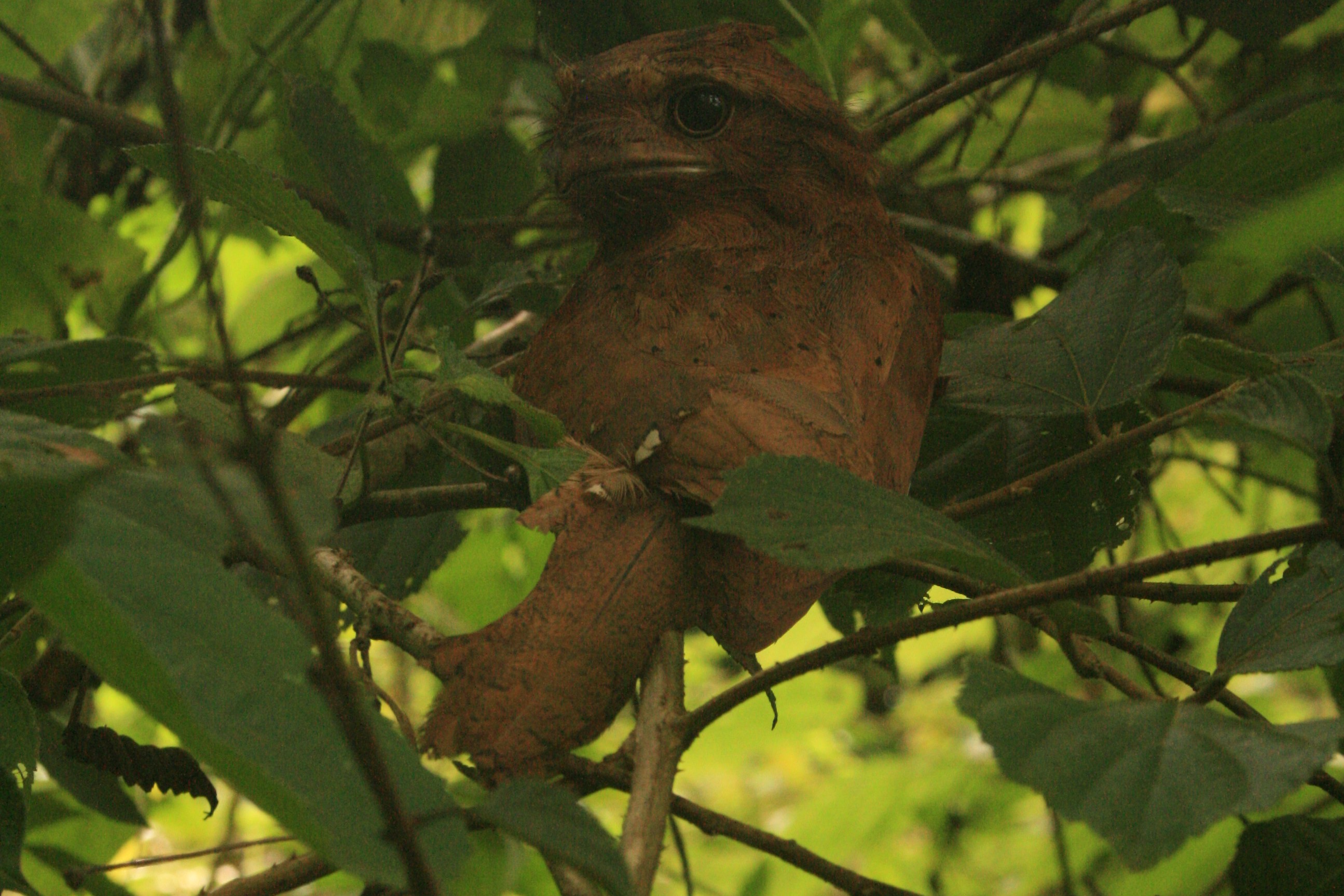
Bird of the Day: Sri Lankan Frogmouth
Funny Macaques (Bonnet Macaque)
Bonnet macaques are found only in South India, occupying wet lowland to dry deciduous forest, up to a height of 2100 m. They are usually quite sociable and are seen mostly in groups.
This photograph was taken near Kumily close to the lower Camp road side by Mr. Shaji. Bonnet macaques of this area mostly seem to be waiting for travelers passing by in hopes of getting some food or fruits from them. Visitors usually feed them to watch the macaques eat and their funny facial expressions, but actually this is a mistake for both animals and people, and should be discouraged.
Selective Pantheon
The Guardian, more than most newspapers, investigates and reports stories of historical-scientific “cabinet of curiosities” value that match our interests on this site. This slide show below is an example, and is worth a visit.
It is a side show, actually, from a story the paper covered titled “How a book about fish nearly sank Isaac Newton’s Principia” (also worth a visit) and had the subtitle “Poor sales of lavishly illustrated book forced Royal Society to go back on promise to finance publication of Newton’s Principia;” so if pictures intrigue you visit their site and read the captions for each image.
Carbon Emissions Series: Scope 3 for Hospitality
If someone asks you to measure your property’s scope 3 emissions, you should tell them that it’s basically impossible. Because it is. That’s the gist of this post. But before we despair over the endless range of scope 3 emissions for a hotel property, let’s toss in the GHG Protocol’s definition:
Scope 3: Other indirect emissions, such as the extraction and production of purchased materials and fuels, transport-related activities in vehicles not owned or controlled by the reporting entity, electricity-related activities (e.g. T&D losses) not covered in Scope 2, outsourced activities, waste disposal, etc.

How far does your supply chain reach? The vast scope, depth, and complexity of hotels' supply chains and customer interactions make scope 3 measurement a daunting task.
Bird of the Day: Cactus Wren (Palm Desert, CA)