
Bird of the Day: Swallow-tailed Gull (Galapagos Islands, Ecuador)
 Perhaps to close a recent string of links to interesting items on photography, which began here, continued here and here, and then extended just a bit here, there is an item in the Photo Booth feature on The New Yorker‘s website that:
asked Lyle Rexer which five photography books he would want to be stranded on a desert island with. Lyle is a photo critic, curator, teacher, and author of numerous books about photography, so I had a feeling he would take the challenge seriously. My suspicions were confirmed when, after three hours in our library, he was still deliberating. Knowing Lyle’s selections and his reasons for making them, I would gladly trade one of my five desert island photo books for a volume of Lyle’s photo criticism.
Click the image to above to go to the International Center of Photography’s website; they carry one of the choices mentioned in Rexer’s response. Continue reading

The Rose apple is a fruit bearing plant that ranges to a height of 12 to 15 metres. Rose apple is a popular fruit native to Southeast Asia.  Continue reading

Photo: T.J. Varghese

Red-crowned Parrots
With this entry, I begin a series describing some of the places I have been birding in North America that I think anyone with an interest in birds would enjoy visiting. Not only are these places incredibly birdy, they are also often wild, usually beautiful, and always memorable.

Mpala Research Center, Kenya
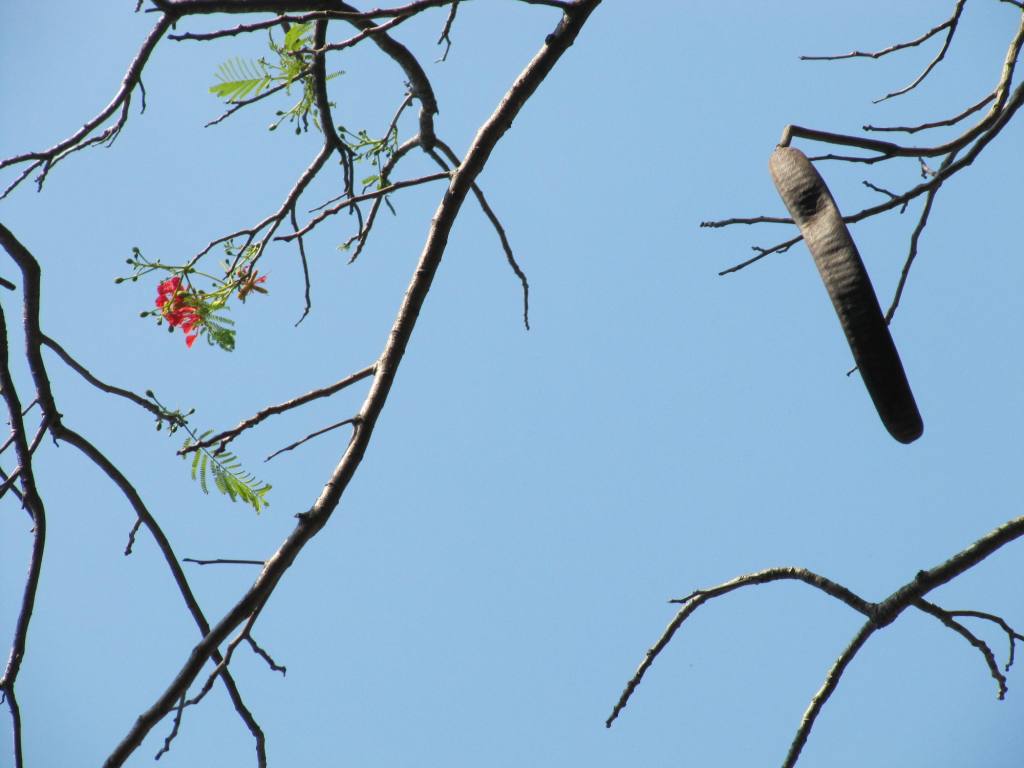
The Royal Poinciana (Delonix regia) is an ornamental tree which grows up to 30 to 40ft in height. In India, it is widely known as the Gulmohar tree which means “peacock flower” due to its abundant color. Continue reading
 Another interesting word or two on this exhibition (click the image to the left to go to the source) to add a different critical perspective:
Last Tuesday, The New Yorker commissioned Jessica Craig-Martin to photograph the opening of Cindy Sherman’s MOMA retrospective.
Continue reading

Pomegranate (Punica granatum) is a deciduous shrub which is a fruit bearing plant. The flowers may be solitary or grouped in twos and threes at the ends of the branches. The pomegranate juice can range from very sweet and sour, but most fruits are moderate in taste.
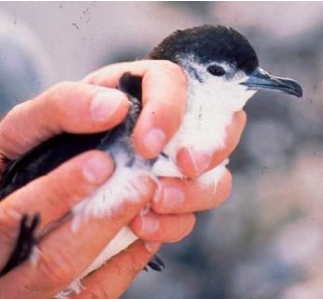
Some fields of scientific study rack up an astounding rate of new species discoveries annually; think entomology as an example. But ornithologists are currently more likely to be subtracting species than adding them.
But last year Peter Pyle, a sharp eyed scientist at the Institute of Bird Populations noticed something amiss while studying a group of pelagic bird specimens in the Smithsonian’s collection from 1963. Pyle’s theory was strong enough to merit a DNA study and it was discovered that the small bird had been misidentified as a Little Shearwater. The analysis was correct and the bird was given the name Bryan’s Shearwater, Puffinus bryani. Continue reading
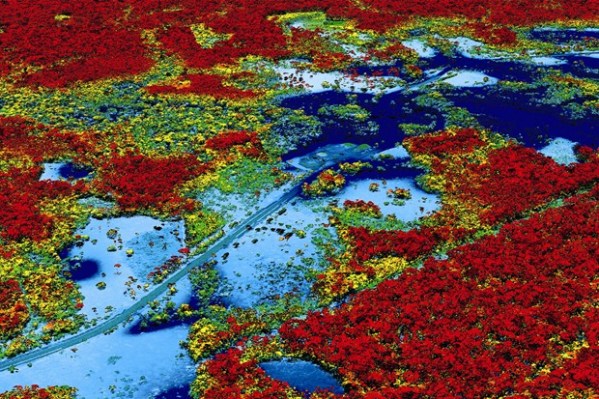
Click the image above to go to a story covered in Wired about a novel approach to mapping threatened rainforest, using existing technology in an innovative manner:
A small, twin-propeller plane flies over the Amazon rainforest in eastern Peru. The scale of the vegetation is extraordinary. The tree canopy stretches as far as the eye can see — an endless array of broccoli florets bounded only by haze and horizon. Greg Asner, 43, has seen the rainforest from this vantage point many times before, but he still stares out of the window in rapt fascination.
We take a break, whenever we can, and check out the urge to paddle, surf, skate, or other-board on just about any kind of surface. Sometimes our own contributors are in the action. Continue reading

Amherst Island, Ontario
 In two recent posts linking to stories about two very different photographers, there may have been an implied answer to the question raised in the first and repeated in different words in the second. Art critic Peter Schjeldahl– who has a good track record of mixing insider knowledge, smart observation and common sense — weighs in with his own answer:
Starting in 1982, Sherman countered a popular clamor to discover “the real Cindy,” as if she were the latest shtick-wielding show-biz celebrity.

We met Mr.Steve from England who stayed at Cardamom County from 26th Feb to 28th Feb. He kindly shared his experiences with us. He sighted herds of elephants, a niligiri langur, and also went to see the Kathakali program.

The young man working his way through the kitchen brought to mind a young man of about the same age, three decades earlier. I had the good fortune, in my early adulthood, to work in a restaurant owned and operated by a man who is one of the great chefs of his generation. I did not work in the kitchen, but in the dining room, from 1983-1985. It provided the most important education of my life, which is saying a lot because I eventually earned a Ph.D. and even that did not top the learning earned in Guy Savoy’s restaurant.
Many of my posts reflect my outlook to err on the upside of life’s circumstances. I try to drown out my inner (and often powerful) pessimism by surrounding myself with positivity and optimism. I find that this is a careful balance of being hopeful while remaining realistic. Today, when I was taking a break from my coursework, or the slightly negative part of my day, I watched an encouraging Ted Talk that I think demonstrates hopeful realism.
Johan Rockstrom suggests that the earth is at a point where major transformation must occur. He optimistically recommends that we use and continue to use crises as opportunities and local initiatives to transform and sustain life. Also, he makes a realistic statement that climate change is not our biggest problem only a symptom of our land use.
I found this talk engaging and thought-provoking. I agree that I transformation is soon to happen and I look forward to being a part of it.
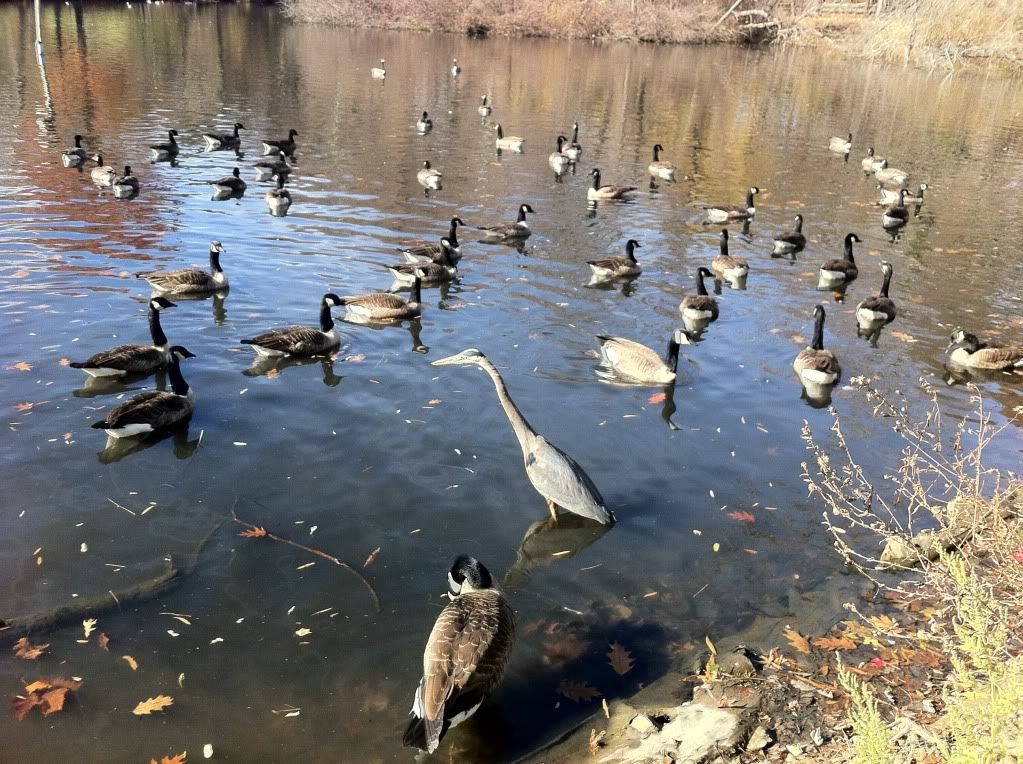
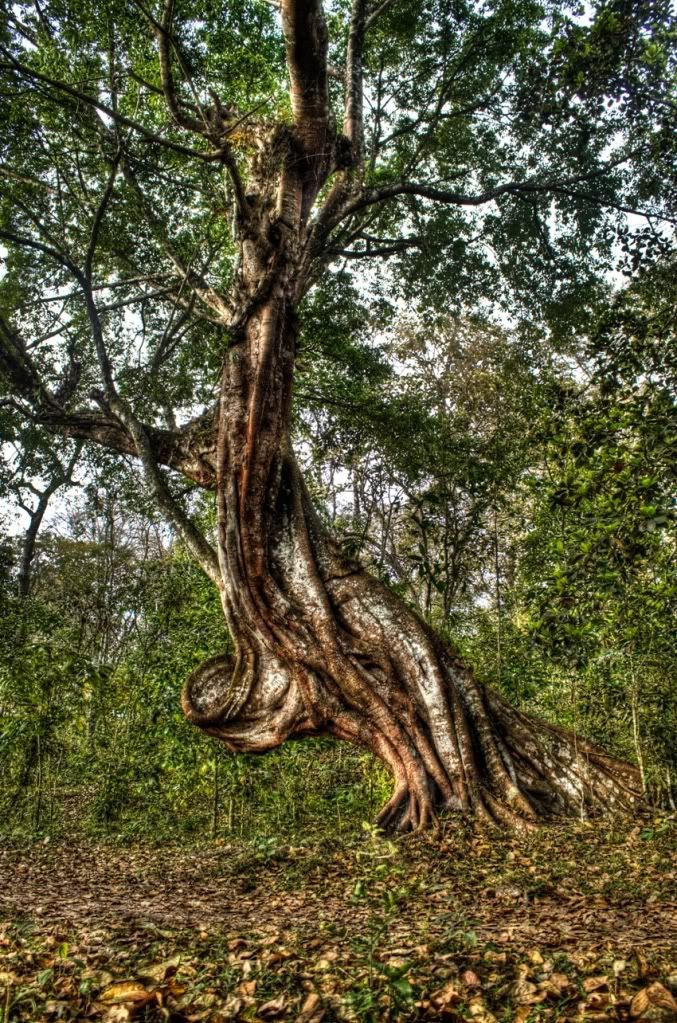
Kerala is dry. The places I’m used to seeing so green and vibrant that they practically drip are now dry, brown and crackly. What are normally torrential waterfalls are reduced to sunbaked rock faces. Clouds occasionally float through the sky, mostly in early morning, but they haven’t shed tears throughout the season. The native plants are geared to survive this climate, as the year seesaws between dryness and enormous moisture. In the forest, untold thousands of dead leaves cover the ground, crackling with glee as trekkers pass under the trees. Continue reading

One of the most effortless pastimes is visually-cued memory. Out of nowhere you see something that reminds you of something and you are off to the races. Or you hear something. Whether the trigger is visual, auditory, tactile, gustatory, or olfactory–or any combination of those–if you have the fortune of a stock of pleasant memories then something may take you to the kind of place linked in the image above.

