Wordsmithing: Authentic

We have been using this word for years as a shorthand for one of the core objectives of our entrepreneurial conservation work: collaborating with communities to assist in the retention of heritage that has meaning, and that those communities feel should remain essentially as it was.  It is therefore interesting to consult OED (finally) on exactly what this means.

Top of the list of entries:

a. Of authority, authoritative (properly as possessing original or inherent authority, but also as duly authorized); entitled to obedience or respect.

Continue reading

Waterborne Mysteries

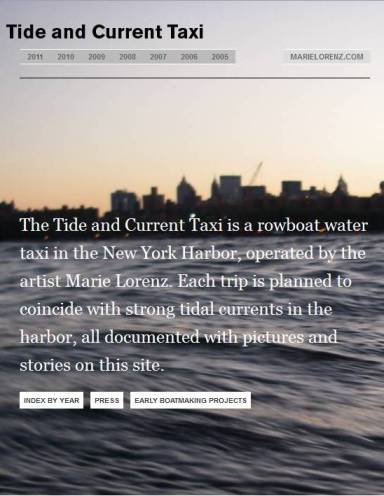
Click the image to the left and you will find yourself somewhere in the Marie Lorenz realm.  It may be easier to understand this realm if you see some of her more “traditional” art, and especially the evolution of that art, at her own website first.

If you happen to be in New York City, you have an advantage: you can experience this realm firsthand. If not, maybe a description of some of her other recent art will give a small portion of perspective to the Tide and Current Taxi:

Recently I have been making collographs of things that I find on the beach. This project is an attempt to find out the story that an object tells about itself. I think of it as another way to collaborate with the tide – because of how the harbor collects things from the city, and distributes them around the shore according to their density, buoyancy, and shape. Continue reading

A Dead Zone

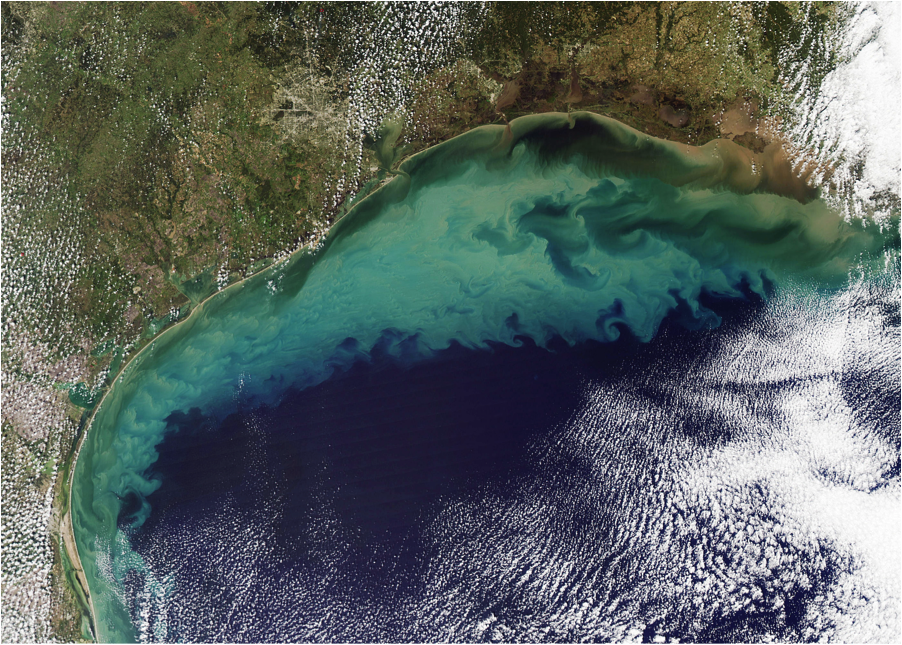
This picture is of the hypoxic area in the Gulf of Mexico, the largest “dead zone” in the western Atlantic. Since the beginning of this site we have tried to accentuate the wonders of nature, creative and collaborative approaches to conservation, and other fun stuff.  Every now and then a dose of scientific explanation helps put this in perspective, even if it is a downer like hypoxia.

Hypoxia occurs when oxygen concentrations in the water are too low to sustain most life, and is created by a process known as eutrophication. This is the over-enrichment of water by nutrients, which cause dense growth of algae that consumes oxygen as it multiplies and decomposes. The resulting lack of oxygen can cause large die-offs of marine life, seriously threatening ecosystems in the Gulf.

Continue reading

From 81 Years Back


It has been our preference not to to succumb to the second most acute syndrome plaguing file-sharing on the internet.  Not that those kittens, monkeys and elephants are not adorable–they are.  But the video clip above is different… Continue reading

Amazing People From India

In a post a couple days back, mentioning two artists of Indian origin, there was no intent to create a new focus on the theme of Indians in the so-called new world, but this catches the attention on its own:

Sir Jagadish Chandra Bose, the aforementioned carrot vivisector, was a serious man of science. Born in what is today Bangladesh in 1858, Bose was a quintessential polymath: physicist, biologist, botanist, archaeologist. He was the first person from the Indian subcontinent to receive a U.S. patent, and is considered one of the fathers of radio science, alongside such notables as Tesla, Marconi, and Popov. He was elected Fellow of the Royal Society in 1920, becoming the first Indian to be honored by the Royal Society in the field of science. It’s clear that Sir Jagadish Chandra Bose was a scientist of some weight. And, like many scientists of weight, he has become popularly known for his more controversial pursuits — in Bose’s case, his experiments in plant physiology.

And the source of this information is new to us, but seems worth the visit. Continue reading

Meeting the Masai

Although the Kenyan destination tourism market has commercialized the Masai name, I was pleasantly surprised to find the traditions and heritage of the Masai people thriving and vibrant in the Masai Mara. In Nairobi, you will find merchants and craft markets collectively selling Masai blankets, beaded jewelry, artwork and more. I would contend the Masai name is an over-utilized marketing tool, a clear indication it’s moving dangerously close to holding a “tourist trap” reputation. Although my position on the matter remains unchanged, the innate beauty of the Masai culture should not be dismissed. The Masai Mara may be best recognized as Kenya’s wildlife mecca, but the region is also home to over fifty authentic Masai villages of tremendous character and unique local charms.

This slideshow requires JavaScript.

After our concluding full day safari game drive, our guide gave us the option of visiting a Masai Village near our camp. Indicating that the venture would cost us an additional 15USD, I immediately believed yet another “tourist trap” pitstop was in store. Nevertheless, faced with the alternative option of sitting in my non-electrified tent, I succumbed to the sales proposal and scrambled together 1500 Kenyan Shillings to visit this so called “authentic village”. The entrance fee granted us a traditional Masai welcome dance, entry into the villagers’ homes, a guided tour of the community, and complimentary photo opportunities. With my skepticism still intact upon entering, I anticipated some sort of lazily executed, artificial village re-creation of primitive Masai Mara life, à la Plymoth Plantation or some cheesy Renaissance Fair. While the community has certainly optimized their culture’s tourism appeal, I was happily surprised to find that what we witnessed wasn’t just for show or to indulge us “muzungus” (foreigners); conversely, it demonstrated how the native Masai currently lived day-to-day.

Continue reading

National Geographic Channel In Panama

One of our Contributors recently posted from Panama, including a brief summary of his visit to the Panama Canal and Panama City.  Here is a nice two minutes worth of additional footage, courtesy of one of the few worthwhile channels on television.

Continue reading

Sand Scripture

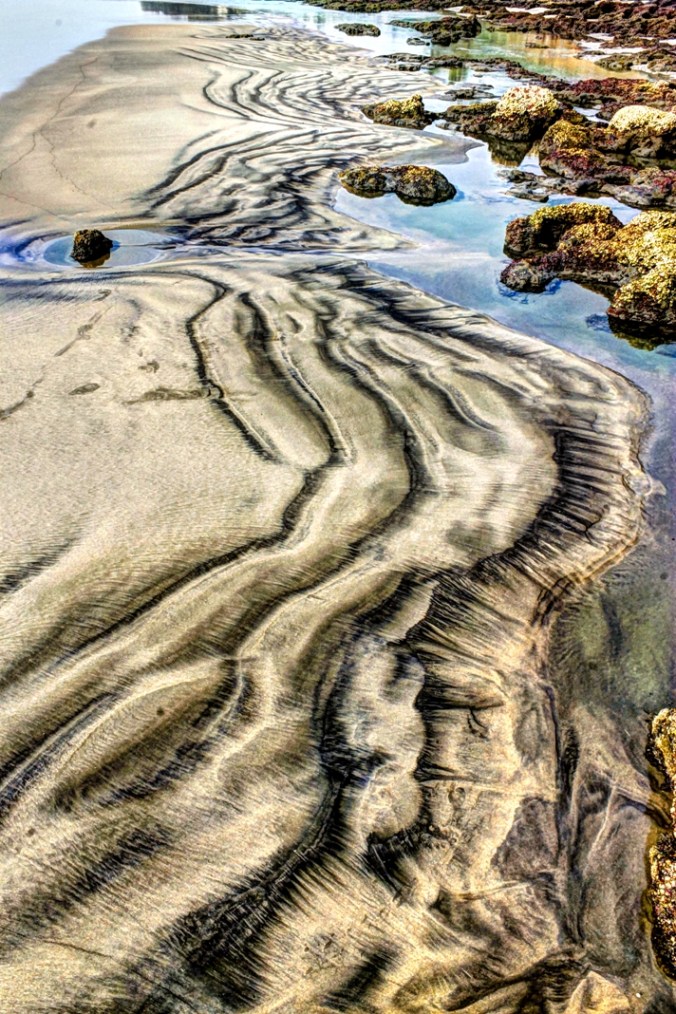
Not to be confused with sand sculpture, sand scripture is the graceful story a million grains of sand tell of the passing of time. Sand isn’t only found on the beach – riverbanks, empty fields, and desert dunes host the legion grains, akin in countlessness to the untold billions of stars in the universe.  The ocean’s tides tell stories, however, with the pliable mass of silica as the medium.

Continue reading

When It Rains, It Pours

We try not to favor any one source when we link out to interesting items, but sometimes a source seems to have a “hot hand”.  Just after noting one great, short item of enormous consequence we can recommend another longer item (click the image to the right) for anyone–especially parents of those most likely to read this series–for whom quality of writing in the English language is a concern.  Not to mention that yesterday we had a completely unrelated reason to mention visiting Oxford

Here is the shocking opening line that should get you reading this piece (and as always we encourage subscription to that publication, without which we would not get so much vivid, varied and valuable reportage):

At Oxford in the nineteen-forties, Professor John Ronald Reuel Tolkien was generally considered the most boring lecturer around, teaching the most boring subject known to man, Anglo-Saxon philology and literature, in the most boring way imaginable.

No one who had read, let alone seen placed on film, this man’s writing would have guessed that to be the case. Continue reading

Tools Of The Trade

Click the image to the left for context.  As we learn more on this complex issue, the enlightened position must be literally that–enlightened by fact.  Sometimes sarcasm is an easier position, especially when the facts seem outrageous.  But thankfully there are more and more facts to tone down sarcasm to a chiseled tool.   Our ever-appreciated investigator shares some this week in her usual venue and as always her balanced-yet-urgent perspective probably is appreciated:

Every kind of energy extraction, of course, poses risks. Mountaintop-removal mining, as the name suggests, involves “removing” entire mountaintops, usually with explosives, to get at a layer of coal. Coal plants, meanwhile, produce almost twice the volume of greenhouse gases as natural-gas plants per unit of energy generated. In the end, the best case to be made for fracking is that much of what is already being done is probably even worse. Continue reading

Life Mein Ek Baar, Featuring River Escapes

Every minute of this is fun.  The 35th minute is particularly fun for those of us based in Kerala because members of our organization join the stage with the stars of this show.

About five months ago we were approached by a film production company about a show they were filming for National Geographic Channel.  They told us that River Escapes was recommended to them as having the best houseboats in the Kerala backwaters (a bit of music to our ears).  Then they proposed that their Kerala episode should be based on our houseboats (we danced to that music).

Continue reading

Sledding a Volcano

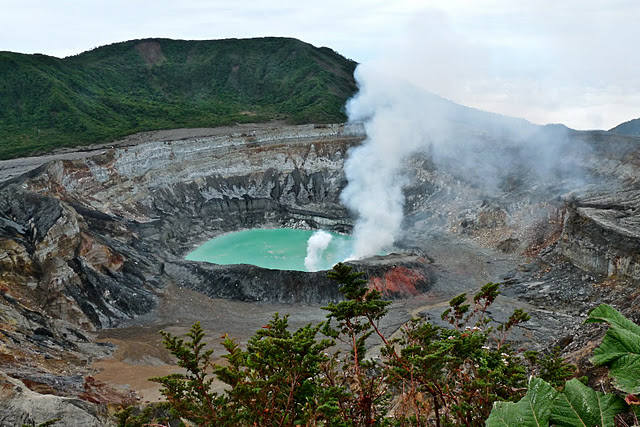
One volcano-related assumption which I’ve had to let go of since arriving in Central America is that a volcano is a volcano.

Anyone who grows up in Scotland knows that mountains are not just ‘mountains’. There are mountains, but there are also ranges, hills, Bens, and Munroes. There are the kind that, although tall, the fitter of us can walk up without much in the way of equipment; there are others which may be smaller but are impassable unless you really know what you’re doing.

I wasn't expecting it to be so blue...

Continue reading

Forbidden Fruit

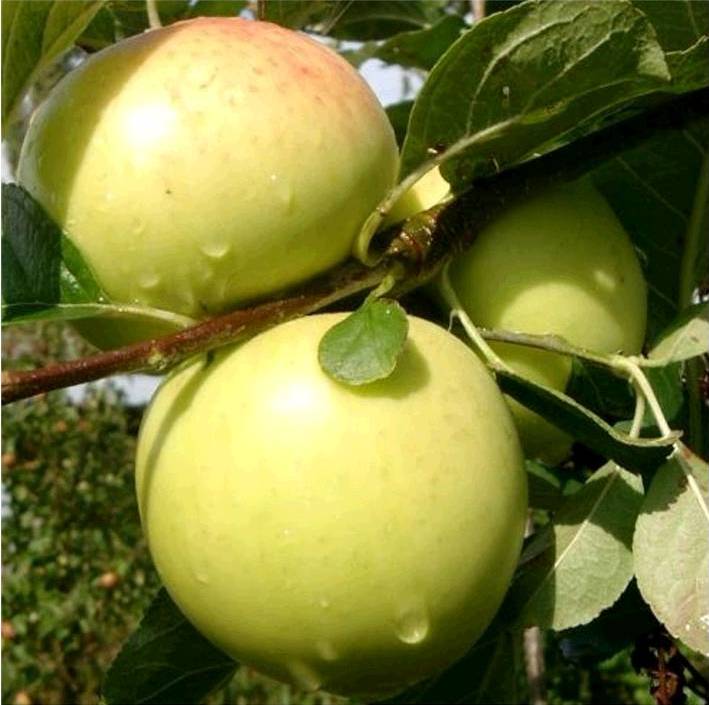
Second only to bananas, apples are one of the most popular fruits in many parts of the world. Yet when domesticated and planted in monoculture production, they run the risk of falling into the same trap as their “homecoming king” cousins, i.e. susceptibility to pests that requires a great deal of chemical hand holding.

A member of the rose family, there are believed to be 7,500 cultivars of Malus domestica, stemming from their original Western Asian ancestors.  In fact, the apple is believed to be the earliest tree to be cultivated, beginning in what is now southern Kazakhstan and eastern Turkey. The fruit has played a staring role in mythology and folk tales, from the Greeks to the Germanic and northern European cultures, and finally taking center stage in Renaissance depictions of Biblical lore in the 15th Century CE. Continue reading

Necessary Versus Sufficient

There are needs, and there are wants.

A toothpick sculpture?  Not necessary for San Francisco to demonstrate its greatness (as might have been an underlying objective of the commission).  Not sufficient for that purpose either.

Continue reading

Indians In North America

Click the photo to the left to read the interview of mother by daughter, artist by artist.  The interviewer shares this perspective on the interviewee’s art:

Her work has, over the years, centred on forgotten, vanishing worlds, art and language that exist on the margins. The epigraphs to her novels (TS Eliot, Emily Dickinson, Borges …) often make reference to the persistence of memory. She writes: “The ancient Chinese believed time is not a ladder one ascends into the future but a ladder one descends into the past.” Her new book, The Artist of Disappearance, is made of three delicate stories about the frailty as well as the transforming power of art.

Continue reading