Green Backlash

My course load this semester throws some very interesting subject matter my way. In one of my classes, Marketing Research for Decision-Makers, the professor was asking the class to brainstorm a specific hospitality-related topic to research. The professor said that last year the class had looked into sustainable hospitality, and in passing, he mentioned that he and a colleague had put together a report on the class’s findings.

The report, titled Reversing the Green Backlash: Why Large Hospitality Companies Should Welcome “Credibly Green” Competitors, was written by Michael Giebelhausen and Helen Chun. It addressed a very interesting issue: how consumers would view a company if it introduced green initiatives. One of the steps consisted of in-depth interviews in order get people’s opinions on such initiatives. Results showed that interviewees distrusted company motivations for implementing sustainability programs. That is, the interviewees doubted that companies actually cared about the environment; they assumed they were instead implementing green practices for the marketing appeal and cost savings.

Greenwashing, the use of deceptive marketing to promote a company's sustainability, has exploded among hospitality firms.
Continue reading

When Wheels Start Turning

“180+ countries. 2000+ events. A single day to move beyond fossil fuels.”

Even if you missed one of 350.org‘s September 24th Moving Planet events, the goals of reducing CO2 in the atmosphere is a 365 days per year project.

Whether its with Climate Ride in California, Clif 2 Mile Challenge in your neighborhood, or the Great Power Race in 2010, there have been many ways to get involved in this global call to action.

365 Days a year; 40,075.16 km around the globe; cast of thousands; cost? Priceless.  

Get Moving! 

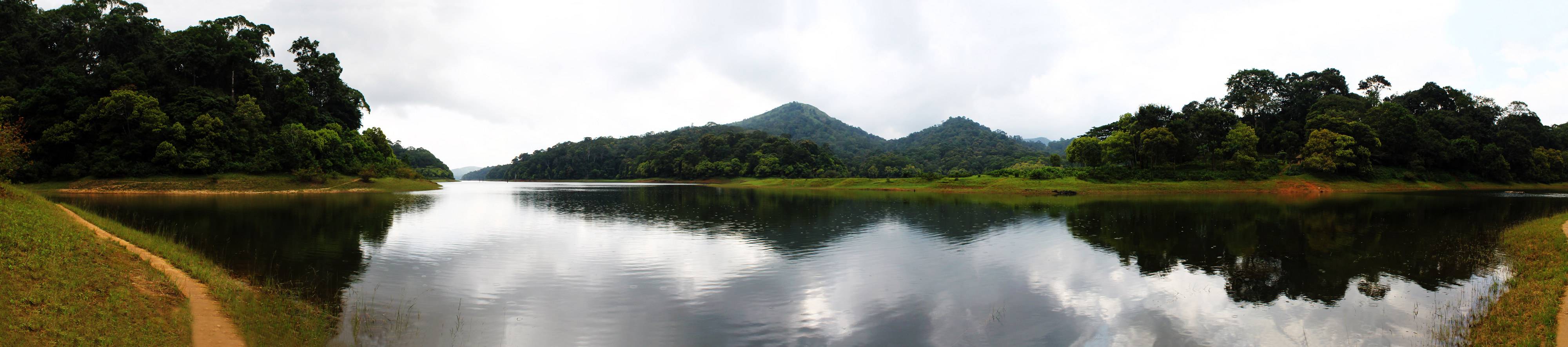
Periyar Panorama

Thekkady’s boat-landing area on Periyar Lake. The full panoramic weighs in at 18mb and a print-size of 190 inches wide, so I have done your computer the courtesy of downsizing it to a still whopping 2mb – viewable by clicking the above image.

Burning Skies

Many people associate fiery skies over cities with pollution and smog. While these are indeed causes for a red-orange color during sunset and sunrise, they are not exclusively so – any particles in the air, including dust and vapor, can cause Rayleigh scattering. This optical phenomenon is not as complicated as some other forms of light scattering, and is more easily explained.

Continue reading

Preventing Invasive Fire

In general, species adapt to ecosystems in which they have greater chances of prospering, and abandon areas that are not conductive to survival and reproduction. Arctic species, for example, have specialized for harshly cold conditions and thereby made it very hard for themselves to live in desert or even temperate biomes. These are common trade-offs that occur with natural selection, and somewhat to be expected. But there are species in certain areas of the world that are not indigenous and still survive in those ecosystems. In many cases, these species have advantages over native ones and flourish. Termed “invasive species,” these organisms often replace autochthonous populations to the point of extermination (one could argue that humans are the ultimate invasive species), causing irrevocable damage to the original habitats.

John Dryzek defines the Promethean discourse in his book “The Politics of the Earth.” The metaphorical name comes from the ancient Greek myth of Prometheus, who stole fire from the gods; fire represents technology and the potential it gives for humans’ improvement. Prometheans are those who approve of a free market that unleashes human ingenuity on the world’s “unlimited” resources, propose liberalization, decentralization, and growth to improve human livelihood around the planet. Every one of these prescriptions, however helpful to humans, is practically a different form of poison for ecosystems in that they tend to greatly increase the numbers of invasive species around the world, contributing to rampant biodiversity loss and environmental degradation.

On the topic of invasive species, I consider myself a Survivalist, or one who believes that Continue reading

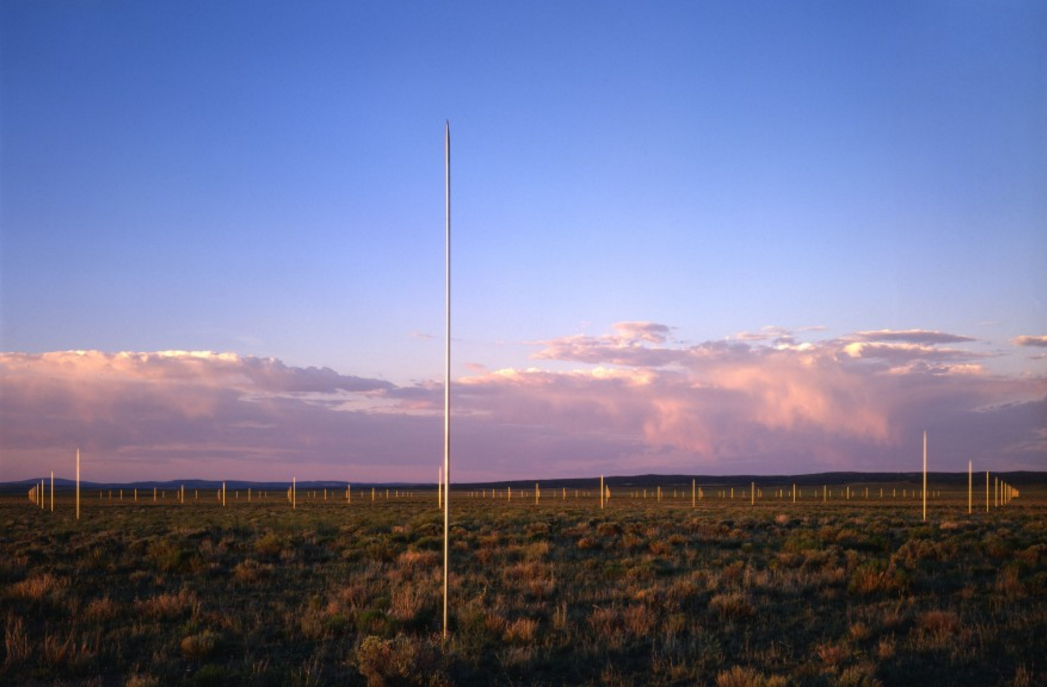
Field of Dreams

Walter De Maria, The Lightning Field, 1977. © The Estate of Walter De Maria. Photo: John Cliett

Walter De Maria, The Lightning Field, 1977. © The Estate of Walter De Maria. Photo: John Cliett

Based on his oeuvre one would say that Walter De Maria is an artist fascinated by mathematical precision and order. His work at Gagosian Gallery in New York City or The Nelson-Atkins Museum of Art in Kansas City in the United States or even the Chichu Art Museum in Naoshima, Japan exemplify this focus on the predictable progression of sunlight as it relates to planetary rotation and the perfection of spheres.

Continue reading

Primitive Garage

While driving through Tamil Nadu a few weeks ago, there were more  than enough of those moments one experiences when travelling through a culture not your own, during which your eyes glaze over as you try to determine either what someone was doing, what you saw, or what in the world is going on. Tamil Nadu, of all the places I have traveled in the world, very likely has the highest concentration of these moments I have personally experienced, and in addition to a truck garage that looks more like an elephant parking space, one is liable to see extravagantly mustachioed motorcycles, patchwork oxcarts, and large angry red men.

This slideshow requires JavaScript.

Tree House Redux


When I ponder the question “why I travel” I often return to the same answer; I travel to gather new experiences, to learn, to refresh, to reconnect with something lost.  I think we all have the tendency to become complacent with the familiar. Even one step outside of that familiarity brings us closer to a broader vision.  And for many who live in urban areas, the drive to step outside is a power in itself.  I believe we are programmed to feel connected with the outdoors, soothed by the power of green, taking in spiritual chlorophyll like deep breaths, to speak metaphorically.

But not everyone who craves communion with nature is ready to “rough it” in her embrace.  An innovative hotel built in Sweden’s Boreal forest (the same forest region that has inspired Land Art Installations) offers an inspiring way to wake up amid birdsong. Continue reading

Wordsmithing: Dictionary Attack!

Another December 2010 addition to the OED brings to mind a phrase in our lexicon describing large books as “heavy enough to stun an ox”.

dictionary attack n.

While it is perhaps a matter for regret that the quotation paragraph for this term does not catalogue incidents of physical harm meted out by wielders of dictionaries—the 20 volumes of OED2, in particular, could cause someone considerable damage—it does provide an insight into one aspect of a very 21st-century preoccupation, the security of the information held on computer systems. Here the “dictionary” in question is nothing more than a word list held electronically, and although the attack for which it is used is unlikely to cause physical harm, the virtual damage might be very high indeed: if a dictionary attack is successful and an automated program correctly matches a password, the files on a computer network or system are at the mercy of the initiator of the attack.

Hold on to your words!

A Worldly Point of View

Emory’s Language Lab

Diversity in American universities is on the rise: just a little under a quarter (23%) of Harvard’s undergraduate enrollment consists of international students. At Columbia University, over a quarter (26%) of the university’s enrollment are international students. The story is the same at other top schools around the nation. UCLA, Boston University, Cornell and NYU all boast international student levels at around 15%. Here at Emory, the picture is roughly the same. Most of these international students in American universities hail from Asian countries, but there is plenty of exchange from Europe, Africa, the Middle East, and other parts of the world as well.

At Emory, many international students specifically come from China, India, South Korea, and Japan. Having spoken to these foreign exchange students, it is clear that international admissions to a top-20 American university are incredibly competitive, even more so than they are here. One friend told me that he was the only student from his entire town (a suburb of Calcutta, so quite a lot of competition) to attend a top-30 American school; even with his extremely impressive credentials Continue reading

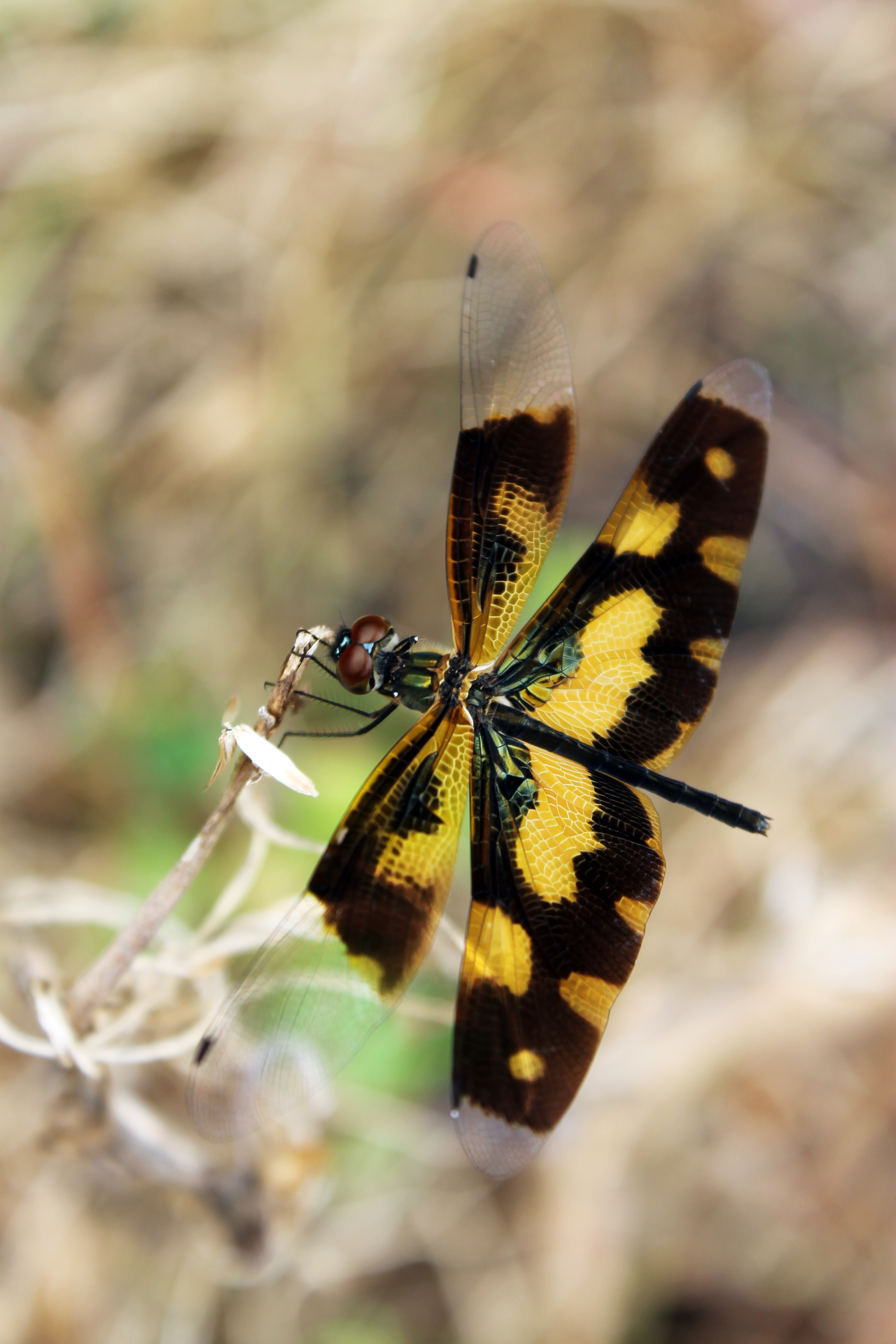
Rhyothemis variegata

Field guides and online  descriptions of this dragonfly dub her the ‘Common Picture Wing’. I ask you to take a good look at her delicate wings – the architecture of the joints on the back of her thorax, and the colored patterns of the papery wings that carry her so gracefully through the air. I ask you to ask yourself – why is it called the Common Picture Wing?


Walton Ford, Come To India!

In my last post, I walked along a border–the one separating the land of nostalgia from the land of meaning–and am still not sure which side of the border I was on.  One person’s memory lane is full of madeleines, and another’s may have no particular there there (so be it, glass houses and all).  The link to Brother Blue is the puzzle.  Can anyone, out of context, realize who that man was and what he accomplished from that little bit of Lear jive?  I do not know.  But recycling is an ethos that India is instilling, so I go with it.

The thread linking Thoreau and Brother Blue for me the other day kept un-spooling, and led me back to my favorite living artist: