Biodiverde

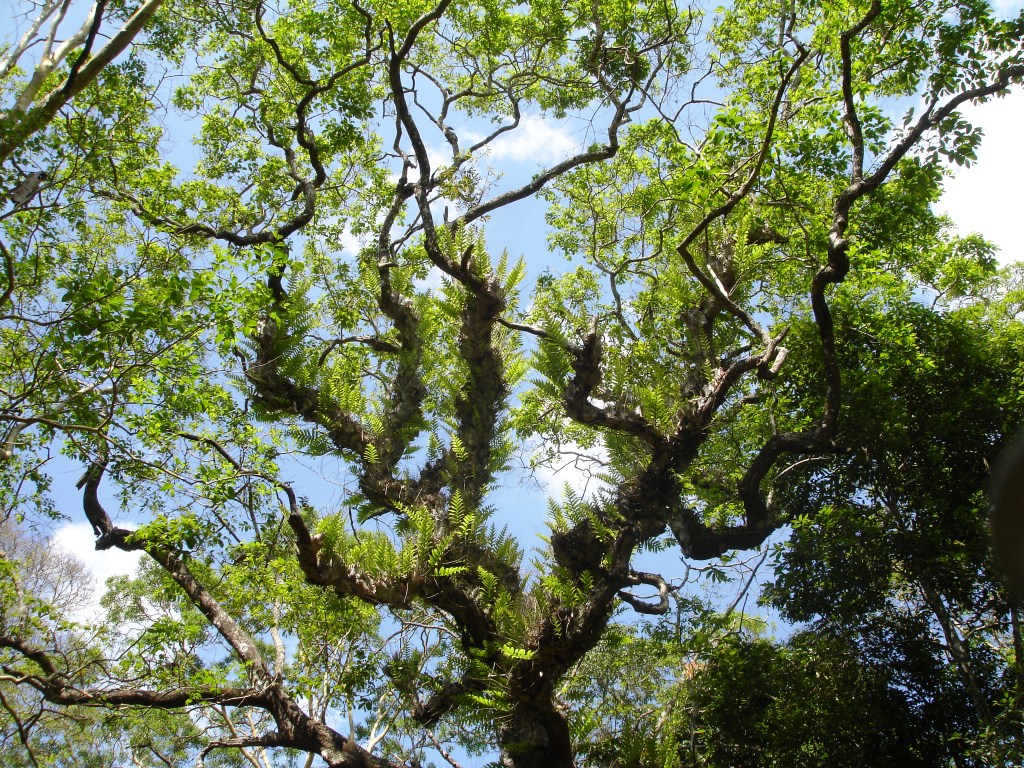
I live in a very green land. Especially post monsoon the landscape of Kerala is dotted with all shades of green like a pointillistic painting.

There’s the chartreuse of new growth tea. The Chromium oxide green of the lower, more mature leaves. The olive green of coconut fronds or the sage of the pineapple top. The celadon of bamboo, the sap green of buffalo grass or the emerald of the banyan tree….all the greens that blend when you squint into this verdant landscape.

The word green is closely related to the Old English verb growan, “to grow”.  It makes us think of nature, of biology, of ecology, of prosperity, even of innocence.

Do I need to mention that green happens to be my favorite color?

But I also spent many years of my life in parts of the world where the Autumnal Equinox means crisp air and changing leaves. And when the chlorophyll levels drop the spectrum changes to include the colors of spice– of turmeric, cinnamon, nutmeg and mace, with a healthy dose of dried capsicum thrown in with the help of the maple trees.

Unless someone from another part of the world sends me photos of this annual metamorphosis I have only the poignancy of memories. But Christophe Niemann is always a good choice to add levity to longing.
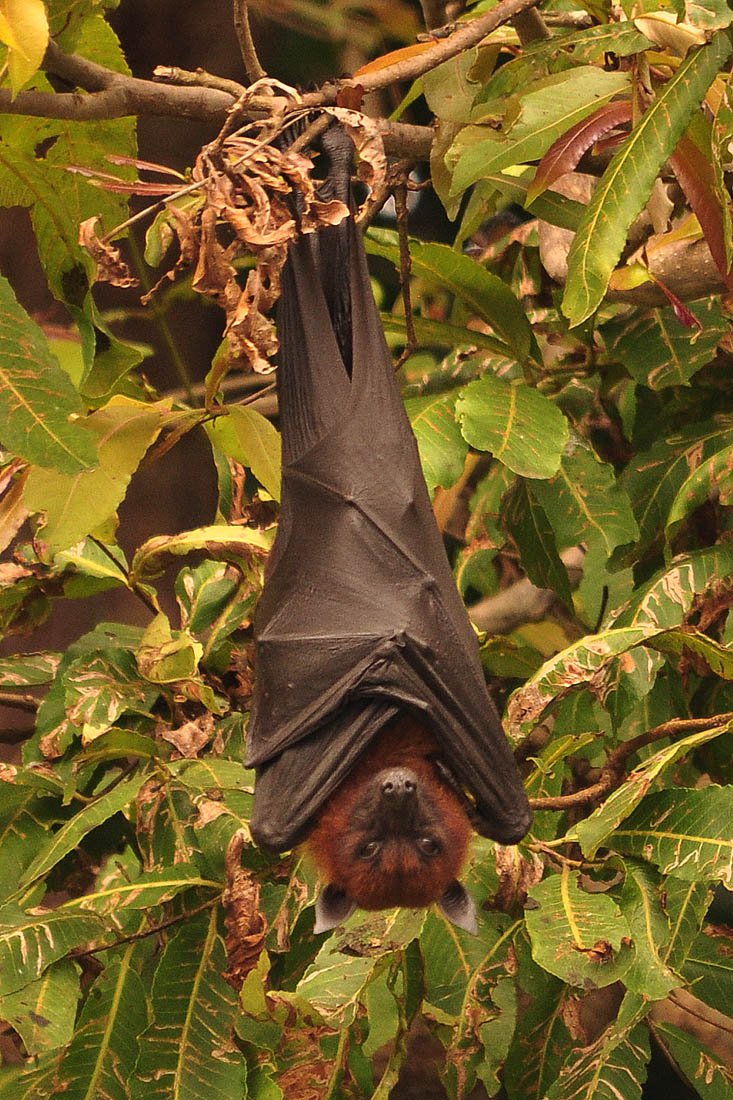
Non-Bird of the Day: Flying Fox (Thekkady, India)

They come out before dawn, and again at dusk, and it is easy to confuse them with birds–eagle-sized at that– when they circle around Cardamom County.  Flying foxes are good neighbors, hanging around the bamboo stand across the way from us in the Periyar Reserve during the day; munching on insects during the darker hours.

Dawn and Dusk

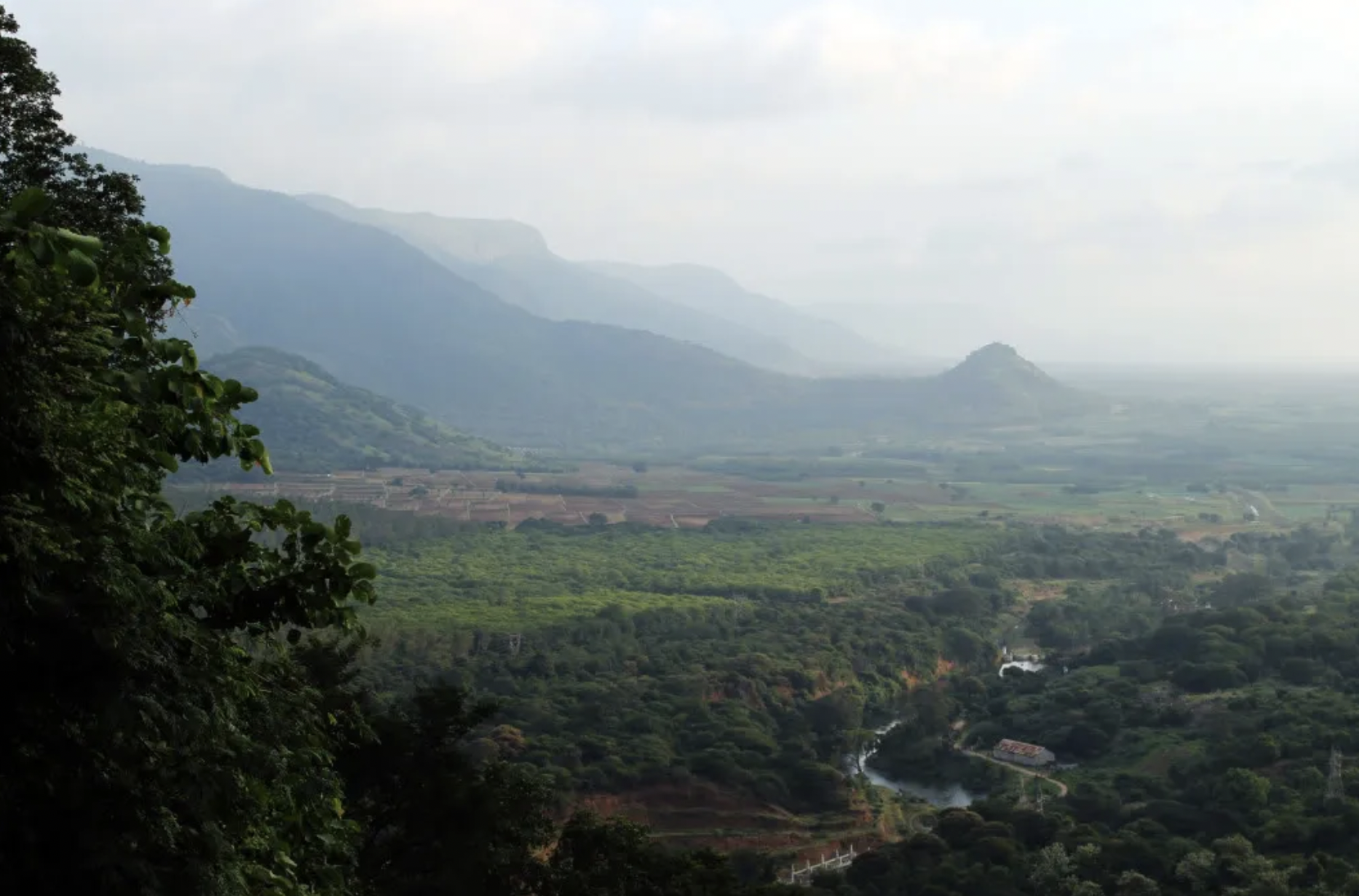
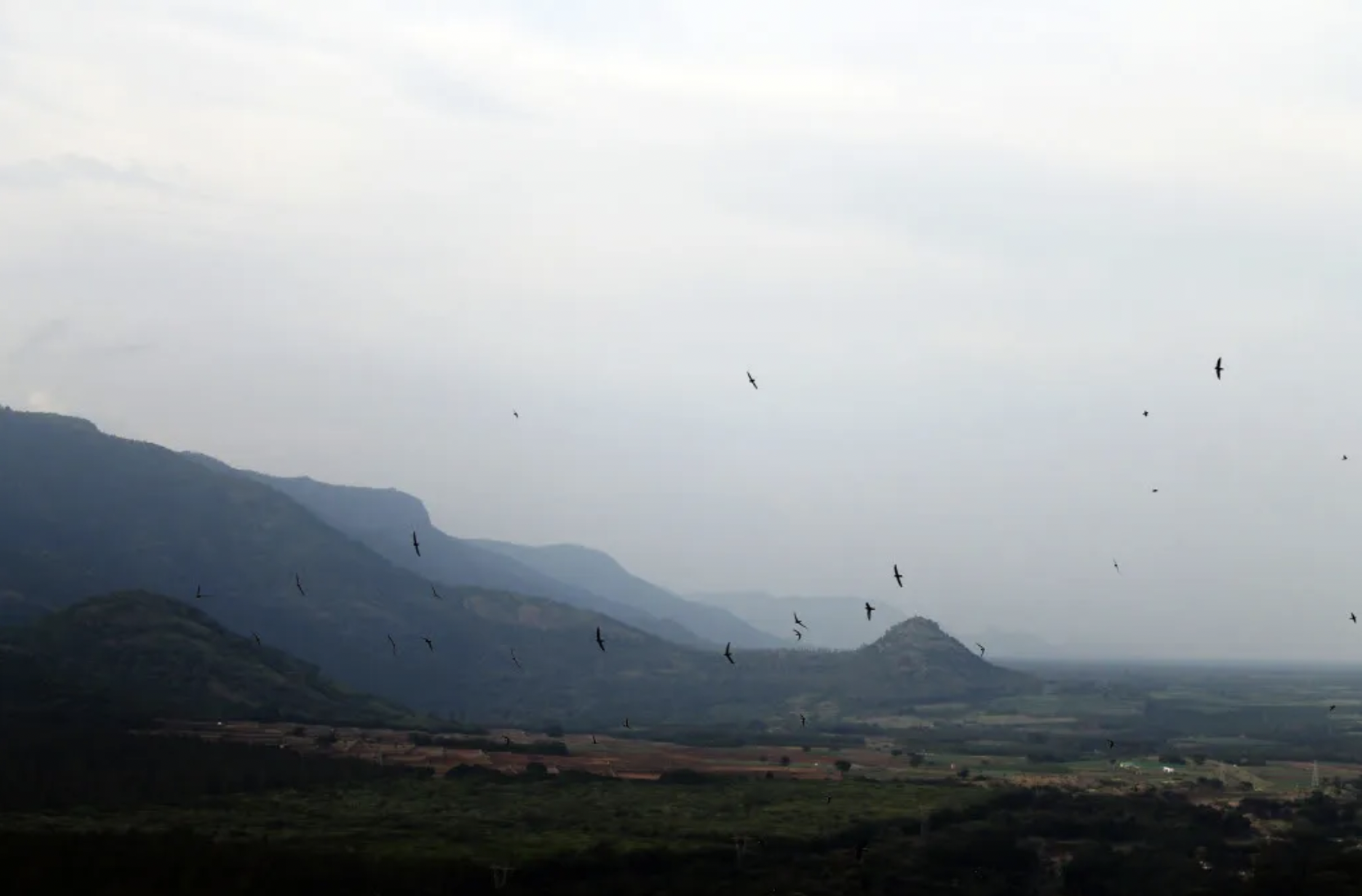
The clear skies and fair weather last Saturday allowed for breathtaking views across the expansive scenery on the drive down from Kerala’s Idukki District into Tamil Nadu. The following pictures were taken respectively at 7AM and 5PM (not quite dawn or dusk, but close enough) from different points along the drive down from and back up to Kumily.

Connecting Dots

This slideshow requires JavaScript.

The news of Jad Abumrad being selected as a MacArthur Fellow, the so-called “genius grant” in recognition of his accomplishments and his future contributions, was worthy of celebration.  That defenestration reference led me back to that episode, which was a series of oddly connected sub-segments on the topic of Falling.  I use the word odd at the same time that I think: these are clearly examples of structured relevance.

What’s more odd is the coincidence between the Jad news and the fact that I just recently had pulled out material from my doctoral dissertation that I had only looked at one other time since 1997.  I pulled it out for the presentation I made to the students at Brown mentioned here.  Some visual highlights of that presentation (more on my dissertation, which is more clearly linked to Seth’s post here, and this one too, another time) are in the slideshow above, and complement Radio Lab’s treatment of the same (cue up at just prior to the 35th minute of this episode if you can download it and listen to it on your own player). Continue reading

Earth’s Eye

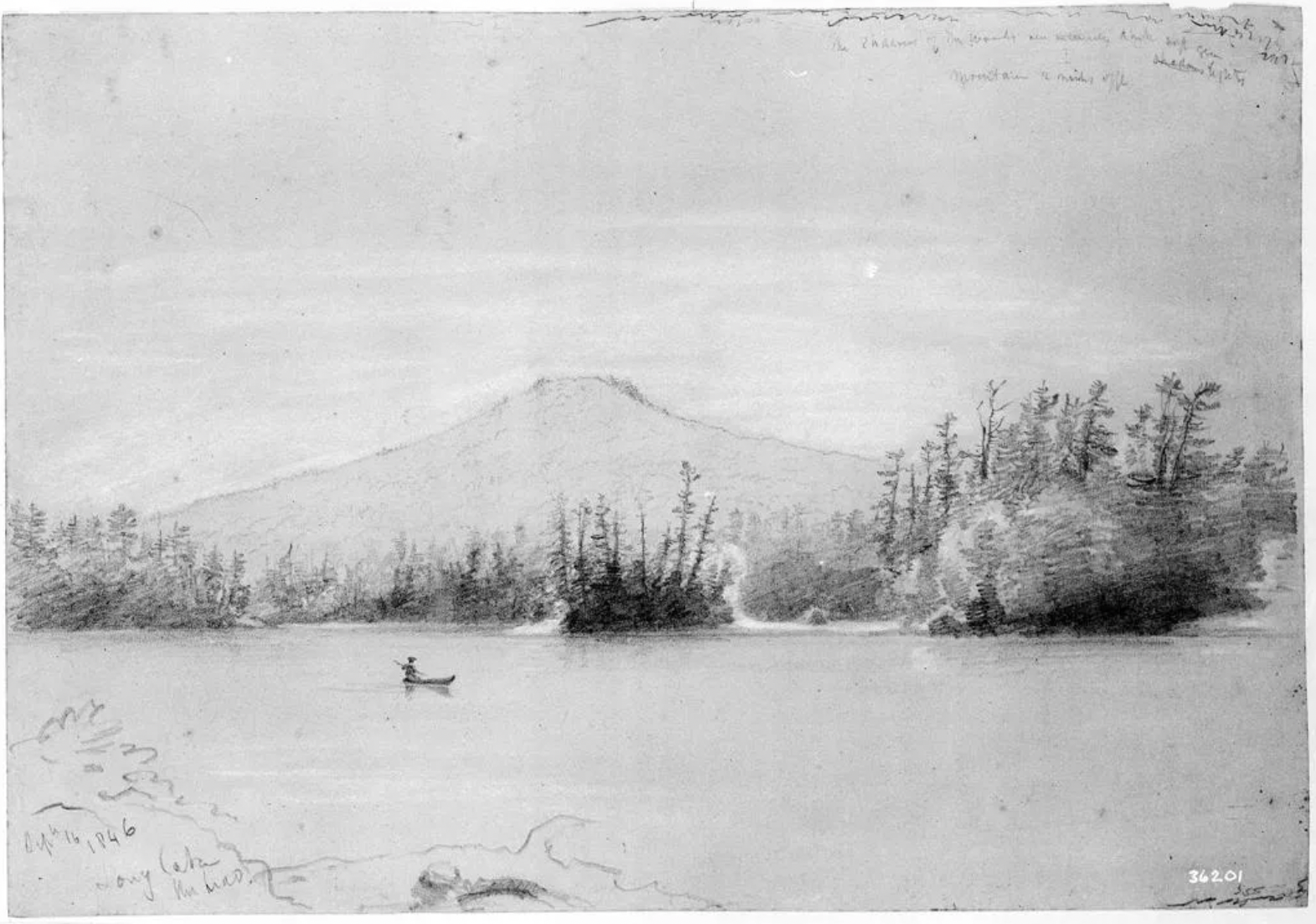
Thomas Cole’s Long Lake Sketch 1846

“Nothing so fair, so pure, and at the same time so large, as a lake, perchance, lies on the surface of the earth. Sky water. It needs no fence. Nations come and go without defiling it. It is a mirror which no stone can crack, whose quicksilver will never wear off, whose gilding Nature continually repairs; no storms, no dust, can dim its surface ever fresh; a mirror in which all impurity presented to it sinks, swept and dusted by the sun’s hazy brush—this the light dust-cloth—which retains no breath that is breathed on it, but sends its own to float as clouds high above its surface, and be reflected in its bosom still.” — Henry David Thoreau, Walden p177

Thoreau’s description of Walden and other lakes in New England came to mind this weekend as I was canoeing and swimming with friends across Lake Cayuga, Ithaca’s own majestic mirror (albeit a crinklier one than Walden, given our weather). Continue reading

“Vella-kkaran!”

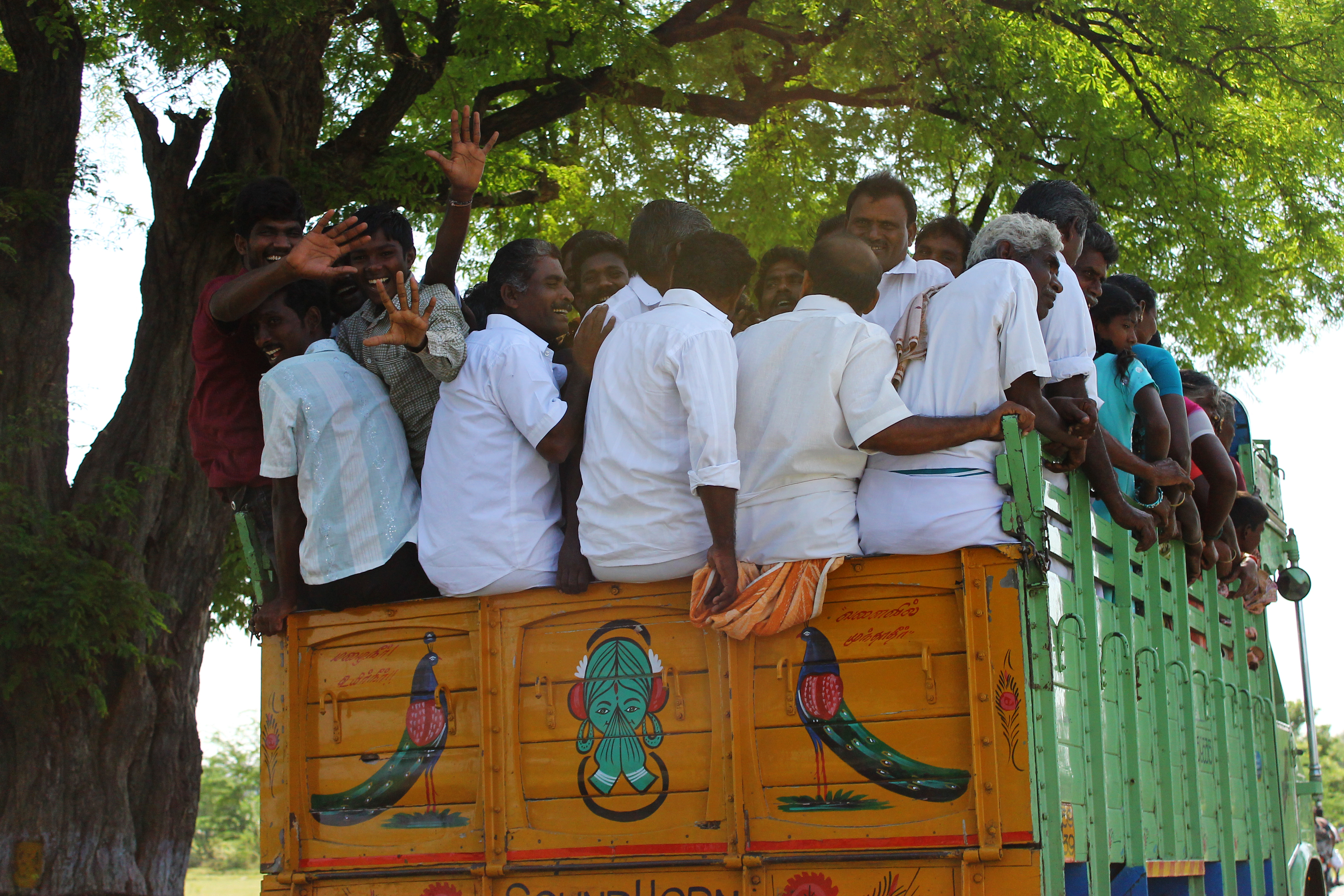
A group of celebratory Tamils on route to a festival

On a recent road trip into Tamil Nadu I was really struck by the ways it differed from Kerala. Although the states are direct neighbors, and many Tamil live and work in Kerala, the contrasts were striking.

They were small differences, subtle even, but enough to give the states a different flavor, if you will. Maybe its that Keralites seem a bit more serious, a bit more focused on their modernity and business acumen. There was something more colorful about the way life was portrayed next door. Although there is the old adage that the “grass is always greener on the other side”, an irony in this case to be sure, as Kerala is a far greener state in almost every meaning of that word.  (I highlight the word almost because, as Sung wrote in a previous post, much of the produce eaten in Kerala is grown in Tamil Nadu, despite their far lower rainfall.)

The short time I spent in the state left me with an impression of a less mechanized world.  A land of brick works and goat herds, of Bullock carts as lorries, of fields and fields of crop cultivation. Continue reading

Wordsmithing: Biophilia

Our usual thanks to OED, but a special one too this time.  One of the words we have been working into our sentences in recent years is this word that had two primary definitions different from the one we associated with one of our favorite biologists.  Now they have added a third definition, thanks to E.O. Wilson and everyone who follows his ideas and words, and repeats them:

3. A love of or empathy with the natural world, esp. when seen as a human instinct.


Oxygen & Odonata

300 million years ago, the world was a very different place. Besides the severe geological changes and the sudden appearance of invertebrates, the Paleozoic Era was host to a severe change in atmospheric composition – namely the extreme increase of oxygen levels, and a drastic drop of carbon dioxide. The atmosphere, changing so radically, caused one or two ice ages, a few extinctions, and a natural development of what we today would consider very strange creatures indeed.


Scientists today, curious about (or perhaps inspired by) the fossils of dragonflies with 2-foot wingspans that zipped and zoomed (or whooshed, rather) through the Paleozoic skies, have been conducting experiments on the effects of atmospheric oxygen levels on short-term adaptation in a variety of insects.  In late 2010, results were produced – on a large scale.

…And Back Again

This small book has followed a long and lively trail since its publication seventy-four years ago today. Tolkien himself recollected that the book began with a mere doodle –“In a hole in the ground, there lived a hobbit”–in the late 1920s, yet the tale itself didn’t actually get written until about 10 years later. But Tolkien was a master scribbler, so those doodles included maps and genealogies that essentially outline the geography of the adventure. He used his keen knowledge as a professor of Anglo-Saxon to populate “Middle Earth” with creatures and languages, making an alphabet of “runes” and painting cover and plate art for the book’s first edition.

J.R.R. Tolkien painted Dust cover from 1937 first edition

“Good morning!” said Bilbo, and he meant it. The sun was shining, and the grass was very green. But Gandalf looked at him from under long bushy eyebrows that stuck out farther than the brim of his shady hat.

“What do you mean?” he said. “Do you wish me a good morning, or mean that it is a good morning whether I want it or not; or that you feel good this morning; or that it is a morning to be good on?”

“All of them at once,” said Bilbo…then Bilbo sat down on a seat by his door, crossed his legs, and blew out a beautiful grey ring of smoke that sailed up into the air without breaking and floated away over The Hill.

“Very pretty!” said Gandalf.  “But I have no time to blow smoke-rings this morning.  I am looking for someone to share in an adventure that I am arranging, and it’s very difficult to find anyone.”

“I should think so–in these parts!”

And even before the adventure truly began my then small sons would sit enthralled as we read chapter after chapter.

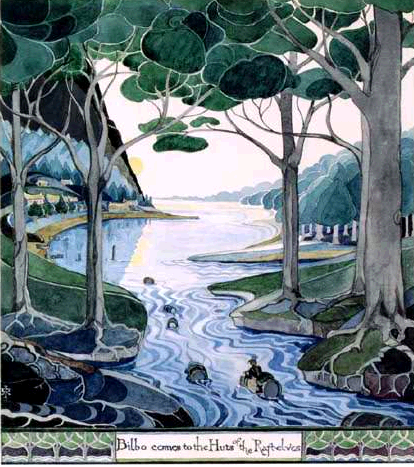
J.R.R. Tolkien painted picture plate from 1937 edition

Before The Hobbit there was Homer, before Homer there was Doyle and Swift and Aesop… Our peripatetic lifestyle always included books, no matter what continent we lived on.

The Hobbit has played an important role in the lives of generations, mine and my sons’ counted among them. Before there were computers and video games there were books, and before books there were stories. I can only pray that the latter two will outlive the former.

Watch It On National Geographic Channel

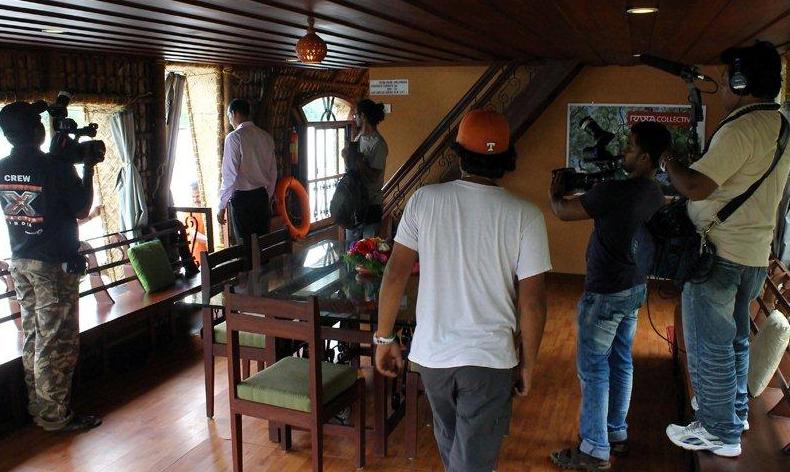
Our colleagues offer amazing experiences on the backwaters of Kerala, in the houseboats described here, with some visual support here and here; and once more here (really, look at it to get a sense of grocery shopping in our neighborhood); so no surprise that a film crew and remarkable cast of characters asked to spend time with them.  The crew of 15 or so (I lost count) was from all over India; so was the cast.  The four featured men in this film are part of a “bucket list” adventure that is being filmed in the locations ranked most highly in a national competition as “must go.” Kerala’s backwaters made that list. Raxa Collective’s houseboats were chosen as the venue for best experiencing those backwaters.

The four men–a student, an IT marketing executive, an Indian Capoeira master-in-training, and a famous Bollywood actor–met for the first time not long ago, and by the time we met them they seemed like old friends.  By the time it airs on the National Geographic Channel, that will stand out as much as the fabulous locations (I like the picture hanging on the wall past the camera man).  We will share more on the broadcast times when we have them.  The photo below is Milo’s, and we have some additional photos by Sung from this particular day (they were on the houseboats for many more days), more on which as we have those photos, and hopefully some film outtakes.

Jad!

You knew he deserved it, but never thought about it, did you?  Sounds like a question for Radio Lab.  If you agree with us on comfort food, you might agree that Jad has something in common with those oreos, mostly in that he helps us adjust to wherever we find ourselves, but also when introducing us to new words such as defenestration (about 26 minutes into the segment in this link). For those who feel as strongly about Robert Krulwich as they do about Jad–what a team–you know that the Radio Lab partner is beaming with pride, don’t you?  One word; good.

Live an Example

Lullwater at Emory

Do you respect your friends? Unless you have very strange relationships, I’m guessing you can say that your friends’ ideals and opinions are meaningful to you. If you know that a buddy doesn’t enjoy country music, you’re probably not going to blast Keith Urban when he’s around. If your best friend can’t stand whistling, maybe you’ll refrain from providing your most rousing rendition of the Star Wars theme song. If she’s not so into politics, perhaps that’s not the person you’ll run to and inform of Glenn Beck’s latest revelation.

The point is, what matters to your friends usually matters to you, and vice versa. If you’re mindful of this Continue reading

Yes! We Have No Bananas!

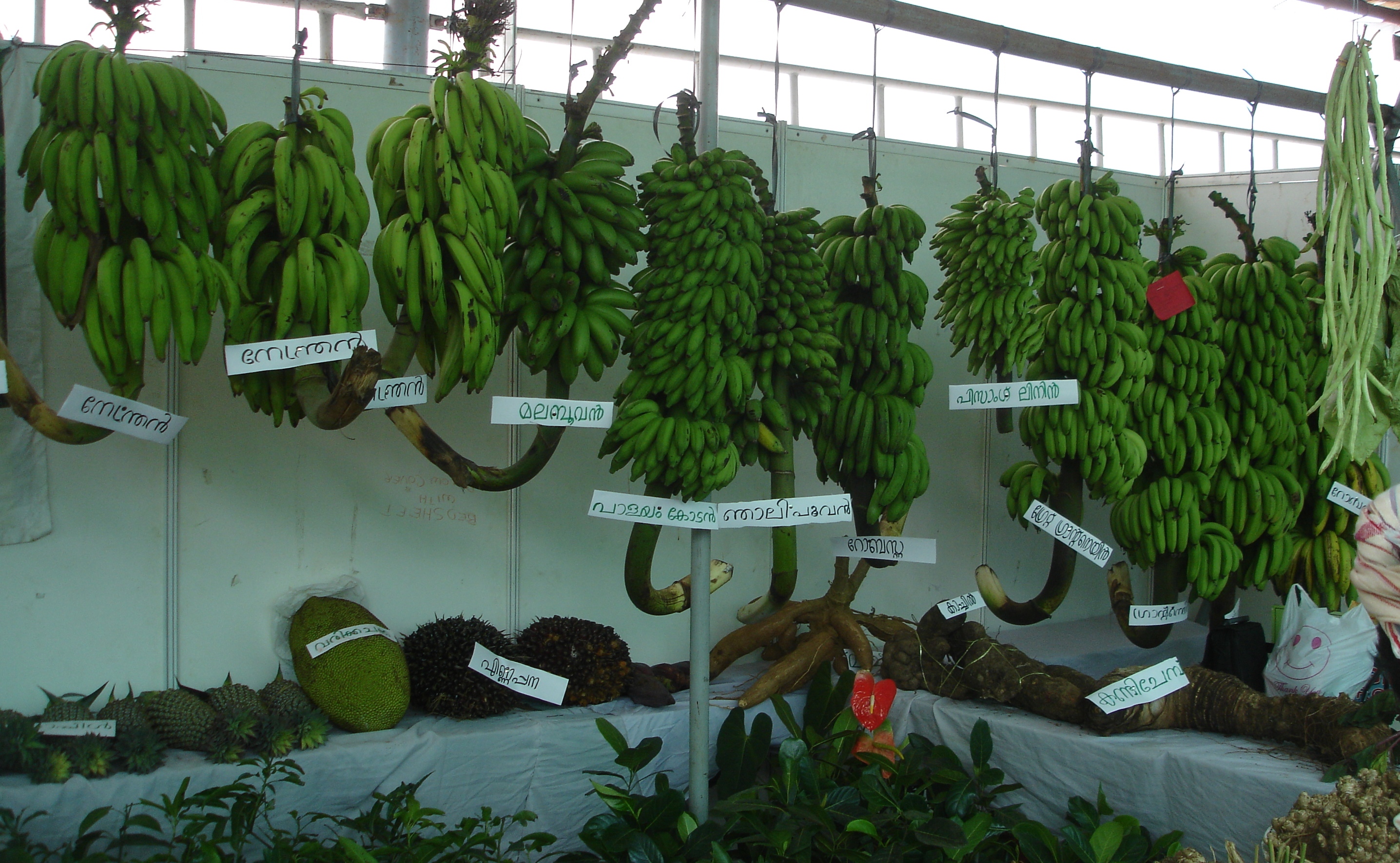
Banana Varieties On Display at the Cochin Flower Show (Names in Malayalam)

There are bananas for eating and bananas for cooking.  Bananas for boiling and bananas for frying. There are bananas with exotic sounding names: Cuban Red, Blue Java, Lady Finger, Orinico, Poovan, Rasthali, Manzana (which does, indeed, taste more like an apple). I wish I knew (and could taste!) all of them, because there are more than a thousand varieties. Somewhere there must be a database of all those names, all those varieties, hopefully all those genomes.  Continue reading