Collective Action & Learning

This site has more than one expression of gratitude for the founders, funders, faculties and students at more than one institution of higher learning.  Students have written their own descriptions of gratitude for experiences that such schools (as well as their families and communities) have prepared them for.  Recently I have interacted with the faculty and students of a course at Brown University and the takeaways keep on giving and then giving some more. Now, I extend an invitation, or recommendation, to students elsewhere: join!

I do not necessarily mean, as in here, join us.  Just as well if you can support the efforts here or here or here; otherwise take your pick from other posts on this site.

I direct this to students at a course at Cornell University, taught by Steve Wolf.  They are challenged to figure out the collective action problem, and solve it practically.  Side note: some recent graduates of Cornell, such as Nicole and Katrina, have shared their personal experiences in projects inspired by the topics in this course; a couple of examples are here and here (see their other posts by clicking on their names on the right side of this site); so has Adrien, a couple of years out of Amherst; and David, who would have graduated Brown a few years ago if he had not been busy forming this organization.

You get the point.  I hope that more of you join, wherever you may. And you are more than welcome here.  We all look forward to your contributions.
Green House Redefined

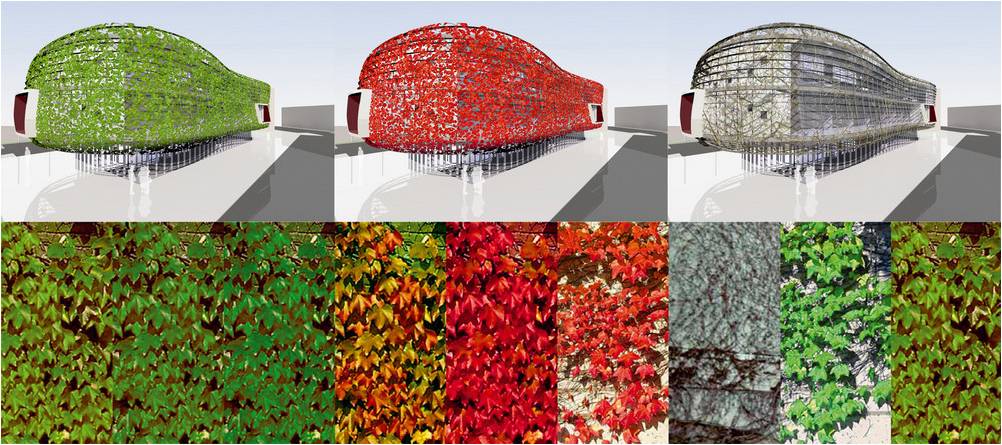
Use of natural light, passive and active energy saving systems, relative position to the sun, air flow, leaf moistened air….

This doesn’t sound like “business as usual” for a municipal building. But the Noain City Hall in Navarre, Spain designed by Award winning Zon-e Arquitectos stems  logically from the fact that the region leads Europe in its use of renewable energy technology.  Continue reading

Cool-Schooling

If you are a parent, and ever had a challenge related to your child(ren)’s school (what is the opposite of an oxymoron? this must be an example of it, but where is George Carlin when you need him?), you will likely want to read Clifford Levy’s moving description (alert: if you are not a subscriber to The New York Times this link will count as one of your free sample views) of enrolling his three kids from Brooklyn in a Moscow school a few years back.

If you are anyone who ever had your own momentary thoughts about being too cool for school (again the opposite of an oxymoron: who hasn’t?  is it called a tautology?  or just plain old redundant?), you will definitely want to read at least one snippet about the founder of the school in Moscow that Levy is describing:

…Bogin added courses like antimanipulation, which was intended to give children tools to decipher commercial or political messages. He taught a required class called myshleniye, which means “thinking,” as in critical thinking.

That is the school everyone could use a bit of: the one that enlightens, that empowers its students to become too cool to be fooled.

Brown Takeaways, & Galapagos Giveaways

For the work we do, there are a few places always on my radar.  I do not mean some search engine tool for getting all the news on such and such.  I mean radar in the sense of, what really matters?  Why? When and where did it start mattering for me?  September, 1983 at JFK Airport is at the very top of the list, believe it or not, but I will save that story for another day. August, 1988 at Cornell University is near the top, as is February, 1995 in Costa Rica.  The Galapagos Islands joined the list in July, 1998 when I had my first work assignment there.  Ever since, I have had WWDD? buzzing in my thoughts, something like a bumper sticker in the back of my mind that cannot and will not go away.

This story from 2000 is a reminder of one my my subsequent visits.  Continue reading

Color Wheels

Whether by coincidence or just being on a roll (sorry), I just came across an inspiring urban art project that is part Civil Disobedience, part Public Art Initiative, part plain old recycling and completely FUN! Continue reading

Hello To The Galapagos

A pleasure to read this post from the Islands that Reyna has written about, especially that it is from someone celebrating their honeymoon; super-especially when they take great photos, write well, and share them with everyone.

Takeaways & Giveaways

The mention of Brown and the questions students raised in a postscript exchange of ideas continues to inspire.

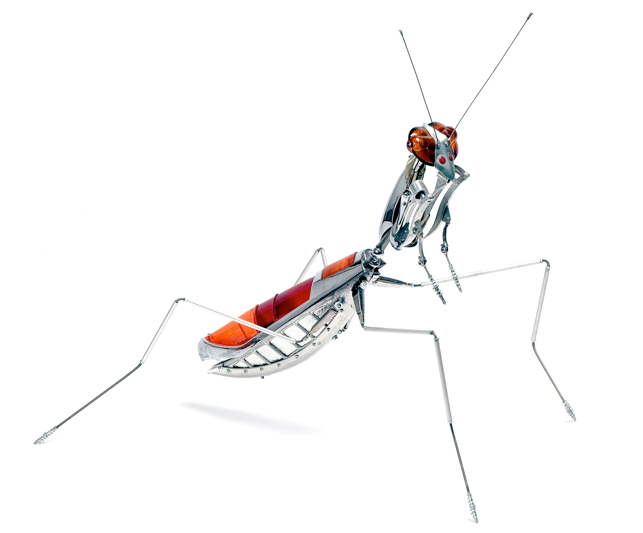
In a world of give and take, another mention of our favorite sculpteur of late is one way to think again about the fable mentioned here.  Ants are not just the worker drones implied, and grasshoppers are not just the partiers implied.  Could it be that the praying mantis has the answer? :

Lights Out!

The Celebration of Urban Birds isn’t just about “Bird Counts” and helping to create welcome habitats for your ornithological neighbors.  Protecting migratory birds is an urgent part of this process.  Just as we work to create and support buffer zones around nature reserves in various parts of the world, we need to think about ways that human lifestyles impact animal health and habitat.

New York City Audubon’s Director of Conservation Susan Elbin states that

Night-time migrants navigate using cues which include moon-light and star position, and may become confused by the glare of tall building lights.

Continue reading

Citizen Science

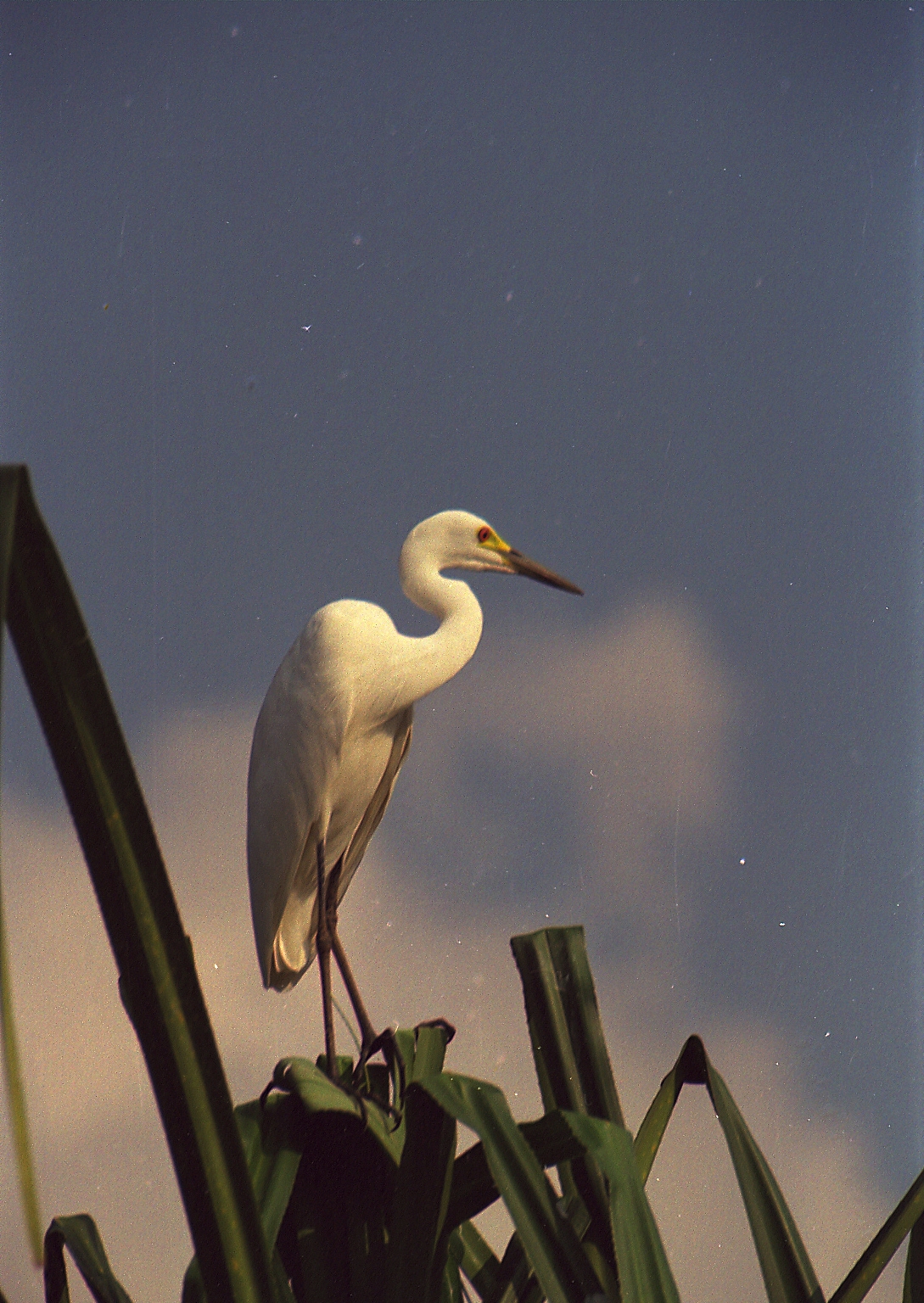
Bird watchers are everywhere. Countless households around the world sport bird-feeders in back yards, and thousands of photographers like Vijaykumar Thondaman dedicate much of their lives to capturing stunning images. It is practically impossible to believe that anyone could fail to see the beauty in a toucan or quetzal, Latin American species that tourists travel whole hemispheres to see for themselves in the wild.

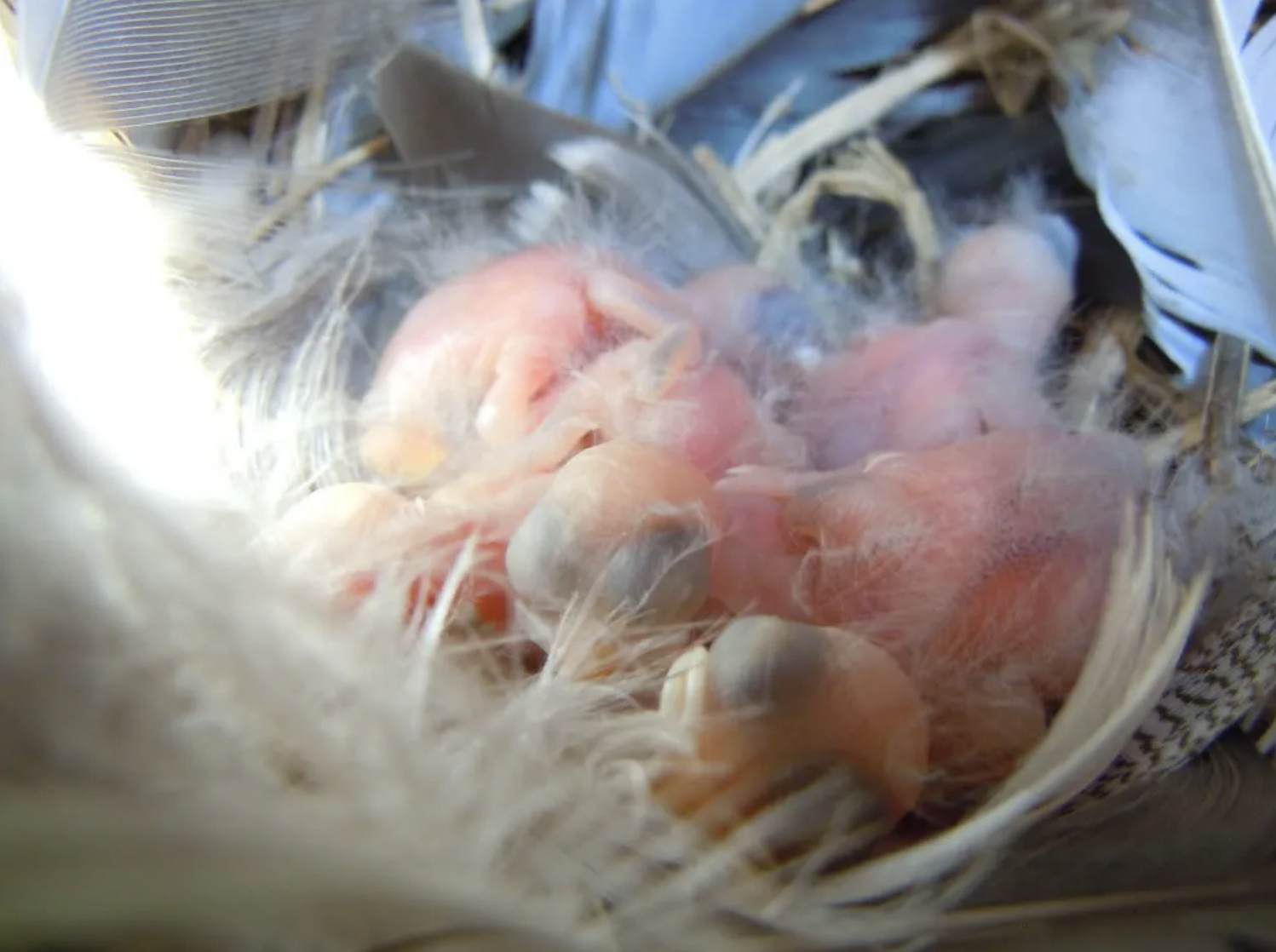
Swallow nestlings studied by Cornell students

Collecting data on birds is a difficult process because there aren’t enough ornithologists to be in the field all the time. But what about the casual bird watchers carrying around their binoculars, the families gathering on their porches to watch hummingbirds flit around flowers, or the schoolchildren staring out the classroom window at the distant and free shadows of birds of prey in the sky? Citizen science involves using these millions of bird lovers as a resource. As one of the world leaders in the study of birds, the Cornell Lab of Ornithology has been using citizen science since 1966, and is involved in many projects that bring bird watchers together while building an impressive database that is used for important research.

Here’s an article on Cornell Lab of Ornithology and the National Audubon Society’s citizen science project eBird.org.

Starting next week I will be working at one of these projects, called Celebrate Urban Birds, managing/deciphering this data and helping people around the country get involved in the surprisingly simple and rewarding experience of watching and identifying birds, whether they have a background in ornithology or not.

Pachyderm Premonitions

At the risk of being tagged a superstitious bumpkin, I bring up the topic of auguries for the second time. My first omen of good fortune in Kumily was the appearance of an owl – the portent was indeed accurate, as shown by the success of Diwia’s paper bag workshop. Today, while in the Periyar Tiger Reserve, I sat on a bamboo raft and allowed my gaze to amble into the skies. It was a bright, sunny day (my toasted face solid evidence), with a clear sky save for a few small outcroppings of water vapor drifting in the soothing breeze. One particular puff of cloud caught my eye for a single reason – it looked like an elephant.

Amused but not particularly touched, I returned to my casual waterline eye-scanning. Not 10 minutes later, the significance of the elephant cloud hit me, albeit from about a football field’s distance.

Takeaways

The video clip above is what comes to mind after a bit of reflection. Thanks to Alan, Bill and 30+ others, I have not only fonder thoughts for Brown University, but food for thought.  The course ENGN 1930, aka Social Entrepreneurship, asks students to provide brief, written reflections on class sessions, readings, etc.  In my session with them, I started by sharing my experience completing a PhD and moving to Costa Rica in the mid-1990s.  I then described the process of learning from both public sector leaders and entrepreneurs there, and eventually forming a company that practices entrepreneurial conservation.

The gist of several of the “takeaways” from students is the reasonable question that I am chewing over now: are the Raxa Collective initiatives examples of social entrepreneurship?  Is La Paz Group practicing social entrepreneurship?  The snarky, if partially true reply would have been that I do not care all that much what it is called.  Continue reading

What Wheels Can Do

This slideshow requires JavaScript.

From Bike Share programs to recycled wheels, Tour de France to backwater byways, bicycles are universal, or at least global.

More than just a method of transportation, they are often a form of expression, of the person riding it or the job they do. Continue reading

Columbian Exchange & Bananas Ca. 2011

The book mentioned in this previous post is proving difficult to stop thinking about.  The historical clarifications are part of it in a purely fascinating way (no domesticated animals in the pre-Columbian New World, really?); better understanding of phenomenal events such as the potato blight of 150+ years ago, and kudzu in the present day southeastern USA, are equally illuminating, if more alarming.  For anyone who has lived in the old or new tropics, this naturally leads to thinking about bananas, and then the clicking starts.  And if you are lucky you end up somewhere like this (click on the image above): Continue reading

Solar on the High Seas

There was a time when all seafaring vessels used renewable energy sources…they moved either by manpower or wind power, or a combination of the two. The Industrial Revolution changed that and the steam engine, powered by coal or wood, pushed ships out of carbon neutrality.

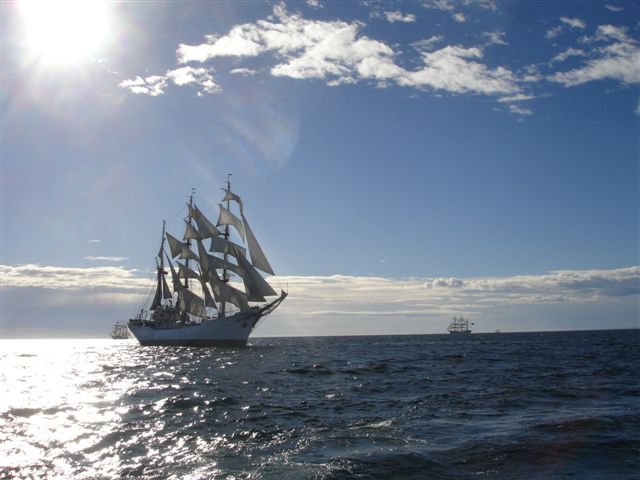
In March, 2010 I had the privilege to experience the Vela Sud America, a Bicentennial Regatta of tall ships commemorating the creation of the independent South and Latin America, as they passed through the Straits of Magellan near Punta Arenas, Chile on their way up the west coast of South America. The weather hadn’t yet turned very cold (it was nearing winter in the southern hemisphere) and it was a bright sunny day.

Coincidentally today, September 15th, is Independence Day in all 5 countries of Central America–Feliz Día de la Independencia! Continue reading