Resilience, or Failure?

It is said that our early experiences create connections in our brains that last throughout our lives. In one particular case I know this to be true: visiting Tikal and Copan as a child filled me with a lifelong awe and interest in the Mayans. So in my current studies it is an easy leap from that simple interest to a more scholarly one.

For hundreds of years human civilizations have looked back on previous societies and wondered why they made certain decisions, how they coped with diverse problems, and what caused them to change. In his popular book Collapse: How Societies Choose to Fail or Succeed, Pulitzer-winning author Jared Diamond examines societies that he claims had unsustainable relationships with their ecosystems, and describes how their actions largely led to their demise. He also refers to some current communities, such as those of modern-day Rwanda, but for my purposes I will only address the past societies (the most academically pertinent and personally interesting to me being the Mayans, because their disappearance from their grandiose cities–Tikal and Copán, for example–has historically been mysterious, and may be closely related to environmental stresses). Continue reading →

Protecting Penguins

Penguins – one of the most charismatic and charming birds on the planet, and yet very few people ever get the chance to see them. They are not enigmatic, nor are they rare, for the most part. And yet, the majority of people are under the impression that the only penguins living today are the Emperor Penguins, and that they live in the Arctic region. However, not only are the emperors one in over twenty extant species, but no penguins whatsoever live in the Arctic region. In fact, no penguins at all even live in the northern hemisphere – all are native to the southern hemisphere, but not exclusively in icy-cold climates such as Antarctica. They are spread over the entire hemisphere, with significant populations on the east coast of South America, the entire Sub-Antarctic, Oceania, and various islands on the Indian and Pacific oceans.

This slideshow requires JavaScript.

Continue reading →

A Four Year Echo Of Hope

For all of the challenges facing the Gulf Of California region ecologically, global trends in sustainable tourism offer potential solutions.  Broadly speaking, the mass tourism model propagated on the most accessible coastal regions of the world—particularly those visited by European and North American travelers—has been challenged by this alternative model.

Still, the mass tourism model has its advocates, in Mexico as in other parts of the world, and creeps into the planning models of destinations where sustainable development is the nominal platform. This happens because for at least half a century the notion of success or failure in tourism development has been defined according to this older model.  If WWF is to have an effective strategy for conservation in the GOC region, then a clear definition of competitiveness vis a vis sustainability must be established.

Those words opened the first draft of a report submitted four years ago . Continue reading →

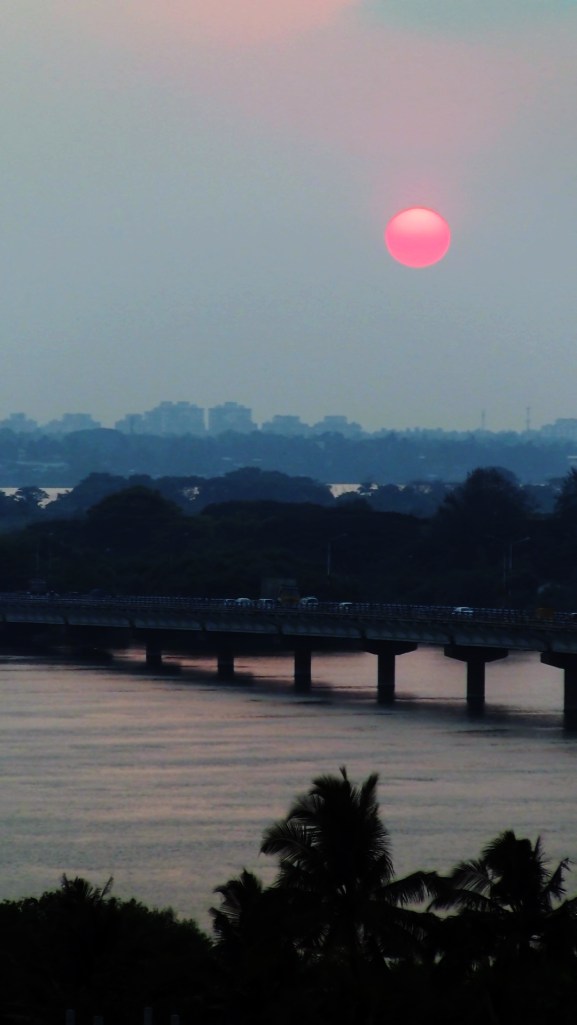
Cochin Sunsets

From two of the windows in our flat in Cochin, the sunset at around 6 is visible, albeit with some structural interference. Nonetheless, the colors and hues, scientifically explained only two days ago, are visible from almost the entire city, or at least all the windows facing west Continue reading →

October Air

National Geographic Magazine, Vol. 1

There must be something in the air.  Some Universal Energy of Inspiration that touches down in October, if not annually, then biannually for a brief moment in time. Or is it just coincidence that two events of such simple, yet great significance should have happened on the same date?

What had begun as an elite club for academics and wealthy travel enthusiasts was reorganized in January 1888 into  “a society for the increase and diffusion of geographical knowledge.”  The National Geographic Society was incorporated a few weeks later and the first issue of the magazine was published as its official journal on October 1st.

William Morris Davis, often called the “father of American Geography” was an early member and contributor who wrote the introduction to Vol.1 of the newly minted magazine.

History became a science when it outgrew mere narration and searched for the causes of the facts narrated; when it ceased to accept old narratives as absolute records and judged them by criteria derived from our knowledge of human nature as we see it at present, but modified to accord with past conditions.

The society’s historic mission has continued for well over a hundred years, extending beyond the specifics of geography to increase and diffuse geographic knowledge while promoting the conservation of the world’s cultural, historical, and natural resources.”

And so we come to conservation.  Continue reading →

Green Backlash

My course load this semester throws some very interesting subject matter my way. In one of my classes, Marketing Research for Decision-Makers, the professor was asking the class to brainstorm a specific hospitality-related topic to research. The professor said that last year the class had looked into sustainable hospitality, and in passing, he mentioned that he and a colleague had put together a report on the class’s findings.

The report, titled Reversing the Green Backlash: Why Large Hospitality Companies Should Welcome “Credibly Green” Competitors, was written by Michael Giebelhausen and Helen Chun. It addressed a very interesting issue: how consumers would view a company if it introduced green initiatives. One of the steps consisted of in-depth interviews in order get people’s opinions on such initiatives. Results showed that interviewees distrusted company motivations for implementing sustainability programs. That is, the interviewees doubted that companies actually cared about the environment; they assumed they were instead implementing green practices for the marketing appeal and cost savings.

Greenwashing, the use of deceptive marketing to promote a company's sustainability, has exploded among hospitality firms.

Continue reading →

When Wheels Start Turning

“180+ countries. 2000+ events. A single day to move beyond fossil fuels.”

Even if you missed one of 350.org‘s September 24th Moving Planet events, the goals of reducing CO2 in the atmosphere is a 365 days per year project.

Whether its with Climate Ride in California, Clif 2 Mile Challenge in your neighborhood, or the Great Power Race in 2010, there have been many ways to get involved in this global call to action.

365 Days a year; 40,075.16 km around the globe; cast of thousands; cost? Priceless.  

Get Moving! 

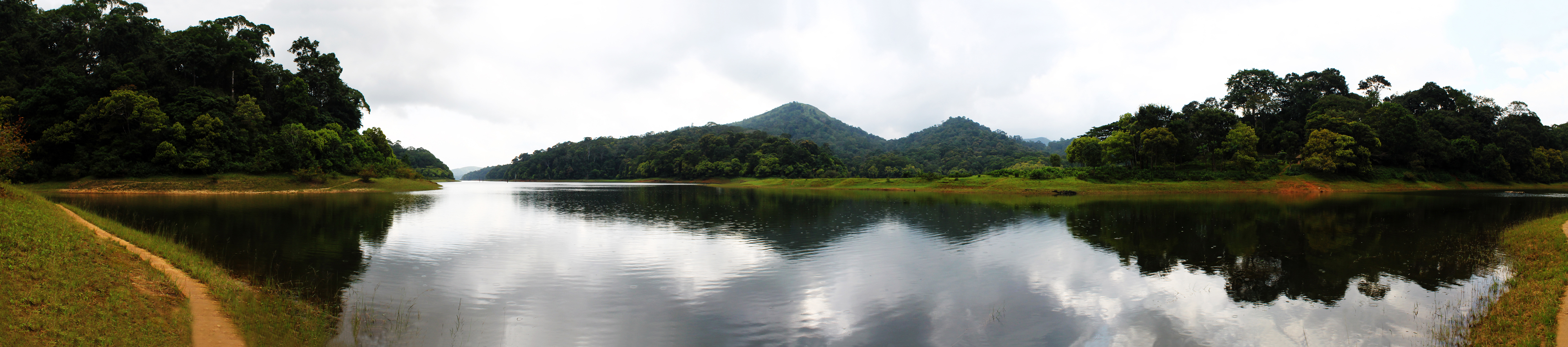
Periyar Panorama

Thekkady’s boat-landing area on Periyar Lake. The full panoramic weighs in at 18mb and a print-size of 190 inches wide, so I have done your computer the courtesy of downsizing it to a still whopping 2mb – viewable by clicking the above image.

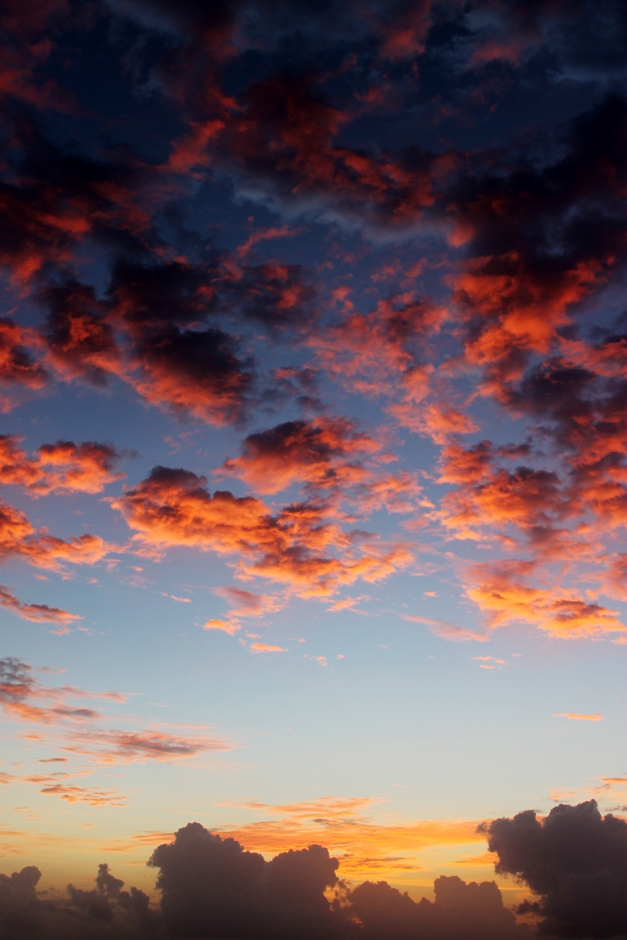
Burning Skies

Many people associate fiery skies over cities with pollution and smog. While these are indeed causes for a red-orange color during sunset and sunrise, they are not exclusively so – any particles in the air, including dust and vapor, can cause Rayleigh scattering. This optical phenomenon is not as complicated as some other forms of light scattering, and is more easily explained.

Continue reading →

Preventing Invasive Fire

In general, species adapt to ecosystems in which they have greater chances of prospering, and abandon areas that are not conductive to survival and reproduction. Arctic species, for example, have specialized for harshly cold conditions and thereby made it very hard for themselves to live in desert or even temperate biomes. These are common trade-offs that occur with natural selection, and somewhat to be expected. But there are species in certain areas of the world that are not indigenous and still survive in those ecosystems. In many cases, these species have advantages over native ones and flourish. Termed “invasive species,” these organisms often replace autochthonous populations to the point of extermination (one could argue that humans are the ultimate invasive species), causing irrevocable damage to the original habitats.

John Dryzek defines the Promethean discourse in his book “The Politics of the Earth.” The metaphorical name comes from the ancient Greek myth of Prometheus, who stole fire from the gods; fire represents technology and the potential it gives for humans’ improvement. Prometheans are those who approve of a free market that unleashes human ingenuity on the world’s “unlimited” resources, propose liberalization, decentralization, and growth to improve human livelihood around the planet. Every one of these prescriptions, however helpful to humans, is practically a different form of poison for ecosystems in that they tend to greatly increase the numbers of invasive species around the world, contributing to rampant biodiversity loss and environmental degradation.

On the topic of invasive species, I consider myself a Survivalist, or one who believes that Continue reading →

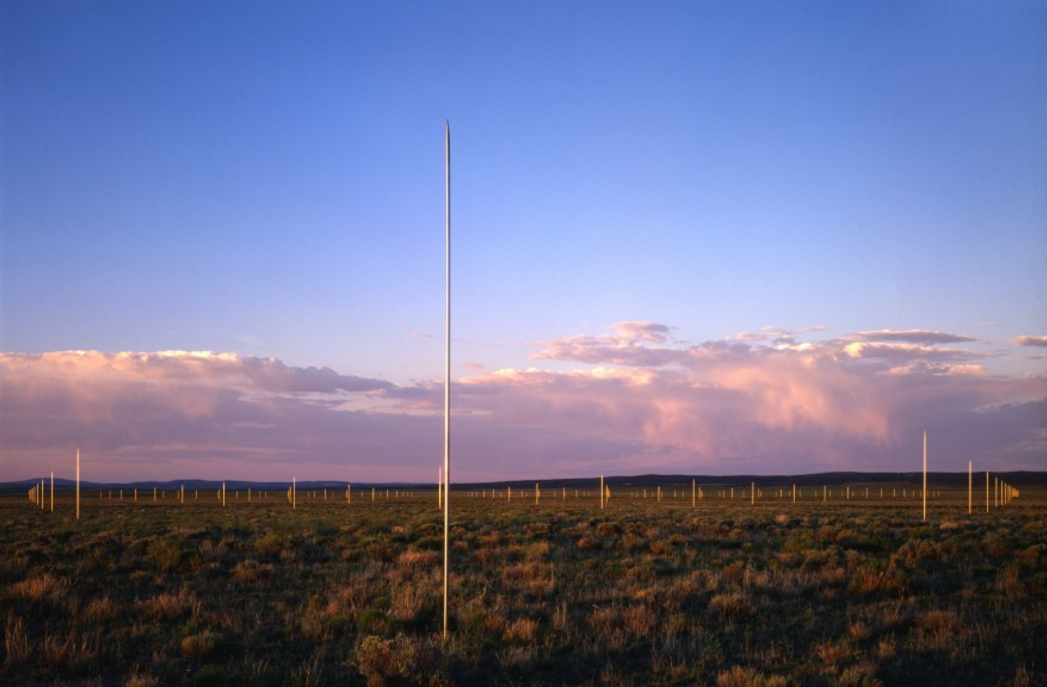
Field of Dreams

Walter De Maria, The Lightning Field, 1977. © The Estate of Walter De Maria. Photo: John Cliett

Walter De Maria, The Lightning Field, 1977. © The Estate of Walter De Maria. Photo: John Cliett

Based on his oeuvre one would say that Walter De Maria is an artist fascinated by mathematical precision and order. His work at Gagosian Gallery in New York City or The Nelson-Atkins Museum of Art in Kansas City in the United States or even the Chichu Art Museum in Naoshima, Japan exemplify this focus on the predictable progression of sunlight as it relates to planetary rotation and the perfection of spheres.

Continue reading →

Primitive Garage

While driving through Tamil Nadu a few weeks ago, there were more  than enough of those moments one experiences when travelling through a culture not your own, during which your eyes glaze over as you try to determine either what someone was doing, what you saw, or what in the world is going on. Tamil Nadu, of all the places I have traveled in the world, very likely has the highest concentration of these moments I have personally experienced, and in addition to a truck garage that looks more like an elephant parking space, one is liable to see extravagantly mustachioed motorcycles, patchwork oxcarts, and large angry red men.

This slideshow requires JavaScript.