
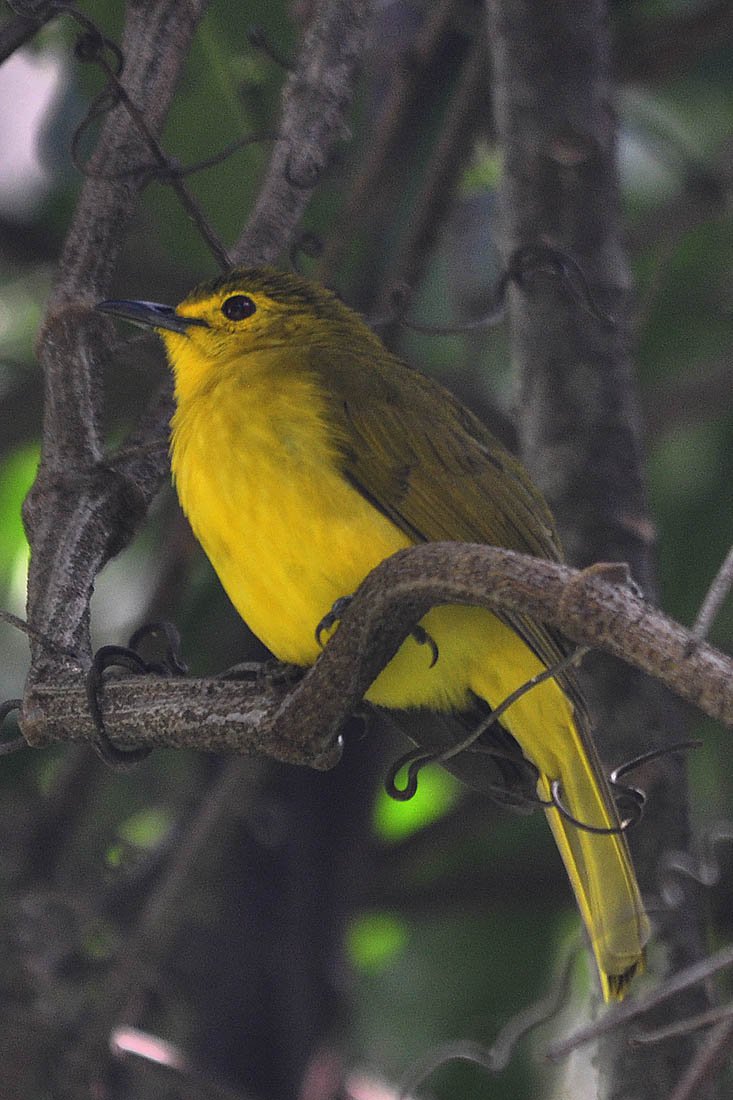
Bird Of The Day: White-Bellied Tree Pie (Thekkady, India)
When I lived in either tropical or Mediterranean environments it was never surprising (but always exciting) to see trees and bushes laden with fruit in their season; mangoes, citrus, and papaya in Costa Rica, or figs, pomegranates and lemons on a Croatian island. But when we temporarily relocated to Atlanta I was happy to discover similar levels of abundance in both urban and suburban environments. In some cases there were trees that looked like they had outlived what some in the neighborhood are wont to call “the war of northern aggression”, such as the pear trees owned by the Dunwoody Preservation Trust, while in others it was a fresh commitment to collective action like the Dunwoody Community Garden where food pantry harvesters pick, wash and bag lbs of produce from donation plots to distribute to a local food bank. (Current estimates for these initiatives are over 1,500 lbs of produce plus 567 lbs of pears to be exact!)
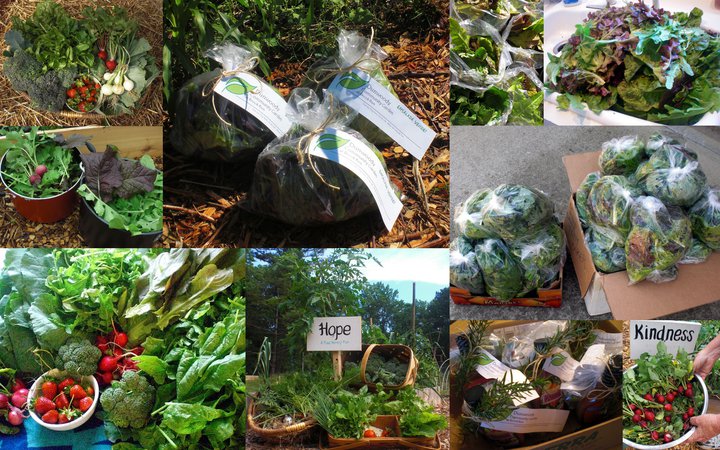
In a time of disparity between the amounts of fresh food produced in the world and the number of people who go without it, I am happy to participate in and proselytize about programs that help alleviate this imbalance. In the United States Community gardens are springing up around the country on both public and private land, in likely places such as empty lots, school yards and church yards, as well as surprise locations like urban rooftops. And while those gardens are used by individuals to allow food security for their families, a large portion of them also plant with surplus in mind in order to donate to local food banks. Continue reading

I am joining Raxa Collective from the Galapagos Islands with the objective of sharing my daily life, project initiatives and global perspectives from this small piece of land that happens to be one of the few places on Earth where sustainable development is still a feasible concept to implement.
But how did I arrive to the Evolution Paradise where Charles Darwin spent important days during his voyage of the Beagle? After getting my B.Sc. in Ecology and Natural Resources Management from Universidad San Francisco de Quito I decided to take a sabbatical year from university studies and became a naturalist guide in the Galapagos. Islanders say that when you drink water from Pelican Bay (a small Bay in Santa Cruz Islands), you will never leave the Islands again. And guess what?….. It happened to me with the exception that I left the Islands for several years before deciding that this is the place where I want to spend the rest of my life. I am lucky enough to be one of the Ecuadorians that have legal permanent residency in the Islands so I was able to act on that decision. But that is a completely different topic that will be the subject of one of my next dispatches. Continue reading
As promised, I have more photos of Volcán Cerro Negro (I’m still looking for some video). The photo below shows the variety of rock size on the hike up the volcano, as well as the underside of the sleds.
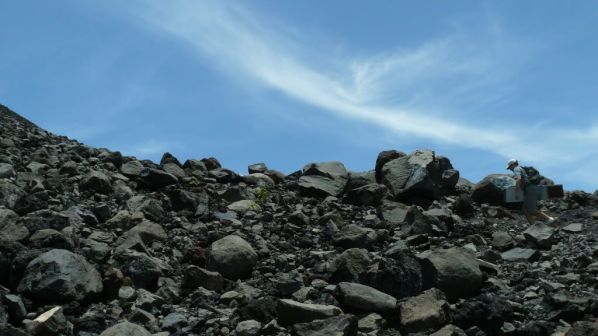
Unfortunately, Pierre and I didn’t take many pictures of the actual descent, since we were preparing ourselves and didn’t think we’d be able to safely use our cameras while sledding. What we did photograph was the natural beauty of the volcano and its surroundings.
Here’s a more full explanation of how the sledding ended: The transition from the slope to level ground wasn’t as jolting as I’d feared, and I skidded to a stop just a meter or two from the slope without wiping out. Standing up, I shook the gravel out of my shorts and shirt, looking around for Pierre, who was pouring stones out of his shoes nearby. As long as you can sit straight in the middle of a sled, it seems that you can slide down the volcano with only basic protection and get away with only having to wash up afterwards.
We appreciate the brave young scholars who choose to be geology majors in college. Especially those who do so without Exxon-Mobil in mind as a career track. Parents probably do not make a choice like this easy, any more than they encourage their kids to major in English (the major of some of our Contributors).
This Note From The Field by a Professor at Oberlin College gives plenty of reason to think that being a geology major could not only be interesting, but meaningful on other levels.

“Alappuzha, Sunday, August 14, 2011: In a photo finish, snake boat Devas Chundan powered by oarsmen of Jesus Boat Club lifted the coveted silver trophy in the annual Nehru Trophy Boat Race, billed as the country’s biggest water sporting event, at Punnamada Lake here on Saturday.
Devas whizzed past Karichal Chundan of Freedom Boat Club and Muttel Kainakari of United Boat Club in a thrilling race….”
* * *
Here’s how Sung saw it:

Note: More photos of the experience are in my first and second updates to this post.
Volcán Cerro Negro, the youngest volcano in Central America, last erupted in 1999. Less than twenty miles from León, a city that I will be posting about soon, the volcano’s main attraction isn’t the crater itself, although the powerful opening to the center of the Earth–which in the past three decades has spewed columns of ash and gas up to 24,000 feet high–is not unimpressive. Instead, most people climb Cerro Negro just to descend it. Why? Because its steep slopes, almost 2,400 feet high, consist of black volcanic stones, which are finer than normal gravel and heavily mixed with ash and dust. How do visitors get from top to bottom? Many locals do it by foot, running down in great leaps. Most tourists rent a wooden board with a metal underside: either a snowboard or sled design depending on their experience and daring.
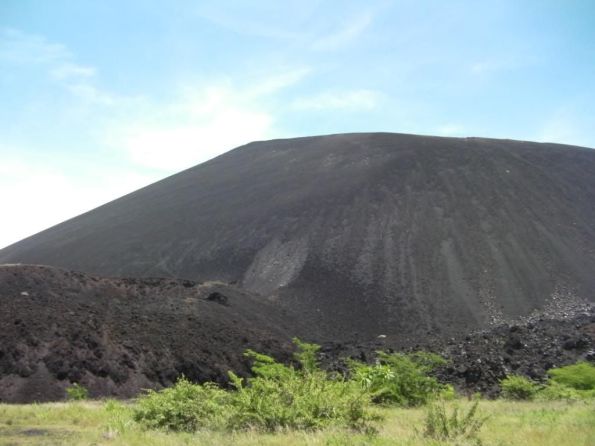
The volcano and its surroundings, together known as the Reserva Natural Complejo Volcánico Pilas El Hoyo, amount to a protected area of 2,140 hectares that includes at least five different types of ecosystem. Entrance fees, as well as the rental of sleds and protective gear, somewhat help incentivize the conservation of the volcanic complex by surrounding communities, mostly farmers (cattle, peanuts, eucalyptus, corn, etc.).
Having only snowboarded once before, I opted for the sled, and Pierre did the same. We hiked up the volcano on the larger rocks (fist-sized to full boulders) for maybe fifty minutes, pausing to take photos of the beautiful hills that starkly contrasted with Continue reading
Hydroponic gardening isn’t for everyone: the handiwork, plant nutritional knowledge, and electrical setup can be daunting to beginners. When I set out to create my very first hydroponic setup, I had essentially zero knowledge in any of those fields. Nonetheless, with a very small budget, I was able to establish a functioning hydroponic garden within a few days.
In 1621, Plymouth colonists and Native Americans gathered for an autumn harvest feast that set the precedent for today’s American Thanksgiving holiday. Thanksgiving traditionally brings families together (in-laws and all) to give thanks to the various aspects of their lives. Many memories are created and a cornucopia of food is shared. In my family, the holiday lingers until only the turkey carcass remains and the stuffing is amply stuffed into our bellies…a week later. See, we tend to err on the side of caution and over-prepare for the rare event that an extra ten people arrive to celebrate.
In one sense, Thanksgiving occurs every day in many restaurants—they over-prepare; however, restaurants are without the willing and unashamed stomachs of my family to eat their daily surpluses of food. As I mentioned in my previous post, much of this perfectly edible food goes to a landfill. Yet, food shelters are often unable to match their supply with their ever-increasing demand.
Increasingly, restaurants are 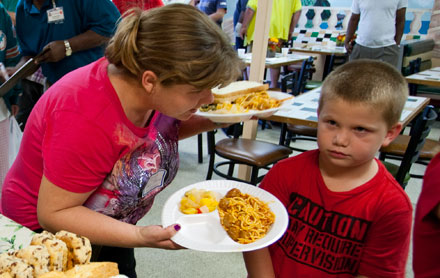 turning to local Harvest Programs to provide an alternative to discarding surplus food. With food donation programs, restaurants and other food service businesses have the opportunity to reach more than just their customers. Programs provide social, environmental, and economic benefits to businesses.
Donating helps disadvantaged members of any community. A Hunger in America study shows that one in eight American families rely on donated food. This outreach helps employees contribute to a greater good knowing that they are helping members of their community. It also helps food pantries better match their supply and demand so restaurants can serve more than just the traditional customer. Continue reading
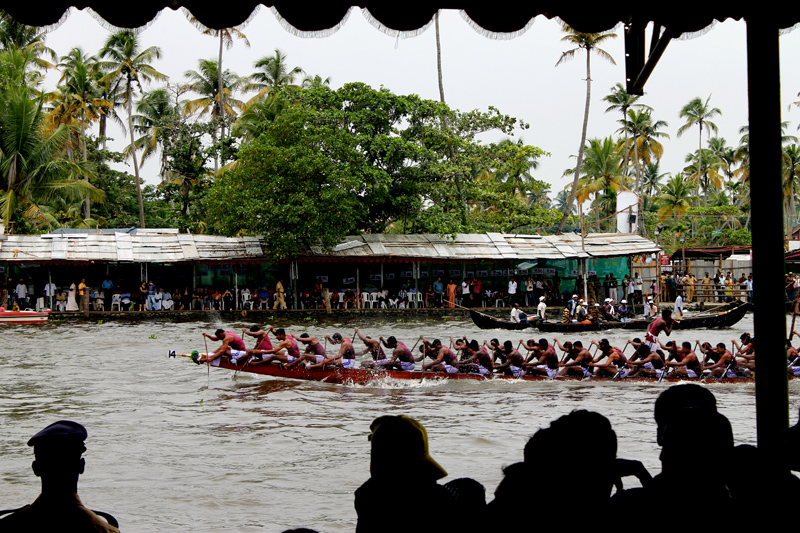 About one year ago today Crist, Milo and I fairly stumbled out of the Cochin Airport after traveling from Ithaca, New York*** and were whisked to view one of Kerala’s endemic sporting events, the snake boat races. Backwaters villages compete with one another in what traditionally commemorated the carrying of idols to the state’s many magnificent temples.
We had missed the fabled Nehru Trophy Race last year by a few days, but had arrived in time to see one of the other many races that occur every year around the Kerala harvest festival of Onam. The snake boats vary in size but the largest are over 50 meters long and slightly more than 1 meter wide with a high curved stern that represents the raised hood of a snake. It isn’t only the length and shape of the boat itself that is impressive. These races are almost certainly (someone please correct me if I am wrong) the sporting event with the largest number of members in a single team: manned (or “womanned”, as the case may be) by over a 100 oarsmen who row in unison to the fast rhythm of `vanchipattu’ or boatmen’s song. The boats are decorated for the races with flower garlands, adding an air of festivity to the shouts, songs and splashes.
Yesterday (as you can see in the photo above) we had seating in a covered pavilion Continue reading
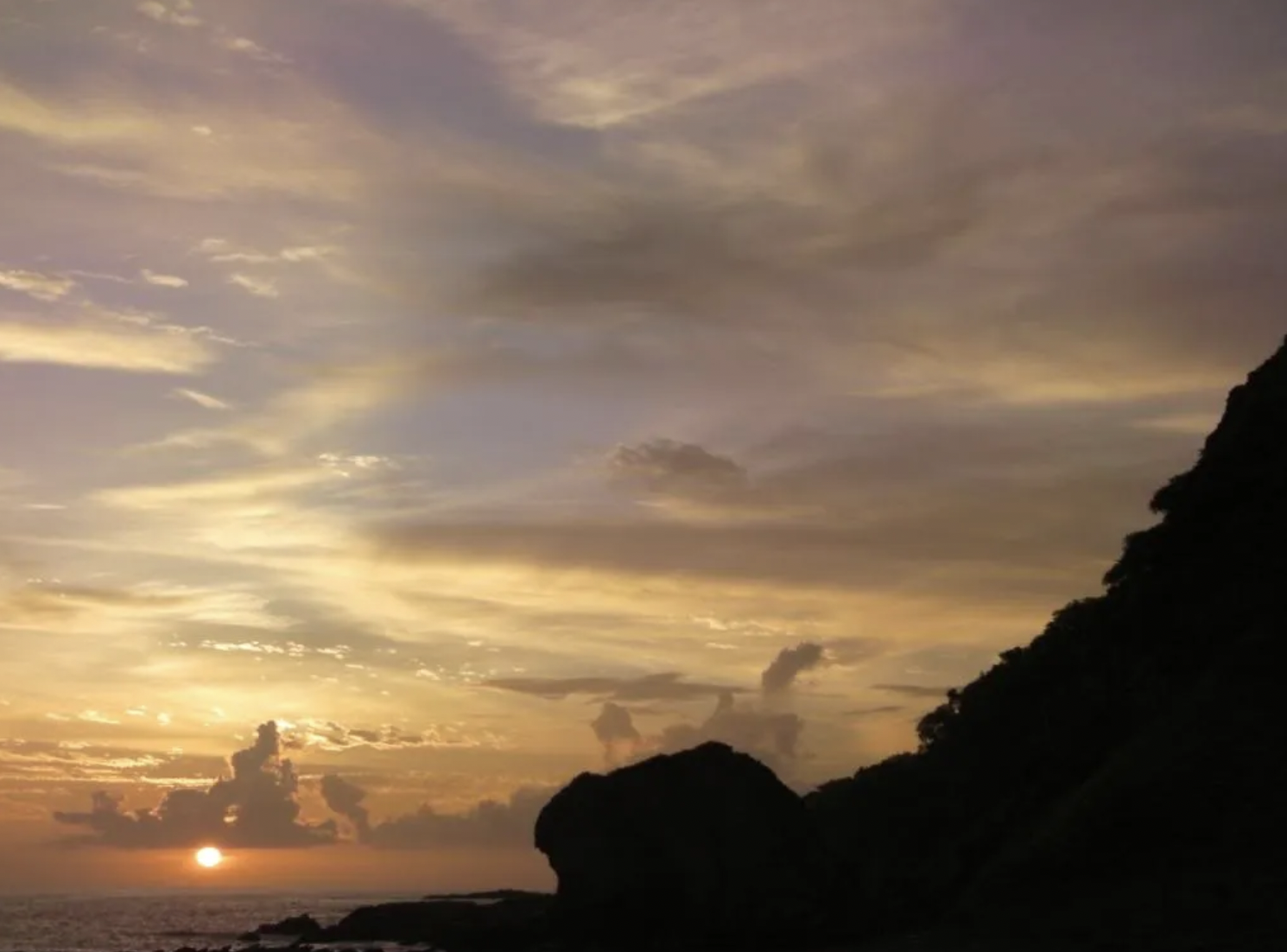
A couple days ago the tides at Morgan’s Rock had shifted a couple hours apart, so that during the sunset, which is normally at full high tide, the waves were absent, leaving a surprising amount of the sand and rocks bare.

This cloud, backlit by the setting sun, offers itself up to the traveler’s imagination
These rocks, which I’d noticed from Sunset Hill before, were now accessible by foot, so instead of hiking to the summit, which I had done several times, I climbed over the rocks until I had a good angle of the sunset as well as waves crashing violently into the rocks (video to come). Since they are so often under water, these formations are covered in sheets of seaweed and house sea urchins. This makes the surface of the rocks look like a fluffy duvet and the tidal pools a bed of nails.
To Morgan’s Rock guests: When the tides are right and you have strong shoes, Continue reading
Taking an early look at an item in tomorrow’s NY Times, we are led to wonder whether the premise, especially including this interesting empirical observation, is a statement of fact, or not:
The post-idea world has been a long time coming, and many factors have contributed to it. There is the retreat in universities from the real world, and an encouragement of and reward for the narrowest specialization rather than for daring — for tending potted plants rather than planting forests.
How will we investigate? One place to start is looking within universities, and for this many of our contributors are uniquely suited to take the challenge and seek out evidence pro and con. The gauntlet is in motion.
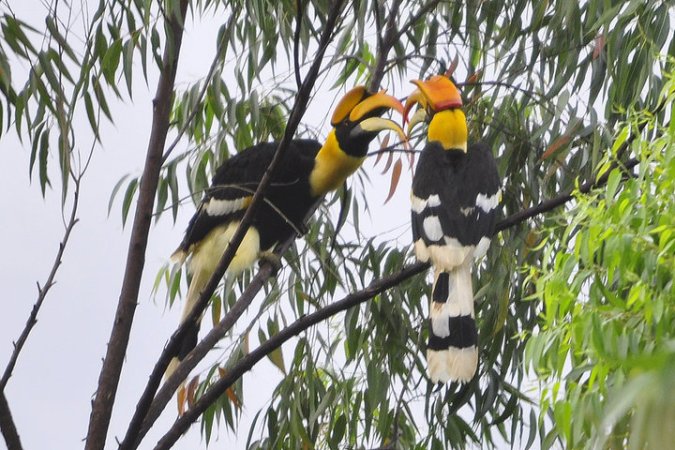
Gavi, India
A friend of mine told me about a shop outside the center city of Nairobi that I had to check out. Anyone who knows me knows I’m a bit of a shop-a-holic, so I took a taxi over to Amani Ya Juu. To my delight, Amani Ya Juu is so much more than a store; it is a reconciliation project, a gathering center for marginalized woman, a place of hard work, and an entrepreneurial dream realized. Amani started in a garage with three eager refugee women, two from South Sudan and one from Mozambique. They used their stitching skills to develop a training program and a “fair trade” business. At Amani, fair trade means the women are paid not only a living wage, but enough to send their children to school, and provide for adequate housing and basic healthcare needs. They also value local culture, traditions, and procure materials locally. Now fifteen years later, Amani Ya Juu exports to the US, staffs over seventy marginalized women, and proves to be a self-sustaining and profitable project.
From the exterior, the shop looks like an adorable guest house with a quaint outdoor garden café to its right. Upon stepping into the shop, I’m greeted by a woman in the back sewing a mushroom pattern on a canvas pillow. She welcomed me and asked if I’d like a tour of the production center. Continue reading
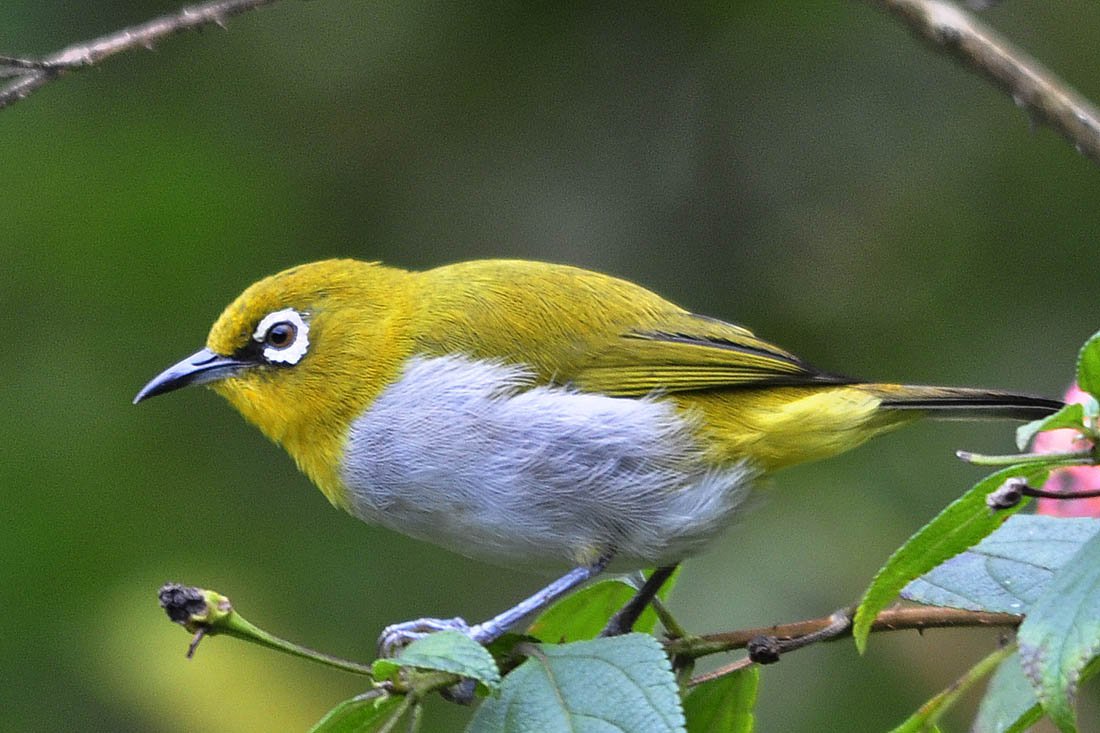
Gavi, India
A couple of days ago I spoke with the resident Ayurvedic Doctor of Cardamom County, Dr. Vinu. Having a family tradition in ayurvedic practice like Ratheesh, he completed a five-year BAMS (Bachelor of Ayurvedic Medicine & Surgery) at the Alvas Ayurvedic Medical College in Mangalore, Karnataka. Dr. Vinu’s connection to ayurveda comes from his father’s side. His grandfather, Dr. Cherian, was a traditional practioner of ayurveda. He told me about how in those days, everything was prepared by hand and nothing was stored for longer than a month. The doctor would prescribe everything personally and even gave recipes for the quantities and ingredients needed to prepare the medicines to each person individually. Interestingly, Dr. Vinu said that when he was younger he wanted to be an allopathic doctor, but that his family tradition led him to the practice of ayurveda. He laments that the long-term and more holistic process of ayurveda is being lost in this fast paced and hurried world and workplace.

In ayurveda there are five main elements, which also correspond to four of the treatment rooms of Cardamom County, the five being prithvi (earth), jala (water), tejas (fire), vayu (air), and akash (space). Dr. Vinu also told me about the importance of physical observation and pulse diagnosis in ayurveda. We discussed the three doshas or body constitutions, of Vata, Pitha, and Kapha. Continue reading
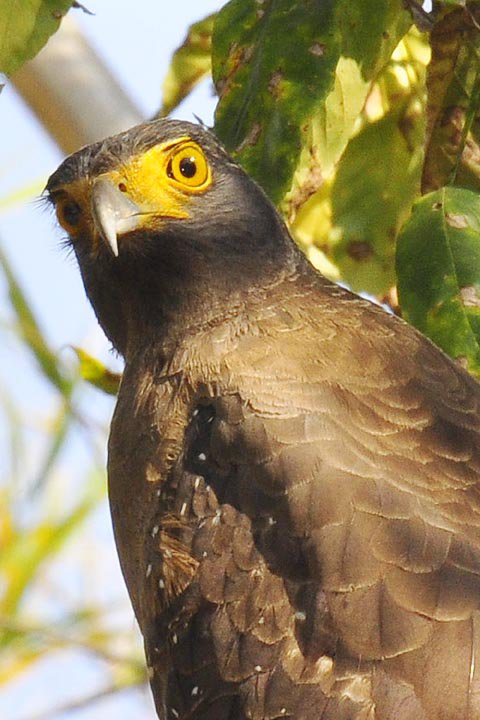
 Organikos