Easy Tips for City Living

As I eagerly prepare to head to Cardomom County in a few days to contribute some of my time and efforts to Raxa Collective on site, I’m packing up my apartment in Paris and thinking of the irony of leaving my little pot of coriander in the window for fields of spices in Kumily. I was growing coriander, basil and parsley – and before that, these lovely flowers my mother got me during her visit several months ago.

Growing my own herbs was a fun way to keep the kitchen an innovative little atelier. Basil was a must for anything remotely Italian, or Thai if I got so daring; parsley was hard to know what to do with at times but got its fair share of dicing in with many miscellaneous creations; and then of course there’s coriander, my preferred name for which is cilantro as I grew up with the herb in its Mexican context of carne asada tacos and guacamole. An absolute favorite flavored flora of mine.

In some countries, the mores of a city-dweller’s everyday life can somehow keep “environmental friendliness” in those darned quotation marks, and make the concept seem as remote as the rainforest. Continue reading
Wordsmithing: Entrepreneurial Conservation

Two previous posts about words pointed out how common usage can alter the course of their meaning over time in surprising ways. We might not even recognize the original meaning today, some perishing in dungeons and others flying too high for their own good. The risk of writing these particular posts is when their intent seems anything other than constructive. Who wants to cast a stone, first or otherwise? We live in glass houses, and all that. In the spirit of focusing on that intent, this quick post draws together two words: entrepreneurial conservation.

As any phrase should, these words together build something more valuable, more effective, than either could on its own. If words can be cousins, as implied in a previous post, then phrases can be part of an extended family too: these two words, as a phrase, share linguistic DNA with social enterprise, but OED does not know it yet. The phrase (and our work) recognizes that for all the heroic efforts of traditional conservation organizations—The Nature Conservancy, WWF, Conservation International, etc.—not to mention incredible government commitments to national and state parks throughout the world in the last century, there is still a deficit of conservation.

The world still loses more wilderness than it protects. Ditto for intangibles in the domain of cultural heritage. So, what else to do other than pitch in and see what we can do? And if it can be shown that conservation is good business, then more people and organizations will pitch in. Watch Adrien’s posts for more on this in Patagonia, and Reyna’s upcoming posts from the Galapagos Islands. Those are two pristine natural wonderlands with limited human populations. But also watch for posts from Kerala, India — where the story is more complex with regard to population growth and wilderness conservation. Or from Nicaragua, where we feel Morgan’s Rock is leading the way in Central America with a robust mixed-use model that makes use of each idea we have put on the anvil so far: resort (old meaning), luxury (new meaning), entrepreneurial and conservation (combined meaning).

Trip to Gavi

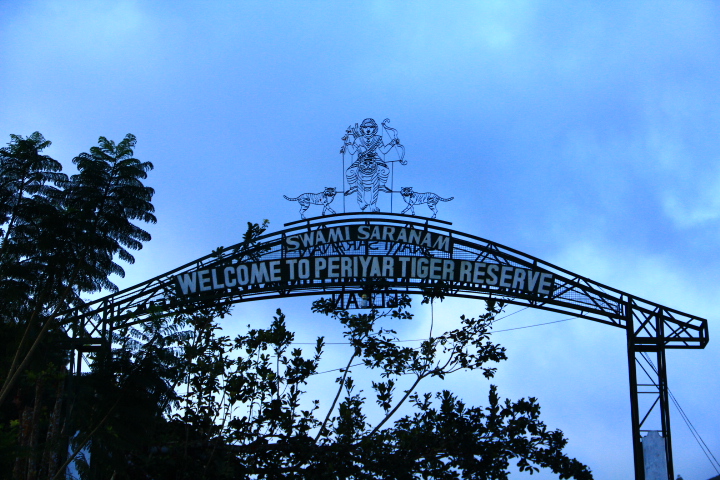
Last Tuesday I had a chance to go to Gavi, a village in the Pathanamthitta district of Kerala and part of the Periyar Tiger Reserve. It’s only a 45 minute trip from Cardamom County, but it’s a full day program that could go from 6 am to 6 pm –when the park gates open and close. Guests also have a choice of staying overnight. All programs are organized by the KFDC (Kerala Forest Development Corporation).

In the morning, we met in front of the reception area around 5:15  in order to spend as much time as possible in the reserve.  Including myself and the driver, we had a total of eight people for this trip. Our driver was Shahul, a usual driver who comes to pick guests up at Cardamom County.  About 30 minutes later, we arrived at the Vallakkadavu entrance to Gavi.

Continue reading

Staff Profile/More About Those Superstitions

Harvey Lopez, until two years ago, was a student at the Universidad National Autónoma de Nicaragua (UNAN) in Managua, studying English on a scholarship. He came to work at the Morgan’s Rock reception at the recommendation of a friend working there at the time, but after one year he became a guide when the position became available. Nowadays he spends his time taking guests on tours or studying the various wildlife books to build his knowledge of local species. These are the same guidebooks that I’ve been using to identify some of the animals in my photographs.

Harvey enjoys sharing popular Nicaraguan countryside myths during nature tours; Latin American lore equivalent to, but a bit less ubiquitous than, the infamous chupacabra. Night walks are especially good tours to tell the tales, since the only illumination comes from flashlights, stars, and reflections in animals’—especially spiders’—eyes, and the stories’ topics fit the dark and quiet atmosphere.

He presents these myths as “creencias,” or beliefs, from small towns like the one he grew up in (Tola, 13km from Rivas):

  • Cadejos are a pair of dogs that appear to travelers at night. One is huge and black, and follows you till it finds an opportunity to attack. The white dog is more of a guardian and is supposed to protect you from the evil one. These cadejos commonly appear to men who are walking at night in dark streets, especially those traveling in a state of fear or inebriation.
  • Lechuzas, or owls (Harvey says screech owls in particular) are omens of death. When their cry is heard in a village, one is supposed to say “en la otra esquina,” or “on the other block,” to ward the bad fortune off to another area so that one doesn’t wake up dead.
  • A duende, which translates as elf, troll, goblin, and sprite, is a supernatural creature that when seen by adults (an uncommon occurrence) appears only as a shimmer in the air. They play with children, specifically those who misbehave, and lure them to their own land (considered by some to be hell). These children are stolen and never seen again. This portrayal of elves or fairy-folk might be as common elsewhere around the world as the chupacabra, but has less of a presence in tabloids and a more mythological nature.
  • The ceibón tree, Bombax emarginatum, is a mysterious and often spiny tree that houses Continue reading

Omens of Fortune

I am not superstitious. But I am also not exactly non-superstitious. I love black cats (my grandmother has two, named Helios and Selini after the sun and moon, in Greek). Sometimes I have to pass under a ladder to get something done. No problem. And in the spirit of declaring my semi-agnosticism in that domain, I also think insects have had a bad rap for way too long. With all due respect to arachnophobes (and I really mean that), I always find encounters with spiders fascinating. Today, it went beyond empirically verifiable fascination; I found myself feeling positively superstitious, if I may say so with the dual meaning of the adverb.

In the morning when I exited my room in the little house not too far from the Morgan’s Rock lobby, this spider was waiting for me outside. After I showered and got ready to leave, I passed a frantic walking stick attempting to find a tree, perhaps having fallen from the ceiling earlier. As I walked to the restaurant for breakfast, I considered these two arthropods good omens of the sightings I would have on my forest walk later in the day.

When I departed on the trail to find wildlife to photograph, I passed near some weeds on the side of the path that had been ravaged by some insect. I crouched and looked closely at all the leaves to detect the culprit, but found no obvious caterpillar or beetle munching on the foliage. Bending closer, I scanned the plants with a patient eye and finally noticed something that stood out. Continue reading

Carbon Emissions Series: Vacationers’ Diets

The hospitality industry is, by nature, one that encourages indulgence. I have seen this mindset manifested through many examples: travelers insisting on using a new towel every day, taking more than they can possibly eat at buffet lines, and drinking ungodly amounts of alcohol at hotel and restaurant bars. Today, tourists excuse themselves from their diets—and some, their environmental principles—when they go on vacation. They expect opulence and excess (a quick look at Las Vegas will confirm all of this). Firms that strive for sustainability are therefore in a hard spot, as they must meet the expectations of guests while providing products and services that do not degrade the environment.

This crude energy pyramid shows that only approximately 10% of energy is transferred between upward steps in the food chain. The higher up you eat, the more energy your diet requires.

I thought it appropriate to look at this paradox more in depth by explaining the findings of an interesting report that the Environmental Working Group (EWG) released recently. Titled Meat Eater’s Guide to Climate Change and Health, this study conducts life cycle analyses

Continue reading

Seeds of Change


Guest Author: George M. George

Most people talk about the Periyar Tiger Reserve as a vestibule of abundant wildlife—one of the last that still retains its serenity and pristine ambiance. A trip to the sanctuary while visiting Kerala is a must-do, even if it means praying on bent knees to the powers that may be, hoping to catch a glimpse of the true king of the rainforest, in addition to the other creatures of the wild.

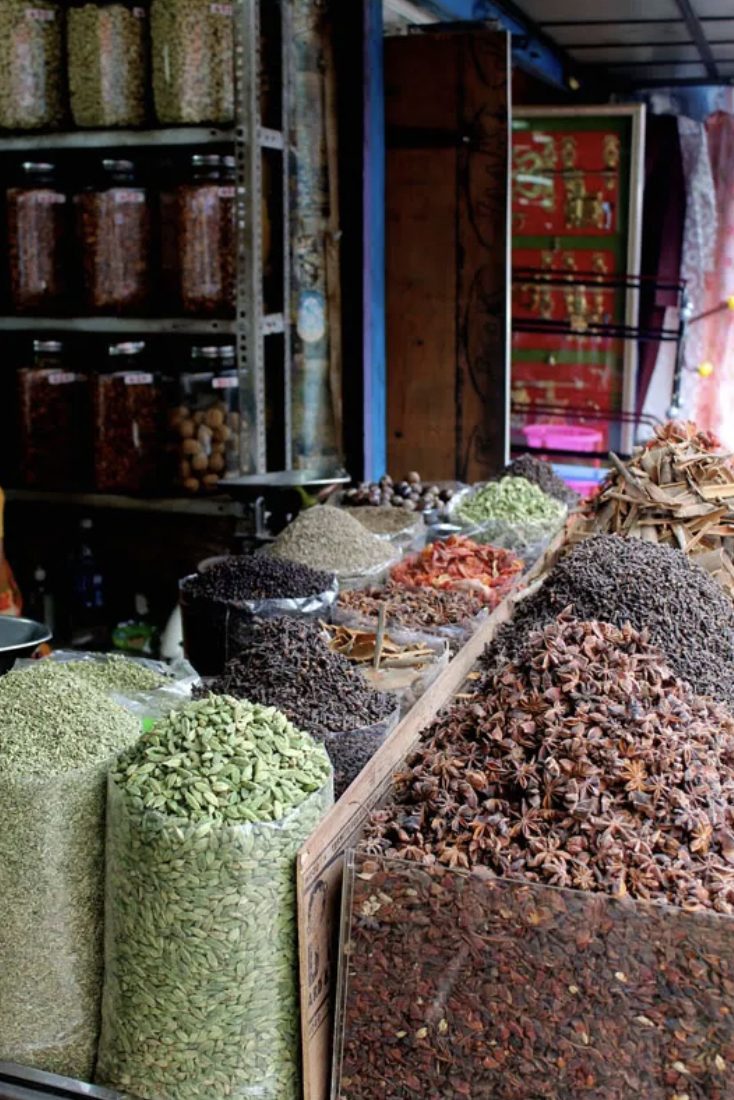
My fascination with wildlife and the enthusiasm that preludes every visit to Periyar is without boundaries. Yet prior to every visit within the sanctuary, I feast my eyes on the tracts of spice plantations that border the protected wilderness areas of the Western Ghats: cardamom, pepper, star anise, turmeric, nutmeg, cinnamon and cloves (just to name a few). Coating the landscape on the outskirts of the forest, they make me wonder if we have forgotten a bit of the past that is relevant even today. A fascination with spices is not something new for the people of Kerala; they have been cultivating and cooking with them for centuries: the delicate preparation of their mouth-watering dishes, soaked in the quintessential (and compulsory) coconut milk and/or oil inspires this post.

Continue reading

Water + Sunlight = Electricity?

Plants are typically regarded as the most efficient energy producers of the biological world, and I myself have imagined the possibility of harnessing their photosynthetic capabilities to generate sustainable energy. In my daydreaming, I visualized the biochemical transfer of a leaf’s photosynthetic output, adenosine triphosphate (ATP), down the plant’s stem and into a battery via some half-baked imaginary electrical conversion process. A possibility I had never before considered was that scientists were not focused on using the biological resources available to them, but rather mimicking and improving the processes carried out by their biological models. This recent development (late March, 2011) is described by Discover Magazine:

Scientists say that they’ve passed a chemistry milestone by creating the world’s first practical photosynthesis device. The playing-card-sized photosynthetic gadget uses sunlight to split water molecules into oxygen and hydrogen, which can then be used to produce energy, and is reputedly 10 times more efficient than a natural leaf. Researchers say they expect it to revolutionize power storage, especially in remote areas that don’t currently have electricity. “A practical artificial leaf has been one of the Holy Grails of science for decades,” says lead researcher Daniel Nocera, who’s presenting this research at the National Meeting of the American Chemical Society this week.

Full story here.

Banner Images: Where, What, Who?

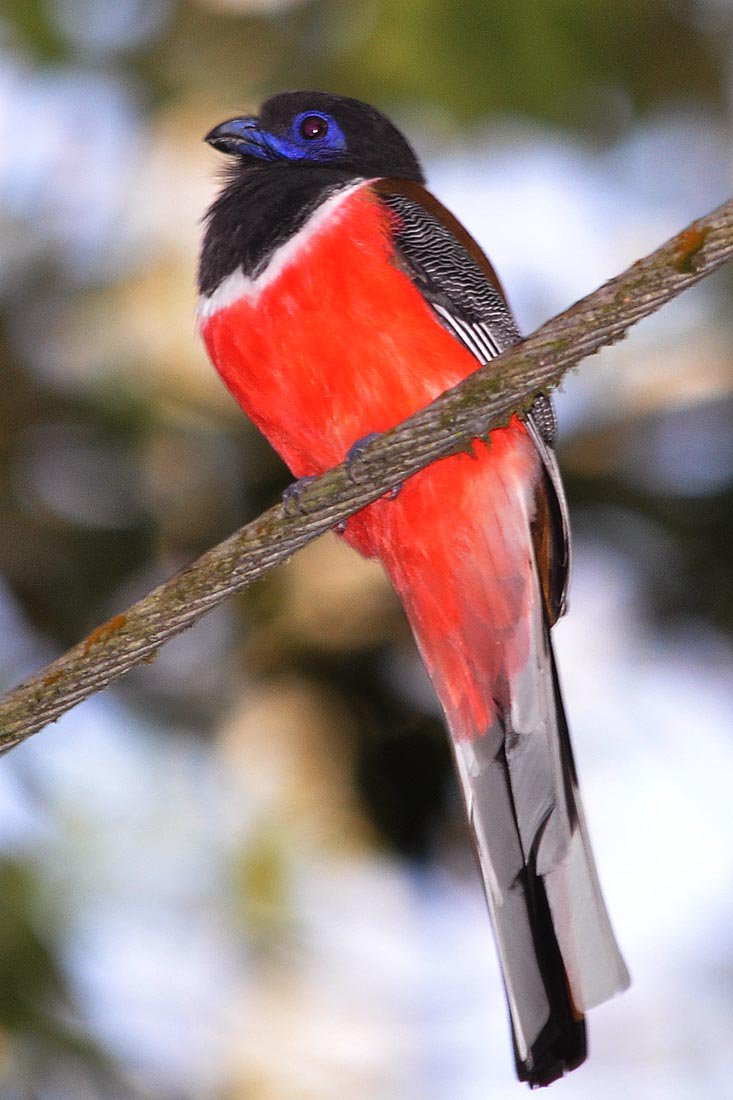
Hopefully the new images in the banner catch the eye. I hope they are aesthetically to the point. In fact, all of these photos are taken by two of our contributors, Milo and me.  Since the pictures are shown randomly with no sequence, I wanted to show all the un-cropped version pictures at once with some background information.

First 12 pictures are taken by Milo.

Pheonix Oysters (Pleurotus pulmonarius) grown on paddy straw in Milo’s apartment in Cochin

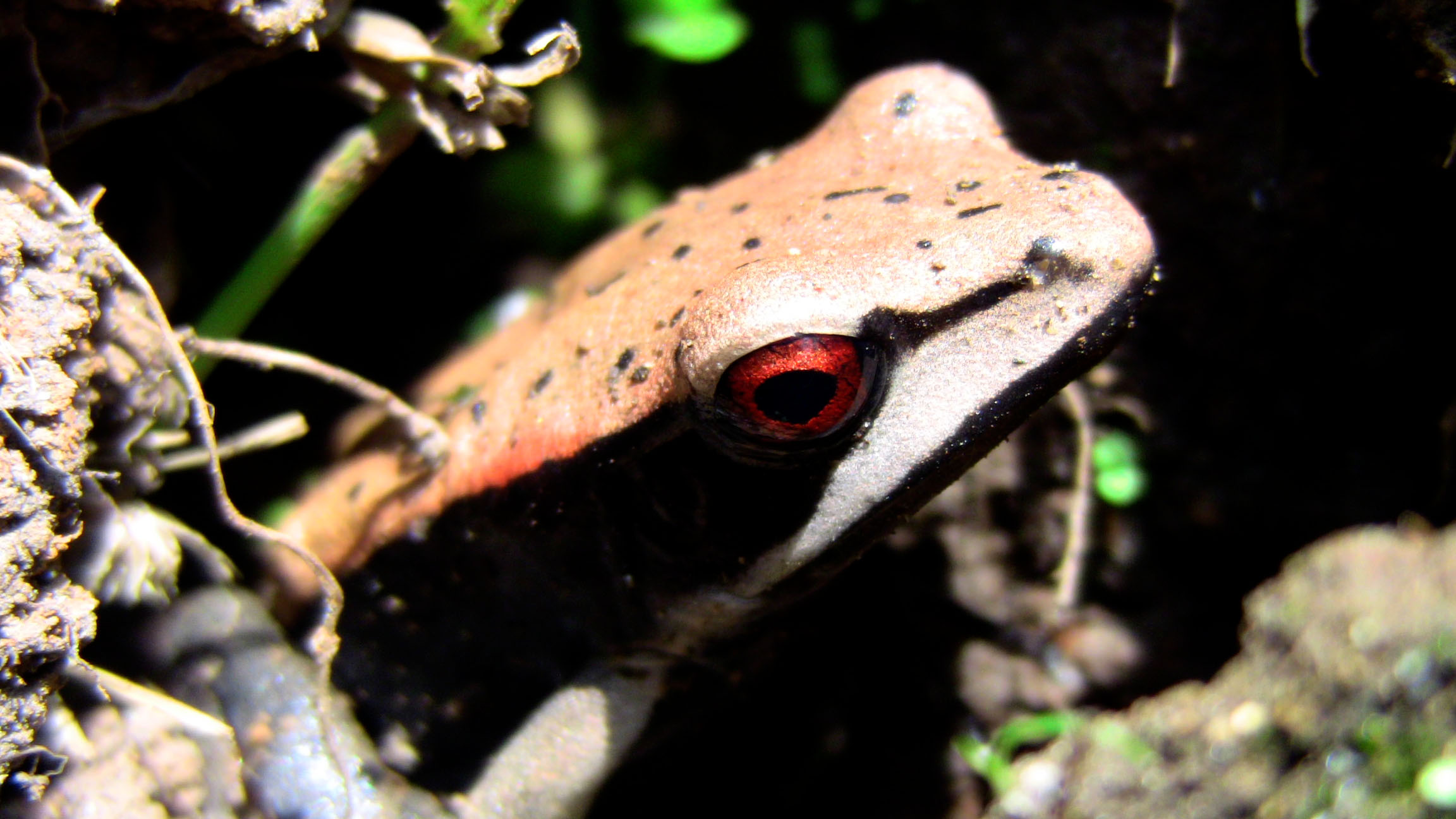
One of thousands of frogs on the road to the boat landing in Thekkady on Border Hike Continue reading

Profile: Anu & The Reception

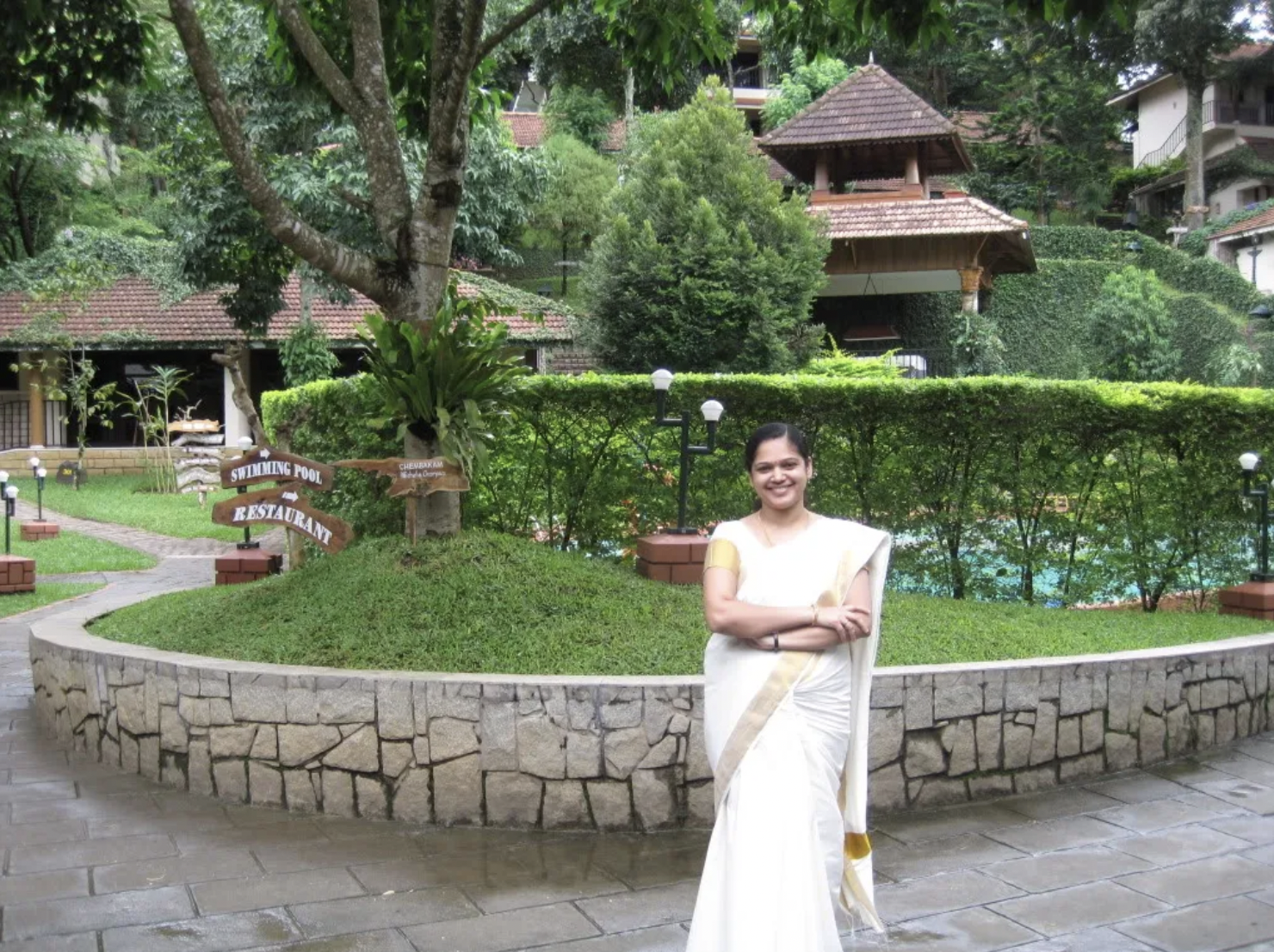
Over the past number of weeks, I have spent much of my time in and around the reception, working with the ever-smiling and cheerful Anu, the Front Office Manager here at Cardamom County. Having spent five years here at Cardamom County, she is a seasoned professional who always keeps guest feeling happy and welcome.


At the reception, guests are welcomed in the traditional way of Kerala. This involves giving the guest a sandalwood aarthi tikka on the forehead.  This beautiful ritual includes a thalam (a special tray) with a small lamp or nilavilakku & small vessels, including a kindi and a para, which contain oil and kerala rice, a brown speckled and starchy specialty of the state. Continue reading

Da’ Flying Frog

When guests at Morgan’s Rock want to have the experience of zooming over the tops of trees, they normally can’t make it all the way to Café Las Flores’ Mombo Canopy Tour at Mombacho Volcano, which is over an hour away. Instead guests almost always go to Da’ Flying Frog, a canopy tour just 25 minutes away in the hills overlooking San Juan del Sur. At a cattle ranch with a nice amount (acreage unknown) of uncut forest on the property, this series of 17 zip lines includes several practice platforms that prepare you for greater heights by starting over dirt paths. Their longest zip line is 400 meters long, a distance that is fun and exhilarating to complete.

Brown Hawk-Owl

On the morning of Diwia’s paper-bag workshop, the team was pleasantly surprised by what could only be considered a portent of success and good luck – a small owl was perched on the roof of reception, in plain sight during the daylight hours. I was summoned forth with my camera, and was fortunate that the owl still hadn’t alighted by the time I arrived, rubbing the sleep out of my eyes.

Continue reading

Biodiversity Buffers

Private reserves have been established in many countries around the world, dramatically expanding the conservation provided to biodiversity in public parks by voluntarily protecting buffer zones. Despite their smaller size (relative to public parks) on an individual basis, in aggregation these private reserves are significant providers of environmental services.

So far the Nicaraguan Red de Reservas Silvestres Privadas includes 50 private reserves that protect 7,467 hectares—18,453 acres—of various ecosystems. Each one has renewable status as a reserve for ten years at a time, and is exempted from income taxes for ten years, property taxes for whatever amount of time the land is a private wildlife reserve, and retail sales taxes on goods that contribute to the reserve.

The Nicaraguan Ministry of Environment and Natural Resources (MARENA) supports certification of conservation activities, includes the private reserves in sustainability workshops, and helps bring teams of scientist investigators to the reserves to conduct studies like the one done at Morgan’s Rock/El Aguacate. Among other things, the reserve owners must make a yearly management plan, comply with environmental norms, and protect the wildlife inside their property. Some of the required contents of a management plan include Continue reading

In Conversation with Team Sustain

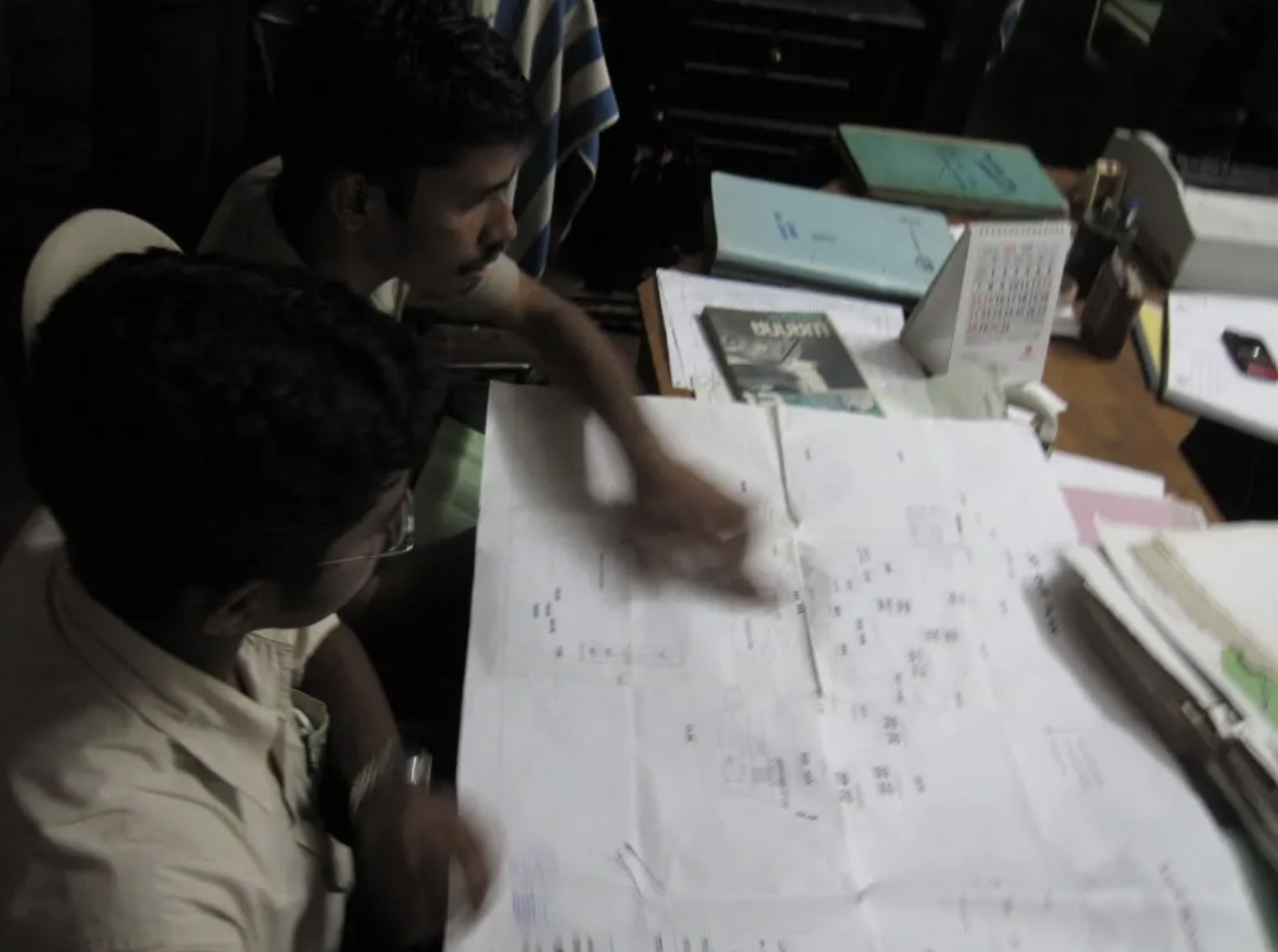
Over the past week our team at Cardamom Country has been in conversation with another team working for a brighter and better future for Planet Earth called Team Sustain. Founded in 1994, Team Sustain is based in Kochi, India and provides cost effective logistics and infrastructure solutions for sustainable resource utilization, engineering green solutions for the modern world. Mr. George Matthew, the founder of Team Sustain, spoke with me and explained that his main goal was to reduce the carbon footprint of as many people and organizations as possible. Mr. Matthew especially said he wanted to increase the benchmark and accepted levels of energy efficiency and encourage further sustainability-oriented social projects with minimal environmental costs. Continue reading

Enough About Me, Here We Go

Guest Author: Aby Thomas

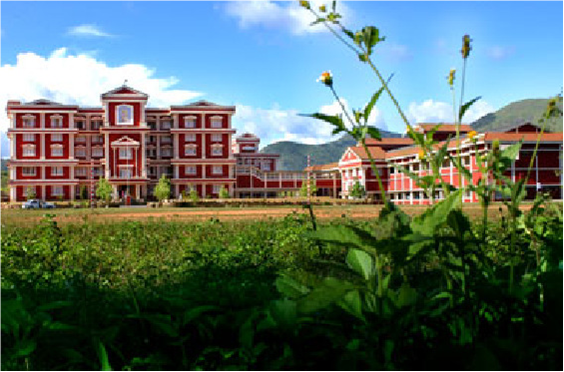
I started work recently, responsible for managing human resources at Cardamom County.  It has been my dream to become a manager in the hotel field since I was young, and I am beginning to fulfill that dream.  I completed my Masters in Hospitality  Management(MMH) from Marian College Kuttikkanam, a near by hill station. I am putting an image of my school here in thanks for the preparation it gave me.

My family home is at a place called Vandiperiyar, 12 km away from where I work, and I can recommend anyone to visit this part of Kerala.  To tell you why, I will need more time and space than my first post will allow.  For now, trust me.

Since joining one month ago, I feel freshness every day. I come across different incidents that I did not expect when I was a student. Recently I got an opportunity to join Michael and be involved in the newspaper bag making training conducted by Diwia Thomas, supported by Cardamom County in tie up with the Forest Department.

Continue reading