Virtual Immersion In Wilderness Via Live Feeds

Thanks to Rachel Riederer for this:

Bear Cam’s Captivating, Unedited Zen

Riederer-Bear-Cam.jpg

It’s innately satisfying to see a bear grab ahold of a salmon with its mouth and trundle off into the shallows with the fish still flapping in its jaws. Photograph by Jennifer Leigh Warner / Barcroft / Getty

One recent afternoon, I found myself spellbound by the brown bears of Alaska’s Katmai National Park, and spent longer than I care to admit watching them fishing and feasting on the sockeye salmon of Brooks Falls. Several bears stood in the water, facing the falls. They didn’t interact with each other much—at least not in a way that was legible to me—but quietly went about the business of fattening up for winter. I watched these Internet stars through a live stream popularly known as the bear cam, which provides a counterpoint to the hyper-produced prestige nature documentaries that use music, high-definition videography, and delicately placed cameras to turn wildlife activities into dramatic cinema. If “Planet Earth” is a Michael Bay production, the bear cam is not even a home movie—it’s CCTV. Continue reading

Investing In Cultural Heritage

170427klukwan_nadworny0252_slide-169e39b0465578c5ad3fac34dc804d2779806ab6-s1300-c85.jpg

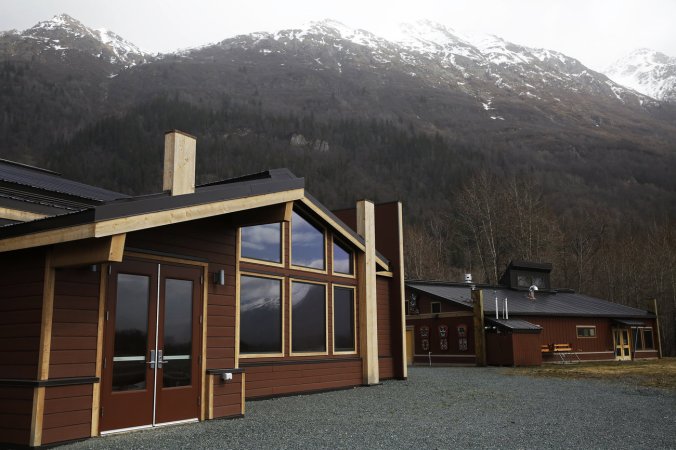
The Cultural Heritage Center is an $8 million investment in the community. Elissa Nadworny/NPR

It is not a question I have had to ponder (the opening line of the story below) for myself, but I get it. Losing the land, through battle, through treaties that are not honored, or otherwise, is an obvious existential threat for any community, and has been since the dawn of civilization. Invisible assets such as language, like any cultural heritage, also called intangible patrimony, are less obviously existentially important. But anyone who ponders it realizes that the loss of a language or another intangible component of cultural heritage matters to all of us, not only those who are at immediate and direct risk of its extinction. In the same way biodiversity matters, so does this.

And it is an underlying logic and motivator of our initiative with Ramon tree and its role in Mayan foodways. In earlier posts on the subject that I emphasized the environmental wonder of Ramon, but it is really a cultural heritage story, still to be told at Chan Chich Lodge. Meanwhile thanks to Melissa Block at National Public Radio (USA) for this story about one communities efforts along a related path:

A Native Village In Alaska Where The Past Is Key To The Future

What does it mean to lose your land, your language, and your heritage?

For Alaska Natives, these are existential threats.

On a trip to Southeast Alaska, I traveled to one village that is finding new ways to survive: Klukwan, ancestral home of the Tlingit tribe. Continue reading

What Warm Temperatures in the Sub-Arctic Mean

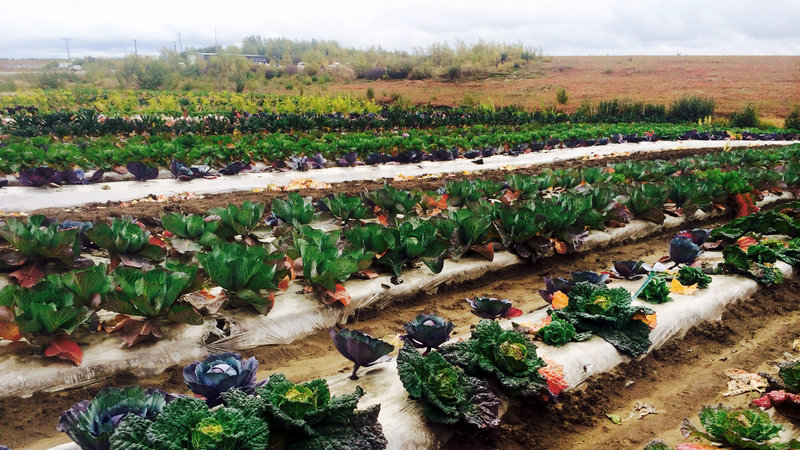
A field near harvest time at Meyers Farm in Bethel, Alaska, can now grow crops like cabbage outside in the ground, due to rising temperatures. PHOTO: Daysha Eaton/KYUK

A field near harvest time at Meyers Farm in Bethel, Alaska, can now grow crops like cabbage outside in the ground, due to rising temperatures. PHOTO: Daysha Eaton/KYUK

Farming in the Arctic? Well, it can be done. The reasons are many. For one, the climate is changing: Arctic temperatures over the past 100 years have increased at almost twice the global average.

On a misty fjord in Greenland, just miles from the planet’s second largest body of ice, Sten Pedersen is growing strawberries. Yellowknife, a Canadian city 320 miles below the Arctic Circle, hosted a farmers market this summer. And a greenhouse in Iqaluit, the capital of the vast Canadian Inuit territory of Nunavut, is producing spinach, kale, peppers and tomatoes. The frozen tundra of the Arctic is experiencing something of an agriculture boom. More

Continue reading

A New Break for Alaska’s Bristol Bay

Helicopter view of the area surrounding Bristol Bay, Alaska. Still image extracted from WH.gov video linked below.

We’ve hosted a good number of Alaskan “bird of the day” photos here, and we share the near-universal affinity for the charismatic Arctic mammal that is the polar bear. Two years ago, Carol Browner and John Podesta wrote an open letter on Bloomberg.com opposing any more drilling in the Arctic, and now we’re happy to announce that President Obama signed an executive order last week that bans exploration for oil and gas in Bristol Bay until another president chooses to counteract the order in the future. Read coverage by Peter Baker for the New York Times below:

Mr. Obama first put the ecologically sensitive area of the Bering Sea — home to an important population of whales, seals and sea lions — off limits to oil rigs in 2010, but that restriction was set to expire in 2017, several months after he leaves office. With the new executive memorandum that he signed in the Oval Office on Tuesday, Mr. Obama made the ban permanent unless a future president acts to reverse it and allow leasing of the waters of the bay.

“It is a beautiful natural wonder, and it’s something that’s too precious to us to just be putting out to the highest bidder,” Mr. Obama said in a one-minute video announcing his decision, which was posted on the White House website.

Continue reading