The Birds Of Australia, Interactive Exhibition Of John & Elizabeth Gould’s Illustrations

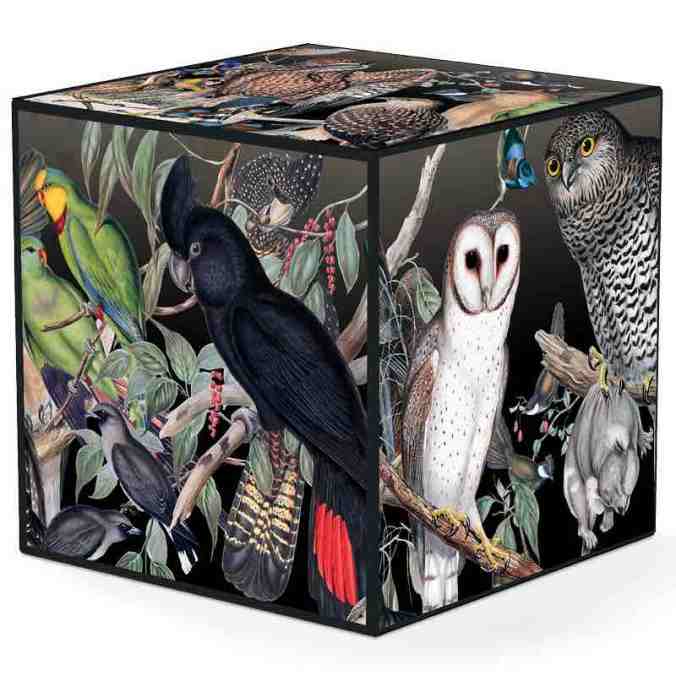
A new exhibition showcasing the incredible world of Australia’s birdlife will launch in Newcastle. Presented on STORYBOX, an interactive storytelling cube, The Birds of Australia, brings to life the iconic bird illustrations of John and Elizabeth Gould together with First Nations storytelling and knowledges.

We have linked to stories about both John Gould and his wife Elizabeth, and now there is a museum exhibition honoring both together, so if you happen to be in Australia:

Touring exhibition: The Birds of Australia

Trace the journey of English ornithologist John Gould and his wife Elizabeth, as they travelled across New South Wales in the 1800s on one of the most significant birding expeditions in history, helping inform contemporary knowledge and conservation of Australian birds. The Goulds described and illustrated over 300 birds that were completely new to science, including the Pied Butcherbird (Cracticus nigrogularis) and the now extinct Paradise Parrot (Psephotellus pulcherrimus). It was an astonishing record of observation and sustained hard work. Continue reading

Ruby Sea Dragon, First Live Portrait


13Tb-seadragon2-superJumbo.jpg

A ruby sea dragon that washed up on the Point Culver cliffs in Western Australia. Credit Zoe Della Vedova

Click the image above, a Ruby Sea Dragon washed ashore, to go to a moving image of another member of this creature’s species, alive and well in the wild waters off Australia:

For the First Time, a Ruby Sea Dragon Flaunts in Front of the Camera

By

Famous for their flamboyant, leaflike appendages and mesmerizing movements, sea dragons are aquatic works of art. Since the 19th century, marine biologists had thought that only two types of these enchanting fish existed — the leafy and weedy — until they discovered a third among museum specimens in 2015: the ruby sea dragon. Continue reading

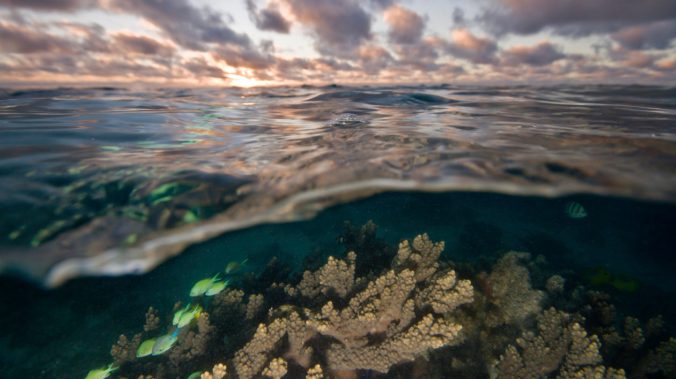
Lessons From Ningaloo Reef

WOPA100627_D105

Acropora coral and blue green chomis on Ningaloo Reef in Western Australia. Photo © Steve Lindfield

Thanks to James Fitzsimons and The Nature Conservancy’s Australia program for this one:

Big, Bold & Blue: Lessons from Australia’s Marine Protected Areas

BY JUSTINE E. HAUSHEER

Australia has one the largest systems of marine protected areas in the world, from the coral-covered Great Barrier Reef to the sub-Antarctic Macquarie Island. Now, a new book details the lessons learned by Australian scientists, policymakers, and communities during more than 130 years of marine conservation.

The book — Big, Bold & Blue: Lessons from Australia’s Marine Protected Areas — gathers lessons learned from academia, government, NGOs, indigenous communities, and the fishing sector. Continue reading

South Australia’s Renewable Energy

Wind turbines at the Snowtown Facility.

Any story regarding the expansion and encouragement of renewables to promote sustainable development is a good story in our book, and we’re impressed by the Clean Energy Council policy manager’s statement, “If South Australia was a nation, it would be second only to Denmark [in renewables].” South Australia is a state in the middle of the southern coast of the country, about a hundred square miles larger than the US state of Texas, so it’s great to hear that such a large area relies so much on innovation. Kathy Marks reports for the Guardian:

In a state that leads the country – in fact, much of the world – in producing electricity from renewable sources, Snowtown is wind central. The first stage of a $660m, 270-megawatt farm, with 47 turbines, opened in 2008, 5km west of the town; the second, adding another 90 turbines, came on stream in 2014.

Developed by New Zealand’s Trustpower, South Australia’s biggest wind facility – and Australia’s second biggest – created hundreds of construction jobs and 21 permanent positions.

Continue reading

Biodiversity May Protect Against Wildfires

Photo of a Southern brown bandicoot by John O’Neill via Wikimedia Commons.

New research in Australia’s forests and bushlands indicates that terrestrial biodiversity–or more precisely, a higher number of different mammal species–can help prevent wildfires given the way the critters alter their ecosystem. We’ve heard about different creative management options for fires before, and we care deeply for biodiversity preservation efforts, so this seems like one of those win-win scenarios if it can be implemented. Jason Goldman reports for UW’s Conservation Magazine on research published in Animal Conservation:

One factor leading to increased wildfire susceptibility might be surprising: biodiversity loss. In particular, the extinction of small, ground-dwelling mammals may prime Australia’s bush to burn.

Wildfires certainly threaten biodiversity in some cases. According to the IUCN, 179 mammal, 262 bird, 146 reptile, 300 amphibian, and 974 plant species can count wildfire (and fire suppression) among their existential threats. More wildfires means less wildlife, even accounting for the many ecosystems that are already fire-adapted. But according to a new study published in the journal Animal Conservation, it works the other way around too.

Matt Hayward, a conservation ecologist at Australia’s Bangor University and the Australian Wildlife Conservancy, argues that restoring biodiversity could reduce the likelihood of a wildfire starting—or of spreading rapidly once it’s begun.

Continue reading

The Mad Hatterpillar

The Mad Hatterpillar, Uraba lugens, larval stage of an Australian moth. Image © Nuytsia@Tas via WIRED Magazine.

The image above may seem a little gruesome if you hear that the pictured caterpillar has a collection of old skulls attached to the top of its own its spiky, irritating-to-the-touch hairs. But the larval insect isn’t a true headhunter, since the eery tower above the caterpillar’s crown is in fact made of its own exoskeleton pieces from previous moltings of its skin. Ed Yong reports on new research regarding a caterpillar that has been known for many decades but is still being studied for explanations on the strange cranium-collecting behavior:

Some caterpillars defend themselves from predators using toxic chemicals, repugnant smells, or stinging hairs. Some camouflage themselves. Some mimic snakes. Some recruit ant bodyguards. Some create protective fortresses, or make warning clicks, or vomit up their guts.

And then there’s Uraba lugens, an Australian moth colloquially known as the gum-leaf skeletoniser, and even more colloquially known as the Mad Hatterpillar. Like all caterpillars, it grows by shedding its hard outer shell before expanding the soft body beneath.

Continue reading

Ever Heard of a Quoll?

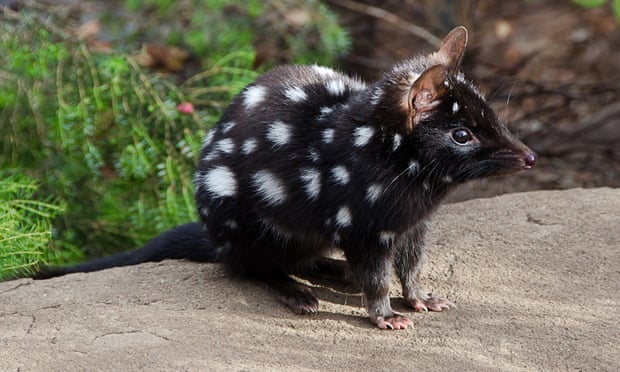
An eastern quoll. Professor Adrian Manning said it was the first ‘translocation’ of wild eastern quolls ‘into a free-ranging situation’ on the Australian mainland. Photograph: Marc Faucher, via The Guardian

We’re always happy to hear about the reintroduction of a previously extirpated species to its original habitat, even if we’re wary of some of the more ambitious projects from prior extinctions. Even though we weren’t aware of the existence of this cute marsupial named the Eastern Quoll, we’re glad to know that it is returning to its homeland. Elle Hunt reports for the Guardian:

The eastern quoll is making a comeback to mainland Australia, from where it disappeared more than 50 years ago, with a new generation introduced to the Australian Capital Territory from Tasmania.

A team of researchers from the Australian National University has reintroduced a group of wild eastern quolls from Tasmania into the Mulligan’s Flat Woodland Sanctuary in Canberra.

The small, carnivorous marsupial has not been seen there for almost 80 years.

Prof Adrian Manning, who led the team from the ANU’s Fenner School of Environment and Society, said it was the first “translocation” of wild eastern quolls “into a free-ranging situation” on the Australian mainland.

Continue reading

Sheepdogs Active in Wildlife Conservation Yet Again

Phillip Root with the Maremma sheepdogs of Middle Island, Australia. The dogs were introduced there in 2006 to protect the little penguin, a native species. Credit David Maurice Smith for The New York Times

A few years ago, we shared the story of an effort by the Cheetah Conservation Fund in South Africa as part of their Cheetah Outreach project that involved Anatolian shepherd dogs. The idea was to help livestock owners raise the sheepdogs to guard their herds and therefore not feel the need to kill cheetahs that might see the sheep as potential prey. This program has worked out well, and now we’re hearing from the New York Times about another success story in Australia, although in this case the sheepdogs aren’t protecting livestock: they’re guarding the Little Penguin on Middle Island, Victoria from the introduced red fox.

‘Massacred,’ read the banner headline in the local newspaper — just the single word, as if describing an act of war. Below it was a photo of dead penguins and other birds, the latest casualties in Australia’s long history of imported species’ decimating native wildlife.

Foxes killed 180 penguins in that particular episode, in October 2004. But the toll on Middle Island, off Victoria State in southern Australia, kept rising. By 2005, the small island’s penguin population, which had once numbered 800, was below 10.

Continue reading

Where World Heritage Sites Meet

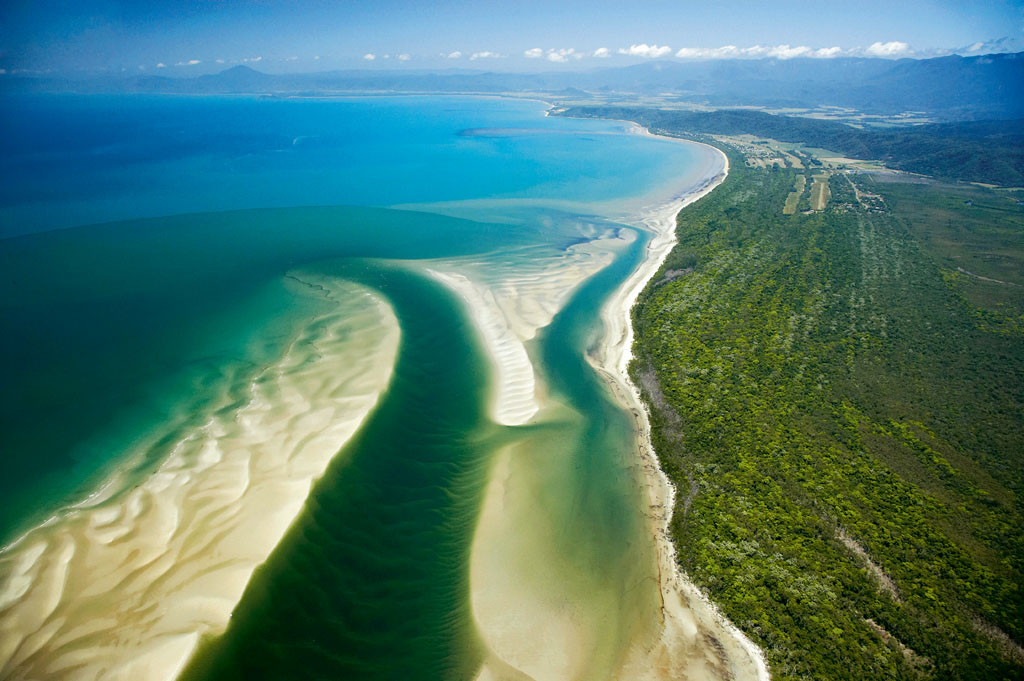
A variety of birds, frogs, and crocodiles can be spotted while cruising the mangrove-lined Daintree River. Photo: David Wall/Dinodia

A variety of birds, frogs, and crocodiles can be spotted while cruising the mangrove-lined Daintree River. Photo: David Wall/Dinodia

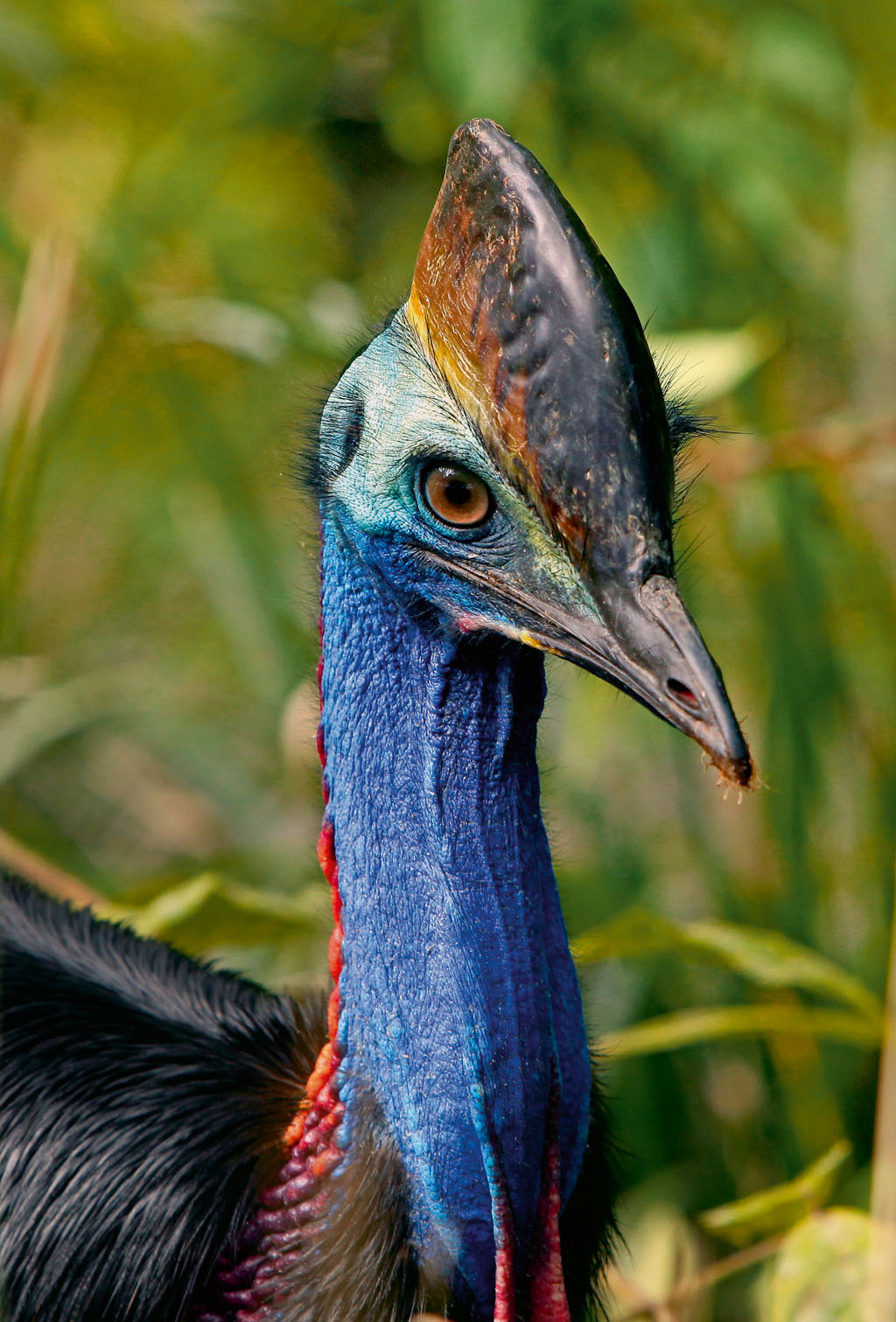
Unique to Australia, the flightless cassowary bird lives a solitary existence for most of its life. It is integral to the survival of many of the plants of this rainforest. Photo: CCOPhotostockBS/Dinodia

Unique to Australia, the flightless cassowary bird lives a solitary existence for most of its life. It is integral to the survival of many of the plants of this rainforest. Photo: CCOPhotostockBS/Dinodia

The list of the World Heritage Sites, as recognized by UNESCO, is a goldmine of history, natural and cultural patrimony. It tells of places and cultures that warrant a second look, an effort to better understand them. And of all the geography the list covers, there’s only one place where two Heritage Sites meet: the Daintree Rainforest and the Great Barrier Reef.

Continue reading

The Art Movement of the 20th Century

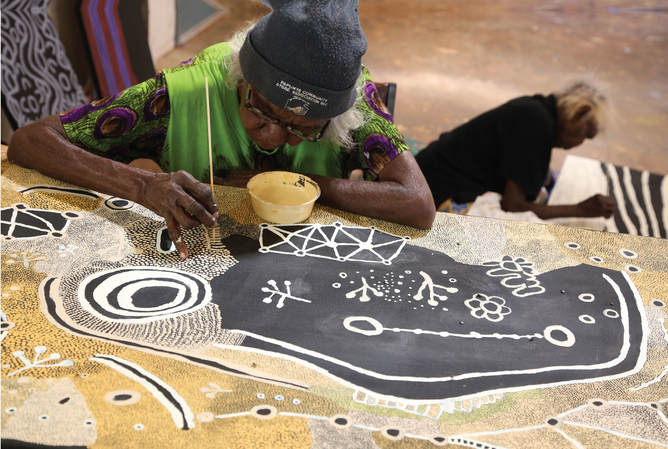
Martha MacDonald Napaltjarri (in foreground) and Mona Nangala painting at Papunya Tjupi art centre, Papunya, 2015. Photo: Helen Puckey

Martha MacDonald Napaltjarri (in foreground) and Mona Nangala painting at Papunya Tjupi art centre, Papunya, 2015. Photo: Helen Puckey

Have you heard of Papunya? The birthplace of what is touted as the century’s greatest art movement? The Conversation looks at how the movement has given birth to indigenous artists’ collectives, transformed communities, empowered women and forms a grand narrative on Aboriginal art:

The emergence of ‘dot’ paintings by Indigenous men from the western deserts of Central Australia in the early 1970s has been called the greatest art movement of the twentieth century.It all changed at a place called Papunya. Papunya was a ‘sit-down’ place established in the early 1960s, 240 kilometres northwest of Alice Springs in the Northern Territory (NT). The settlement brought together people from several western desert language groups: the Pintupi, Warlpiri, Arrernte (Aranda), Luritja, and the Anmatyerr, who were unaccustomed to living in close proximity to each other. Papunya was described as a ‘centralised government settlement established as a marshalling point for Aboriginal people displaced from their traditional lands’ (Curator Hetti Perkins, Papunya Tula: Genesis and Genius, Art Gallery of New South Wales– external site, 2000).

Continue reading

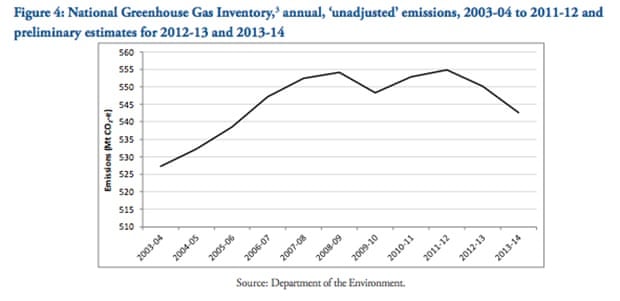
Australian Emissions Drop With New Carbon Tax

Via The Guardian

In 2012, Australia introduced a carbon tax, or carbon “price,” with the goal of reducing the country’s greenhouse gas emissions. Then, this July, the Australian government — under a different party than in 2012 — abolished the carbon tax to fulfill an election promise, since they argued that the tax was too much of a burden on homeowners and also discouraging industry. But data released this month by the Department of the Environment shows that Australia’s emissions dropped 1.4% during 2013 (the second year of the tax), which is the highest annual decrease in the country’s emissions within the last decade. Oliver Milman reports for The Guardian:

The latest greenhouse gas inventory showed emissions from the electricity sector, the industry most affected by carbon pricing, fell 4% in the year to June.

Electricity emissions account for a third of Australia’s emissions output, which stood at 542.6m tonnes in the year to June, down from 550.2m tonnes in the previous 12 months.

Emissions from transport dropped 0.4% in the year to June, with gases released by the agriculture industry decreasing by 2.6%. Industrial processes emitted 1.3% less greenhouse gas during the year, although fugitive emissions, such as those from mining, rose 5.1%.

Electricity emissions peaked in 2008 and have steadily decreased ever since, driven by a number of factors such as the winding down of parts of Australia’s manufacturing base and energy efficiency initiatives.

Continue reading

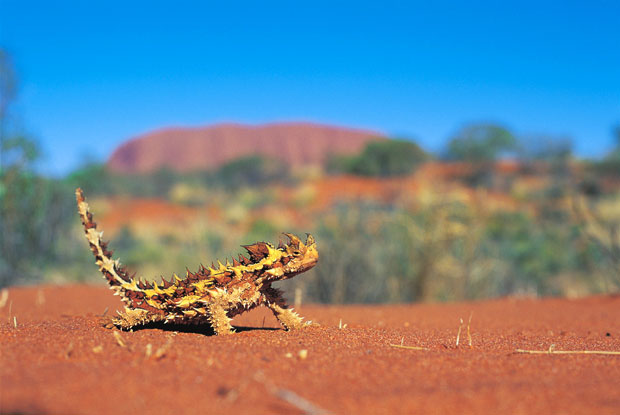
Reptile of the Day – Thorny Dragon

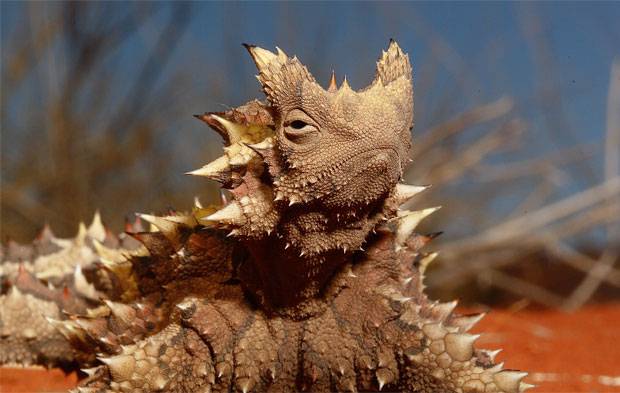
Today’s reptile is the Thorny Dragon, Moloch horridus (Australia) — as its name suggests, this Australian lizard’s body is dominated by intimidating spikes in order to look unappealing and fend off predators.

Occupying scrublands and deserts primarily, the Thorny Dragon’s coloration is perfect for blending in and feasting on ants, its main source of nutrition.

Image


Photo Courtesy: statravel.co.uk


Image

^ The face says it all ^

Photo courtesy: australiangeographic.com.au