On a recent trip to the Osa Peninsula for a couple of days, and one herpetologically-rich night, I found a number of the types of animals that make Costa Rica such a popular destination for wildlife-lovers. The Osa is home to about half the species that Costa Rica boasts, making it the most biodiverse spot in the country — or even the world. The density of fauna seen on any hike through the forest back up the statistics (2.5% of the earth’s biodiversity just on this little peninsula?!), and I was glad to be able to get some video of typical animal behavior during my time there. Continue reading
biodiversity
The Marari Fruit Diaries
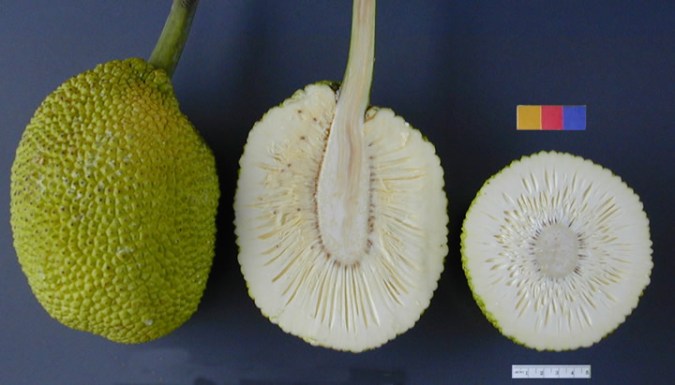
This is a picture of breadfruit, which actually tastes like freshly baked bread
I’ve been writing about the exciting biodiverse varieties of plants at the new property, Marari Pearl. I want to point out though that even before we started, the land has hundreds of coconut trees on it, as well as dozens of mango and cashew trees, which is exciting in its own right.
One thing about the coconut trees that makes them a win-win, is that it helps provide local jobs. There is a certain group of people whose legal right it is in Kerala to do the job of tending to coconut trees. Before Marari Pearl was there, no one was hiring them to take care of the trees. Now that we are utilizing them to provide coconuts for our properties, they get jobs and we get fresh coconuts.
We are adding a cornucopia of other fruits, both local and exotic. I mentioned that we have pomelos, rambutans, tamarinds, several types of jackfruit, lovi-lovis, mangos, and oranges as well as the infamous miracle fruit. There is also the hong kong guava, burmese grape bud, pomegranate, sapota, malayalam champa fruit, abiu fruit, jaboticaba fruit, langsat tree, and several varieties of avocados or ‘butter fruit’ as its called here. There are breadfruit trees as well as peanut butter trees. There is karonda fruit, nelli puli fruit, mangosteen, and mooty fruit. There are five pages of names, some I know, some I don’t, and some I can’t understand because it’s a handwritten list. Continue reading
A Biodiversity Triumph at Marari
As I mentioned in my last post, the new property, Marari Pearl, could easily be called the Beach Banana Genome Project because it has 30 varieties of bananas being grown on it. When Amie and I saw the list of everything being grown on the property, our joy was akin to kids on christmas.
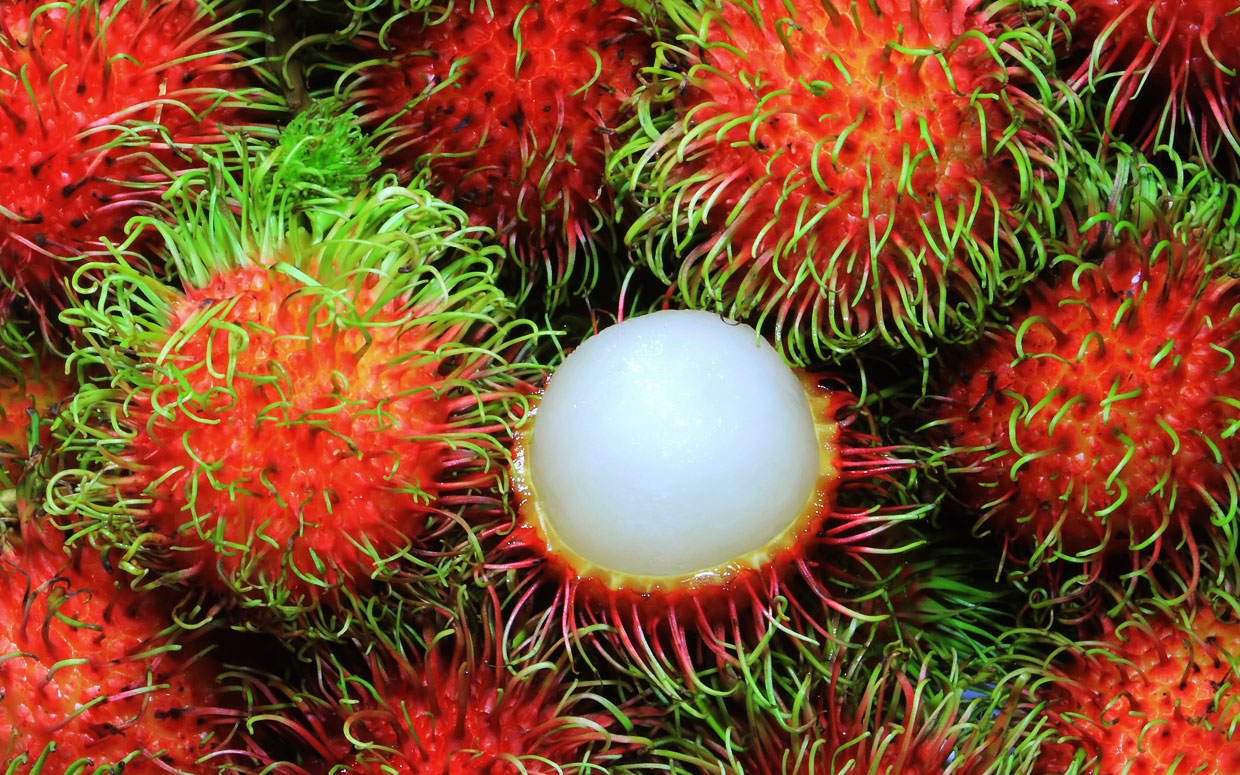
Have you ever seen a rambutan?
Since I’ve been reading The Fruit Hunters by Adam Leith Gollner, I’ve realized the role variety awareness plays in conserving biodiversity. Simply not knowing about all the varieties allows agribusiness to monopolize the market with one or two varieties that best suit global trade. For example, when people only saw red and yellow apples in the supermarket, they did not know what they were missing out on, so they weren’t as picky. Once Fujis and Galas became known, customers began to demand more. Knowledge of varieties is seen as a threat to supermarket because customers focused on varieties become less easy to please with subpar, out-of-season fruits.
So with that being said, simple awareness of varieties is a method of raising the bar. It helps promote biodiversity because people are less willing to accept generic and standardized fruit.
On the Marari Pearl property, there are pomelos, rambutans, and tamarinds. There are several types of jackfruit, lovi-lovis, mangos, and oranges. I was particularly excited to see the miracle fruit on the list. Continue reading
Beach Banana Genome Project
The next Xandari property that La Paz Group is developing is at Marari beach, and in my mind it could easily be called the “Beach Banana Genome Project” due to the 30 varieties of bananas being planted on site.
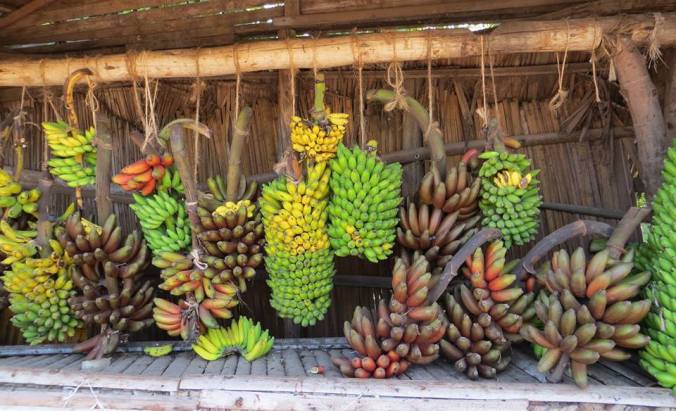
There are actually over 1000 varieties of bananas in the world, which is pretty crazy to think about since the main variety in global commerce is the Cavendish. There are red bananas, dwarf bananas, sugared-fig bananas, pregnant bananas, ice cream bananas, Popoulou bananas, the golden aromatic bananas, Macaboos, Thousand-Fingered bananas, and the list goes on. Out of the 1000+ types of bananas, grocery stores in the United States only offer one main type? Why?
That’s because our grocery stores are in a permanent global summertime, as Adam Gollner puts it in his book “The Fruit Hunters”. Because our fruits aren’t sourced locally in the United States, they must be able to endure the rigorous journey of international trade. If I hadn’t traveled to India for the summer, I would’ve probably never been offered the range of varieties I’ve gotten to taste here.
Most people in the United States won’t get exposed to a diverse range of options and therefore do not demand them. Big banana agribusiness makes is buck with monoculture. They can reliably deliver the same subpar banana.
It’s not as reliable though in the long run because monoculture invites disease. Thats why before the Cavendish banana was the world’s top banana, there was the Gros Michel banana. It was struck by a fungus called the Panama Disease, and now a mutation of that disease is threatening the Cavendish. Biodiversity acts as a natural buffer to disease but biodiversity isn’t conducive to agrarian capitalism. Continue reading
From the Flora-Files, Part 1
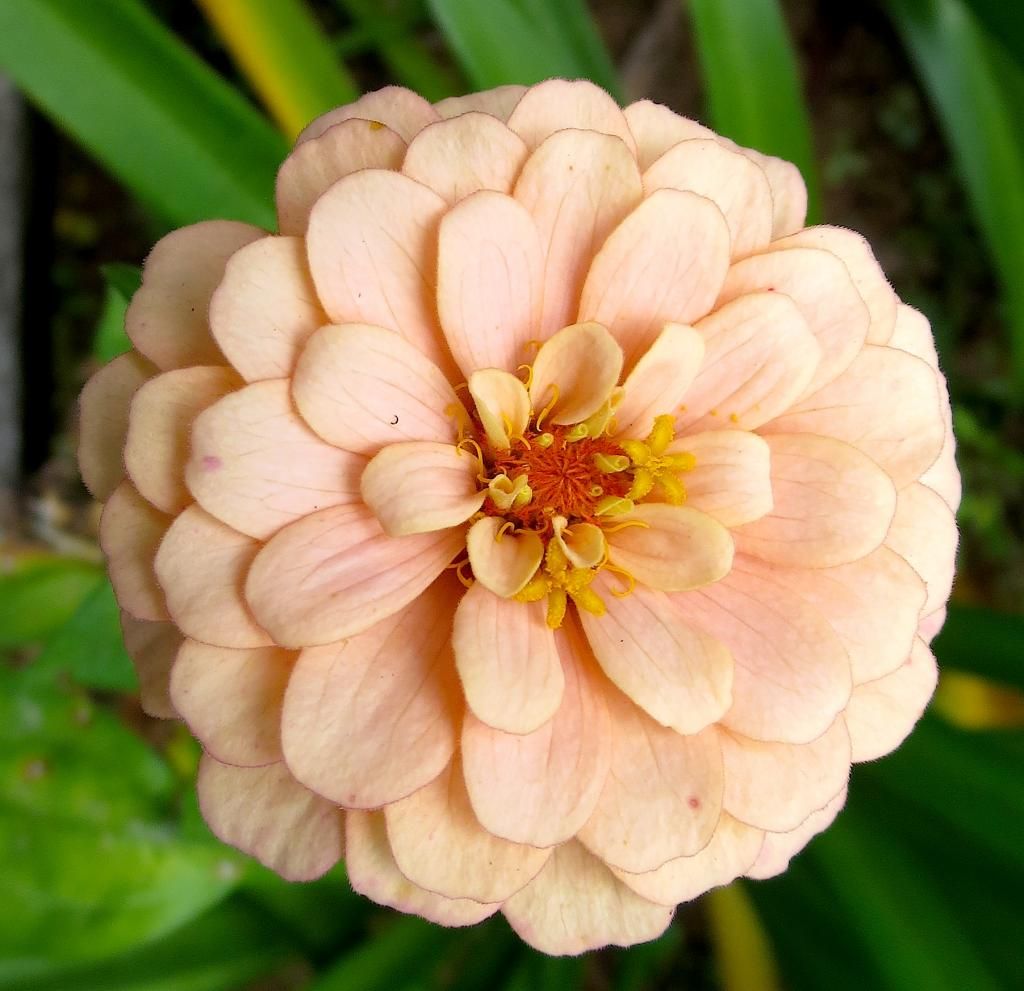
Right of the reception
Although, as I detailed in my last post, my internship at Xandari is over, I still have a great backlog of images that I never had a chance to upload while there. (My computer broke.) I’d like to share the better of those photos with everyone here. I’ve named this post “flora-files” because I think the title sort of punny: “files” in the sense of records on Xandari’s flora; and “file” in the sense of the Greek φίλoς (philos), “love,” the same one that shows up in “Philadelphia” or “audiophile.” Look out for more from the flora-files… I’ll detail where I find these flowers around Xandari in the caption, so that if you’re lucky enough to be here while they’re in bloom, you can go seek them out.
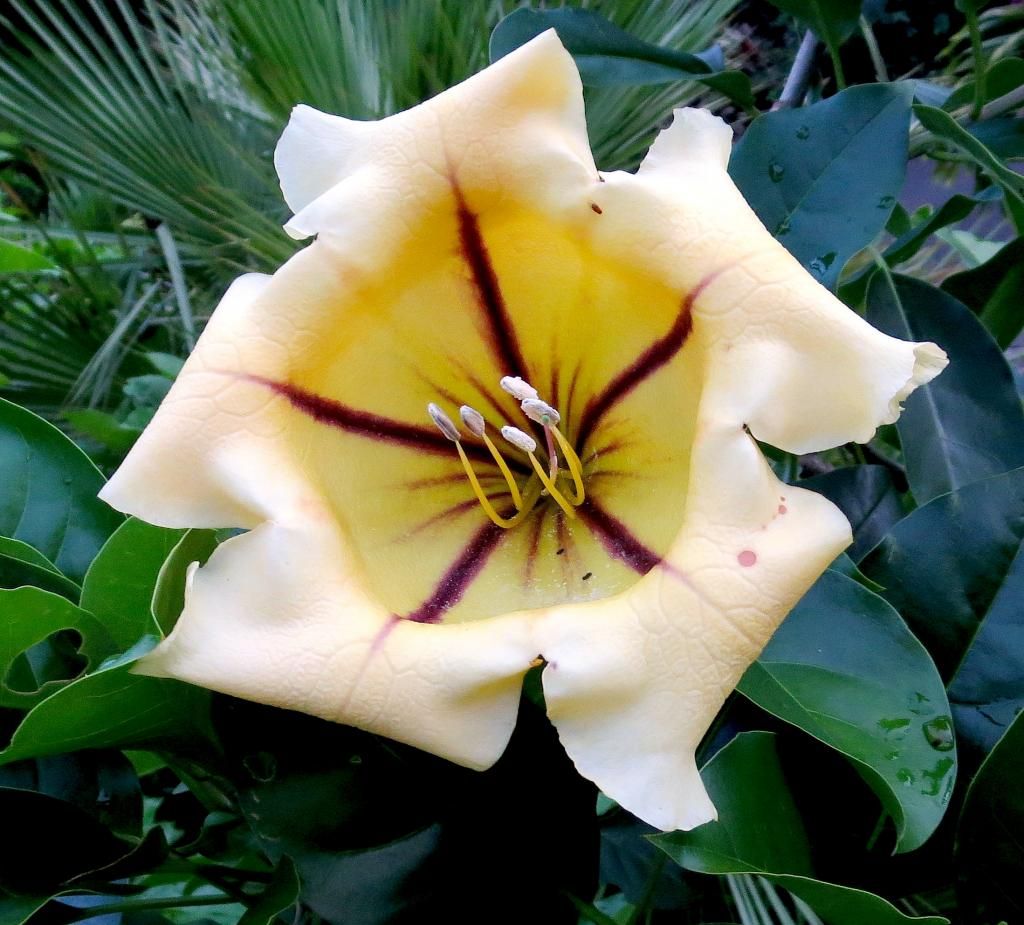
Garden paths
Lepidoptera Diversity in Costa Rica
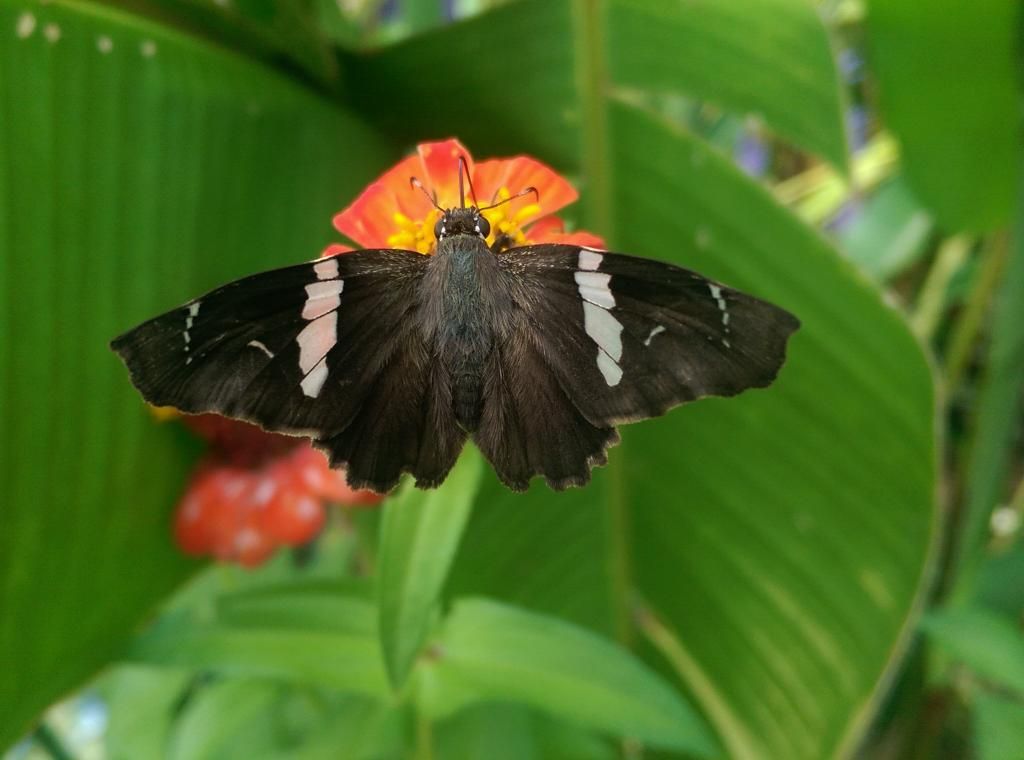 Costa Rica is home to some 1200 butterflies and another 8000 species of moths (both diurnal and nocturnal varieties). This astounding diversity is no surprise, given the country’s neotropical climate and its position as a land bridge between North and South America, each home to a plethora of diverse ecosystems. The tremendous number of butterflies that can be seen goes hand-in-hand with the fact that Costa Rica is home to about 4% of the world’s total biodiversity! Of the butterfly species, some of the most famous include Continue reading
Controlling Invasive Lionfish – Update on Market Solutions: Part 2/2 — Lionfish Art
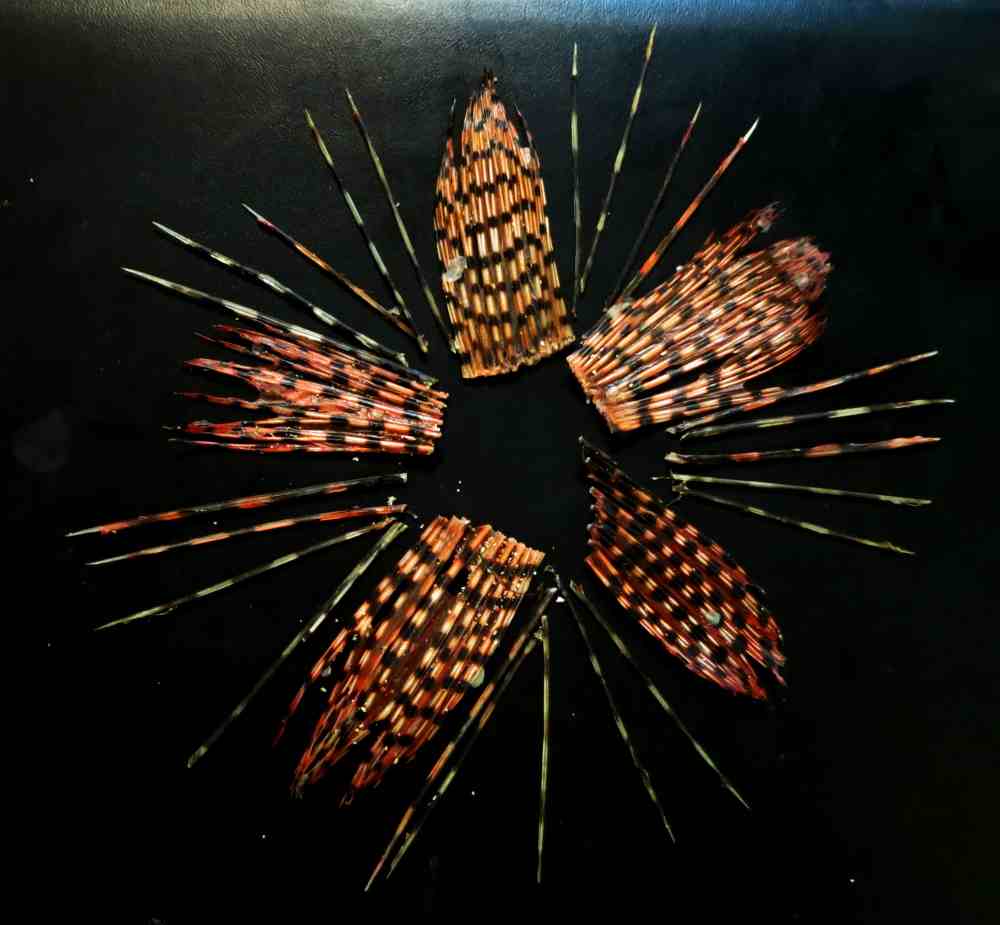
Array of dried lionfish spines and tails -ready for jewelry use Credit: ReefCI
In Part 1 of this post regarding market-based solutions to fighting the lionfish invasion that is threatening coral reef and other marine ecosystems throughout the Caribbean, Gulf of Mexico, and Southern Atlantic Seaboard of the United States, I wrote about the challenge of developing commercially sustainable strategies for undertaking the systematic removals that are needed to keep lionfish populations under control. I discussed the need to develop a series of vertical markets, pointing to promotion of lionfish as a seafood choice as the most obvious of these. Capture of juvenile lionfish for the aquarium trade as another. A third market, and one in which I’m personally involved, is use of lionfish spines and tails for jewelry and other decorative items. Continue reading
International Environmental Film Festival of Paris: Prize List and Small Gems
The 30th edition of the International Environmental Film Festival closed in Paris a few weeks ago. The selection of rare, beautiful and eye-opening films was a treat so I wanted to share some of the goodness with you.
Grand Prix: The Fruit hunters by Yung Chang
Inspired by Adam Leith Gollner’s book of the same name -that also inspired a post in these pages – Canadian director Yung Chang (Up the Yangtze) enters the world of fans of rare varieties of fruits. As he follows fruit hunters’ travels and meet-ups, he finds the tree of an almost extinct mango, comes across actor Bill Pullman and interviews many of these unsung heroes of biodiversity. The aesthetics of the cinematography makes those fruits and those characters irresistible. Continue reading
Unveiling Fungi
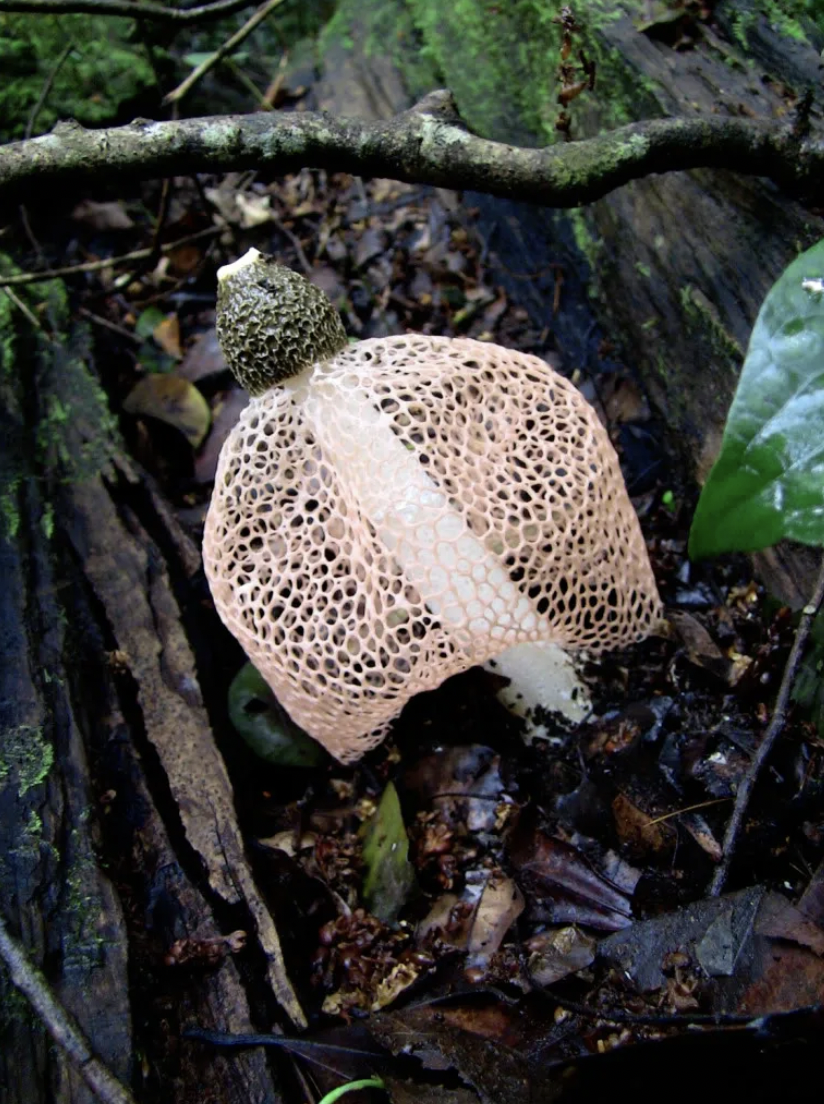
Fungi are some of the most under-appreciated organisms on the planet, and even the most simple forms can be fascinating and capable of enthralling all but the most listless eyes. Most people associate the word ‘mushroom’ with the button-shaped, styrofoam-flavored Agaricus bisporus, also known as Portabella, Crimini, baby bella, et cetera, ad nauseam. The marketing ploys for peddling this poor excuse for a mushroom are legion, and no matter what name comes on the package, it’s always the same. In that light, the purpose of this post is to unveil the magnificent beauty of the Fifth Kingdom.
 Organikos