Dickson D. Despommier Discussing The New City Concept

The vertical farming part of this concept is one we have linked to many times. The appeal is not difficult to grasp even if sometimes the concept is stretched. This is different and worth hearing him out:

Dickson Despommier Wants Our Cities to Be Like Forests

A leading proponent of vertical farming discusses how urban areas should adapt to a perilous environmental future.

Illustration by Daniele Castellano

In 2000, Dickson D. Despommier, then a professor of public health and microbiology at Columbia University, was teaching a class on medical ecology in which he asked his students, “What will the world be like in 2050?,” and a follow-up, “What would you like the world to be like in 2050?” As Despommier told The New Yorker’s Ian Frazier in 2017, his students “decided that by 2050 the planet will be really crowded, with eight or nine billion people, and they wanted New York City to be able to feed its population entirely on crops grown within its own geographic limit.” Continue reading

Photosynthesis Mimicry Out Of Cambridge

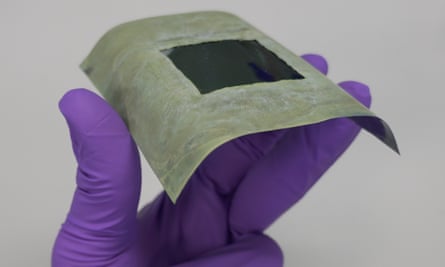
Researchers from the University of Cambridge designed ultra-thin, flexible devices, which take their inspiration from photosynthesis – the process by which plants convert sunlight into food.

Researchers from the University of Cambridge designed ultra-thin, flexible devices, which take their inspiration from photosynthesis – the process by which plants convert sunlight and CO2 into food. Photograph: Virgil Andrei

Photsynthesis comes in handy on this planet. This invention leverages the natural process into a technology to tackle a large scale challenge. We can only hope that it is not too little, too late:

Floating factories of artificial leaves could make green fuel for jets and ships

Cambridge University scientists develop a device to ‘defossilise’ the economy using sunlight, water and carbon dioxide

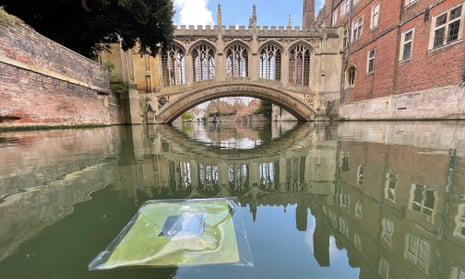
The artificial leaves were tested on the River Cam in and around Cambridge including sites such as the Bridge of Sighs.

The artificial leaves were tested on the River Cam in and around Cambridge including sites such as the Bridge of Sighs. Photograph: Virgil Andrei

Automated floating factories that manufacture green versions of petrol or diesel could soon be in operation thanks to pioneering work at the University of Cambridge. The revolutionary system would produce a net-zero fuel that would burn without creating fossil-derived emissions of carbon dioxide, say researchers. Continue reading

CRISPR Silk

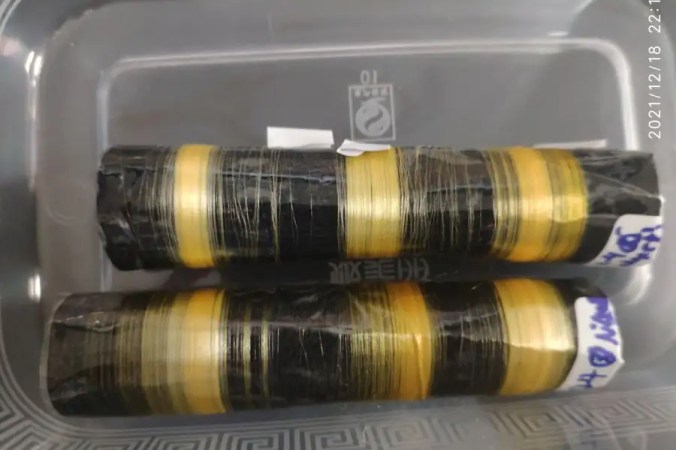
Spider silk fibres produced by silkworms. Junpeng Mi, Donghua University

This will be the fifth time for CRISPR in our pages. We suspend judgement each time we link to explanations of the technology, or new applications:

Silkworms genetically engineered to produce pure spider silk

Spider silk has been seen as a greener alternative to artificial fibres like nylon and Kevlar, but spiders are notoriously hard to farm. Now researchers have used CRISPR to genetically engineer silkworms that produce pure spider silk

Silkworms have been genetically engineered with CRISPR to produce pure spider silk for the first time. The worms could offer a scalable way to create things like surgical thread or bulletproof vests from spider silk, which is prized for its strength, flexibility and lightness. Continue reading

Green Building Techniques Inspired By Insects

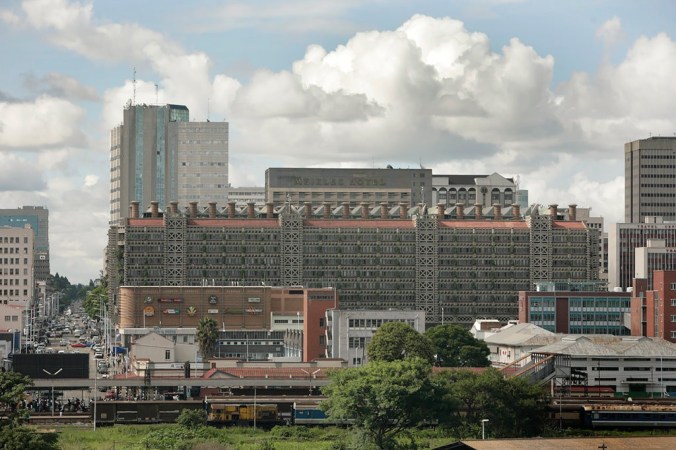
The air conditioning system of the Eastgate Centre in Harare, Zimbabwe, was inspired by termites’ nests. Credit David Brazier, via Wikimedia Commons

It’s been quite some time since we posted about biomimicry. Thanks as always to JoAnna Klein for this illuminating story:

What Termites Can Teach Us About Cooling Our Buildings

“We think humans are the best designers, but this is not really true,” a researcher said.

In the capital of Zimbabwe, a building called Eastgate Centre holds nearly 350,000 square-feet of office space and shops. It uses 90 percent less energy than a similar sized building next door.

What’s Eastgate Centre’s secret? Termites.

merlin_152612904_38aa91c7-eec0-456c-ae7a-09920b6f5ed5-jumbo.jpg

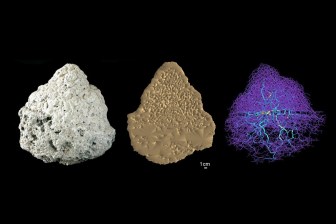
Three views of a termites’ nest, including from left, a photo of the nest, a tomography of the the nest’s interior and the networks of galleries and paths in it. Credit G. Theraulaz, CRCA, CBI, CNRS, Toulouse

In the 1990s, Mick Pearce, the building’s architect, took his inspiration from mounds built by fungus-farming termites he saw on a nature show. The insects created their own air conditioning systems that circulated hot and cool air between the mound and the outside.

As architects and builders seek new and improved ways to cool buildings without using more energy in a warming world, a study of another type of termite mound suggests that Mr. Pearce won’t be the last human to take design tips from these cockroach cousins. Continue reading

Moths, Inspiring Innovation

gettyimages-548205455_custom-1db34a79eea572396473d1ee197099398efc1c89-s1300-c85

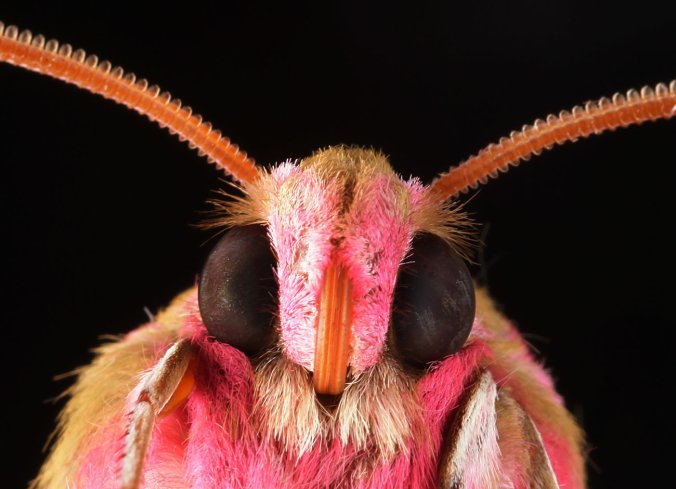
Deilephila elpenor, commonly called the elephant hawk-moth, has specialized eyes that don’t reflect light. Such moths inspired scientists to invent an anti-glare coating for smart screens. Ullstein Bild/Getty Images

We have lots of reasons to believe in biodiversity, and here is one more important case in point. Thanks to Madeline K. Sofia at National Public Radio (USA) for this:

If you’re standing in the blazing sun struggling to read this on your cellphone, there may be some relief in sight.

And you’ll have a moth to thank. Continue reading

Ladybugs, Awe & Design Inspiration

19tb-ladybugs01-superJumbo.jpg

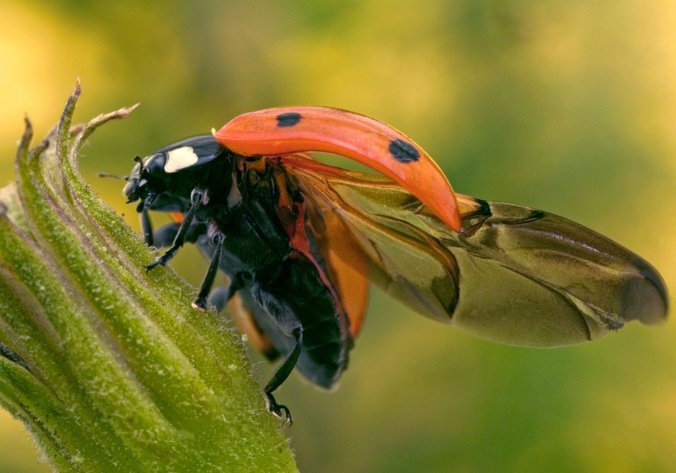
After ladybugs fly, they tuck their wings into a sliver of space between their abdomen and the colorful outer wings for which they are best known. Credit Jean-Michel Labat/Science Source

Even without words this item from the Science section would tell a full story just with the gif below, which captures what any of us might remember being awed by as a kid. Thanks to Joanna Klein for this:

Ladybugs Pack Wings and Engineering Secrets in Tidy Origami Packages

The ladybug is a tiny insect with hind wings four times its size. Like an origami master, it folds them up into a neat package, tucking them away within a slender sliver of space between its abdomen and the usually polka-dotted, harder wings that protect it. Continue reading

Flattering Mother Nature

The Art and Design worlds are constantly giving us examples of our interpretive abilities when it comes to nature.  In fact, the very roots of Art go back to those expressions. But if “Imitation is the Sincerest Form of Flattery” then scientists and engineers are also following the adage that “form follows function” in ways that have the potential to direct us out of some of our environmental problems.

Lindsey Doermann writes about how an elephant’s trunk, water strider’s legs, woodpecker’s beak, peacock’s feathers or a beetle’s back (to name a few) are inspirations toward conservation focused engineering.

Continue reading