
Architect Esha Munshi and veterinarian Sherwin Everett, founders of the Feather Library
Over the years we talked about feathers from numerous perspectives, including scientific and artistic. Thanks once again to the Guardian for sharing this inspiring Citizen Science story.
Plucky idea: the feather library providing a visual A to Z of India’s birds
Finding a trapped silverbill during lockdown inspired Esha Munshi to create an invaluable record of species in an uncertain world
Esha Munshi, an architect based in Ahmedabad, has “breathed birds” as far back as she can remember. She has travelled all over India on birding trips and has, she says, spotted 1,060 of the 1,400 bird species in the country.
An Indian golden oriole feather, left, and white-throated kingfisher feathers
But it was at home, during the Covid-19 lockdown in 2020, that she saw an Indian silverbill caught in the protective netting on her balcony, attracting the attention of her cat. Although the bird escaped, some of its feathers were damaged. When Munshi saw the exquisite markings and patterns, she tried to identify the bird, but was struck by how little information there was online.

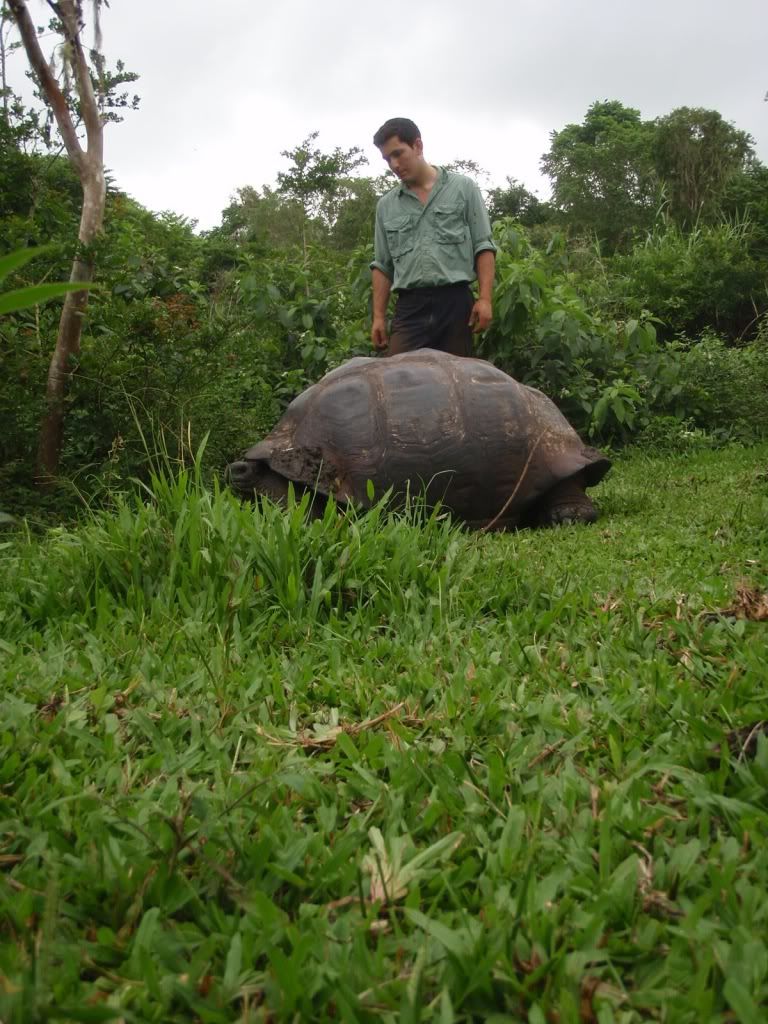
 Last week, thanks to the effort of very helpful contacts on the islands, I was able to attend a Participatory Monitoring workshop in Puerto Ayora. For those of you unfamiliar with the term in the workshop title, you are not alone. Participatory monitoring, community science, public participation in scientific research, volunteer data collection–these all mean practically the same thing as citizen science, which I have briefly
  The workshop consisted of an impressive list of international expert invitees—representing Cedar Crest College/Earth Watch, SUNY (College of Environmental Science and Forestry and at Stony Brook), Stanford University, Pepperdine University/ Scripps Institution of Oceanography, the Center for Biodiversity and Conservation/American Museum of Natural History, Colorado State University/University of Wisconsin-Madison, the United States National Park Service (Joshua Tree National Park and Acadia National Park), and the Galápagos Conservancy. Additionally, the Galápagos National Park, Charles Darwin Foundation, WWF Galápagos, Conservation International, Universidad Central Sede Galápagos, and Grupo FARO were present. A very skilled interpreter, with portable headsets, helped those who didn’t speak English or Spanish. Being in the minority of non-PhD.-holders, and practically the only person with just an undergraduate education, made walking into the room slightly unnerving, but I knew that since the Cornell Lab of Ornithology didn’t have a representative in attendance there were still constructive inputs that I could contribute, seeing as the workshop was about citizen science. Another comfort was that people commonly mistake me for being older than I am. While a freshman at Cornell two years ago, many of my TAs thought I was a senior or junior for most of the semester, and when traveling, people who I tell I’m studying at Cornell tend to assume I’m in graduate studies until I correct them.
 For the past year, I have been working at the Cornell Lab of Ornithology for the project
 Organikos