Global Big Day 2017, Belize

BigDayDonate

You have plenty of options of where to spend the day, but we are hoping to share the entire week leading up to May 13 with lots of old friends of Chan Chich Lodge–not only dedicated birders, but especially them. And not only old friends–we welcome the opportunity to introduce new folks to birding. So think about joining us that week in particular.

In our work around the world in recent years we have tried to support the Cornell Lab of Ornithology’s mission, focused through ebird in this worthy call to action, in as many ways as possible. If you do not know about the Lab, start with what they say about themselves and if it strikes you as relevant click on the banner above to make a pledge on one key initiative:

The Cornell Lab of Ornithology is a world leader in the study, appreciation, and conservation of birds. Our hallmarks are scientific excellence and technological innovation to advance the understanding of nature and to engage people of all ages in learning about birds and protecting the planet. Continue reading

Preparing For Global Big Day On May 13, 2017

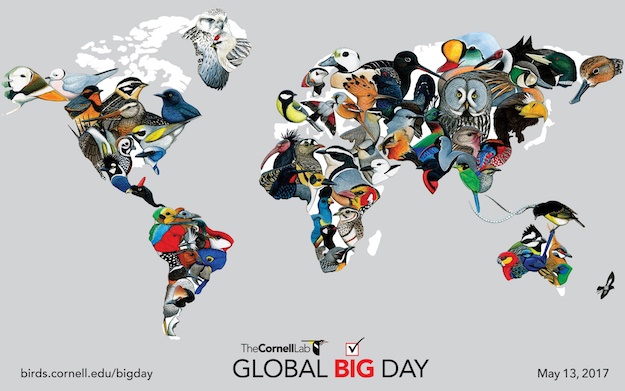
Cornell_Lab_Global_Big_Day_Map-625px

Global Big Day map painted by Luke Seitz, a Bartels Science Illustration intern and member of the Redheads student birding team.

We have about two months to prepare, and this third year of Global Big Day could be epic. When we started participating in this annual event in 2015 our work still mostly focused on the Western Ghats region of southwest India, but we were migrating back to the Mesoamerica region so our attention has been shifting. Now we are all in at Chan Chich Lodge and we want to help ensure that this year Belize is as strong a contributor as possible to the goals of this program:

In our ongoing effort to push the boundaries of a Big Day, we’re inviting everybody around the world to join together and participate in our Global Big Day to support global conservation.

How to Participate

Submit Your Data to eBird on May 13

It’s that simple. If you submit your birds to eBird they count. Learn how to take part. Don’t worry — you don’t need to be a bird expert, or to go out all day long. Even a half hour checklist from your backyard will help. Of course, you are welcome to spend the entire day in the field, but know that it is not required! Please enter your data as soon as you can, preferably by Tuesday, May 16. Continue reading

Merlin Flying Further Afield

We’ve written about this amazing APP on our pages before, and it’s exciting to watch it’s evolution and expansion of both technology and territory.

Our work has yet to expand to Mexico, but birds don’t acknowledge national borders, so the majority of the species in the Yucatan  can be found in all 3 countries that make up the peninsula – Belize, Guatemala and of course, Mexico.

We look forward to having our marvelous guides try it out just for fun!

 Merlin Expands to Mexico

We’ve spent the last few months working to expand coverage of Merlin, and we’ve just released a new bird pack for the Yucatan Peninsula. Research at the Cornell Lab of Ornithology repeatedly points to the Yucatan Peninsula as a vital wintering ground for many of our favorite breeding birds in the United States. It’s also home to many dazzling birds unique to the Neotropics. Continue reading

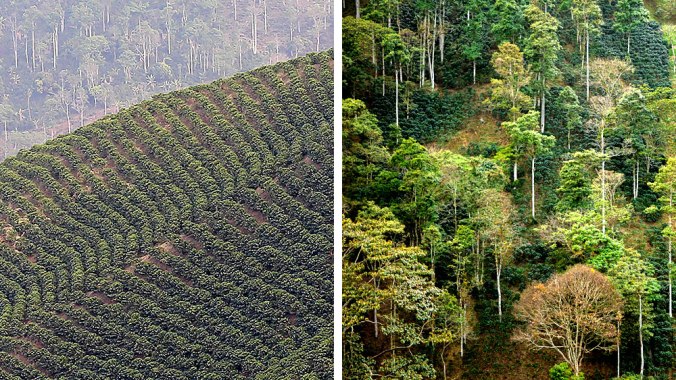
Coffee, Birds & How They Matter

Sun-grown coffee (left) is a monoculture of coffee bushes. Shade-grown coffee (right) offers more habitat for forest species. Photos: Chris Foito/Cornell Lab Multimedia; Guillermo Santos).

Sun-grown coffee (left) is a monoculture of coffee bushes. Shade-grown coffee (right) offers more habitat for forest species. Photos: Chris Foito/Cornell Lab Multimedia; Guillermo Santos).

Our lives in the New World Tropics has allowed a frequent convergence between birds and coffee, even in the most simple terms of enjoying birdsong in our garden over the first morning cup. That very garden of our home in Costa Rica sits in what was historically cafetal (a coffee finca), with large trees shading the coffee that still grows along the little stream that runs along the property line. Blue-crowned motmots (the Central American cousin to the Andean Motmot mentioned below, have been frequent residents.

The coffee plantings at our home are insignificant compared to the 100+ acres of Gallon Jug Estate shade-grown coffee at Chan Chich. Of the nearly 350 bird species recorded in the Chan Chich Reserve’s 30,000 acres, a large percentage are migratory, making their home in the coffee as well as the healthy forest habitats that make up the reserve.

Sustainable agriculture is rarely a “get rich quick scheme”, but taken within the context of the “seventh generation stewardship”, the benefits will continue to outweigh the costs.

In Colombia, Shade-Grown Coffee Sustains Songbirds and People Alike

By Gustave Axelson

Early one morning last January, I drank Colombian coffee the Colombian way—tinto, or straight dark.

I sipped my tinto while sitting on a Spanish colonial veranda at Finca Los Arrayanes, a fourth-generation coffee farm and hotel deep in northwestern Colombia’s Antioquia region. The sun had not yet risen above the high ridges of the northern Andes. In the ambient gray predawn light, the whirring nocturnal forest insects were just beginning to quiet down.

My senses of taste and smell were consumed by the coffee, which was strong and bold in a pure way, the flavor flowing directly from the beans, not a burnt layer of roast. But my eyes were trained on a small wooden platform that held a couple of banana halves. The first bird to visit was an Andean Motmot, one of Colombia’s many Alice in Wonderland–type fantastical birds. It sported a green-and-turquoise coat and black eye mask, and it was huge—longer than my forearm, with a long tail with two circles at the end that swung rhythmically from side to side like the pendulum of a clock.

The motmot flew away and I took another sip of coffee to be sure I didn’t dream it. Another bird soon landed on the platform to pick at the bananas. This one was yellow, though Colombians call it tangara roja, because males of this species are completely red. In its breeding range, birders from the Carolinas to Texas know it as the Summer Tanager.

For more than 5 million years, a rainbow of Neotropical migrant birds (tanagers, warblers, and orioles) has been embarking on epic annual migrations from breeding grounds in North America to the New World tropics. In Colombia, these wintering areas are a lot different now than they were just 50 years ago. From the 1970s to the 1990s, more than 60 percent of Colombian coffee lands were cleared of forest as new varieties of sun-grown coffee were planted. During that same period, populations for many Neotropical migrant species plummeted—a drop many scientists say is related to deforestation of the birds’ wintering areas across Central and South America.

And yet, coffee doesn’t require deforestation. Continue reading

For the Birds: a Message to North American Policymakers


The State of North America’s Birds 2016

The State of North America’s Birds 2016

We continue to laud the importance of eBird on this site, gaining special importance as it becomes more and more clear that wildlife doesn’t acknowledge political borders. The data gleaned from tens of thousands of Canadian, Mexican and U.S. citizen scientists who contribute to eBird indicate that more than 350 species in North America migrate up and down Canada, the U.S.A, and Mexico over the course of a calendar year.

And according to the recently released State of North America’s Birds 2016 report, those three countries—their governments, and their societies—need to step up and do more to preserve our continent’s spectacular and shared natural heritage of birdlife. This report is the first-ever scientific conservation assessment of all 1,154 bird species in North America, and it was only possible because of the tremendous scale and big-data capabilities of citizen-science….

Among the many takeaways from eBird maps and models includes one of relevance to our property, Chan Chich Lodge, located on 30,000 acres of Belizean forest in the Yucatan peninsula.

The Yucatan Peninsula is one of North America’s most vital bird habitat regions

The Yucatan Peninsula is one of North America’s most vital bird habitat regions

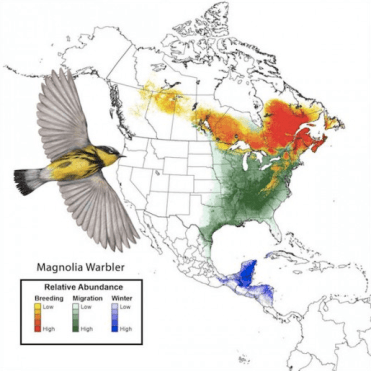
Not only is the Yucatan rich with endemic birdlife, it’s a critical wintering area for more than 120 birds species that migrate from Canada and the U.S.A. In winter, the entire population of Magnolia Warblers relies on an area of tropical forest in Mexico only 1/10 the size of its boreal forest breeding range, with the Yucatan as the bull’s-eye of their wintering range.

Continue reading

‘Tis the Season for Creative Arborescent Decision-Making

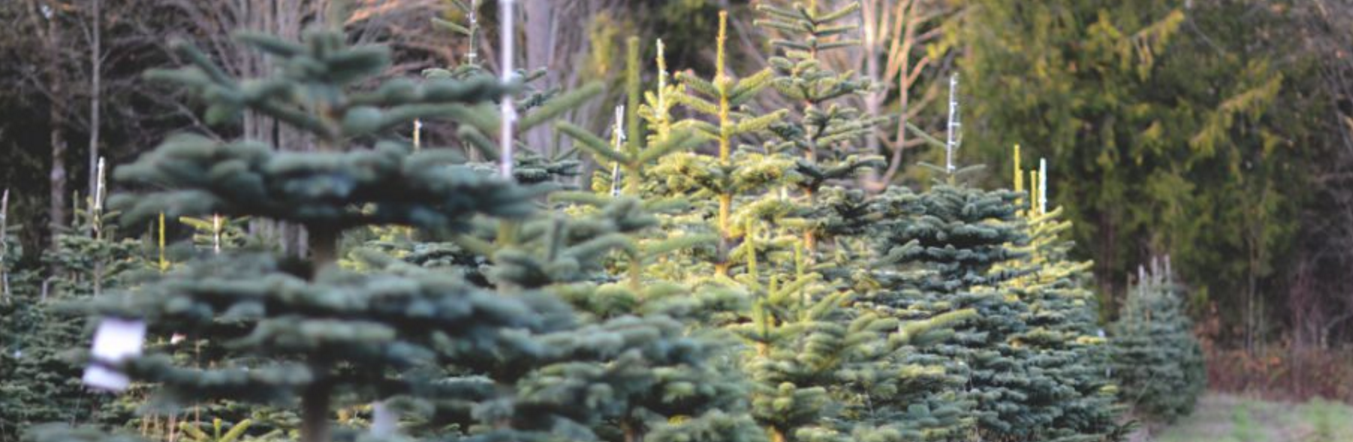
photo credit: Carol Fernandez

photo credit: Carol Fernandez

Real Vs. Fake Trees – Which is Better for the Environment?

Tis the season for an age-old question: Which kind of Christmas tree – real or fake – is better for the environment?

We love this question, because it’s an example of a simple choice that anyone and everyone can make that can reduce our impacts on the environment.

We also love this question because, like many environmental issues, the answer isn’t as simple as you might think. Our #1 recommendation? Buy a real tree. Read on for more details on the impacts of both real and fake Christmas trees, and then make the choice that’s right for you. And check out our 12 Tree Tips for other earth-friendly holiday decoration tips.

REAL CHRISTMAS TREES

In 2015, 26.9 million trees were purchased from live Christmas tree farms – more than twice the number of fake trees purchased (12 million).   Continue reading

Christmas Bird Count, 2016

Seth’s work at the Cornell Lab of Ornithology, with the Celebrate Urban Birds initiative helped us all get a close look at citizen science in action. Past Christmas counts since then have been an annual tradition in these pages. Thanks to Lisa Feldcamp for a note on this topic with her post Give Kids the Gift of Birding on The Nature Conservancy’s website Cool Green Science:

The annual Christmas Bird Count is one of birding’s most cherished traditions. This year, consider introducing the count to a child. There’s no better time to get a youngster started in birding.

“When I was a kid in a large family of eight kids in Upstate New York, my parents told us we could do anything that cost less than $5; baseball, boy scouts, or birding,” says Tom Rusert of Sonoma Birding. “I joined Junior Audubon with my brothers, not realizing it would be a life sport to enjoy forever. It really is no different than any other sport.” Continue reading

eBird Workshops in Guatemala

First of all I would like to give to you a brief introduction of myself since it’s the very first time I have the great opportunity to write a post here – by the way thanks Amie, Crist and Seth Inman for the invitation.

I am a 20 year old birder from Guatemala and I have been in touch with nature and birds since I was a little kid. I remember being carried by my dad on his back and going out to the field to go birding. He needed to take care of me but he didn’t want to just stay at home wasting valuable hawk migration time, so he took me with him no matter what. I remember I enjoyed it A LOT, not only because I liked being carried, but the memories of the field guide open in my dad’s hands and his binoculars hanging by his neck and his trying to point out the bird and later showing it to me in the book are things I will never forget. Of course I was too young to actually spot the bird and appreciate it in the field but I do remember looking at the birds carefully in the field guide. A few years later I was so excited when he gave to me my first pair of binoculars as a Christmas present! I felt like a pro ornithologist (although I didn’t know that word yet). That same year he bought his first spotting scope so when I wasn’t able to see the bird and observe it through my binoculars myself he would find it on the scope so I could enjoy the beauty, behavior, different plumages – everything of the birds. I immediately fell in love with birding and all of what biding had to offer to me. Continue reading

Big Numbers for eBird this Summer

Starting in May, eBird hit a big milestone: 11.8 million bird sightings in that month alone – the same amount of sightings the citizen science database collected in the first five years it existed. Participation in recent years had shot up enough to make that sort of number, and these sorts of maps, possible. Then, on June 17th, the 333,333,333th checklist was submitted to eBird from a participant in Illinois. A third of a billion records submitted by just over three-hundred thousand different people around the world since the Cornell Lab of Ornithology and Audubon partnered to make it possible for people to easily digitize their bird sighting checklists – that amounts to an average of a thousand-and-fifty checklists per eBirder!

At the end of last month, eBird saw another big number, with a million bird photos archived in the Cornell Lab’s Macaulay Library through the new tool allowing users to attach images to their checklists. And this week, the app Merlin got downloaded by its millionth user since it was launched for iPhones in January 2014 (and a bit later on Android phones). But eBird, Merlin, and the Macaulay Library aren’t the only ones reaching milestones this summer. Continue reading

What Can Be Done with eBird Data?

Brighter colors indicate higher relative abundance. © Cornell University

The Western Tanager is a species I have yet to see, but which will be unmistakeable once I do, with the male’s red-and-orange head and bright yellow body contrasting with black wings striped with white bars. Based on the animated map above, I expect to spot some of them down in Baja California Sur by September or October, and I look forward to it. As I’ve written here before in the case of another moving map, citizen science makes this sort of illustrative prediction of a species’ moving presence possible, and it’s one of the reasons why I contribute to eBird as often as I can.

A paper titled “Using open access observational data for conservation action: A case study for birds” was published in the scientific journal Biological Conservation by a team of researchers at the Cornell Lab of Ornithology, several of whom I was just down the hallway from when I worked there. Although I haven’t gotten through their findings yet myself, Victoria Campbell chose nine interesting examples of how eBird data created tangible conservation in several countries.  Continue reading

Xandari’s 2016 Big Day

A male Red-legged Honeycreeper, the highlight of my 2016 big day

Last year, we shared some details about the Global Big Day, an event that I participated in very casually from Chicago back then, and contributed to more seriously this year, as did the rest of the global birding community, as the data from eBird published today shows. In 2015, 6,158 species were reported on 38,923 complete checklists from 14,787 participants across 140 countries. This year, 6,263 species were reported on 43,848 checklists from 15,953 participants across 145 countries. Every point of comparison displays an increase in participation and effort this time around!

Continue reading

Ornithological Climate Change Indicators

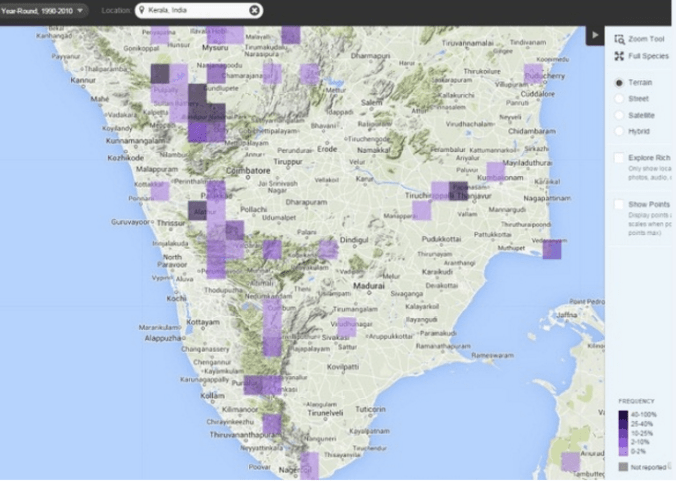
Map showing peafowl-sightings between 1990-2010 (Source: Cornell Lab of Ornithology and the National Audubon Society)

Map showing peafowl-sightings between 1990-2010 (Source: Cornell Lab of Ornithology and the National Audubon Society)

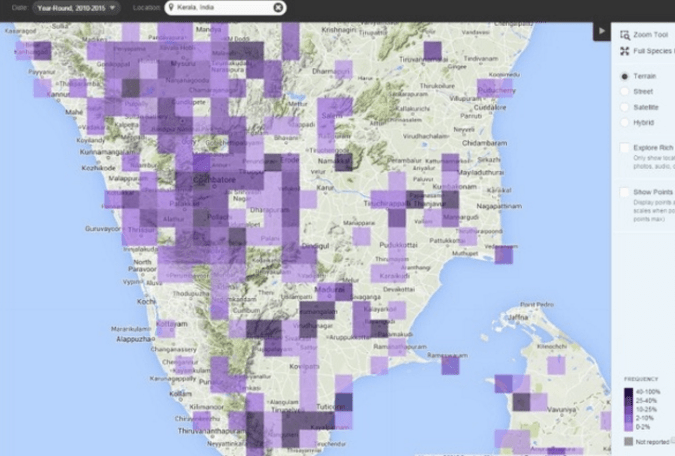
Map showing peafowl-sightings in Kerala between 2010-2015 (Source: Cornell Lab of Ornithology and the National Audubon Society)

Map showing peafowl-sightings in Kerala between 2010-2015 (Source: Cornell Lab of Ornithology and the National Audubon Society)

Few of our readers will fail to notice that eBird and Citizen Science are important elements of the RAXA Collective DNA. Stories related to Kerala and the state’s healthy birding population are equally on our radar.

The folks at India Climate Dialogue recently turned to eBird observations to document changes in climate patterns in Kerala, an important watershed state for the Indian subcontinent using peafowl population as one of the indicators. Especially during mating season, the birds find it difficult to move their trailing feathers in areas of dense foliage, so they’re attracted to drier climactic areas. The eBird data above illustrates their movement into Kerala, meaning more areas are opening up.

High heat in February-March is not unusual in Kerala, and in reality it is this heat trough that pulls the monsoon from Indian Ocean into the Indian subcontinent. The heat epicentre heralds the monsoon and runs like a pilot car through the peninsula, taking the same path that the southwest monsoon will follow a few months later. Since the southwest monsoon starts from the coast of Kerala, it is the state that has to feel the heat first, so that pre-monsoon showers start in May and the monsoon arrives in June. Continue reading

Ornithological Epicenter

There is grandeur in this view of life, with its several powers, having been originally breathed into a few forms or into one; and that, whilst this planet has gone cycling on according to the fixed law of gravity, from so simple a beginning endless forms most beautiful and most wonderful have been, and are being, evolved.

– Charles Darwin, Origin of Species, 1859

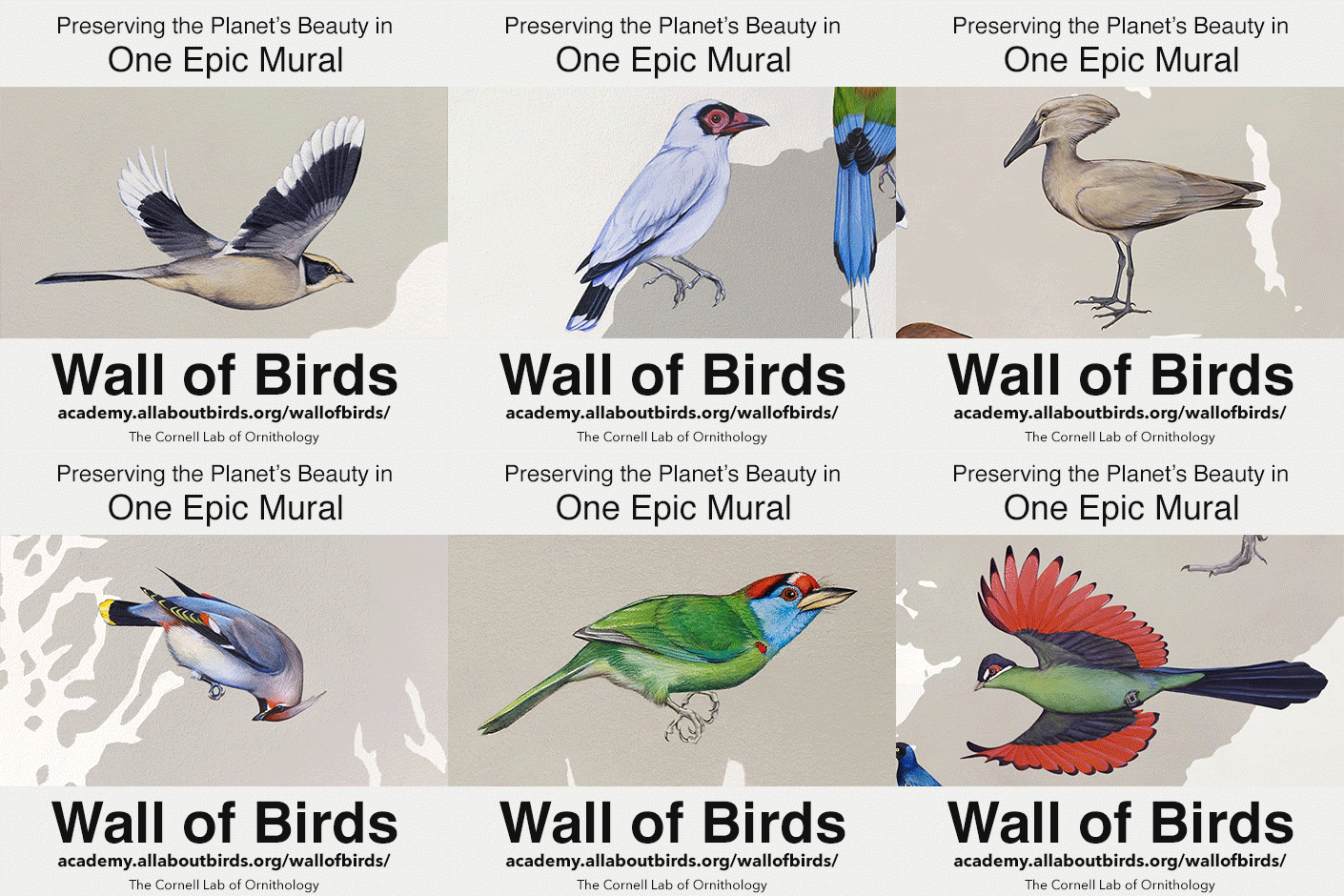
The Cornell Lab of Ornithology has long been a leading presence in the study, appreciation and conservation of birds. From citizen science programs, to eBird, to research collaboration with the the National Geographic Society, the Lab has helped to educate the public about the environmental importance of birds. The Wall of Birds, titled “From So Simple a Beginning,” from the Darwin quote above, celebrates the world of birds, showcasing biodiversity and evolutionary change, by featuring species from all surviving bird families alongside several extinct ancestors.

The scale of the mural is mind-blowing! The world map covers the largest wall of the Lab’s visitor center, with life-sized birds from each of the 243 taxonomic families of the world, placed in their geographical endemic locations. Check out the scale of the flying albatross in the lower left of the mural! The pale, gray scale depictions of the extinctions and ancestors adds to the complexity of the mural.

Continue reading

Bringing Nature To An Urban Audience

AMNH-03-320

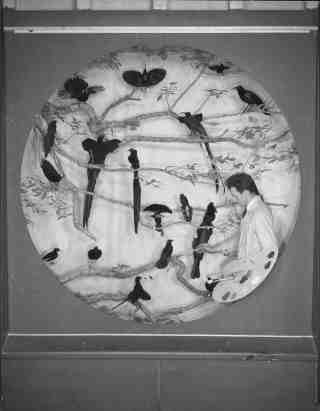
Installing the Birds of Paradise group, 1945. COURTESY AMERICAN MUSEUM OF NATURAL HISTORY

Our interest in the display of natural history makes this is a must-read:

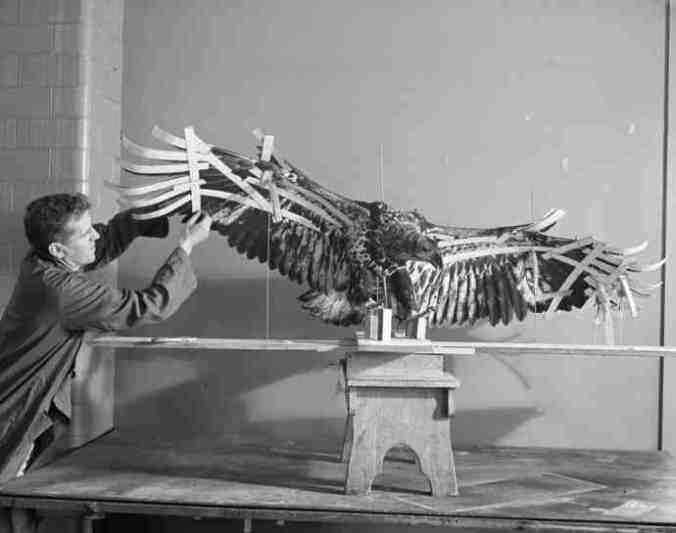
The dioramas at New York City’s American Museum of Natural History—those vivid and lifelike re-creations of the natural world, in which the taxidermied specimens almost seem to breathe and the painted horizons seem to stretch for miles—are very much products of the late-nineteenth and early-twentieth-century milieu in which many of them were created. Temporally and aesthetically sandwiched between the cabinet of curiosities and “Planet Earth,” the dioramas grew out of the intersection between a nascent conservation movement and an age of swashbuckling adventurism…

Of course, we prefer natural history in natural places, preferably intact and living and resplendent as hinted at in this video which we have featured previously. But museums have their place, and the mural at the Cornell Lab of Ornithology is just the most recent of a long line of efforts to get the inanimate to animate our interest. But for those of us who grew up making dioramas, this feature brings to mind the power of three dimensions, even when inanimate, to animate.

AMNH-07-690

An eagle for the bird-group exhibit, 1961. COURTESY AMERICAN MUSEUM OF NATURAL HISTORY

…The word “diorama,” which comes from the Greek for “to see through,” Continue reading

Migration Animation from eBird Data Proves the Worth of Citizen Science

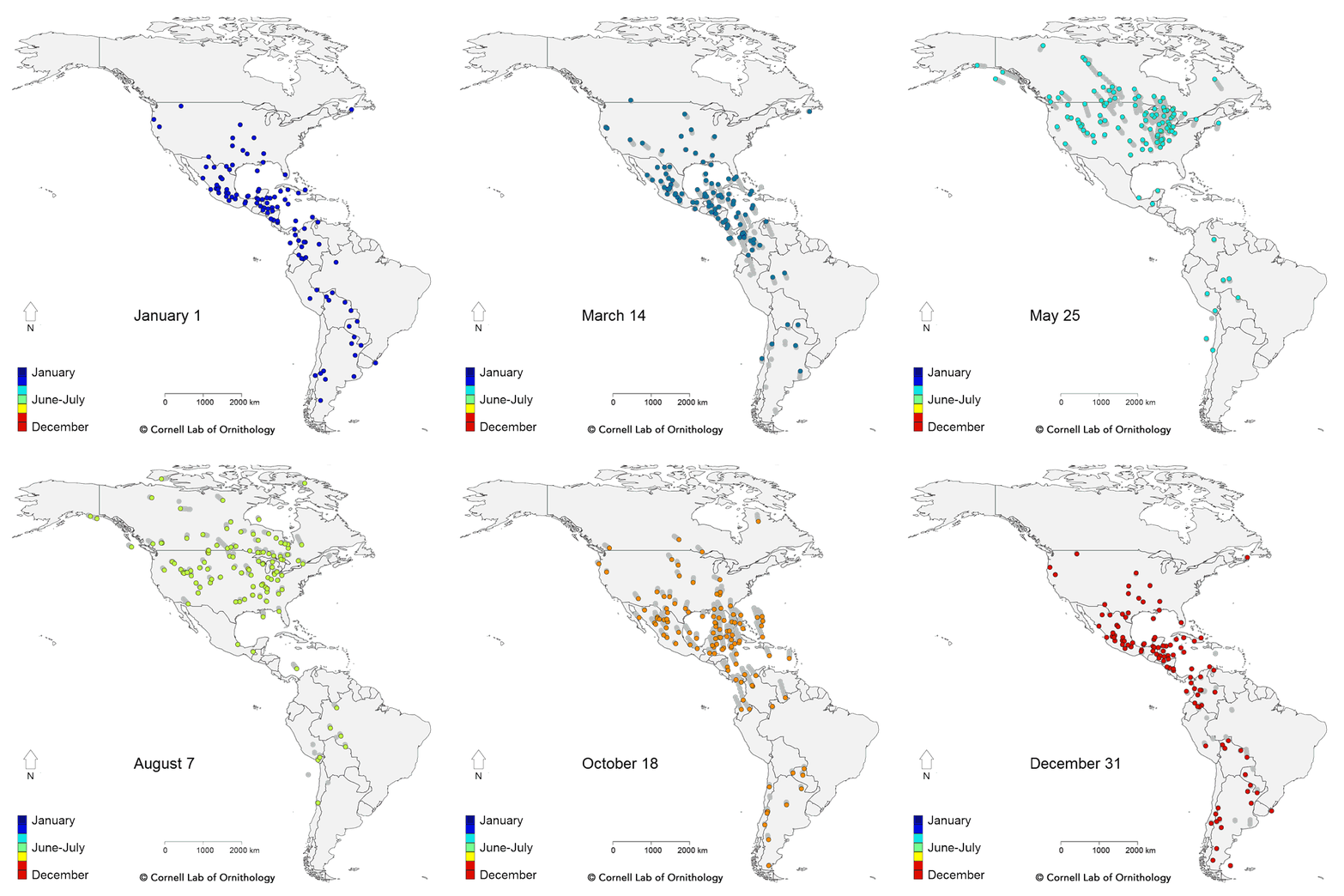
Each dot represents a single bird species; the location represents the average of the population for each day of the year

On January 20th, researchers at the Cornell Lab of Ornithology published a paper in the Proceedings of the Royal Society B titled “Convergence of broad-scale migration strategies in terrestrial birds.” Using data from eBird that indicated the presence and absence of over a hundred different bird species in the Western Hemisphere, they tracked migration patterns among the various species and found that many of them used very similar routes that avoided or took advantage of certain geographical or atmospheric factors. In short, the paper illustrated that scientists can use the data from eBird in just the manner that I always tell guests here at Xandari: with thousands of observations by people in different places and at all times of the year, population statistics, migration data, and other information can be gathered about bird species around the world. All through citizen science.

Continue reading

Clap Hands for Kerala Birders!

Between the on-going Bird of the Day series and many ornithologically focused posts, our interest in birds can’t be breaking news to any La Paz Group reader. We’re constantly hearing more about the importance of citizen science in all sorts of ecosystems, but with both birding and Kerala so close to our hearts we’re thrilled to applaud the enthusiasm of the Bird Count India community. Continue reading

Another Step Forward for Merlin

© Visipedia

I don’t mean the bird species, which is found in North America and also in different varieties elsewhere in the world. I’m not talking about the wizard, either. I’m referring, rather, to the Merlin Bird ID app that I wrote about last month. It turns out that Cornell Tech and Caltech, working together as a team called Visipedia, have been developing a new tool with the Cornell Lab of Ornithology for Merlin Bird ID that involves computerized identification of bird photos. Called Merlin Photo ID, this beta-stage program can take an image of one of North America’s most common bird species (a pool of 400) and identify it after a human user has pointed out where its bill, eye, and tail are.

And after testing it out for a bit I learned that it doesn’t even need all of those Continue reading

“The Great Empty,” more Full than its Sobriquet Implies

Photo © Gerrit Vyn

What will you be doing this Wednesday 5/20 at 8pm EDT? If you’re in the United States and have a television, you should consider watching a PBS Nature documentary on the Greater Sage-Grouse (male in mating display pictured left) and other wildlife members of the vast community that lives in the sagebrush plains that span eleven western states and hundreds of thousands of miles. Titled “The Sagebrush Sea,” the film is the first of its type shot and produced by the Cornell Lab of Ornithology, and it promises to be quite entertaining and educational about this vast and daunting landscape. A friend who was in one of my freshman-year classes at Cornell has been helping out in the editing room as an employee at the Lab this spring, and he tells me that its been a really rewarding experience. Just from watching the trailer below you can see why!

You can check out the PBS Nature schedule webpage to see when the broadcast Continue reading

Merlin App Recognized in 2015 NSF Showcase

Prairie Warbler © Gerrit Vyn

Last week, an online video event was held to celebrate and showcase work funded by the National Science Foundation, called the NSF 2015 Teaching and Learning Video Showcase: Improving Science, Math, Engineering, and Computer Science Education. 112 videos featuring innovative work in these fields were shared on the website, and 21 were recognized as Facilitators’ Choice, Presenters’ Choice, and/or Public Choice projects.

From the Showcase website’s About page, here are the criteria for recognition in each category:

During the event, facilitators from each resource center will select a few videos, which will recognize extraordinary creativity in the use of video to share innovative work to determine the “Facilitators’ Choice.” In addition, all presenters will have the opportunity to vote for their favorite videos to determine “Presenters’ Choice.” Finally, all public visitors to the event will be asked to select those videos that they find most compelling. Those with the greatest number of public votes will receive “Public Choice” recognition.

The Cornell Lab of Ornithology’s Merlin Bird ID app was one of only 3 projects to Continue reading

Status of the Critically Endangered Jamaican Golden Swallow (summary)

Justin Proctor, Department of Natural Resources, Cornell University, Ithaca, NY

Seth E. Inman, Cornell Laboratory of Ornithology, Ithaca, NY

John M. Zeiger, Cornell Laboratory of Ornithology, Ithaca, NY

Gary R. Graves, Smithsonian Institution, Washington, D.C.

Screen Shot 2015-04-30 at 11.10.57 AM_zpsskyyrz9u (1)

Hispaniolan Golden Swallows in Parque Valle Nuevo, Dominican Republic. (From left to right) Adult in flight; adult perched overtop of artificial nest-box; 25-day-old chicks in nest-box, one day prior to fledging.

The Golden Swallow (Tachycineta euchrysea) is an aerial insectivore and obligate secondary cavity-nester known exclusively to the Caribbean islands of Jamaica and Hispaniola. The Hispaniolan subspecies (T. e. sclateri) was first described in 1866 by the American ornithologist, Charles Barney Cory, and though considered common in the early 1900s, it has become an increasingly rare resident of the highlands of Haiti and the Dominican Republic. The subspecies is currently categorized as vulnerable by the International Union for Conservation of Nature (IUCN). Researchers have been studying the life history and breeding biology of the Hispaniolan subspecies since 2012, and initial conservation efforts are currently underway. The nominate Jamaican Golden Swallow race (T. e. euchrysea) was first described in 1847 by the English naturalist, Philip Henry Gosse, and was always considered uncommon, locally distributed, and endemic to Jamaica. Sadly, the Jamaican Golden Swallow subspecies has not been unequivocally observed since the late 1980s. Continue reading