The Bishnois of Rajasthan: The First Environmentalists

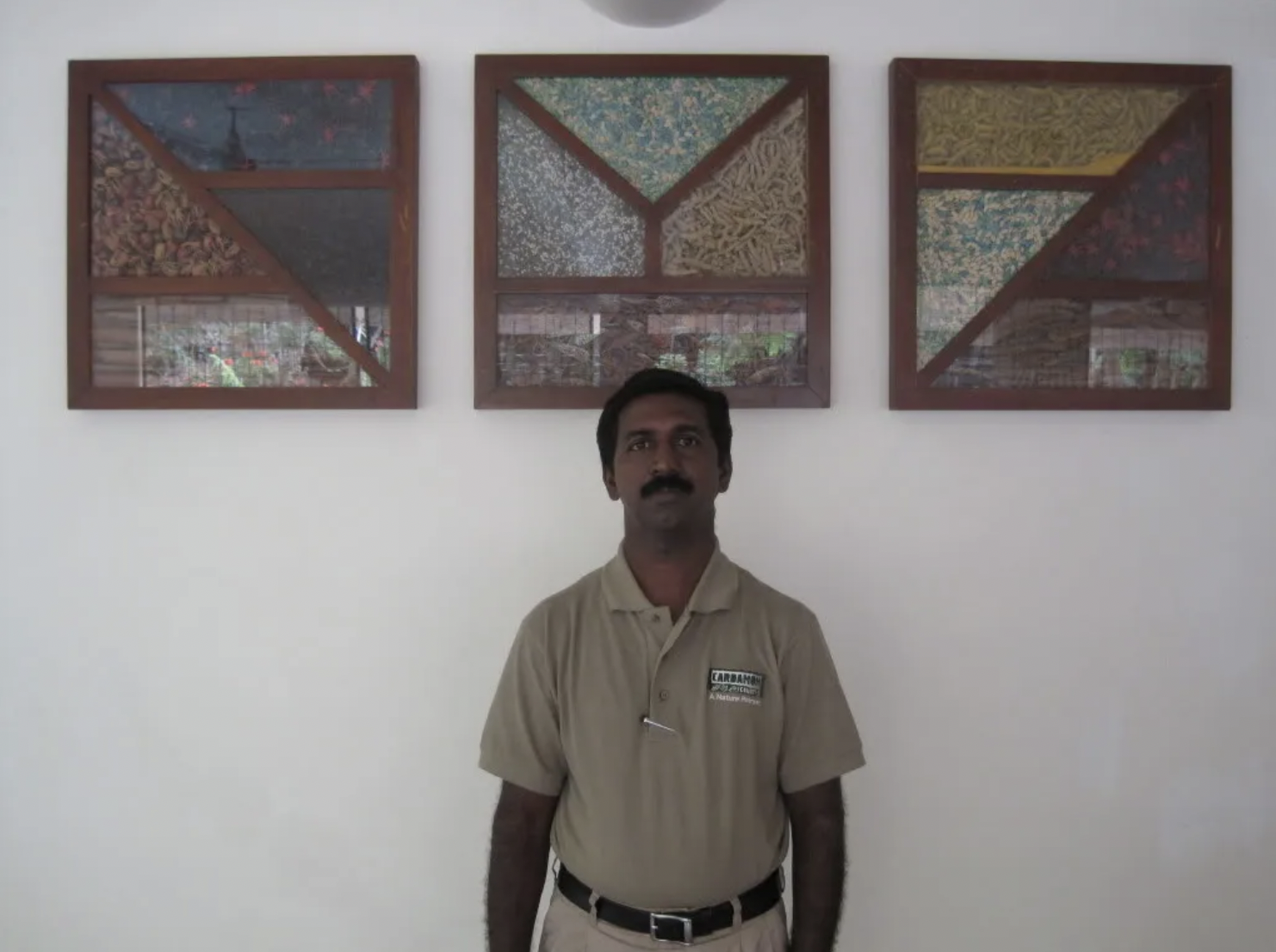
Khamu Ram Bishnoi fights against the pollution carried by discarded plastic bags in India since 2005. Every year during Mukam festival, the Bishnois, his community, must bring sand on top of dunes to solidify them and block the advance of the desert.  Lately pilgrims had taken the habit of collecting the sand in plastic bags, causing a widespread pollution in the Thar desert. To protect the landscapes and the animals who regularly ate plastic bags, Khamu Ram started to demonstrate noisily to educate his community about alternatives to plastic bags.

In 2008, he was invited to talk at a series of environmental conferences in  France. When looking at the street dustbins in Paris, Khamu Ram had the idea of a mobile public dustbin.  Since 2010, he installs these dustbins complete with jute bags in public places, during festivals, pilgrimages, and organizes their collection. Last February Khamu Ram Bishnoi received the award of “Extraordinary man of India” in Jaipur, Rajasthan.

If Khamu Ram Bishnoi is an extraordinary man, he’s also part of an extraordinary community. He is a bishnoi. Continue reading
Connecting Over Competition

Guest Author: Siobhan Powers

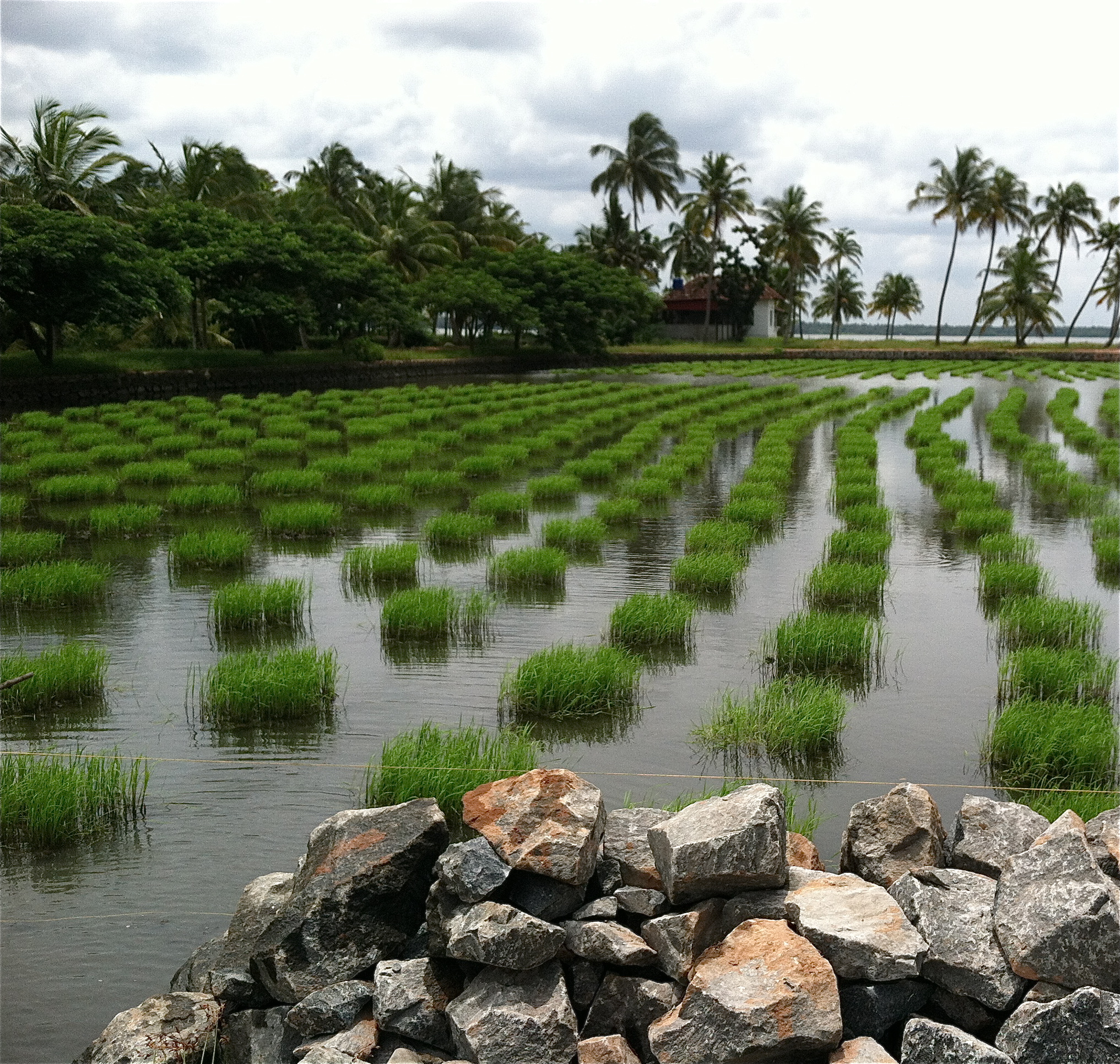
I’ve been staying in the beautiful backwaters of Kerala for the past few days, which has put me at ease as I always feel more comfortable by the water.  Jonathon and I took some time out of our workday to take a walk and get a feel of the area, including all it has to offer, both culturally and agriculturally. We interrupted the construction of a stone wall surrounding a rice paddy field and watched a young boy catch fish in a stream at the side of the narrow road. In the heat of the Indian sun’s rays, we contemplated buying ice cream, but, on our return, settled on the universal refreshing thirst-quencher that is an ice-cold cola.

Rice paddy in Panangad

Continue reading

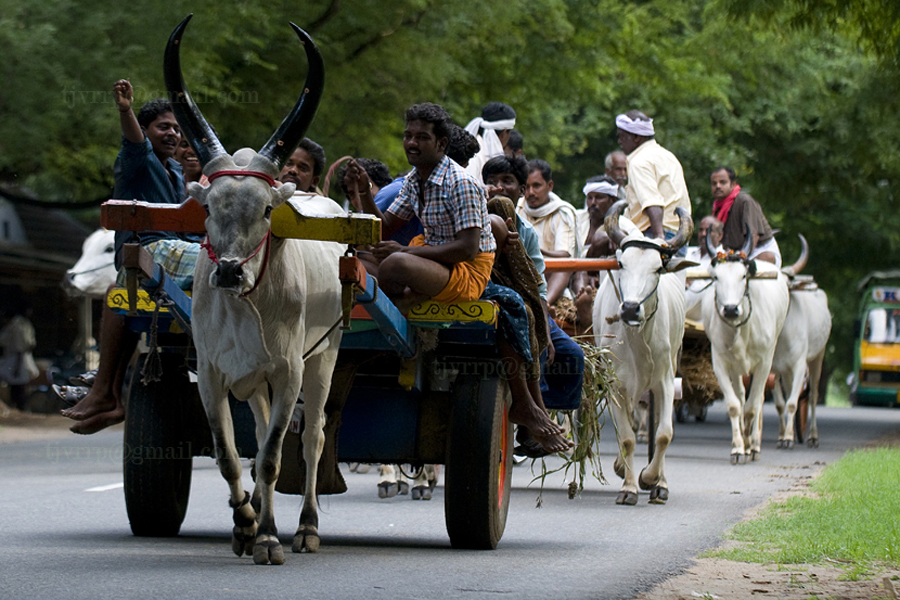
Bullock Cart – A Traditional Transportation

The whole world is moving towards new technologies and scientific inventions, but still one can find the oldest and traditional mode of transportation in Kerala across some villages: the Bullock cart. Some merchants and travelers prefer the bullock cart over other transportation vehicles. Continue reading

Kaiser the Puppy and the Rising Middle Class in India

Three days ago, we pulled up in front of an art deco gate and half-abandoned mansion on the property of a soon-to-be new RAXA Collective resort. By ‘we’ I mean the design team comprising of an architecture student (me, Chi-Chi), a landscape architecture student (Rania), a hotelie-turned-interior architecture student (Jonathon), and an engineering student (Siobhan). We were told to get a feel of the property.

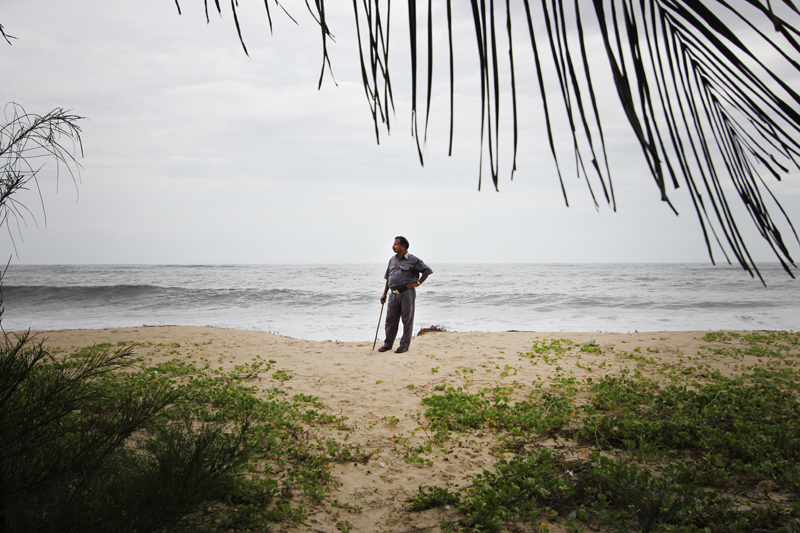
Trusty Guard at Marari Beach

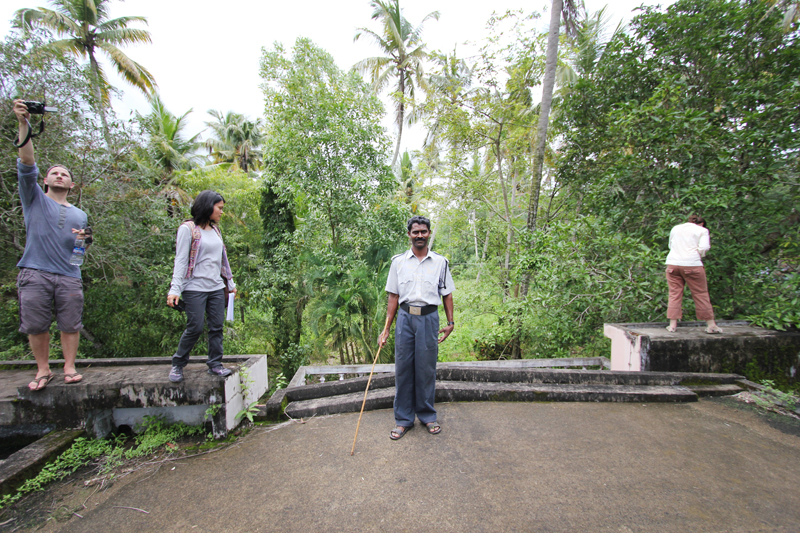
We, the interns, walked around the property with Amie and the trusty guard. The bamboo stick to protect against rumored snakes on the beach.

We found: ‘objects’ (modest fishermen’s homes); an endless, unobstructed beach with marbled sand and black waves; and our new favorite hangout spot, a nearby internet café.

Exploring the ObjectsRania Inspects a Decorative Statement Wall

Guard and us exploring the roofline

Exploring the roofline of an abandoned wealthy fisherman’s house with the guard.

Kaiser found: two Indian security guards; their next-door-neighbor friend; our cook Manu; and us.

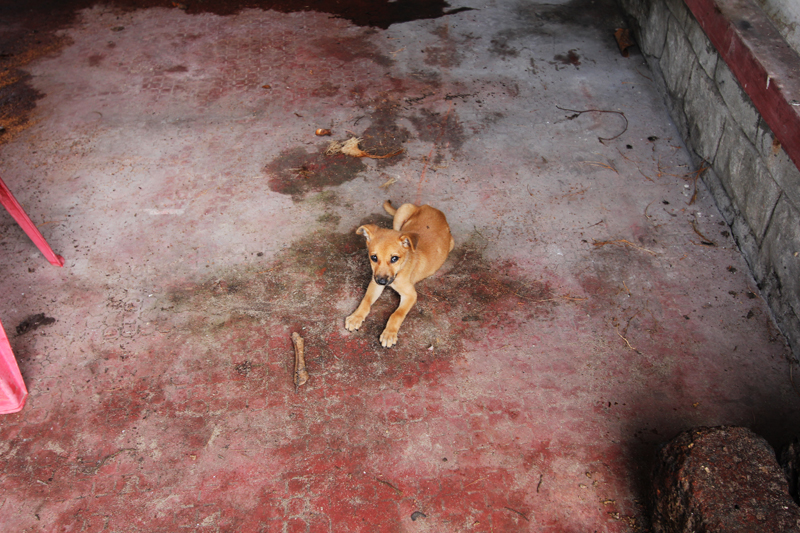
Kaiser is a tiny mixed puppy who arrived on site only an hour before we did. As a dog-lover and all-around “everything happens for a reason” believer, I KNEW KAISER WAS A SIGN. A sign for what, I don’t really know, but he was a very cute and very small sign, so I immediately focused all my down-time obsessing and fussing over Kaiser.

Kaiser the Puppy

This is Kaiser.

I think Kaiser gave me more insight to Indian attitudes. It’s very difficult to converse with someone about abstract ideas without a common language, but if you throw a dog in the mix, it becomes a lot easier.

Continue reading

Being Full of It: A Meaningful Word

Since arriving in Kerala, I have been greeted many ways.  I have exchanged many smiles and hellos, and I have been veiled with jasmine garland and pressed with traditional dika.  However, the greeting I find most profound lies in a single word: Namaskaram.

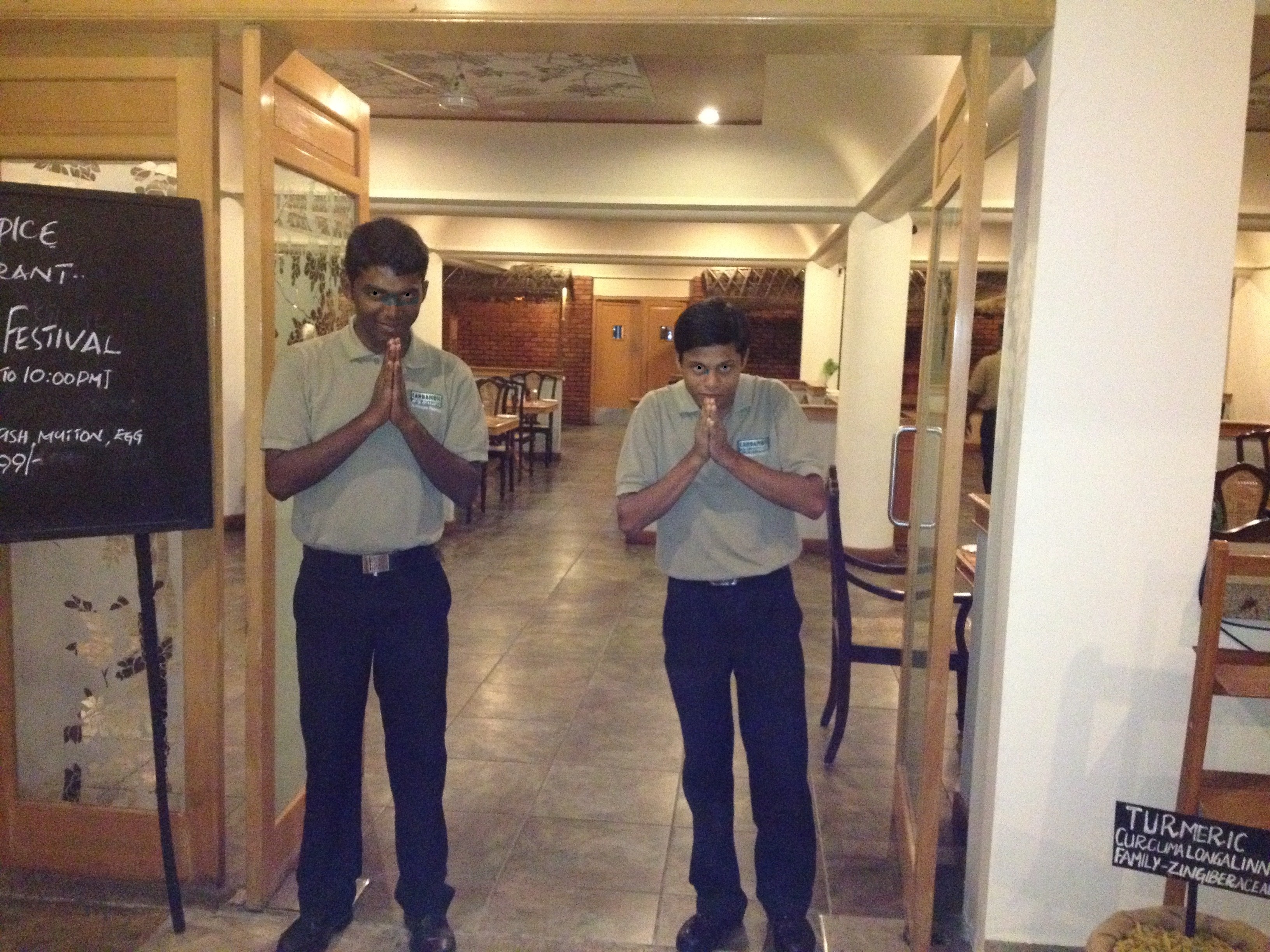
Two people, worlds apart, meet with this word.  Each of their hands draws together in a prayerful pose in the nest of their individual chests.  With a bow of their heads, they utter, “Namaskaram.”  At first, it seemed like a simple interaction, yet when I asked the native people for the meaning, I learned that it has a much deeper connotation.

A signal of respect.  A promise of hospitality.  A notion of putting aside one’s ego.  All of these meanings are understood with Namaskaram.  I witness and experience them with nearly every interaction among the people here at Cardamom County, but the latter meaning, putting aside one’s ego, has struck a powerful chord in me. Continue reading

Machad Mamankam – Unique and Traditional Temple Festival

In Kerala, almost every village has its own temple with an annual festival. So there is always a local festival happening somewhere or the other, each with its own flavor and color. The 800 year old Mamankam festival is celebrated annually at the Machad Thiruvanikav temple near Trichur, the cultural capital of Kerala. Continue reading

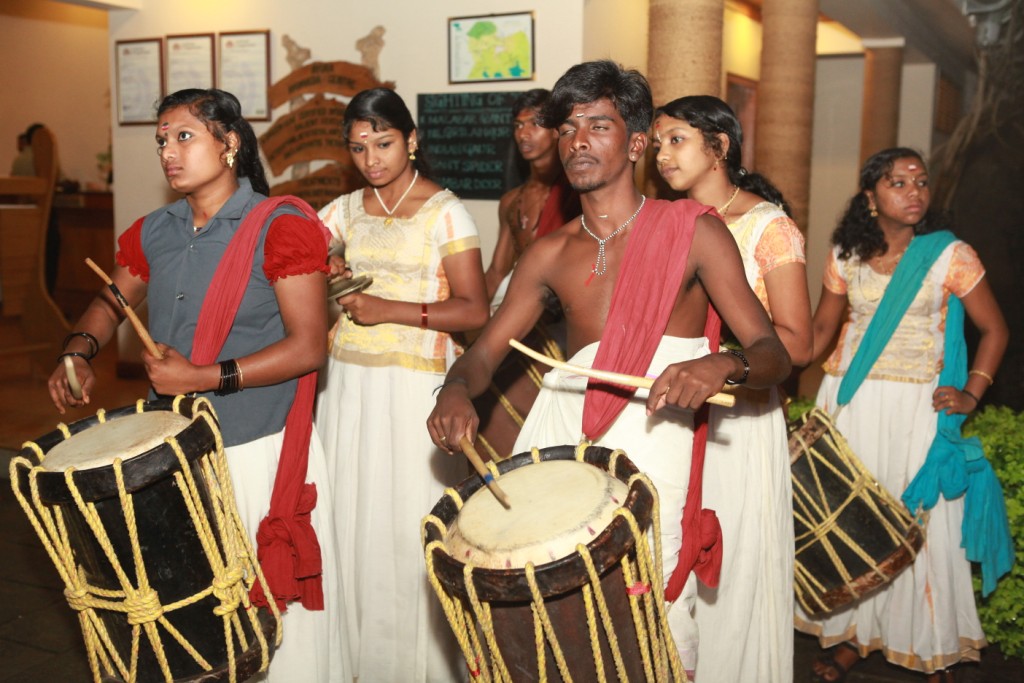
The Chenda melam- Traditional band of Kerala

The Chenda melam is the most widely performed keshtra vadhyas (songs or programmes based on temples festivals) of south India. Irrespective of cast or religion, the melam have been an important part of every Kerala festival for over 300 years old. The most important among these melams are Pandy and Panchari, which may extend up to 5 hours. The leading instrument in these compositions is the Chenda, a cylindrical drum that originated in Kerala. The Chenda is divided into Valamthala Chenda & Edamthala Chenda (right & left side of the instrument) or also known as “Veekam Chenda” & “Uruttu Chenda”.

Continue reading

Holy Basil (Ocimum sanctum) – Queen of Herbs

Holy Basil (Ocimum sanctum) is an erect multi-branched shrub that grows up to 30-60cms in height which in Kerala is commonly known as Tulsi. The holy basil is highly valued for Hindu religious traditions and also for its medicinal properties in Ayurveda.

Continue reading

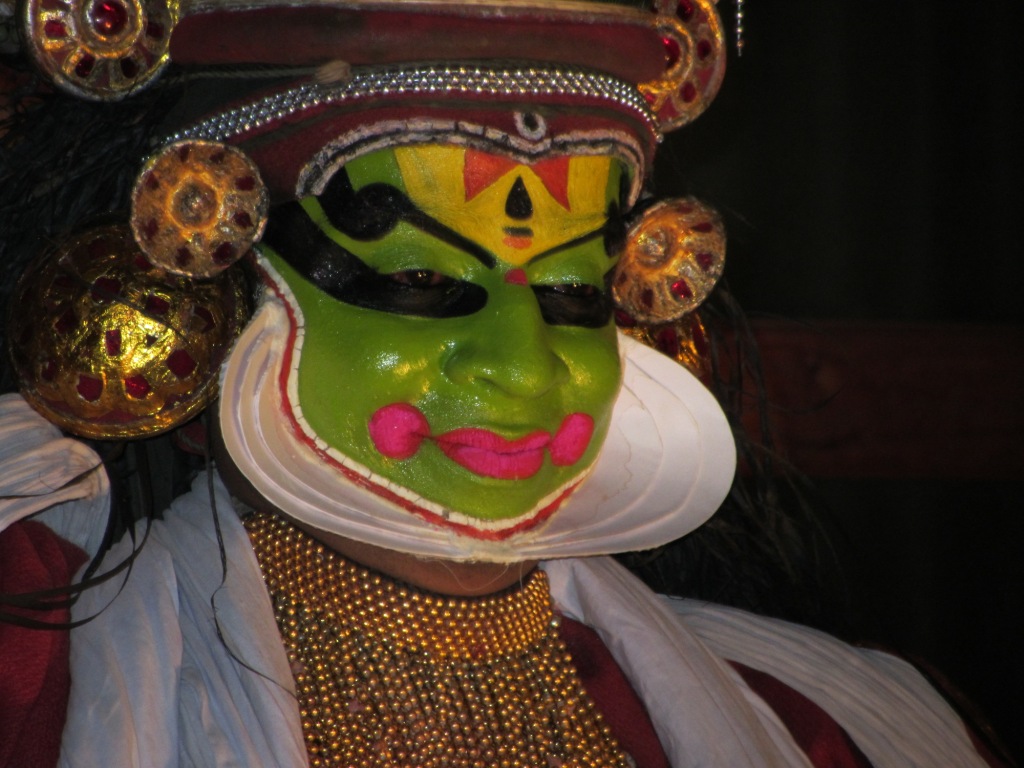
Kathakali- Unique Dance

Here we are sharing the snapshots of Ms.Piranna who has been a guest at Cardamom County for the last two days. Yesterday they experienced the Kathakali performance, which is presented each evening at Thekkady. Continue reading

Periyar Experience

Photos by Mr.Ravi Varma, Director, Vishal Xperia Holidays Pvt.Ltd

A group of seventeen guests from the United Kingdom who stayed at Cardamom County for the last three days (7th Feb to 9th Feb) have shared their photos with us. They have had wonderful experiences in and around Thekkady.

Continue reading

Positively Happy

My high school chemistry teacher always said, “Don’t be negative; be positive.  Multiply the love and divide the hate,” while she used her hands and fingers to represent each mathematical symbol.  This phrase would surface in my memory occasionally, but I must admit I rarely took it to heart.  However, I was preparing for a presentation about affirmations when I stumbled across a Ted Talk that affirmed this old saying.

I found this short speech relatable, funny, and surprisingly thought-provoking.

Continue reading

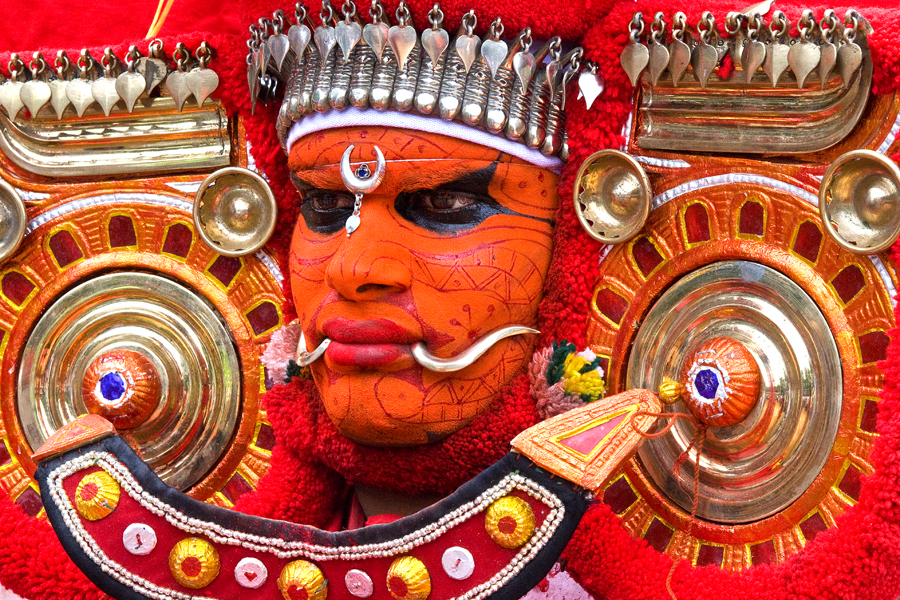
Theyyam – The Ritual Dance 2

In Kerala, almost every village has its own temple, with an annual festival. So there’s always a local festival happening somewhere or the other. As we mentioned about Theyam in our previous post, there are more than 400 Theyams performed in Kerala each year. Continue reading

Theyyam – The Ritual Dance

Photo: T J Varghese- taken from a temple festival near kannur, North kerala

Kerala is a land of old traditions, rituals, customs and arts. Most of them spring from folk tradition but they are often related to religious rituals and mythological stories.

Theyyam is one of the oldest popular devotional performance of Kerala. The performer usually takes a role of one deity and continue the character over the year. Continue reading

Strengthening Helpers’ High

Lately, I have been pondering altruism, one’s unselfish devotion to the well-being of others often without regard to personal well-being.  I admit I am befuddled by the concept.  It challenges theories of evolution and even caused Charles Darwin to question his own theory of natural selection—how could these acts of self-sacrifice exist in a world full of the fittest habitants, that possess only an incentive to survive and reproduce?   Regardless, I find it very encouraging to witness such selfless behaviors from my fellow mankind.    This behavior takes many forms in many aspects at many different times.

For instance, I reflect on the aftermath of September 11, 2001.  This date was one of the earliest times in my life when I acknowledged altruism’s existence.  I remember people gathering in tribute to the dead, celebrities organizing benefit concerts to raise money, and yellow ribbons streaming across nearly every home and shirt lapel signifying compassion for lost lives.  After Hurricane Katrina swept through the Gulf Coast, citizens all over the nation offered their support; my family even opened our home to refugees for a few weeks.  Similarly, this year’s September flooding of the southern tier of New York and the recent damaging snow storms of the East Coast have brought out the kindness and generosity of neighbors.  From the Flight 93 passengers to storm rescuers, altruism spurs many questions: Why are some people willing to help even at their own expense?  Why do some feel the urge to help more strongly than others?  Can altruism be learned or is it innate? Continue reading

An Abundant Life

I recently read an essay in the Wall Street Journal titled, “Living to 100 and Beyond.”  As I read about the technology that is rapidly increasing human longevity, the movie Death Becomes Her began replaying in my mind.  I imagined myself following in Meryl Streep’s and Goldie Hawn’s footsteps and taking some magic potion that makes me immortal.  However, instead of the body deteriorating with age like the Streep and Hawn rivalry, advances in modern technology will likely not only increase life span but also health spans.   Living for centuries may seem appealing on the surface, but we should consider the overall effects of a longer life.

Continue reading

Profile: Varghese & Resource Management

A few days ago I spoke with Varghese, the restaurant manager and head of the food and beverage department here at Cardamom County, who prides himself in running a tight ship and making sure that guests are at their happiest. Varghese is another long-time member of the Cardamom County family, originally arriving here eleven years ago, in 2000. Having taken a two-year hospitality course in Ravipuram in Ernakulam (the same district housing Cochi), at a school that has now shifted to become the Fort Munnar Catering College in the misty mountains of nearby Munnar, and training with Taj Group of Hotels, he arrived to fill the role of a restaurant supervisor.


Varghese told me about his Uncle Phillip who was one of the many well-educated people from Kerala who went over to a Gulf country, in this case being Bahrain. We talked about this brain drain, which Varghese mentioned had been going on since as early as the 1970s. The highly educated people and professionals of Kerala go in search of new opportunities, higher living standards, and money to send back home. Varghese also talked about Arabic being a language that is not too difficult to pick up, especially because of the difficulty and speed with which the native tongue of Malayalam is spoken. However, what is interesting to note is the stark contrast of climate between the Gulf countries and Kerala, the former being very dry, arid, and hot with the latter being humid and comfortably cooler especially at higher altitudes near the Western Ghats such as here in Kumily, Idukki. Continue reading
A Staff Tour

On its face, there is nothing remarkable about a company picnic. If what I’ve learned from media representations and other secondhand reports stands up, it seems that they happen just about everyday in some part or another of the world, and that they all involve a bit of hair-letting, whether with ice-cooler beer at the neighborhood park or mini-fridge delectables in Vegas. It is this understood relaxation—or evisceration—of daily norms, of one’s decorum, coupled with the acceptance of its temporality—because of course, work does go on the next day, and you must confront those who yesterday saw you transformed—that gives these professional gatherings their almost sacred quality in the religion of the workplace. Whether mentioned in hushed tones or all too self-consciously laughed off, the company picnic/outing/soiree is, in the daily grind’s cosmology, the potential site of the divine, of the disclosure of truth and the unmasking of custom.

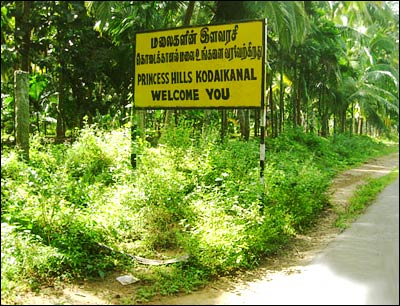
So I don’t think I overstate it when I say that yesterday I bore witness to (and, yes, sometimes partook in) culture. Twenty hours in a bus through the hills of Tamil Nadu is culture, and my inability to draw from my fellow travelers a suitable translation of its subtleties (I mean, who can speak fluently about his own culture?) made it that much more profound. No, this may not have been ‘culture’ in the sense that the Martial Arts show down the street purports to be, nor is it ‘culture’ in the same way that the locally-inspired cuisine at Cardamom County’s All-Spice Restaurant is.

This was culture in the minute, unsalable sense. This is that culture which happens in the infinite, petty moments between friends. Continue reading