
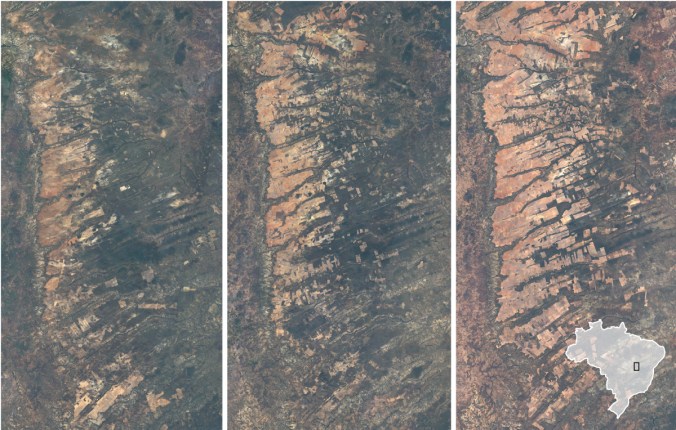
Satellite images of Cambodian forest in 2000 (left) and, after being cleared, in 2015 (right). Forests were replaced by a grid of rubber plantations, as well as croplands. Source: NASA
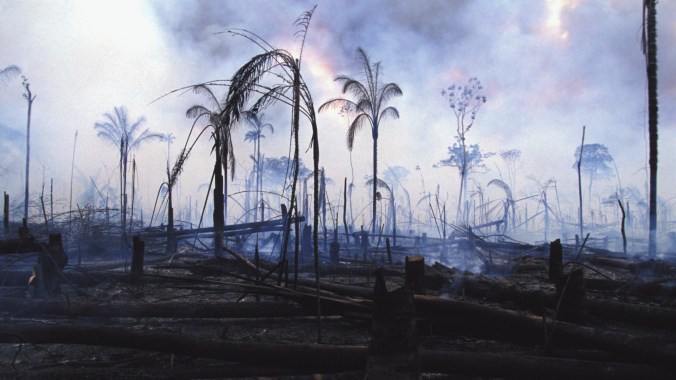
If you have never seen ecosystem destruction firsthand, count yourself lucky. I witnessed, during visits over several years, as 1,000 acres of primary forest ecosystem was destroyed to make way for a rubber plantation. It was horrifying. And I am further horrified to read how what I witnessed was only a small part of a much bigger rubber-induced destruction (thanks as always to Fred Pearce):
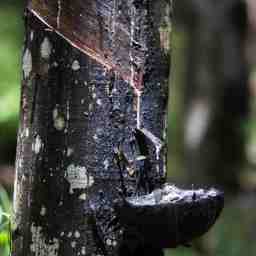
Rubber resin collected from a tree near Lubuk Beringin, Indonesia. TRI SAPUTRO / CIFOR
How Mounting Demand for Rubber Is Driving Tropical Forest Loss
The growing market for rubber is a major, but largely overlooked, cause of tropical deforestation, new analysis shows. Most of the rubber goes to produce tires, more than 2 billion a year, and experts warn the transition to electric vehicles could accelerate rubber use.
The elephants are gone. The trees are logged out. The Beng Per Wildlife Sanctuary in central Cambodia is largely destroyed, after being handed over by the government to a politically well-connected local plantation company to grow rubber. Continue reading



 Organikos