Desalination’s Discontents

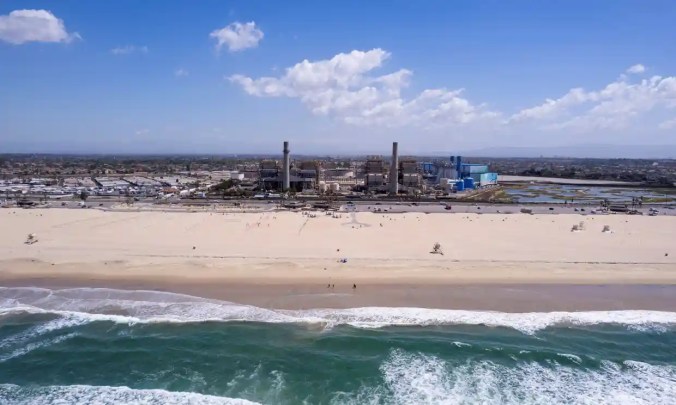
The commissioner of the panel said: ‘The ocean is under attack … I cannot say in good conscience that this amount of damage is OK.’ Photograph: Mike Blake/Reuters

Desalination, which we celebrated multiple times over the years, might not be all as good we thought it was:

Joy for environmentalists as California blocks bid for $1.4bn desalination plant

Poseidon Water sought to turn seawater into drinking water but activists said plan would devastate ecosystem on Pacific coast

California coastal panel on Thursday rejected a longstanding proposal to build a $1.4bn seawater desalination plant to turn Pacific Ocean water into drinking water as the state grapples with persistent drought that is expected to worsen in coming years with climate change. Continue reading

CO2 + Brine = Baking Soda and More

Map showing the largely artificial salinity of the Persian Gulf.

Desalination is clearly going to be a very important technology for the future, as our drinking water supply dwindles. Carbon capture/storage is also an imperative process to be working on in an effort to slow down global warming in any way possible. So the fact that a scientist at Qatar University is working on a process that takes pure CO2 waste from natural gas plants, waste brine from desalination plants, and ammonia, which all react chemically to create sodium bicarbonate (baking soda), calcium chloride (used as a preservative or tanning chemical), and ammonia (which can be recycled to continue the process). Erica Gies reports for Scientific American:

Farid Benyahia wants to solve two environmental problems at once: excess carbon dioxide in the atmosphere and excess salt in the Persian Gulf (aka the Arabian Gulf). Oil and natural gas drive the region’s booming economies—hence the excess CO2—and desalination supplies the vast majority of drinking water, a process that creates concentrated brine waste that is usually dumped back into the gulf.

Continue reading