A Fishy Excursion

img_9262_zps6rndumkn

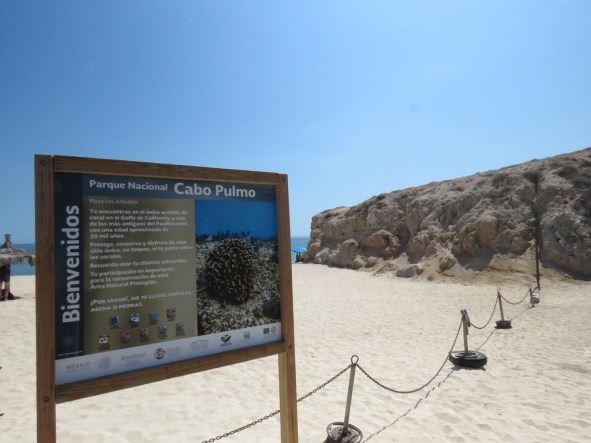
Thirty minutes north from Villa del Faro is a place called Los Arbolitos, which translates to “the little trees,” and is part of Cabo Pulmo National Park. I will just state from the beginning that this area does not have any trees, or small trees for that matter, only a sturdy watchtower on top of a sandbank that from a distance could perhaps look like the outline of a tree, and some scrubby bushes. Los Arbolitos is a small, secluded bay with crisp white sand and smooth crystalline waters, making it an ideal spot for snorkeling. Continue reading

Travel For The Marine Biodiversity, Support Conservation in Baja California Sur

This slideshow requires JavaScript.

We’ve posted about the biodiversity of this spectacular region before so when we came across this article highlighting the Cabo Pulmo National Marine Park it definitely drew our attention.

The park is

a 27.5-square-mile ecosystem with an unusual history and an uncertain future. At least 226 fish species live in the park, and it is home to the only living hard coral reef in the Sea of Cortez. But environmentalists fear that a major resort development could significantly alter this delicate fringe of Baja, both above ground and underwater. Continue reading

The Heavy Hand’s Awesome Grip

What can be done to reduce hypoxia?

Although reducing fertilizer use is the most cost effective method of ameliorating hypoxia in the Gulf of Mexico, the reductions necessary are too difficult and expensive to implement; the massive agribusiness establishment of wheat, soy, and especially corn is not easily confronted. So conservation and restoration of wetlands, or creation of any other form of buffer zone, is one of the better alternatives.

Buffer zones can filter between 50 and 90 percent of nitrogen and phosphorous from runoff; riparian buffers, filter strips, grassed waterways, and contour grass strips are practices eligible for the Conservation Reserve Program that also prevent nutrient runoff. The Conservation Reserve Program, or CRP, is Continue reading

Swampbuster

My last post introduced the problem of hypoxia in the Gulf of Mexico, and I promised to start trying to answer that question. Today I’ll shed some light on some subsidies and federal policies that could be altered and bolstered in the right ways to stop nutrient-rich runoff from reaching the Mississippi River. I’m going to point out right away that although the most obvious way of preventing hypoxia is by reducing fertilizer use, this is also the most difficult and expensive tactic to implement. My goal is to start laying out elements of a more cost effective, pragmatic plan for ameliorating hypoxia in the Gulf of Mexico.

The agricultural subsidies that I discuss here are measures that can be implemented through various policy tools (e.g. direct payments, technical assistance, tax incentives) to reduce costs for producers and attempt to benefit the economy in doing so. One positive form of subsidy, known as a cross-compliance program, discourages creation of farmland from current wetlands or land that is highly erodible. Continue reading

A Dead Zone

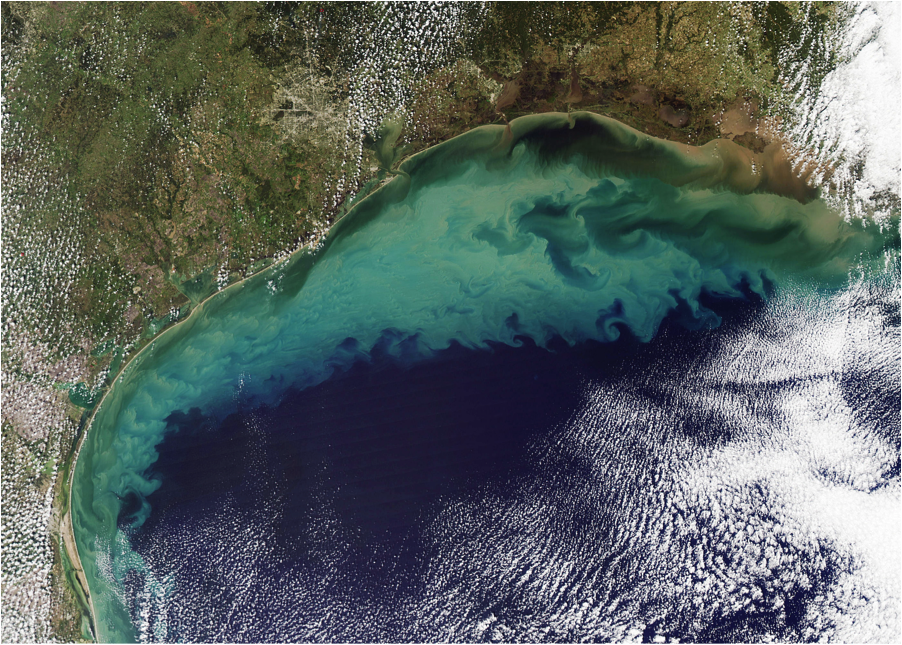
This picture is of the hypoxic area in the Gulf of Mexico, the largest “dead zone” in the western Atlantic. Since the beginning of this site we have tried to accentuate the wonders of nature, creative and collaborative approaches to conservation, and other fun stuff.  Every now and then a dose of scientific explanation helps put this in perspective, even if it is a downer like hypoxia.

Hypoxia occurs when oxygen concentrations in the water are too low to sustain most life, and is created by a process known as eutrophication. This is the over-enrichment of water by nutrients, which cause dense growth of algae that consumes oxygen as it multiplies and decomposes. The resulting lack of oxygen can cause large die-offs of marine life, seriously threatening ecosystems in the Gulf.

Continue reading